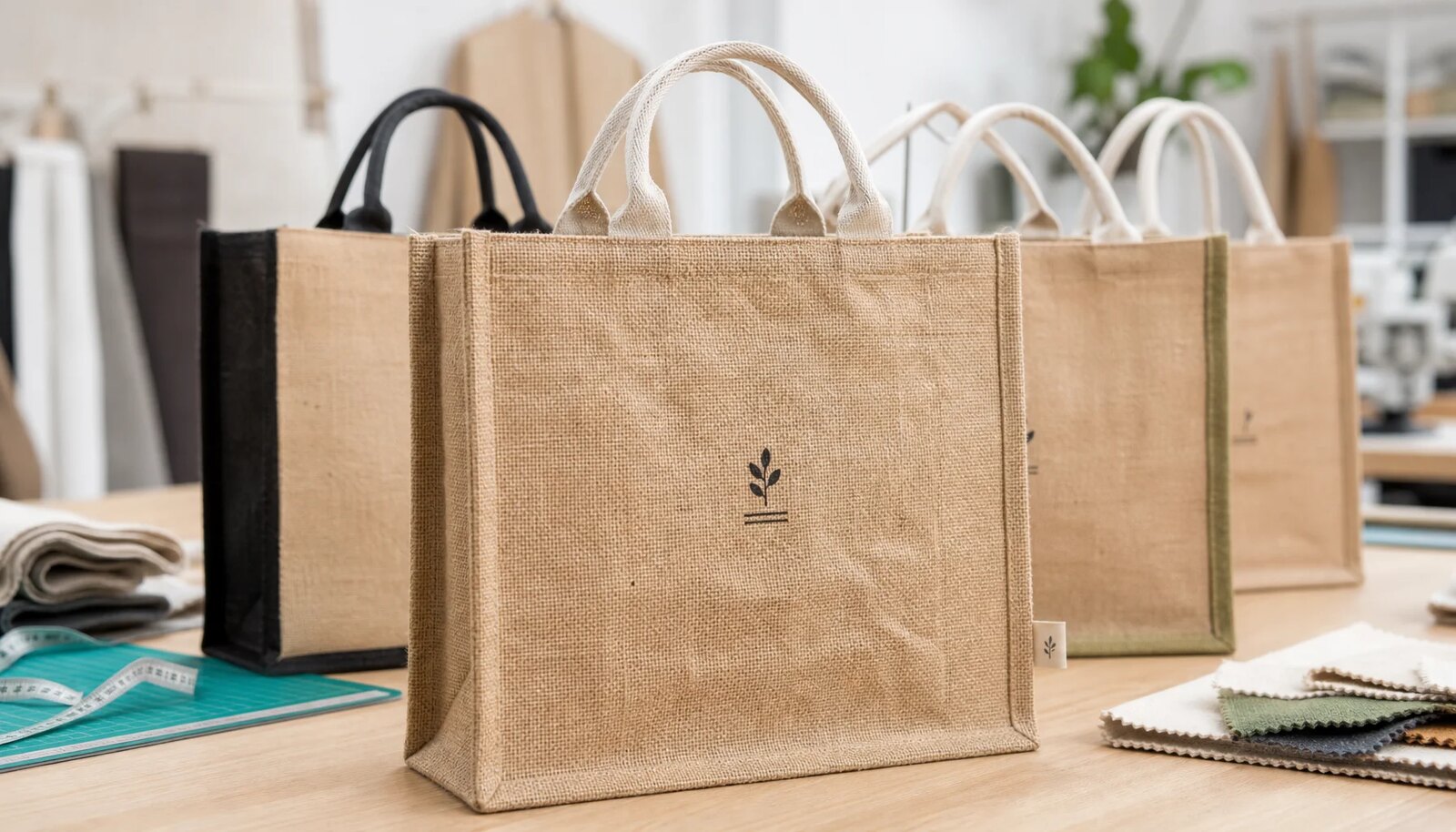
Plan From the Warehouse Date
For craft fair programs, the important date is not when a factory finishes sewing. It is when bags are usable at the buyer's warehouse, distributor, staging site, or kitting line. A tote that arrives after sponsor kits close or after booth materials ship is commercially late even if the purchase order was technically produced on time.
Start the schedule with four dates: fair date, required warehouse arrival, kitting or redistribution cutoff, and latest usable delivery. Then work backward through artwork approval, sample making, courier transit, material booking, printing, sewing, trimming, packing, inspection, export handling, freight, customs clearance, local delivery, and any final sorting.
- Domestic stock with local print may work in 1-3 weeks when blanks and print capacity are confirmed.
- Overseas stock construction with simple print often needs 4-7 weeks depending on sample, booking, and freight mode.
- First custom overseas orders by air commonly need 5-8 weeks when approvals are fast and components are available.
- First custom overseas orders by sea are better planned 8-12 weeks or more before the required warehouse date.
- Repeat orders can move faster, but only if the same fabric, handles, screens, labels, packing, and carton marks remain available.
Separate Production Time From Total Lead Time
A quoted production lead time such as 25-35 days usually starts after deposit, final artwork, sample approval, and material confirmation. It normally does not include RFQ revisions, sponsor artwork approval, sample courier time, inspection booking, export customs, freight departure, import clearance, or local delivery.
Ask suppliers to provide a dated milestone schedule instead of one broad lead-time range. This protects the buyer from discovering too late that printing has not started because a logo file was not vectorized, webbing was not reserved, or cartons were waiting for final destination marks.
- Ask when the production clock starts: deposit, artwork approval, sample approval, or material arrival.
- Request dates for sample dispatch, sample approval cutoff, material booking, cutting, printing, sewing, packing, inspection, and shipment release.
- Add a remake buffer for new artwork, new construction, custom labels, sponsor approval, or first-time supplier orders.
- Reserve extra time for multi-version orders because each logo, SKU, or destination can affect setup and packing.
- Keep the kitting date visible in the PO if bags must be packed with catalogs, badges, coupons, or vendor materials.
Define the Bag Before Price Comparison
Quotes are not comparable if one supplier prices a flat tote and another prices a gusseted bag with reinforced handles. Write the bag as finished width x height x gusset depth, then define bottom style, top hem, lamination, handle material, handle drop, print method, label requirements, packing, and carton marks.
For many craft fair uses, a medium format around 35 x 40 x 12-15 cm is a practical starting point because it can hold boxed crafts, apparel, books, candles, jars, and sponsor materials. Flat totes cost less and pack efficiently, but they are less useful when shoppers carry mixed purchases through a fair.
- Use finished dimensions, not fabric cutting size, in the RFQ and purchase order.
- Specify side gusset, box bottom, or flat construction because each changes cost, capacity, and carton volume.
- Agree tolerances before approval; +/-1 cm for width and height is often practical for medium jute totes.
- Confirm top opening width if the bag must hold boxes, jars, folders, or pre-packed sponsor kits.
- Ask the supplier to recommend a practical carrying load for the exact GSM, gusset, and handle construction.
Choose GSM and Lamination Carefully
Natural jute varies in yarn thickness, color tone, weave density, slubs, stiffness, and loose fiber. That variation is part of the material, but it must still be controlled by an approved sample and written tolerance. The quote should state whether GSM is measured before lamination, after lamination, or by a supplier nominal grade.
A useful starting range for mainstream jute tote bags for craft fairs is 260-320 GSM laminated natural jute. Lighter 220-240 GSM can work for low-load giveaways or single-item gift packaging. Heavier 320-350 GSM can improve structure and perceived value but may increase sewing stress, carton volume, and freight cost.
- Use 220-240 GSM only when low load, low cost, and light presentation are acceptable.
- Use 260-320 GSM for most reusable craft fair totes, sponsor bags, and merchandise bags.
- Use 320-350 GSM when structure and premium feel matter more than carton efficiency.
- Confirm lamination side, inside appearance, odor expectation, stiffness, and shedding level from a physical sample.
- Avoid unsupported sustainability claims unless the full construction, including lamination, ink, handles, labels, and packing, supports them.
Engineer Handles for Real Use
Handle failure creates visible complaints because it usually happens while a shopper is carrying paid merchandise. Handle material, webbing width, drop length, insertion depth, thread, stitch pattern, and top-hem reinforcement should be specified before prices are compared.
Cotton webbing is a strong default for craft fair totes because it feels smoother on the hand and shoulder than many jute handles. Common widths are about 2.5-3.8 cm. A 45-60 cm handle drop supports shoulder carry, while shorter drops suit hand-carry gift bags.
- Specify handle material, width, finished drop, insertion depth, thread color, and stitch pattern.
- Use reinforced top hems, box stitching, cross stitching, or bar tacks when heavier products are expected.
- Check handle comfort after loading the sample, not only when the bag is empty.
- Ask for the factory's handle pull test or hanging load test, including weight, duration, and pass/fail rule.
- Test bulk pieces during inspection because showroom samples do not prove production consistency.
Match Artwork to Jute Printing Limits
Jute is coarse, tan, and uneven, so artwork that works on paper or smooth cotton may not print cleanly on a jute tote. Screen printing is usually the safest option for bold event names, sponsor logos, simple retail marks, and strong typography. Fine lines, gradients, photographs, tiny reverse text, and tight multi-color registration are higher risk.
Artwork should be supplied as vector files with final print size, placement, color count, and Pantone references where needed. Color approval should happen on printed jute, not only on a PDF or white paper proof, because tan fabric and lamination change ink appearance.
- Use one or two solid print colors when clarity and schedule reliability matter.
- Avoid fine lines below roughly 1 mm, small reverse text, gradients, photographs, and detailed QR codes on the main jute panel.
- Specify placement from top edge and side seams, with a realistic tolerance such as +/-5 mm to +/-10 mm.
- Request a printed strike-off on actual jute for sponsor, retailer, or Pantone-sensitive artwork.
- Use woven labels, cotton patches, hangtags, or inside tags for small text, barcodes, or premium detail.
Break MOQ Into Components
MOQ is driven by more than finished bag quantity. It can depend on jute fabric availability, lamination, handle webbing, dyeing, print setup, label sourcing, hangtags, inserts, carton marks, and individual packing. A supplier may accept 500 pieces for a stock natural jute tote but require more for custom-dyed fabric or special webbing.
Craft fair buyers often need different sponsor logos, city names, vendor groups, SKUs, or destination marks. One order of 1,000 pieces with one logo is simpler than five versions of 200 pieces, even if the total quantity is identical. Each version can add screens, setup time, inspection sampling, carton segregation, and packing-list risk.
- Ask whether MOQ applies to total order quantity or per artwork, SKU, colorway, label, or destination.
- Confirm MOQ for jute, lamination, handles, dyeing, woven labels, patches, hangtags, inserts, and retail bags.
- Separate setup charges from unit price so multi-version orders can be compared accurately.
- Ask whether material stock is reserved only after deposit and written purchase order confirmation.
- Use stock construction when lead time matters more than full customization.
Use Samples as Control Documents
A useful sample is not just a sales presentation. It should prove the production route: bulk jute, lamination, handle webbing, thread, print ink, label, stitching, and packing reference. If any element is substituted, the supplier should state what will differ in bulk and when the final component will be available.
Evaluate the sample against a written specification sheet. Measure finished size, gusset, top opening, handle width, handle drop, print size, print position, stitch quality, label placement, odor, shedding, and packing behavior. Load the bag with realistic fair products, carry it by hand and shoulder, and inspect stress points afterward.
- Approve samples with written comments, photos, measured dimensions, and agreed tolerances.
- Check odor, dampness, loose fiber, print curing, rub resistance, seam quality, handle comfort, and standing shape.
- Keep one signed approval sample with procurement and require a matching factory reference sample.
- Do not rely on photo approval when odor, load behavior, lamination feel, or print texture matters.
- Use a pre-production sample before first custom orders, sponsor-funded bags, retail-facing bags, or strict delivery windows.
Compare Landed Cost and Packing Data
FOB unit price can hide the real cost of jute tote bags. Jute is bulkier than many promotional materials, and gussets, heavier GSM, wider handles, labels, hangtags, and individual bags can increase carton volume. A lower unit price may lose its advantage after freight, storage, sorting, and event handling are included.
Ask for carton dimensions, pieces per carton, gross weight, net weight, estimated carton count, packing orientation, carton marks, and any liner or moisture protection. If comparing 280 GSM against 350 GSM, or flat against gusseted construction, request carton data for both options.
- Compare EXW, FOB, CIF, DDP, or other trade terms carefully because each shifts cost and risk.
- Separate sample charges, screen charges, label charges, hangtag costs, packing costs, inspection support, and document fees.
- Confirm whether SKU separation, venue carton marks, barcode labels, and destination sorting are included.
- Avoid over-compression when bags must stand upright or look neat at booths.
- Use carton data to compare unit price, freight, warehouse handling, and final distribution together.
Set Inspection Criteria Before Shipment
Inspection is most useful when standards are agreed before bulk production. Without written criteria, one side may call an issue natural jute variation while the other sees unacceptable workmanship. For event-dated orders, inspect early enough to allow sorting, repair, replacement, or partial shipment decisions.
Defect definitions should fit jute totes. Critical defects may include mildew, dampness, wrong artwork, wrong SKU packing, broken handles, unsafe contamination, severe odor, or incorrect destination marks. Major defects may include open seams, weak handle stitching, obvious print misplacement, heavy smearing, missing labels, deep crushing, or incorrect carton quantity.
- Agree AQL level or sampling method, defect classes, rework rules, and final payment hold point.
- Measure width, height, gusset, top opening, bottom panel, handle drop, print placement, and label placement consistently.
- Inspect top hem, handle attachment, side seams, bottom seam, gusset corners, loose threads, and stitch tension.
- Compare brand colors against the approved printed jute strike-off, not only a digital artwork file.
- Check cartons for dryness, correct marks, secure sealing, packing count, compression, and export handling strength.
Specification comparison for buyers
| Sourcing route | Planning lead time to warehouse | Best fit | Buyer controls to confirm |
|---|---|---|---|
| Domestic stock bag with local print | 1-3 weeks if blanks, print capacity, and artwork are ready | Small craft fairs, urgent sponsor giveaways, low customization, domestic redistribution | Confirm blank stock quantity, actual bag size/GSM, print proof timing, carton count, and whether the supplier can hold inventory while PO is approved |
| Overseas stock construction with simple logo | 4-7 weeks by air or fast ocean where available; timing depends on sample approval and booking | Medium programs needing better unit cost than domestic stock but limited changes | Use stock jute, stock handles, one or two print colors, standard cartons, and a firm inspection-ready date |
| First custom overseas order by air freight | 5-8 weeks from complete RFQ to warehouse when sample approvals are quick | Event-dated orders with custom size, handle, label, or artwork where volume is not container-efficient | Separate sample time, approval window, production days, inspection, export handling, air booking, customs, and final delivery |
| First custom overseas order by sea freight | 8-12 weeks or more before required warehouse date, depending on origin, destination, customs, and sailing schedule | Larger craft fair programs, distributor orders, retail merchandise, and multi-venue shipments | Do not treat quoted production days as total lead time; add sample courier, freight booking, import clearance, and kitting buffers |
| Repeat custom order, same approved spec | 4-8 weeks depending on material reservation, production queue, and freight mode | Reorders using the same size, GSM, handle, print screens, labels, packing, and carton marks | Verify that fabric, webbing, inks, and cartons are still available; ask if screens or labels need remake |
| Multi-version sponsor or venue order | Add 3-10 working days versus a single-version order, depending on artwork count and packing separation | Programs with several sponsor logos, city names, vendor groups, SKUs, or destination cartons | Quote setup per version, print strike-offs, carton marks, SKU segregation, inspection sampling by version, and packing-list cutoff date |
| Custom dyed jute or special trims | Often 10-14 weeks or longer when dyeing, custom webbing, woven labels, or retail packaging require separate production | Brand programs where exact color, premium trim, or retail presentation matters more than speed | Confirm component MOQ, lab dip or trim sample timing, color tolerance, material booking date, and fallback options if approval fails |
Buyer checklist before sampling
- Set the craft fair date, warehouse arrival date, kitting or redistribution date, and latest usable delivery date before requesting a quote.
- Specify finished width x height x gusset, bottom style, top hem, jute GSM, lamination, handle material, handle width, handle drop, print method, and intended carrying load.
- State tolerances for finished dimensions, GSM, handle drop, print placement, logo color, stitch quality, carton quantity, and carton condition before approving the sample.
- Provide vector artwork with final print size, color count, Pantone references where needed, placement from bag edges, and approval deadline for sponsors or retailers.
- Ask MOQ by component: jute fabric, lamination, handle webbing, dyeing, print screens, woven labels, cotton patches, hangtags, inserts, individual bags, and carton marks.
- Request sample cost, sample lead time, courier cost, remake policy, and written confirmation of which materials will match bulk production.
- Collect carton dimensions, pieces per carton, gross weight, net weight, packing orientation, carton marks, inner liner or moisture option, and estimated total carton count.
- Separate base requirements from optional upgrades such as heavier GSM, wider handles, labels, hangtags, individual packing, barcode labels, or destination sorting.
- Agree inspection timing, sampling method, defect definitions, rework rules, and payment hold point before the purchase order is released.
- Keep one signed approval sample with procurement and require the factory to keep a matching reference sample at production and packing.
Factory quote questions to send
- What jute GSM, weave appearance, color tone, and lamination type are included, and is GSM measured before lamination, after lamination, or by nominal supplier grade?
- What exact finished size, gusset style, handle width, handle drop, top hem, thread color, and reinforcement stitch are included in the quoted unit price?
- Is the MOQ based on stock materials, or does any fabric, handle, label, patch, hangtag, insert, carton, or artwork version require a separate minimum?
- What are the sample dispatch date, buyer approval deadline, material reservation date, bulk production days, inspection-ready date, and shipment-ready date?
- Will the pre-production sample use the same bulk jute, lamination, handles, labels, inks, thread, stitching, and packing method? If not, what will differ?
- Which print method is quoted, how many colors are included, what is the recommended maximum print area, and what artwork details are not suitable for jute?
- Can you provide a printed strike-off on actual jute for sponsor logos, retailer marks, Pantone-sensitive colors, or artwork with registration risk?
- What practical carrying load do you recommend for this construction, and what handle pull test or hanging load test do you use on finished bulk bags?
- How many pieces are packed per carton, what are carton dimensions and gross/net weights, and are cartons flat packed, folded, bundled, lined, or desiccated?
- What quality issues do you classify as critical, major, and minor for jute totes, and what rework or replacement process applies if inspection fails?
Quality-control points to confirm
- Fabric GSM should match the approved sample and written tolerance, commonly around +/-5% for natural jute unless a stricter commercial tolerance is agreed.
- Finished dimensions should be measured after sewing: width, height, gusset depth, bottom panel, top opening, top hem depth, handle width, and handle drop.
- A practical finished-size tolerance such as +/-1 cm for width and height should be written into the purchase order before bulk production starts.
- Handle attachment should show sufficient insertion, reinforced stitching, no skipped stitches, no loose ends, no tearing at the hem, and no distortion after load testing.
- Stitching should have balanced tension, straight seams for retail presentation, no open seams, no broken threads, and reinforced stress points at handles and gusset corners.
- Print should be centered within tolerance, fully cured, reasonably even on coarse jute, free from heavy smearing, and resistant to light dry rubbing after curing.
- Pantone or brand colors should be judged against an approved printed jute strike-off, not only a digital file, paper proof, or white substrate drawdown.
- Jute surface should be free from strong chemical odor, mildew smell, visible dampness, oil marks, excessive loose fiber, insect contamination, and large dark stains.
- Labels, patches, hangtags, barcode labels, and inside tags should match approved artwork, placement, orientation, language, stitch method, and SKU separation.
- Cartons should be dry, clean, correctly marked, securely sealed, counted correctly, and strong enough for export handling, warehouse stacking, and final distribution.