1. Start with the real buying problem: the logo must look good and pass inspection
For coffee roasters, jute tote bags are rarely just a cheap giveaway. They may sit beside retail coffee bags at the register, hold holiday bundles, travel to farmers markets, carry subscription welcome kits, or go out with wholesale samples. A logo placement that works in one of those situations may fail in another. A bold centered mark helps with event visibility. A small side label may feel more premium and reusable. A low corner logo can look refined, but it may also drift into the boxed gusset if the measurements are vague.
That is why logo placement is a procurement decision, not only a design choice. The placement has to survive printing, sewing, folding, carton packing, ocean or air freight, warehouse handling, and customer use. A flat digital mockup can make almost any logo look balanced. Bulk production is less forgiving. The logo may land too close to handle stitching, run into the bottom crease, shift toward a gusset fold, or lose detail on the coarse jute surface.
The phrase “custom jute bag with logo” is not enough for a supplier brief. Buyers need finished bag dimensions, jute GSM, lamination status, handle details, decoration method, artwork size, reference points, tolerances, sample approval rules, and inspection criteria. Without those details, two suppliers can quote what sounds like the same bag while actually offering different materials, different print limits, and different defect risk.
Coffee products also change how the bag behaves. Two flat 250 g bags create a different panel shape from four 500 g bags, a 1 kg bag, or a bundle with a mug. Once filled, the front panel can bow, the gusset opens, and the handle may visually cross the upper part of the bag. Before approving the logo, decide whether the mark must face forward on a shelf, remain visible while carried, or stay subtle enough for daily reuse outside the cafe.
- Use finished bag measurements, not artwork mockup measurements or raw fabric panel measurements.
- Define the logo from measurable reference points: finished top edge, side seams, bottom fold or gusset seam, and handle stitch position.
- Treat jute as a coarse natural packaging textile, not as smooth canvas, paper, or plastic film.
- Ask the supplier whether printing is done on cut panels before sewing or on finished bags, because this affects placement tolerance.
- Approve a real pre-production sample with the correct material, ink, handle, stitching, and packing method before bulk production.
- Request sample photos flat, standing upright, hanging, and loaded with product-like weight so placement can be reviewed in realistic conditions.
2. Choose the jute base before locking the artwork
Logo quality begins with the bag material. GSM, weave openness, lamination, lining, and stiffness all affect how cleanly the mark prints and how the finished tote presents when filled. A 250-280 GSM laminated jute can suit lighter promotional or small retail programs. A 280-320 GSM range is often the practical middle ground for coffee roasters that want a reusable tote with decent structure and manageable cost. A 300-350 GSM laminated jute gives more body for gift sets, grocery-style carrying, or paid merchandise, but it can increase carton volume, freight cost, and fold stiffness.
Lamination deserves special attention. Laminated jute usually provides a more stable surface for screen printing, cleaner edges, less fiber movement, and better standing shape. Unlaminated jute feels more rustic and can support a farm-to-cup or natural brand direction, but it brings more fiber shedding, shade variation, odor variation, and print-edge irregularity. If the artwork includes small origin names, delicate farm drawings, fine circular badges, or certification-style icons, direct printing on unlaminated jute is usually a higher-risk choice.
The construction matters too. A single-layer laminated jute tote may be enough for retail bean purchases and market use. A cotton-lined jute tote can feel more finished and cleaner inside, although it adds sewing time, cost, and sampling complexity. A boxed gusset helps the tote stand upright and hold coffee packs neatly, but it changes the visual center of the front panel. It also creates fold lines that can interfere with low logo placement.
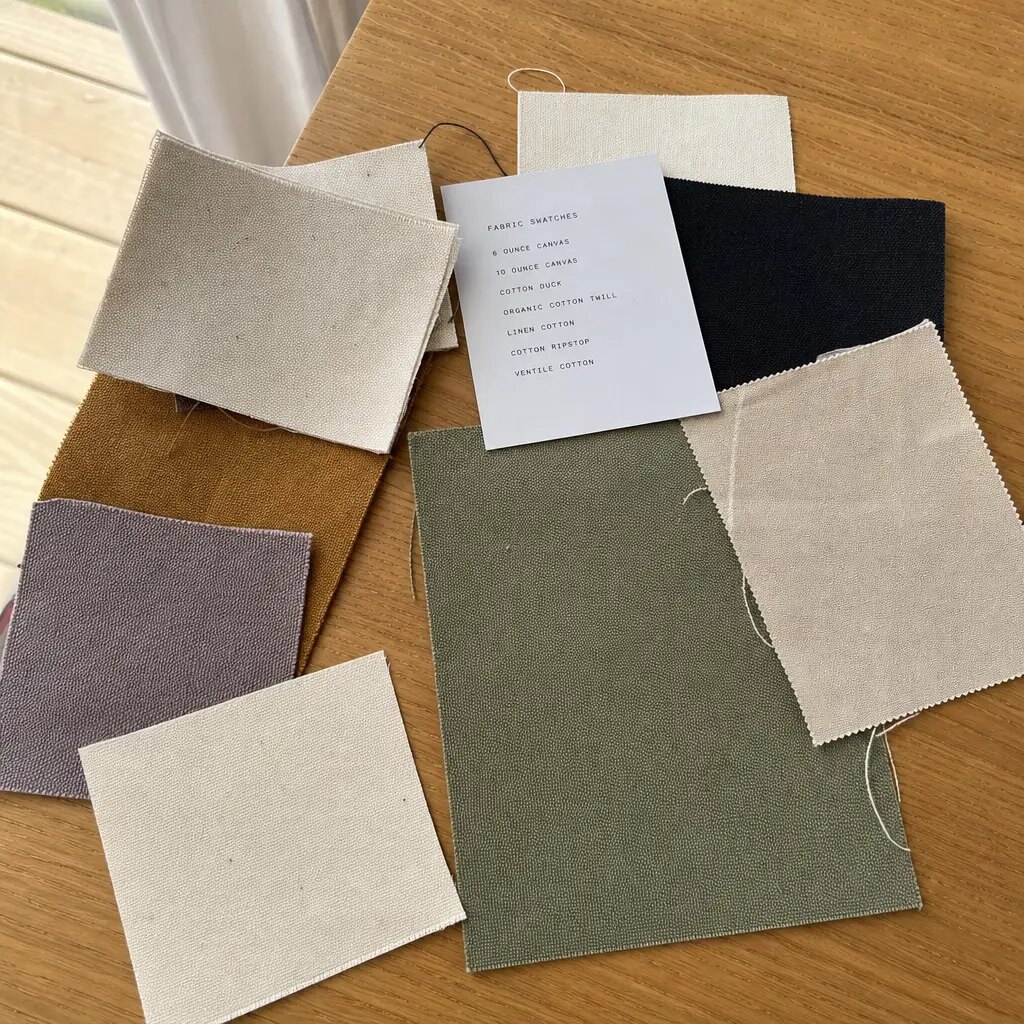
Ask for material swatches before choosing ink colors. Natural jute is not a white base. It can make brand colors appear warmer, duller, or less saturated. Even two natural jute lots from similar specifications may differ in shade. For B2B repeat orders, it is worth recording the approved jute type, GSM, lamination, and sample reference so reorders do not drift over time.
- 250-280 GSM laminated jute: light retail, promotional totes, smaller bean purchases, and budget-sensitive programs.
- 280-320 GSM laminated jute: common B2B balance for cafe merchandise, market totes, and reusable retail bags.
- 300-350 GSM laminated jute: stronger gift tote, grocery-style carrier, coffee-and-mug set, or paid merchandise position.
- Unlaminated jute: best when rustic texture is intentional and the artwork is bold, large, and low-detail.
- Cotton lining or inner lamination: improves cleanliness and structure but increases cost, sample complexity, and carton thickness.
- Ask for material swatches or previous production samples from the same jute grade because natural jute shade changes perceived ink color.
3. Build the safe logo area on the finished tote, not on the flat mockup
The safest front logo position is usually the visual center of the front panel, not the mathematical center of the entire bag including gussets. For a medium tote around 350 x 400 x 150 mm, a practical front logo area may be about 180-250 mm wide and 120-180 mm high. That range depends on handle drop, top hem size, bottom construction, artwork style, and whether the bag is meant to stand or hang. Treat it as a starting point, not a universal rule.
Clearance is what keeps the logo out of trouble. On a gusseted jute tote, the artwork should avoid side seam bulk, side gusset folds, bottom fold lines, the top hem, and handle reinforcement. For many medium totes, keeping at least 30-40 mm from side seams and 50-70 mm above the bottom fold reduces distortion. If the logo is large, uses heavy ink coverage, or includes a rectangular border or circle, the safe area may need to shrink. Small tilts become very visible when the artwork has straight frames.
A proper placement drawing should include finished bag width, finished height, gusset depth, handle attachment points, logo width, logo height, and the distance from the finished top edge to the top of the logo. For example: logo size 200 x 140 mm, centered left to right on the front panel, top of logo 110 mm below the finished top edge, placement tolerance +/-5 mm. With that kind of drawing, inspection becomes measurable. Without it, everyone is relying on opinion.
Lower-corner logos need extra care. They can look premium and less promotional, but the corner of a jute tote is not a quiet area. The boxed bottom, side fold, and seam thickness all meet near that point. If you choose a lower-corner mark, specify the distance from the finished side seam and from the finished bottom or gusset fold. Also define tilt tolerance, especially for patches and labels that are sewn after the bag body is assembled.
- Measure from finished seams and edges after sewing, not from raw panels or a mockup centerline.
- Keep front logos away from handle stitching, top hems, bottom fold lines, boxed corners, and side gusset folds.
- For lower-corner marks, define the distance from both the finished side seam and the finished bottom/gusset fold.
- For hanging retail displays, check whether the handle covers the top logo area when the bag is suspended.
- For shelf display, load the sample with coffee-like weight and confirm the logo is not hidden by the shelf edge or bottom crease.
- If using a border, circle, or rectangular frame, allow extra placement tolerance because slight tilt or panel bowing becomes more noticeable.
4. Match the coffee roaster artwork to the right branding process
Screen printing is the most common decoration method for jute tote bags. It is scalable, direct, and cost-effective for bold artwork. It performs best with one or two solid colors, limited registration, and line weights that can survive a coarse weave. On natural jute, dark inks such as black, dark brown, navy, or forest green often read more clearly than pale inks or detailed multi-color marks. Fine serif type, halftone shading, and reversed text should be tested before bulk approval.
A printed cotton canvas patch is often the safer option when the roaster logo includes small typography, origin names, badge outlines, fine illustrations, or certification-style details. The artwork is printed on a smoother cotton or canvas surface first, then stitched onto the jute. This adds material and labor cost, but it can reduce print-quality risk and create a more deliberate retail look. If the tote is paid merchandise rather than giveaway packaging, that extra finish may be justified.
Woven labels are useful when the brand wants quiet, premium identification. They work well on side seams, upper hems, or small front positions. They are not a magic solution for unlimited detail, though. At small sizes, the weave of the label has its own limitations. Tiny copy and complex marks may need simplification, and label MOQs can be separate from bag MOQs.
Heat transfers should be treated cautiously. They may help with certain multi-color logos where screen registration is difficult, but rough fibers, lamination quality, folding, and packed-carton pressure can affect adhesion. If a supplier recommends transfers, ask for testing on the exact jute substrate and the exact packing method. Direct embroidery on open coarse jute can distort the fabric; embroidery usually works better on a patch or reinforced panel.
- Direct screen print: best for bold cafe names, simple symbols, one-color slogans, and medium to high volume retail programs.
- Printed cotton patch: best for small text, badge-style logos, fine line drawings, and artwork that needs sharper edges than jute allows.
- Woven label: best for understated side branding, premium repeat programs, and minimal logos with limited detail.
- Heat transfer: only use after adhesion, rub, bend, folding, and packed-carton tests on the exact production material.
- Embroidery: consider on a patch or reinforced panel; avoid assuming it will work cleanly on open coarse jute.
- If using two branding points, such as front print plus side label, specify placement, size, color, and tolerance for each one separately.
5. Adjust artwork rules for jute before screens, labels, or patches are made
Jute has an open and uneven surface, so the artwork should be adapted to the textile instead of forced onto it. Fine lines can break where ink skips over fiber ridges. Tiny letters can fill in, blur, or disappear into the weave. Large solid ink blocks may look uneven because the surface is not perfectly flat. This does not mean jute cannot look good. It means the logo has to be designed with the material in mind.
As a practical starting point, avoid strokes thinner than about 1.0-1.5 mm for direct screen print on jute. Avoid text smaller than about 8-10 mm high unless a physical test on the selected material proves that it works. These are not fixed industry rules, because weave, lamination, ink, and printing technique vary. They are useful guardrails for RFQ review and sample approval. Buyers should be especially cautious with QR codes, roast notes, origin maps, nutrition-style copy, and certification marks printed directly onto jute.
Color approval also needs realism. Pantone references help communication, but natural tan jute is not coated white paper. The same ink can look warmer, flatter, or less saturated on jute. White and cream inks may need opacity testing. If color accuracy is important, approve a physical strike-off or pre-production sample under consistent lighting. Then define the bulk standard against that sample instead of relying only on a digital file.
Ask the supplier to review the vector file before screen making. A useful supplier will flag unsafe elements: thin strokes, small reversed text, too many colors, difficult registration, heavy solids, or artwork too close to seams. It is cheaper to simplify the file before screens are made than to reject a sample after setup costs have already been spent.
- Provide vector artwork and avoid low-resolution JPEG logos for production setup.
- Increase thin strokes, simplify fine illustrations, and remove tiny secondary copy before screen making.
- Do not place QR codes or small compliance-style text directly on rough jute unless a physical sample proves scan and readability performance.
- Use fewer print colors when possible; each extra screen adds cost, registration risk, and approval complexity.
- For light inks, confirm opacity on actual jute, not on a white digital mockup.
- Ask the factory to mark unsafe artwork elements before charging for screens or starting the sample.
6. Compare MOQ and cost by component, not just by unit price
MOQ for jute tote bags is not driven only by the sewing line. Minimums can come from fabric rolls, lamination, handle color, screen setup, label weaving, patch cutting, hangtags, kraft bands, individual packing, and carton marking. A supplier may offer a lower MOQ for stock natural jute with standard cotton handles and one-color screen print. The same supplier may require a much higher minimum if you add custom handle webbing, woven labels, or private-label retail packing.
Separate the base bag MOQ from every decoration and trim MOQ. For example, the bag body may be possible at 500 pieces, but a woven label supplier may require 1,000 or 3,000 labels. If you order 500 bags, the extra labels may be charged, stored, or shipped loose. Similar issues can occur with printed patches, belly bands, barcode stickers, custom hangtags, or dyed webbing. These leftover components affect landed cost and reorder planning.
When comparing suppliers, ask for itemized options. One lower unit price may use lighter jute, shorter handles, a smaller logo, weaker stitching, fewer inspection steps, or tighter carton compression. Those differences may not show up in the first quote line, but they can show up later as handle complaints, crushed gussets, inconsistent branding, or poor retail presentation.
For coffee roasters with multiple cafes or wholesale partners, artwork version control matters. Each location logo, co-branded event mark, or seasonal design may require a separate screen, separate sample, and separate carton mark. If the supplier quotes one price for “logo print” without version details, clarify before placing the order.
- Low-MOQ route: stock natural laminated jute, stock cotton handle, one-color screen print, standard export carton.
- Medium-MOQ route: printed cotton patch, two-color print, special handle color, kraft belly band, or retail hangtag.
- Higher-MOQ route: custom woven labels, jacquard handle branding, custom dyed fabric, private-label packing, or multiple artwork versions.
- Ask whether leftover labels, patches, or bands are included in the price and who owns them after production.
- Confirm whether each cafe location logo requires a separate screen charge, sample, MOQ, and carton mark.
- Require carton dimensions and gross weight at quote stage because jute tote freight cost can change the real landed price.
7. Treat samples as production controls, not casual references
A pre-production sample is the control standard for the bulk order. It should use the same jute GSM, lamination, handle material, ink, label, patch, stitching, and packing method planned for production. If the sample uses substitute fabric, a different handle, or a temporary decoration method, label it clearly as a development sample. Do not allow bulk production to start from a sample that does not represent the final specification.
Coffee roaster artwork often contains small origin names, roast language, circular badges, mountain or farm illustrations, and fine logo details. These elements may look clean in a PDF and fail on coarse jute. Sample approval should include measurements with a ruler, front and side photos, close-up print photos, and a standing photo with representative contents. A loaded sample is especially useful because the front panel can change shape once coffee bags and accessories are inside.
Replace vague approval comments with measurable acceptance points. Instead of “logo looks good,” record logo size, distance from top edge, centering, color, readability, print coverage, stitch quality, handle reinforcement, and packing fold. If the approved sample has normal jute slubs or minor print edge variation, note that too. The goal is not perfection on a natural material. The goal is consistency against an agreed physical standard.
Packing should be sampled as well. Folding through a heavy logo, stacking print against print, or compressing gussets too tightly can create creases or transfer marks during shipment. If the logo has heavy ink coverage, ask whether paper interleaving, alternate folding, longer curing time, or lower carton quantity is needed. Price those choices before production, not after a packing problem appears.
- Confirm the sample is made with production material, not only similar stock fabric.
- Measure logo size and placement from finished top edge, side seams, and bottom fold or gusset line.
- Check text readability at normal customer distance and close-up against the approved artwork.
- Rub the logo with a dry white cotton cloth to check for obvious ink transfer, powdering, or flaking.
- Fold the bag as it will be packed and check whether the logo cracks, sticks, creases heavily, or transfers.
- Load the bag with representative coffee weight and inspect front panel bowing, standing shape, and handle stress.
- Keep one approved sample with the buyer and one with the supplier, both signed or clearly identified as the production standard.
8. Define QC tolerances that fit natural jute and real factory production
Natural jute varies. Shade, fiber thickness, slubs, and odor can differ from lot to lot. Procurement should define acceptable natural variation before production instead of rejecting normal jute character after the goods are finished. At the same time, mold smell, oil stains, water marks, broken seams, wrong artwork, loose handles, unreadable logo details, and major placement shifts should be treated as defects. A useful QC plan separates natural textile variation from workmanship failures.
For common laminated jute totes, a finished size tolerance of about +/-10 mm on width or height is often more realistic than tight apparel-style tolerances. Gusset depth may also vary after folding. Logo placement tolerance around +/-5 mm can be practical for a standard front screen print when the measurement method is clear. Rough unlaminated jute, gusset printing, small patch placement, or sewing near bulky seams may need wider tolerances. The supplier should state what is realistic before production starts.
Logo size tolerance should be separate from placement tolerance. Screen stretch, substrate movement, ink spread, and curing can affect the final mark. Patch tilt and woven label alignment should also be measured, not judged only by eye. If the logo uses a circle, frame, or straight baseline, a small tilt may look more obvious than it would on free-form artwork.
Inspection should happen after sewing and before final carton sealing, with additional packed-carton checks. If printing is done on cut panels before sewing, the final visual position may shift once the tote is assembled. If printing is done on finished bags, seams and folds may restrict the printable area. Either way, inspectors should measure from finished reference points and compare results with the approved physical sample.
- Critical defects: wrong artwork, wrong logo method, broken handle stitching, mold, severe odor, incorrect size, or logo outside agreed tolerance.
- Major defects: print flaking, heavy smudging, large stains, open seams, twisted handles, loose patch corners, severe misalignment, or crushed structure.
- Minor defects: small jute knots, limited slubs, slight shade variation, small loose threads, and minor print edge variation within sample range.
- Measure logo centering, distance from top edge, relation to side seams, and distance from the bottom fold or gusset line.
- Check stitching at handles, side seams, top hem, bottom corners, labels, patches, and reinforcement points.
- Inspect cartons from different production lots, not only top samples prepared for supplier photos.
- Record defects with photos, ruler measurements, carton number, and defect classification so rework decisions are evidence-based.
9. Control packing because packing can protect or damage the logo
Jute totes are often packed flat to save space. That is practical, but the fold direction can affect the printed logo. If a heavy screen print is folded through the center, ink may crease or transfer during long transit, especially if bags are packed before the ink is fully cured or stored in humid conditions. If cartons are overfilled, gussets can crush and the front panel may not stand neatly at retail. Packing is part of the logo placement plan, not a finishing detail to decide at the end.
Packing also affects cost, cleanliness, and sustainability messaging. Individual polybags help keep bags clean for retail or e-commerce distribution, but they add plastic, labor, and carton volume. Kraft belly bands or paper wraps may fit a coffee roaster’s brand better, although they can scuff the print if too tight. Bulk flat packing with a carton liner is usually more cost-efficient for B2B distribution, provided the fold line, nesting direction, and print-to-print contact are controlled.
For heavy ink coverage, paper interleaving may reduce transfer risk. It adds material and labor, so it should be included in the quote. For totes with patches or woven labels, confirm whether the patch thickness changes the stack height or causes pressure marks. If the bag must look crisp on a cafe shelf, ask for a packed sample or at least photos showing the final folding and carton arrangement.
Carton marks are operationally important, especially for multi-location roasters. Cartons should show item code, artwork version, color, quantity, gross weight, net weight, carton size, and destination mark if required. When similar logo versions ship to different cafes or distributors, weak carton labeling can create receiving errors even when the tote quality itself is acceptable.
- Bulk flat pack: efficient and lower cost, but define fold line, nesting direction, carton liner, and print-to-print contact control.
- Individual polybag: cleaner for retail or e-commerce distribution, but adds plastic, labor, carton volume, and sometimes sustainability concerns.
- Kraft belly band: retail-friendly and lower-plastic, but test band pressure and friction against the printed logo.
- Paper interleaving: useful for heavy ink coverage or print-transfer risk, but adds material and packing labor.
- Require carton quantity, carton dimensions, gross weight, net weight, folding method, and carton mark layout before production.
- For sea freight, avoid damp storage and specify export cartons strong enough to reduce crushed gussets and panel deformation.
10. Keep lead time under control by freezing artwork, trims, and approval gates
A custom jute tote program has more steps than many buyers expect: material confirmation, artwork adjustment, screen or label preparation, sampling, sample approval, bulk cutting, printing, sewing, trimming, inspection, packing, and shipment booking. Delays often come from late artwork changes, unclear placement drawings, custom label production, handle color sourcing, or packing revisions. Sewing is only one part of the schedule.
The production calendar should be tied to clear approval gates. A supplier’s lead time should start after deposit, final artwork, and approved pre-production sample, not from the first inquiry. If the buyer changes logo size after screens are made, adds a woven label after sample approval, or switches from bulk pack to retail banding late in the process, new setup charges and schedule loss are likely. Freeze the artwork and trim list before bulk materials are cut.
Coffee roasters often need tote bags for fixed dates: holiday bundles, trade shows, cafe openings, farmers market seasons, corporate gift programs, or product launches. Work backward from the required in-warehouse date, not just the factory completion date. Leave time for sample revisions, inspection, possible rework, export documents, customs, and domestic delivery.
If timing is tight, reduce variables. Use stock laminated jute, standard cotton handles, a one-color front screen print, no custom label, and standard export packing. A simpler specification is often the safer path when a retail launch date cannot move. More customized details can be added in the next production run once the base tote and logo placement are proven.
- Fastest route: stock laminated jute, standard cotton handles, one-color front screen print, no custom label, standard carton.
- Common delay points: artwork redraw, Pantone review, screen remake, custom label weaving, patch production, handle color sourcing, barcode files, and carton mark changes.
- Approval package should include final artwork, placement drawing, material spec, signed sample photos, packing method, carton marks, and inspection checklist.
- Ask which components are stock and which are made or purchased only after deposit.
- Freeze artwork before screen making; changing logo size or location later can require new screens and sample revisions.
- For fixed retail dates, build buffer for inspection findings, rework, freight booking, customs clearance, and domestic delivery.
Specification comparison for buyers
| Spec decision | Recommended option | When it fits | Buyer risk to check |
|---|---|---|---|
| Standard front-center logo | One-color screen print on 280-320 GSM laminated jute, kept inside a measured safe area such as 180-250 mm wide x 120-180 mm high for a 35 x 40 x 15 cm tote | Retail bean purchases, cafe merchandise, farmers markets, gift sets, event bags, and subscription welcome totes | Fine strokes below about 1.0-1.5 mm and text below about 8-10 mm height may break on jute; approve a physical printed sample, not only a PDF mockup |
| Premium understated lower-corner logo | Small screen print, woven label, or printed cotton patch positioned about 35-50 mm from finished side seam and 40-60 mm above the finished bottom/gusset fold | Roasters that want a reusable lifestyle tote rather than a strong promotional bag | Corner placement is affected by boxed gussets and seam bulk; require measurement from finished seams after sewing and define tilt tolerance |
| Large full-width artwork | Simplified one-color or two-color artwork on laminated jute, avoiding side gusset folds, bottom creases, top hem, and handle reinforcement zones | Seasonal launches, coffee festival bags, brand collaborations, corporate gift kits, and holiday bundles | Large solid ink areas can look uneven on coarse fiber; define acceptable ink coverage against the approved sample and request rub and fold checks |
| Side gusset branding | Woven side label, small cotton patch, or narrow vertical print only if the gusset width is stable and wide enough | When the front panel carries product information, illustration, or a cafe message and the brand mark should stay subtle | Small gusset panels shift during sewing; request a placement tolerance and confirm the logo will not sit on the fold radius |
| Handle branding | Custom cotton webbing with jacquard woven text or printed handle tape, usually for repeat programs rather than trial orders | Multi-location cafes, distributors, loyalty merchandise, and established retail packaging ranges | Custom webbing often has separate MOQ, longer sampling, color approval, and tooling; confirm handle pull strength after decoration |
| Printed cotton canvas patch | Logo printed on smoother cotton/canvas patch, then stitched onto jute with approved thread, stitch density, and edge finish | Detailed logos, small origin text, certification-style icons, badges, or multi-line coffee branding that direct jute printing cannot hold | Patch size, edge fray, stitch color, corner shape, placement tolerance, and labor cost must be specified; patch thickness may affect flat packing |
| Woven label | Damask or woven label sewn into side seam, front panel, or top hem, with simplified artwork and limited small text | Premium reusable totes, minimal cafe branding, private-label programs, and repeat SKUs | Label MOQ may exceed bag MOQ; confirm leftover label ownership, label fold type, sewing position, and readability at final size |
| Heat transfer logo | Only considered on tested laminated jute using transfer film proven on the exact substrate and folding method | Limited multi-color logos where screen registration is risky and the buyer accepts a smoother, less rustic finish | Transfers can peel, crack, or lift from rough fibers; require adhesion, dry rub, bend, fold, and packed-sample aging checks |
| Unlaminated rustic jute | Bold one-color print, woven label, or cotton patch; avoid small typography and detailed line art | Natural, farm-to-cup, organic, and rustic cafe positioning where texture and variation are intentional | Expect more fiber shedding, shade variation, slubs, odor variation, and broken print edges; separate normal material variation from defects in the QC checklist |
Buyer checklist before sampling
- Define the use case before choosing artwork size: retail bean carrier, paid merchandise, gift packaging, market tote, corporate gift bag, subscription welcome bag, wholesale sample carrier, or event giveaway.
- Specify finished bag size as width x height x gusset in centimeters or millimeters, for example 350 x 400 x 150 mm, instead of using only a photo or estimated capacity.
- List expected contents and load, such as two 250 g coffee bags, four 500 g bags, one 1 kg bag plus mug, or a mixed holiday set; use this to set handle and seam requirements.
- Choose the material specification: 250-280 GSM for lighter promotional use, 280-320 GSM for common retail totes, 300-350 GSM for gift or grocery use, and heavier only when the structure and budget justify it.
- State laminated or unlaminated jute. Lamination improves print stability and structure; unlaminated jute gives a more rustic hand feel but has more fiber movement, dust, and print variation.
- Confirm construction details: single-layer laminated jute, cotton-lined jute, top hem style, boxed gusset, bottom reinforcement if any, and whether the tote must stand upright when filled.
- Define handle material, length, and reinforcement: cotton webbing, jute tape, rope, short hand-carry length, shoulder length, cross stitch, box stitch, bartack, or rivet where applicable.
- Send vector artwork in AI, EPS, PDF, or SVG format with Pantone references, logo size, color count, minimum text height, and minimum line weight clearly marked.
- Mark logo position from finished bag reference points: finished top edge, finished side seams, bottom gusset/fold line, and handle stitch locations. Do not measure from raw fabric panel edges.
- Keep the logo inside a safe print zone that avoids seam allowance, top hem, handle reinforcement, side gusset folds, bottom fold lines, and high-slub areas.
Factory quote questions to send
- What exact jute GSM, weave description, lamination type, and construction are included in the quote? Is the lamination inside, outside, or absent?
- What are the finished dimensions in mm, including width, height, gusset depth, handle length, handle width, and top hem size? What finished-size tolerance do you offer?
- What handle material, handle width, handle color, stitch pattern, and reinforcement are included? How do you test the handle attachment for the proposed load?
- What is the recommended carrying weight for this bag style, and what sample load test can be performed using coffee-like weights?
- What is the maximum safe print area for the chosen bag size without crossing seams, gusset folds, bottom crease, top hem, or handle reinforcement?
- Which logo process do you recommend for this artwork: direct screen print, printed cotton patch, woven label, heat transfer, embroidery on patch, or another process? Why?
- What artwork modifications do you require for jute, such as increasing line weight, enlarging small text, reducing color count, simplifying halftones, or removing fine registration?
- What MOQ applies separately to the bag body, print color, screen setup, woven label, cotton patch, handle color, handle branding, hangtag, kraft band, carton marks, and inner packing?
- Are setup charges, screen charges, label tooling, patch cutting, and sample fees included or separate? Are any sample charges refundable after bulk order placement?
- How many sample rounds are included, and will the pre-production sample use the exact production material, ink, handle, label, patch, stitching, and packing method?
Quality-control points to confirm
- Finished bag size tolerance should be agreed before production. For common jute totes, +/-10 mm on width or height is often more realistic than tight apparel-style tolerances; gusset depth may also vary after folding.
- Logo placement should be measured from finished reference points: left and right side seams, finished top edge, bottom gusset/fold line, and handle stitching where relevant.
- For standard front screen print on laminated jute, a placement tolerance around +/-5 mm may be practical when the bag structure is stable; rough unlaminated jute, gusset printing, or small patch placement may need wider tolerances.
- Logo size tolerance should be defined separately from placement tolerance, especially for screen printing where screen stretch, substrate movement, and ink spread affect the final image.
- Screen print adhesion should pass a dry rub test with a clean white cotton cloth and a light scratch check without obvious flaking, powdering, or ink transfer.
- Fine logo details should be judged against the approved physical sample and a marked artwork standard, not only against a digital render.
- Print color should be reviewed on the actual jute background because natural tan jute shifts perceived Pantone color; light inks and fine reversed text can look dull or uneven.
- Handle attachment should be pull-tested against the intended load, especially when bags carry multiple 250 g, 500 g, or 1 kg coffee packs plus mugs or accessories.
- Inspect for jute odor, mildew smell, oil marks, water stains, dark stains, insect contamination, excessive fiber dust, and unacceptable shade variation before final packing.
- Check stitch density and seam security around handles, side seams, top hem, bottom gusset corners, patches, labels, and any reinforced areas.