1. Build the pricing plan around a sellable tote, not a vague “jute bag” quote
A useful jute tote bags bulk pricing plan for coffee roasters starts with one question: what is the cost per sellable bag after specification, packing, freight, and defect risk are considered? The lowest FOB unit price is not always the lowest commercial cost. A light open-weave bag with rough handles, weak print, or crushed cartons may arrive cheaper but produce more complaints, rejects, or unsellable stock.
For coffee roasters, a jute tote is often visible merchandise. It may be sold beside whole bean coffee, used for holiday bundles, given to wholesale accounts, or included in subscription promotions. Customers see the logo, touch the handles, load it with dense coffee packs, and associate the bag with the roaster’s brand. That makes handle comfort, body shape, print clarity, odor, and carton condition real procurement variables, not cosmetic preferences.
Price comparison works only after the base tote is defined. Use one written specification for every supplier: size, finished GSM, lamination, gusset, handle material, print method, print size, packing, and sample route. Then request quantity tiers using the same construction. If Supplier A quotes laminated jute with cotton handles and Supplier B quotes unlaminated jute with self-material handles, the price gap is not a negotiation result; it is a product mismatch.
The plan should separate must-have requirements from optional upgrades. Must-haves usually include functional size, acceptable body weight, handle reinforcement, print approval, packing rules, and inspection tolerances. Options can include second-side print, labels, hangtags, dyed handles, individual polybags, or store allocation cartons. Keeping these lines separate makes it clear which features increase cost and which ones protect retail value.
- Set the base spec first, then request price breaks.
- Compare cost per sellable unit, not only FOB unit price.
- Use the same size, GSM, handle, print, and packing assumptions across suppliers.
- List optional upgrades as separate adders, not hidden in one blended quote.
- Tie every cost decision to use case: resale, gift set, giveaway, wholesale, or distribution.
2. Use a simple bulk pricing tier model before negotiating details
A pricing-tier model gives procurement a practical way to compare MOQ breaks and avoid buying too much inventory simply to chase a small discount. The numbers below are not market quotes; they are a worksheet structure. Replace each placeholder with supplier data, freight quotes, and your internal receiving costs.
Start with one base tote: natural laminated jute, 38 x 42 x 15 cm, cotton webbing handles, box-X reinforcement, one-color front screen print, 50 pcs per export carton. Ask for 1,000, 3,000, 5,000, and 10,000 pieces. Require setup and option charges separately because setup can distort small-order pricing while freight cube can reduce the apparent benefit of larger runs.
The tier that looks cheapest per unit may not be best if demand is uncertain. Coffee roasters with seasonal launches should compare the savings from a larger tier against storage cost, cash tied in inventory, artwork expiration, café rollout timing, and the risk that a campaign changes. A repeatable evergreen tote may justify 5,000 or 10,000 pieces. A limited harvest, anniversary design, or holiday bundle may be safer at a lower tier even if the unit price is higher.
A good model also captures reorder assumptions. If the same body and artwork will be reordered, ask whether screen charges are waived or reduced, whether material price is valid for a set period, and whether stock jute shade can be repeated. Reorders are easier when the first order uses standard components: stock natural jute, stock webbing color, standard carton size, and stable artwork.
- Example worksheet columns: quantity, base unit price, setup per order, print adder, handle adder, packing adder, carton CBM, freight estimate, duty/tax if applicable, landed cost per sellable unit.
- Ask whether MOQ is per order, per size, per artwork, per body color, per handle color, or per label.
- Model setup charges across units: a fixed screen charge matters far more at 1,000 pcs than 10,000 pcs.
- Do not select a higher tier until demand, storage, cash flow, and campaign life justify it.
- For reorder programs, standardize body, handle, print color, carton count, and label rules.
3. Prioritize cost drivers in the right order
Most jute tote cost differences come from a predictable hierarchy. First is the base body: jute weight, weave density, lamination, and size. Second is construction: gusset depth, handle type, reinforcement, sewing labor, and finishing. Third is decoration: print method, number of colors, print area, number of sides, labels, and hangtags. Fourth is packing and logistics: pieces per carton, carton cube, special labels, allocation packing, and freight mode.
This order matters because some cost changes are safer than others. Reducing unnecessary second-side print may protect function while lowering cost. Using a stock handle color can reduce component complexity. Standardizing one size across cafés improves reorders. Cutting body weight too far, removing reinforcement, or skipping printed samples can create claims that cost more than the savings.
Freight cube deserves early attention. Jute totes, especially laminated and gusseted styles, can be bulky. A deeper gusset may improve gift-set presentation but reduce pieces per carton. Longer handles can require more careful folding. Individual polybags can improve cleanliness but increase packing time and carton volume. Ask for carton dimensions and total CBM with every tier quote; otherwise landed cost cannot be compared accurately.
A simple landed-cost calculation keeps the discussion commercial. Landed cost per unit equals product cost plus allocated setup charges plus packing adders plus freight and import costs, divided by expected sellable units. If inspection history or the product risk suggests a defect allowance, model it. A bag that costs less but yields fewer sellable units may be the more expensive option.
- Highest-impact cost drivers: finished GSM, lamination, bag size, gusset, handle, reinforcement, print sides/colors, and carton cube.
- Safe savings to test: stock natural jute, stock handle color, one-side print, simplified artwork, standard carton count.
- Risky savings: very low GSM, weak handles, unclear lamination, skipped samples, overcompressed cartons, and undefined QC.
- Example landed-cost formula: (goods + setup + print adders + packing + freight + import costs) ÷ sellable units.
- Always request total CBM, not only unit price.
4. Specify jute GSM, lamination, and weave with regional variability in mind
Jute specifications vary by supplier, production region, and material practice. One factory may describe 280 GSM as fabric weight before lamination. Another may use the finished laminated panel as the quoted GSM. A third may treat GSM as a commercial range rather than a tightly controlled measurement. This is why the RFQ should state whether GSM means jute only or total finished material.
For many coffee retail totes, 260-320 GSM is a useful starting band, but it is not a rule. A smaller event tote may perform acceptably below that range if the weave is tight and the load is light. A premium paid tote, heavy gift set, or large gusseted bag may need a denser or heavier body. Weave density can matter as much as nominal GSM: a tight 280 GSM fabric may feel more stable than a loose 320 GSM fabric.
Lamination is another regional and supplier-dependent area. Inner PP lamination around 20-30 GSM is common in many sourcing programs, but available weights and terminology vary. Laminated jute generally has a cleaner interior, better structure, and lower shedding. It is useful near packaged coffee, retail shelves, apparel-adjacent merchandise, and gift sets. Unlaminated jute has a rawer appearance but can shed more and absorb moisture more readily.
Natural shade variation is normal. Still, retail-facing defects need limits. Minor slubs and tonal variation can be acceptable; mildew odor, oil stains, heavy dark marks on the logo panel, large broken yarns, severe shade mismatch within one carton, and high shedding should be treated as nonconforming if they affect presentation or handling.
- State: natural jute body, target finished GSM, lamination yes/no, and whether GSM includes lamination.
- Request fabric swatches and a blank structure sample before bulk approval.
- Move outside 260-320 GSM when bag size, load, weave density, or resale value requires it.
- If laminated, inspect coverage, bubbling, peeling, wrinkles, odor, and exposed sharp edges.
- If unlaminated, define acceptable shedding with a simple rub check using a clean cloth.
5. Size the tote around actual coffee packs and gift-set contents
A generic tote size can look fine on paper and fail in a café bundle. Coffee packs are dense, rectangular, and often have stiff seams or valves. Four 340 g bags plus a mug stress the bottom corners differently from soft apparel. Two 250 g bags and a postcard need a different footprint from a holiday kit with syrup, filters, or a boxed brewer accessory.
A practical starting point for many coffee totes is about 38 x 42 x 12-15 cm, but the final size should be tested with the real products. The gusset controls capacity, shelf presentation, carton cube, and fabric usage. Too little gusset makes the tote bulge and distorts the front logo. Too much gusset increases material and shipping volume and may make the empty bag look oversized.
Dimensions should be written as width x height x gusset in centimeters, with a measurement method. Some suppliers measure the bag flat, some opened, and some across the front panel only. With gusseted jute bags, that difference can cause disputes. Request a measurement diagram showing front width, height, side gusset, bottom gusset if used, total handle length, and finished handle drop.
Sample testing should be practical. Fill the tote with the exact coffee bags, mug, or accessory mix. Place it on a counter and a shelf. Check whether it stands, whether the front panel stays readable, whether corners strain, and whether the handles pull evenly. Photograph the sample empty, filled, folded, and packed in a carton.
- Validate size with actual 250 g, 340 g, 12 oz, or 1 lb packs.
- Quote gusset changes separately because 2-3 cm can affect cost and CBM.
- Specify dimension tolerances before cutting bulk fabric.
- Use a blank structure sample to test capacity and shelf presentation.
- Record sample photos for the approved reference file.
6. Treat handles and seams as commercial risk controls
Handles are a common failure point in reusable jute totes. A sample can look acceptable when empty and still disappoint under coffee weight. Handle material, width, stitch pattern, thread quality, and attachment position all affect performance. Cotton webbing, jute webbing, padded jute, and self-material handles should be priced and approved as different constructions.
Cotton webbing handles are often a strong baseline for coffee roaster merchandise because they feel smoother than raw jute and suit repeat use. A 25-35 mm width is common for retail totes, though the final choice should reflect bag size and load. If the brand wants a more rustic handle, approve it by touch and load test rather than by photo alone.
Reinforcement should be visible and inspectable. Box-X stitching with back-tacking is a useful standard for totes expected to carry multiple coffee bags or a gift set. Stitching too close to the fabric edge increases fraying risk. Uneven handle placement can make the bag hang badly and look low quality at retail.
Ask for a defined load check. “Heavy duty” is not a test method. The supplier should state weight, duration, sample size, and pass/fail criteria. Your own receiving or pre-shipment check should use the intended contents, including uneven lifting by one handle, because café staff and customers will not always carry bags perfectly.
- Specify handle material, width, total length, drop, color, placement, and stitch pattern.
- Use cotton webbing when comfort and repeat use matter.
- Require box-X reinforcement and back-tacking for loaded gift sets.
- Inspect skipped stitches, loose threads, seam slippage, raw edges, and weak attachment points.
- Reject handle misalignment that affects carry balance or retail appearance.
7. Design artwork for woven jute, not for a smooth paper proof
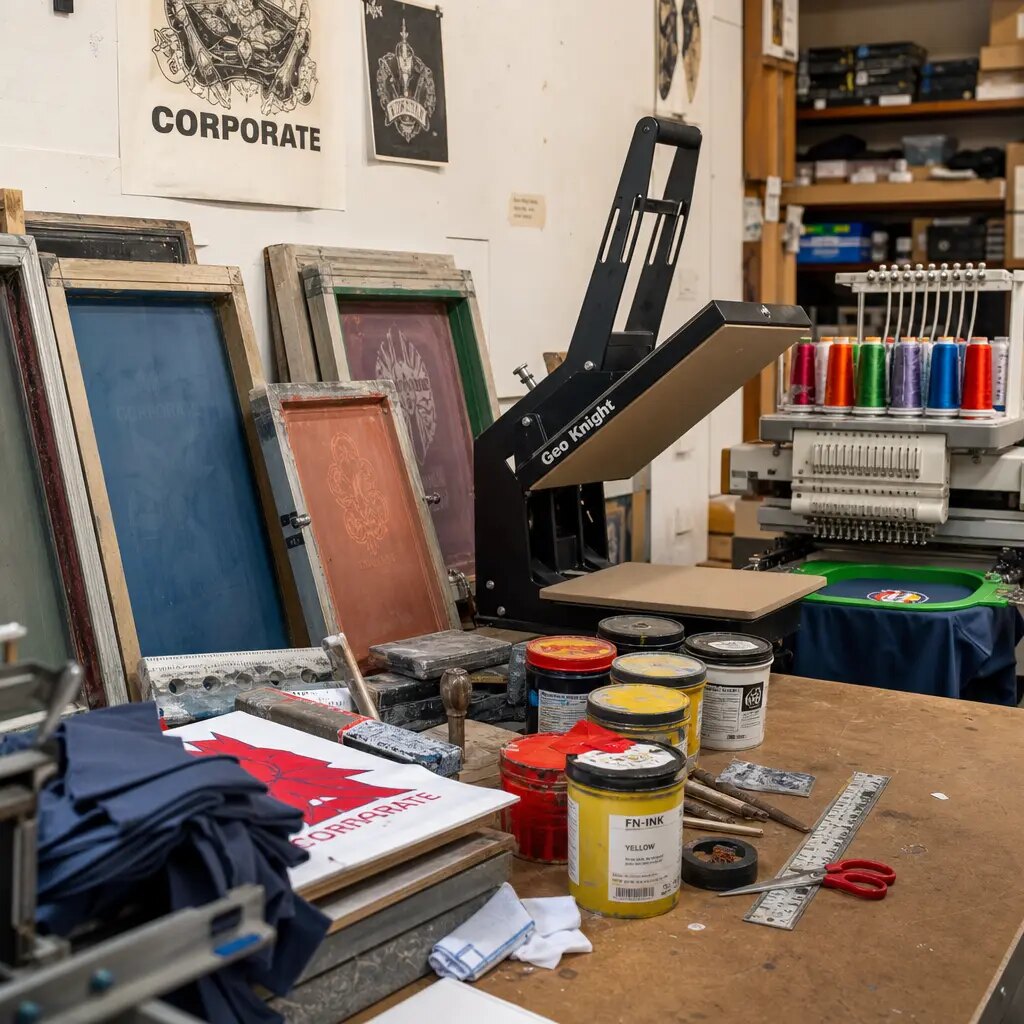
Jute has raised yarns, gaps, slubs, and shade variation. Coffee roaster logos often include fine origin text, small badge details, distressed textures, or thin lines. Those details may look sharp in a digital mockup but break apart on the actual bag.
One-color or two-color screen printing is usually the most practical route for bold artwork. Dark inks such as black, dark brown, navy, or deep green often read well on natural jute. Light inks can lose contrast. Heat transfer may capture more detail but changes the surface feel. Embroidery can be possible on selected constructions, but rough jute may introduce puckering, backing, and cost issues.
Send vector artwork with Pantone references, print size, side, location, and margin measurements. Ask the factory to recommend minimum line thickness and text height for the selected fabric. This question is especially important when artwork includes small taglines, halftones, distressed marks, or large solid fills.
Approve print on the actual production material. A paper proof confirms layout only. A printed strike-off or pre-production sample should be checked for fill, edge clarity, smearing, registration, ink appearance against natural jute, and placement tolerance. Some texture break is normal; unreadable text, missing logo elements, severe smearing, or major placement shifts are not acceptable for a paid retail tote.
- Use vector files, not low-resolution raster artwork.
- Prefer bold logos and simple type for cleaner results.
- Ask for minimum line thickness and text height before final art approval.
- Measure print position from top and side reference points.
- Require printed pre-production samples for retail or campaign-critical bags.
8. Control MOQ by variable, then price upgrades separately
MOQ becomes confusing when too many variables are mixed into one order. A custom jute tote may involve fabric purchasing, lamination, cutting, printing screens, drying, sewing, labels, carton marks, and final packing. If one PO includes three sizes, two handle colors, multiple artworks, and store allocation packing, the factory is really managing several smaller lots.
Ask MOQ by variable: per size, body color, handle color, artwork, print colorway, sewn label, and packing style. Some suppliers can combine multiple artworks on the same base bag, but print setup and sorting still add cost. Others may require each artwork to meet a separate minimum. The answer affects the real order plan.
Build one base price first. Then ask for option adders: second-side print, second print color, woven side label, hangtag, custom handle color, wider handle, individual polybag, barcode label, or allocation carton. This method helps procurement remove low-value upgrades and keep high-value ones. A better handle may support resale value; a second-side print may not.
Avoid asking suppliers to “make it cheaper” without deciding which specification can change. A controlled option list is easier to negotiate and easier to inspect. It also protects reorder consistency because the approved base bag can remain stable while campaign graphics or tags change.
- Quote the base bag at 1,000 / 3,000 / 5,000 / 10,000 pcs.
- Ask MOQ per size, artwork, body color, handle color, label, and packing method.
- Separate setup charges from unit price.
- Price each upgrade as an add/delete option.
- Standardize the base tote if repeat seasonal or café-chain programs are likely.
9. Use sampling to turn the quote into an inspection standard
Sampling is the bridge between quote language and production reality. A digital layout is useful for scale and placement, but it cannot show jute stiffness, shedding, handle comfort, gusset behavior, odor, or print coverage. A blank structure sample confirms size, body feel, handle drop, folding, and load performance. A printed pre-production sample confirms the actual substrate, print method, color appearance, logo size, placement, lamination, and sewing finish.
Test the sample like a customer and a warehouse would. Fill it with the intended coffee bags and accessories. Lift it repeatedly. Try one-handle lifting. Place it on a café counter to judge shape and logo visibility. Rub the inside and outside with a clean cloth to check shedding. Leave the sample closed in a carton overnight, then check for ink, lamination, damp fiber, or mildew odor.
Approval should be written, not casual. Instead of saying “looks good,” record dimensions, tolerances, handle measurements, stitch pattern, print placement, shade notes, lamination condition, packing method, and required corrections. Example: “Approved for bulk after moving print 1 cm lower, keeping handle drop at 25 cm ±1 cm, and using the same cotton webbing as sample B.”
Keep a sealed physical sample or a detailed photo file as the reference for inspection. Jute has natural variation, so the reference should clarify what is acceptable character and what is a defect. This reduces arguments during final inspection and receiving.
- Step 1: digital layout for artwork scale and placement.
- Step 2: blank structure sample for size, gusset, handle, stiffness, and load.
- Step 3: printed pre-production sample for logo, ink, substrate, and placement.
- Step 4: written approval notes with exact corrections.
- Step 5: sealed sample or photo standard for final QC.
10. Finalize QC, packing, and landed-cost controls before production
QC standards should respect natural jute while protecting retail quality. Practical tolerances might include about ±1 cm for width, height, and gusset and ±1-1.5 cm for handle drop, if the supplier agrees these can be held. Print placement tolerance should be defined by top and side margins or allowable shift from the approved sample.
Classify defects before inspection. Critical or major defects include detached handles, open seams, severe seam slippage, wrong artwork, unreadable logo, strong mildew odor, oil stains on visible panels, severe lamination peeling, and missing reinforcement. Minor defects can include small natural slubs, slight shade variation, or small print breaks caused by the woven texture when they do not affect brand readability.
Packing affects both quality and landed cost. Request pieces per carton, carton dimensions, gross weight, net weight, estimated total CBM, and carton marks before the PO is finalized. Handles should be laid flat, print faces protected from abrasion, and cartons packed firmly without crushing the gussets. For many programs, 25 or 50 pcs per carton is a starting point, not a rule.
Receiving requirements should be part of the RFQ. If a 3PL or distributor needs barcodes, SKU labels, PO references, store allocation marks, moisture protection, or poly lining, include those details early. Repacking after production adds cost, handling damage, and delay.
Lead time should be staged: artwork approval, sample making, sample transit, buyer review, deposit, bulk production, final inspection, export documents, vessel or air booking, and domestic delivery. Coffee programs often connect to holiday launches, café openings, or limited promotions. The best sourcing decision is the supplier that can meet the approved spec, carton plan, inspection standard, and launch date at the best landed cost per sellable unit.
- Agree tolerances before bulk cutting begins.
- Use critical, major, and minor defect categories.
- Inspect dimensions, handles, seams, print, lamination, odor, shedding, shade, and cartons.
- Request pcs/carton, carton size, gross weight, net weight, and total CBM for every tier.
- Include 3PL labels, barcodes, carton marks, and allocation needs in the RFQ.
- Compare landed cost per sellable unit, not just factory unit price.
Specification comparison for buyers
| Commercial option | Typical MOQ logic | Cost impact to model | Best-fit coffee roaster use |
|---|---|---|---|
| Base natural laminated jute tote, 1-color front print | Quote at 1,000 / 3,000 / 5,000 / 10,000 pcs on one fixed spec | Lowest clean comparison point: base unit cost + screen/setup + standard export packing + freight CBM | Core café retail tote, seasonal merch, wholesale account gift, subscription add-on |
| Unlaminated natural jute tote | Often lower material cost, but MOQ may be similar if size and print are custom | May reduce unit cost, but can increase shedding complaints, odor risk, and weaker structure depending on weave | Rustic low-cost event bag where raw texture is part of the brand and contents are protected |
| Higher-GSM or denser-weave body | May require fabric availability check; custom fabric can raise MOQ or lead time | Higher material cost and possibly higher freight weight; can improve hand feel, shape, and print stability | Paid merchandise tote or premium gift set where customer perception matters |
| Second-side print or 2-color print | Usually priced per artwork/color setup, not only per total order | Adds screen/setup charge, ink/labor, registration risk, and sometimes higher reject allowance | Retail-facing campaigns where back-panel message or secondary café mark supports resale value |
| Cotton webbing handle upgrade | MOQ may follow stock webbing availability; custom-dyed handles can create separate MOQ | Adds webbing cost but may reduce rough feel and improve repeated-use perception | Coffee bags plus mug bundles, paid tote programs, loyalty gifts |
| Sewn label, hangtag, or barcode label | MOQ may apply per label design or SKU; sorting adds handling cost | Adds component cost, attachment labor, artwork approval, and packing complexity | Multi-location retail, 3PL receiving, distributor programs, productized merch SKUs |
| Individual polybag or retail-ready packing | May be available at any MOQ but increases packing time | Adds bagging labor/material and increases carton cube; may reduce dust transfer in storage | E-commerce resale, premium gift sets, or warehouse environments requiring cleaner units |
| Store allocation cartons | MOQ depends on order split; more carton marks and pack lists add handling | May raise packing labor and reduce carton efficiency, but improves receiving speed | Café chain launches, regional promotions, holiday gift-set distribution |
Buyer checklist before sampling
- Define the commercial role first: paid retail merchandise, holiday gift set, event giveaway, wholesale thank-you pack, subscription insert, distributor promotion, or café opening kit.
- Issue one base RFQ spec and request quantity tiers at 1,000 / 3,000 / 5,000 / 10,000 pcs before adding design variants.
- Ask suppliers to break out base unit cost, setup charges, print adders, handle adders, packing adders, sample costs, and estimated carton CBM.
- State finished dimensions as width x height x gusset in centimeters and include how dimensions are measured: flat, opened, or front-panel only.
- List the actual contents and weight, such as four 340 g coffee bags plus one 300-400 g mug, so the factory can validate gusset depth and handle reinforcement.
- Specify jute body construction: natural or dyed jute, target finished GSM, weave appearance, lamination requirement, and whether GSM includes or excludes PP lamination.
- If lamination is required, define inside lamination, approximate weight if known, odor limits, bubbling/peeling limits, and whether sharp exposed lamination edges are rejectable.
- Specify handle material, width, total length, finished drop, color, stitch pattern, reinforcement, and attachment distance from side seams.
- Provide vector artwork with Pantone references, print size, print side, print location, minimum line thickness, and acceptable texture break on woven jute.
- Require a blank structure sample and a printed pre-production sample before bulk production for any paid retail or brand-critical tote.
Factory quote questions to send
- Please quote the same base specification at 1,000 / 3,000 / 5,000 / 10,000 pcs and separate base unit price, setup charges, print charges, packing charges, sample costs, and estimated export carton CBM.
- What jute construction is included: fabric GSM, finished GSM, weave appearance, laminated or unlaminated body, and whether GSM includes PP lamination?
- What GSM tolerance can you hold in production, and how do you check it: roll weight, panel weight, finished bag weight, or another internal method?
- Is the quote based on stock natural jute, custom-dyed jute, or a controlled shade lot, and what shade variation should we expect between production lots?
- If lamination is included, what type and approximate weight of PP lamination is used, which side is laminated, and what are your controls for bubbling, peeling, wrinkles, odor, and incomplete coverage?
- What finished width, height, gusset depth, handle width, handle drop, and dimensional tolerances are included in the quoted price?
- How are dimensions measured: flat before opening, opened with gusset expanded, or across the front panel only? Can you provide a measurement diagram?
- What handle material is included in the base price, what webbing width and thickness are used, what stitch reinforcement is applied, and what thread is standard?
- Do you perform a load, pull, or hanging test during production? If yes, what weight, duration, sample size, and pass/fail criteria are used?
- What print method is included, how many colors are included, what is the maximum print area, and what artwork limitations apply on the selected jute?
Quality-control points to confirm
- Measure finished width, height, gusset depth, handle drop, handle width, and print placement on multiple bags against written tolerances before shipment approval.
- Use practical tolerances such as ±1 cm for width/height/gusset and ±1-1.5 cm for handle drop only if the factory has agreed these are achievable for the selected construction.
- Check whether the bag opens, stands, and holds shape after folding, especially for coffee gift packs where presentation affects retail value.
- Verify handle drop consistency, handle alignment, and equal attachment distance from side seams; uneven handles are common on manual sewing lines.
- Inspect handle attachment for box-X shape, back-tacking, skipped stitches, thread tension, loose threads, needle damage, and sufficient stitch distance from the fabric edge.
- Perform a practical load check using the intended coffee pack contents, such as several filled coffee bags and a mug or accessory.
- Check side seams, bottom seams, gusset corners, and top hem for open stitching, seam slippage, raw edges, broken yarns at stress points, and inconsistent folding.
- Inspect print adhesion, color fill, edge clarity, registration, smearing, pinholes, and readable fine details on the actual jute texture.
- Measure print placement from top and side reference points; visual centering is unreliable on flexible woven panels and gusseted bags.
- Check interior lamination coverage, bubbling, peeling, wrinkles, sharp edges, delamination near seams, odor, and whether lamination restricts the bag opening.