Start with the coffee use case and load map
A jute tote bag for a coffee roaster is not just a grocery tote with a logo on the front. It might be sold as retail merchandise, packed as a holiday coffee gift carrier, used at farmers markets, added to a subscription box, sent with wholesale samples, or handed out for a café opening. Those situations do not need the same bag. A giveaway for one 250 g pouch can stay simple. A retail tote displayed beside whole beans, mugs, tins, and brew gear needs cleaner finishing, stronger handles, and a more controlled shape.
Start with the fill, not with a catalog size. Coffee is compact and heavy. Many coffee packs also have block bottoms, one-way valves, heat-sealed corners, and fairly stiff laminated surfaces. A tote that looks fine with folded apparel can sag, twist, or narrow at the base when it carries several dense coffee packs. A short handle may be acceptable for a counter gift bag but awkward for a customer walking through a market in a coat. A narrow gusset can force pouches sideways and hide the logo you paid to print.
Before requesting prices, build a simple load map. List the number of coffee packs, the filled weight of each pack, pack dimensions, and any extra items: mugs, jars, filters, brewers, books, bottles, apparel, or sample cards. Then test the sample with those exact items. This one step prevents a very common B2B buying mistake: approving the tote by appearance and finding out later that the base is too small, the handles dig into the hand, or the front panel collapses when the bag is merchandised.
- One or two 250 g bags: compact tote, moderate gusset, simple handle, and logo placed above the load line.
- Two 340 g, 12 oz, or 1 lb bags: wider gusset, stronger base shape, reinforced handles, and enough height for the logo to remain visible.
- Coffee plus mug or jar: stronger handle attachment, better seam reinforcement, and a sample test with the actual heavy item.
- Retail merchandise: cleaner inner finishing, tighter fiber trimming, consistent handle drop, and display-ready folding or tagging.
- Event giveaway: simplify artwork and construction, but still control odor, count accuracy, carton strength, and delivery date.
Translate the use case into measurable bag specifications
Suppliers quote more accurately when the bag is described in measurable terms. Your RFQ should state finished width, height, and gusset; fabric type; fabric weight; handle material; handle drop; print method; packing method; and tolerances. Avoid phrases such as “medium jute bag,” “standard burlap tote,” or “large grocery size.” One supplier may interpret that as a light unlaminated promotional bag. Another may quote a laminated, structured retail tote. The prices will look comparable, but the products will not be.
For coffee roasters, typical commercial fabric targets are about 270-320 GSM for lighter promotional totes and about 340-420 GSM for stronger retail or gift-set totes. Treat these as practical sourcing ranges, not automatic quality grades. A well-sewn 320 GSM tote can perform better than a poorly constructed 420 GSM tote. Also ask what the GSM covers. Some suppliers refer only to the jute body. Others may describe a combined material that includes backing or lamination. That difference matters when you compare quotes.
Agree on tolerances before bulk production. Jute is a natural woven material, so it can move during cutting, sewing, and printing. A common commercial tolerance might be about ±1 cm for finished width and height, ±0.5-1 cm for gusset, and about ±1 cm for handle drop, depending on size and construction. Print placement is often controlled within roughly ±0.5-1 cm. The exact numbers should be written into the purchase order and checked against the approved sample, not negotiated after cartons are packed.
- Core dimensions: finished width x height x gusset, measured flat using an agreed method.
- Fabric: natural jute, laminated jute, dyed jute, cotton-jute blend, lined jute, or unlaminated jute with seam binding.
- Weight: target GSM range and whether it applies to fabric only or combined construction.
- Handles: cotton webbing, jute webbing, rope, or other material; width, drop, color, and attachment pattern.
- Construction: side gusset, bottom gusset, inner seam binding, overlocking, lining, patch, label, and top edge finishing.
- Tolerances: size, handle drop, print placement, color variation, seam quality, odor, and packing count.
Compare supplier routes by capability, not only unit price
The best jute tote bag supplier for coffee roasters is the one that can repeatedly make the specified bag. That is not always the supplier with the lowest first quote. Direct sewing factories usually give clearer answers about fabric weight, gusset construction, handle reinforcement, sewing capacity, and carton packing. Trading companies or sourcing agents can still be useful, especially when the tote is part of a broader promotional kit or when you need consolidation, documentation, or local-language coordination.
Ask what each supplier controls directly. Fabric sourcing, lamination, dyeing, printing, sewing, trimming, packing, and final inspection may happen in different workshops. Outsourcing is not automatically a red flag. It only becomes risky when nobody owns the result. The purchase order should identify one responsible party for sample matching, defect decisions, rework, and shipment release. If the supplier cannot explain how the approved sample becomes the production standard, the low price may be hiding a process gap.
Match the supplier route to the order. A one-color café opening giveaway can often use a promotional bag supplier with stock materials. A retail program with multiple SKUs, hangtags, barcode labels, carton allocation, and repeat reorders needs stronger process control. If the coffee brand plans to sell the tote, not just give it away, construction consistency and packing accuracy matter as much as the front logo.
- Use a direct factory for repeat retail merchandise, higher volume, and tight construction control.
- Use a trading company when you need multi-item consolidation or small mixed promotional programs.
- Use stock blanks when delivery speed matters more than exact fabric, gusset, or handle customization.
- Use local printing on imported blanks for small artwork splits or fast domestic approvals.
- Ask every supplier what is in-house, what is subcontracted, and who approves bulk production corrections.
Choose jute type, lamination, lining, and finishing deliberately
Natural unlaminated jute has the rustic texture many coffee roasters like. It photographs well, feels straightforward, and supports a simple material story. It can also shed fibers, crease more easily, and absorb moisture. Laminated jute usually gives the bag more body, reduces fiber dust, improves shape retention, and adds light moisture resistance. That can help the tote stand better on a retail shelf and pack more neatly in cartons. At the same time, lamination changes the material composition, so do not describe it in a way that conflicts with low-plastic messaging.
Lining and seam finishing are separate decisions. A cotton-lined jute tote feels more finished and can reduce direct contact between rough jute fibers and premium coffee packaging. Inner seam binding gives a cleaner inside appearance without the full cost and sewing time of a complete lining. Overlocking can also help control raw edges. These details are worth considering when the tote is sold as merchandise or packed with premium gift sets. For a basic wholesale delivery carrier, they may be unnecessary.
Be careful with sustainability language. A natural jute body with cotton handles, a laminated jute body, and a cotton-lined jute tote are different products. If your brand will make claims on a hangtag, ecommerce page, café shelf, or wholesale catalog, confirm the composition and follow the labeling rules in your market. In procurement documents, use plain factual descriptions: natural jute body, cotton webbing handles, laminated interior, cotton lining, woven label, or printed cotton patch.
- Unlaminated jute: natural feel, lower-plastic positioning, more fiber shedding and moisture sensitivity.
- Laminated jute: better body, reduced shedding, light moisture resistance, but different composition and possible odor concerns.
- Dyed jute: stronger color control requirements and often higher MOQ or longer lead time.
- Cotton-jute blend: smoother handfeel in some constructions, but composition must be stated clearly.
- Lined jute: more finished retail feel, higher cost, and extra inspection points at lining seams.
- Seam binding: practical middle option for cleaner interiors without a full lining.
Engineer handles and gussets for dense coffee loads
Handles deserve more attention than many buyers give them. Coffee loads are compact and heavy, so a narrow or poorly attached handle can make an otherwise good-looking tote feel cheap. Cotton webbing is common because it is softer in the hand than jute webbing and is usually easier to control for color and feel. Commercial tote programs often use cotton webbing widths around 2.5-4 cm. Wider handles generally feel better when the bag carries several coffee packs or a mug.
Handle drop should fit the way the bag will be carried. A short hand-carry drop may work for a gift set that moves from counter to car. A farmers market tote or retail shopping tote often needs a longer drop for shoulder carry. Spell out the measurement method. Are you measuring handle drop from the top edge to the top of the handle arc, or are you specifying total handle length? If the RFQ is vague, suppliers may measure it differently and still think they followed the order.
Gussets control usable space. Block-bottom coffee packs need a base wide enough to stand upright without distorting the front panel. A side gusset increases capacity; a bottom gusset improves shelf stability. Poorly sewn gussets can twist, narrow the usable base, or pull the printed panel out of shape. During sampling, load the tote with real coffee packs. Check whether it stands as intended, whether the logo remains readable, and whether both handles sit evenly after the bag is filled.
- Request close-up photos of handle attachment before production, not only front-panel product images.
- Specify reinforcement such as box stitch with X, bar tacks, double rows, or the approved factory pattern.
- Set a load test using actual intended items or a defined weight and duration.
- Check for tearing around handle bases after carrying, shaking, and reloading the sample.
- Confirm whether the tote is meant for hand carry, shoulder carry, or both.
- Measure the usable internal base, not only the external gusset dimension.
Match print method to jute texture and brand detail
Direct screen printing is common on jute tote bags because it works well for bold roaster logos, simple icons, large origin graphics, and one- to three-color artwork. It will not look the same as printing on smooth cotton canvas, paper, or a coated coffee pouch. The jute weave can create uneven edges, small pinholes, and visible texture through the ink. For many coffee brands, that rustic look is part of the appeal. Still, approve it on a physical printed sample, not only on a digital proof.
Fine artwork needs a different conversation. Small tasting notes, QR codes, farm maps, certification icons, thin serif fonts, and gradients may lose clarity on coarse jute. If the brand relies on sharp detail, consider a printed cotton patch, woven label, printed cotton panel, side seam label, leather-look patch, or hangtag. These options add cost and another production step, but they also make the result easier to control across reorders.
Print standards should be written into the RFQ. Send vector artwork, final print dimensions, number of colors, Pantone or brand color references, print location measured from seams, and whether one side or both sides are printed. Confirm screen charges and ask whether screens are kept for reorders. If several café locations use the same blank tote with different artwork, separate the base bag specification from the artwork splits so the supplier can price both parts clearly.
- Good for direct print: bold roaster logo, large cup icon, high-contrast slogan, simple origin mark.
- Risky for direct print: QR codes, small serif text, fine farm maps, gradients, and tiny certification marks.
- Better as patch or label: premium identity marks, detailed illustrations, multi-line branding, barcode or QR functions.
- Print QC: opacity, registration, placement, curing, rub resistance, pinholes, smearing, and ink transfer.
- Approval rule: evaluate the physical printed sample after full curing and after folded/packed contact.
Understand MOQ, price breaks, and artwork splits
MOQ for jute tote bags is shaped by fabric availability, cutting efficiency, handle material, print setup, sewing line time, packing requirements, and inspection effort. A supplier may accept a lower MOQ for a standard natural jute body with stock cotton handles, then require more quantity for dyed jute, custom handle color, woven labels, cotton lining, special lamination, or multiple artwork versions. For coffee roasters with seasonal campaigns or several café locations, the useful question is not just total MOQ. It is MOQ per specification and per artwork.
Artwork splits can change the true cost even when the blank tote is identical. Each front print may need a separate screen setup, ink mixing, drying space, sorting, and inspection. If each café location also wants a different handle color, hangtag, barcode, or carton allocation, the project becomes more complex. Ask suppliers to price the base bag separately from artwork and packing variations. You will see quickly which details drive cost.
Low MOQ has value, but it can come with tradeoffs. Some suppliers make very small orders work by using leftover fabric, limited stock handles, or looser tolerances. That may be acceptable for a short event giveaway. It is more risky for retail merchandise or a repeat product line. If consistency matters, choose a construction that fits the supplier’s normal production instead of forcing a highly custom spec into an unstable small run.
- Ask for price breaks at realistic volumes, such as one total run and per-artwork quantities.
- Separate one-time charges: screen setup, sample, label setup, patch setup, hangtag, barcode, or packing surcharge.
- Confirm MOQ by bag size, material color, handle color, lamination, label, and print design.
- Ask whether split artworks share one sewing run or are treated as separate productions.
- Confirm whether overruns/underruns are allowed and how they are billed.
- Avoid comparing suppliers until all are quoting the same base specification and same splits.
Build an RFQ that exposes real landed cost
A useful jute tote quote is more than a unit price. Two suppliers can quote similar numbers while using different GSM, handle widths, seam finishes, print methods, carton counts, and incoterms. Your RFQ should push every supplier to state the measurable specification, included services, exclusions, and logistics data. This is important because tote bags are bulky. A low ex-factory price can lose its advantage if cartons are oversized, weak, poorly marked, or inefficient for freight.
Request carton data early: pieces per carton, carton dimensions, gross weight, net weight, and estimated CBM. These numbers affect freight, warehouse receiving, and event logistics. A heavier structured tote may be worth the cost when it is sold as merchandise, but it becomes expensive to air freight if sample approvals run late. If the delivery date is tied to a launch, café opening, holiday season, or trade show, treat carton volume and lead time as buying criteria from the start.
Define risk ownership before deposit. If bulk goods do not match the approved sample, who pays for sorting, rework, replacement, or delay? If cartons arrive mixed by design, who covers warehouse labor? If the supplier changes fabric lot, handle color, lamination, or packing without approval, what is the remedy? These questions are easier to settle before production starts, while the buyer still has leverage and the supplier can still adjust the process.
- Technical RFQ: size, GSM, fabric type, lamination, lining, gusset, handle, stitching, print, labels, and packing.
- Commercial RFQ: MOQ, unit price by quantity, sample fee, screen charge, payment term, incoterm, lead time, quote validity.
- Logistics RFQ: pieces/carton, carton size, gross/net weight, CBM, pallet option, carton marks, and loading photos.
- QC RFQ: inspection stage, sample approval process, tolerances, defect classification, rework process, and acceptance level.
- Risk RFQ: material substitution rules, delay responsibility, replacement policy, and documentation requirements.
Use samples as production controls, not just logo proofs
Samples should lock the product before bulk cutting starts. Too many sourcing problems begin with a sample that was approved only because the front logo looked good. The buyer did not check handle length, gusset width, odor, fiber shedding, inner finishing, or packing method. For a new supplier or a new construction, request a blank construction sample if needed, followed by a printed pre-production sample. If the exact bulk material is not available for sampling, the supplier should state what was substituted and what will change in production.
Treat the approved sample like a control document. Sign it, date it, photograph it, and label it with material, size, handle, print, and packing notes. Keep one with the buyer and require the factory to keep one as the production reference. If a third-party inspection is planned, the inspector should receive the approved specification and photos, and ideally compare bulk goods against the retained sample. Without this reference, disputes become subjective very quickly.
Sample testing does not need to be complicated. Load the tote with actual filled coffee packs and accessories. Carry it for several minutes, set it on a shelf, reload it, and inspect seams, handles, and shape. Seal the sample overnight in a polybag or carton to evaluate odor, especially for laminated jute or humid-season production. Rub the print after curing with a clean white cloth or tissue to check transfer. If the design includes a QR code or barcode, scan it on the physical sample, not just on the artwork file.
- Measure width, height, gusset, handle width, handle drop, and print placement.
- Check whether coffee packs stand upright and whether the logo remains visible when loaded.
- Review seam straightness, stitch density consistency, loose threads, fiber shedding, and inner finishing.
- Carry-test the sample with real load and inspect handle bases afterward.
- Evaluate odor after enclosed storage, especially for laminated jute or humid-season production.
- Approve a packing sample if hangtags, barcodes, polybags, kraft sleeves, or store allocation matter.
Control QC, packing, and moisture before shipment
Jute totes are bulky, fibrous, and sensitive to moisture, so final quality is not only about sewing. Packing too many bags into a carton can crease panels, bend handles, deform gussets, and cause printed surfaces to rub. Packing too few raises freight cube and increases warehouse handling. The right carton quantity depends on bag size, fabric stiffness, print method, folding style, and the maximum carton weight your receiving team can manage safely.
Moisture and odor control should appear in the purchase order, not just in email comments. Jute can absorb humidity during storage, production, or ocean freight. Require dry export cartons, adequate airing before packing, and no packing of damp goods. For sea freight, humid-season production, or long storage before launch, consider desiccants and carton liners. Before loading, cartons should be checked for dampness, crushing, stains, mold, smell, and correct marks. A musty shipment can hurt coffee brand perception even when the stitching is acceptable.
SKU accuracy is another real B2B risk. Coffee roasters with multiple cafés, seasonal artwork, or retail accounts should require carton marks by PO, SKU, design, quantity, destination, and gross weight where applicable. Ask for final packed-carton photos: open carton, closed carton marks, stacked cartons, and pallet condition if palletized. These photos will not replace inspection, but they can catch mixed designs, weak cartons, and missing marks before the goods leave the factory.
- Confirm flat packing, folding method, bundle quantity, individual polybag, hangtag, barcode, and kraft sleeve requirements.
- Set maximum carton weight and pieces per carton before production packing starts.
- Use desiccants or carton liners when route, season, or storage conditions create moisture risk.
- Check packed cartons for count accuracy, SKU separation, carton marks, and gross weight.
- Avoid heavy compression that causes permanent creases or ink transfer.
- Request pre-shipment inspection before cartons are sealed beyond practical rework access.
Specification comparison for buyers
| Supplier option | What to verify | Commercial advantage | Buyer risk to control |
|---|---|---|---|
| Direct sewing factory | jute roll photos, lamination sample, odor-control process, handle pull evidence, and pre-shipment carton condition photos | Better sample-to-bulk control and faster production feedback | May be weaker on export paperwork or branded packing unless checked early |
| Trading company | Factory name, production photos, trim-source proof, and who owns QC decisions | Can coordinate small mixed orders and extra services | Markup can hide real factory capability and slow defect decisions |
| Specialized bag workshop | handle stitching, side gusset, lamination edge control, inner seam cover, and fiber shedding tolerance | More practical for detailed construction, trims, and repeat programs | Capacity may be limited during peak seasons |
| Low-price general supplier | laminated or unlaminated jute, cotton-jute blend, inner coating, odor control, yarn thickness, and color shade variation | Useful for simple promotional runs with loose specs | Material downgrades, weak packing, and vague inspection scope can erase savings |
| Retail-ready supplier | airing time, moisture absorber, carton liner, bundle wrap, odor separation, and warehouse ventilation before loading | Can handle labels, SKU separation, carton marks, and receiving rules | Higher unit cost must be compared against reduced warehouse work |
| Compliance-focused supplier | Fabric records, labeling review, test plan, and production traceability | Safer for retail programs and repeat brand orders | Documentation claims need evidence, not only sales language |
| Local sample room plus bulk factory | Signed sample, bulk factory handoff, first-piece photos, and deviation owner | Good for complex branding before large production | Sample room quality may not match bulk line unless handoff is controlled |
Buyer checklist before sampling
- Define the commercial use: retail merchandise, holiday coffee gift carrier, farmers market tote, wholesale delivery bag, subscription add-on, café opening giveaway, or staff/partner bag.
- State finished dimensions as width x height x gusset, plus orientation and allowable tolerance. For jute totes, do not rely only on phrases such as 'large grocery size' or 'fits two coffee bags'.
- List the actual intended load: number of coffee packs, each pack size and filled weight, plus mugs, jars, tins, books, grinders, apparel, or glass bottles if included.
- Specify fabric type and target weight: natural unlaminated jute, laminated jute, dyed jute, cotton-jute blend, lined jute, or jute with inner seam binding. Typical commercial ranges are about 270-320 GSM for light totes and 340-420 GSM for more structured retail bags.
- Confirm whether GSM refers to the jute body only or combined material with backing/lamination, because suppliers may describe this differently.
- Define handle material, width, length or drop, color, and reinforcement. Common cotton webbing widths are roughly 2.5-4 cm; dense coffee loads often feel better with wider handles.
- Require a handle attachment method such as box stitch with X reinforcement, multiple bar tacks, or another approved stress-point pattern, and set a pull/load test expectation.
- Provide vector artwork, Pantone or brand color references, final print size, number of colors, print location from seams, and a note that coarse jute texture may affect edge sharpness.
- Decide whether branding should be direct screen print, cotton patch, printed cotton panel, woven label, leather-look patch, side seam label, hangtag, or a combination.
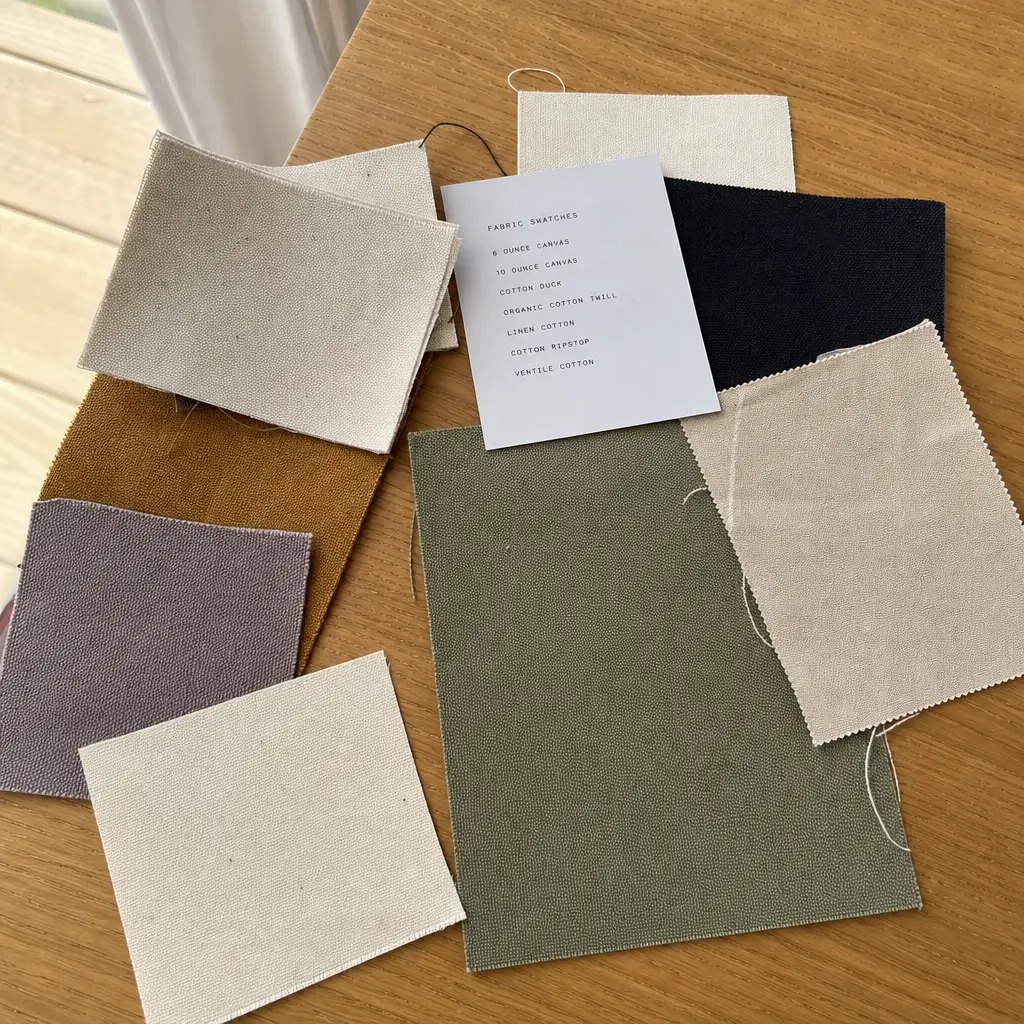
- Ask for fabric swatches, a blank construction sample, and a printed pre-production sample when using a new supplier, new size, retail sale bag, or multiple artwork versions.
Factory quote questions to send
- Are you the direct factory producing the jute tote bags, or are cutting, printing, sewing, lamination, or packing handled by another workshop?
- Which operations are in-house: fabric sourcing, lamination, dyeing, cutting, screen printing, patch sewing, main stitching, trimming, packing, and final QC?
- What exact material is quoted: natural unlaminated jute, laminated jute, dyed jute, cotton-jute blend, cotton-lined jute, or another construction?
- What is the target fabric weight in GSM, and does the GSM refer only to the jute fabric or include backing/lamination?
- Can you provide current swatches from the same fabric lot or from the fabric grade normally used for bulk production?
- What are your standard finished-size tolerances for width, height, gusset, handle drop, and handle length on this construction?
- What handle material, handle width, and handle reinforcement do you recommend for our described load, and can you share close-up photos of the stitch pattern?
- Do you perform or support handle pull/load testing? If yes, what load, duration, sample quantity, and failure criteria do you use?
- Can you screen print our artwork directly on coarse jute, or do you recommend a cotton patch, woven label, or sewn panel for small text or QR details?
- What print tolerance do you use for placement, registration, color variation, opacity, pinholes, and curing?
Quality-control points to confirm
- Finished width, height, and gusset should be measured against the approved sample and PO. A common commercial tolerance is about ±1 cm for width/height and ±0.5-1 cm for gusset, but the exact tolerance should be agreed before production.
- Measure bags flat in a consistent way. Jute can shift and distort; inspectors should use the same measuring method used for sample approval.
- Handle drop should stay within the agreed tolerance, often around ±1 cm for bulk work. Uneven handles are visible on retail racks and uncomfortable with dense coffee loads.
- Handle attachment must be reinforced at stress points with no skipped stitches, open seams, loose backstitching, broken threads, or tearing around the handle base.
- Random bags should be load-tested using the intended filled weight or a defined test load. For coffee gift bags, test with actual packed coffee, mugs, jars, or bottles rather than soft filler.
- Seams should be straight, secure, and free from open seams, heavy fraying, loose threads, needle damage, broken jute yarns, or weak corners at the gusset and base.
- Bottom and side gussets should open symmetrically so coffee packs can stand upright. Twisted or narrowed gussets reduce usable volume and make the bag look defective when filled.
- Inner seam binding or overlocking should be checked where specified. Unfinished raw jute edges can shed fibers and reduce perceived retail quality.
- Logo placement should match the signed sample, commonly controlled within about ±0.5-1 cm depending on bag size and jute movement.
- Print should be checked for opacity, bleeding, smearing, pinholes, registration shift, wet ink transfer, heavy cracking, and abrasion after proper curing.