Why salon chains need a stricter sample approval process for jute totes
A jute tote bag looks simple until it reaches 40, 100, or 500 salon locations with inconsistent print color, scratchy handles, mixed artwork versions, or cartons that do not match the distributor’s receiving process. Salon chains often use jute totes for retail product bundles, opening events, seasonal gift sets, stylist education kits, loyalty gifts, and premium carryout packaging. These bags sit close to shampoos, conditioners, styling products, towels, brushes, gift cards, and boxed retail items, so sample approval is not just a visual brand check. It is also a packaging, handling, customer-experience, and distribution approval.
For procurement buyers, the sample is the bridge between a marketing concept and a repeatable production item. A factory can follow a signed sample, a tolerance sheet, a print strike-off, and an approved packing instruction. It cannot reliably follow a low-resolution photo, a mood board, or a short description such as “natural jute tote with black salon logo.” Jute also has natural variation: shade, smell, weave texture, stiffness, and print absorption can all change the final result. If those variables are not approved physically, they often become disputes after bulk production.
A stricter approval process does not mean slowing the project unnecessarily. It means deciding what must be locked before bulk cutting and printing starts. Salon chains should separate the master bag construction from the artwork approval. The master sample confirms size, jute weight, lamination, handle material, stitching, and shape. The print strike-off confirms ink, logo size, position, readability, and color on the actual jute surface. Packing approval confirms carton count, folding direction, marks, and distribution labels. Together, those approvals create a practical production standard.
- Use one master sample for the approved construction and one print strike-off if artwork is still being adjusted.
- Do not approve a jute tote based only on a digital mockup; jute texture affects color, line sharpness, and ink coverage.
- Treat the approved sample as the production contract reference, especially for natural color variation, handfeel, odor, and structure.
- If the bag will carry liquid-filled salon products, test the sample with the actual expected product weight before signing approval.
- Record approval as a dated decision with version number, sample photos, measurements, and required corrections if any changes remain.
Define the salon use case before selecting jute weight and construction
The correct jute tote specification depends on the commercial use. A retail resale bag needs cleaner finishing, a stronger shape, and more consistent branding than a one-day event giveaway. A gift-with-purchase tote for full-size shampoo and conditioner bottles needs a better base and stronger handle attachment than a flat promotional bag used for brochures. A new salon opening kit may need premium presentation, while a backbar training kit may need durability more than shelf appearance. If the RFQ does not state the use, suppliers will quote different constructions, and the lowest price may not represent the same bag.
For many salon programs, 13-15 oz jute, roughly 440-510 GSM depending on weave and finish, is a practical starting range. Lighter jute can reduce unit cost, carton weight, and freight cost, but it often feels less structured and may show more uneven weaving. Heavier jute gives more body and perceived value, but it increases weight, can raise sewing and freight cost, and may make fine printing harder because the surface is rougher. GSM should not be approved in isolation. The sample handfeel, fold recovery, print result, and loaded appearance matter just as much as the number.
Construction should match the way the bag will be filled. A box bottom or full gusset helps product bundles stand better and gives bottles more room. A flat bag is simpler and cheaper, but it can look weak when filled with dense salon products. Reinforced seams, inner binding, and properly placed handles are more important when the bag is expected to carry retail merchandise home with the customer. Procurement should ask marketing, retail operations, and logistics what the tote must do before selecting the specification.
- Event handout: lighter jute, flat or small-gusset construction, economical one-color print, and simple carton packing.
- Gift-with-purchase program: medium-weight jute, box bottom, reinforced handles, controlled print quality, and carton marks by campaign.
- Retail resale tote: cleaner fabric grade, better handle comfort, stronger stitching, consistent shade range, and attractive finishing.
- Salon opening kit: heavier or more structured jute, cotton webbing handles, possible lining, premium print placement, and better crease control.
- In-store carryout bag: focus on handle comfort, seam strength, load testing, carton efficiency, and easy replenishment by location.
Fabric, lamination, and lining decisions that change price and approval risk
Jute is a natural fiber, not a perfectly uniform synthetic panel. Natural jute can vary from pale tan to deeper golden brown between lots, and it can contain slubs, darker fibers, and small texture changes. These features are not automatically defects, but they must be defined. A clean-beauty salon brand may accept a rustic natural look, while a luxury salon chain may need a tighter fabric grade and more controlled shade. If the buyer only writes “natural jute,” the supplier may choose a fabric that is technically jute but visually too coarse for the intended retail environment.
The approval sample should show the exact finish. Unlaminated jute has a natural feel and is often preferred for eco-style promotional messaging, but it offers less moisture resistance and may shed more fiber. PP laminated jute adds structure and can help when the bag carries shampoo, conditioner, or other products used around wet salon areas. However, lamination changes handfeel, can create wrinkles near seams, and may introduce more visible crease marks after compression. A buyer should not assume laminated jute is always better; it is better only when its functional benefit outweighs the change in look and sustainability positioning.
Some salon buyers request cotton lining or a fabric inner layer for a more finished retail bag. Lining can improve perceived quality and protect contents from rough fibers, but it adds cost, sewing time, and inspection complexity. Lining can sag, twist, reduce usable volume, or show uneven seams if not controlled. If lining is selected, the sample approval should include the lining fabric, color, attachment method, inner seam appearance, and whether the lining affects the bag’s standing shape.
- State fabric weight in oz or GSM range and request the supplier’s actual measured sample GSM, not just a catalog description.
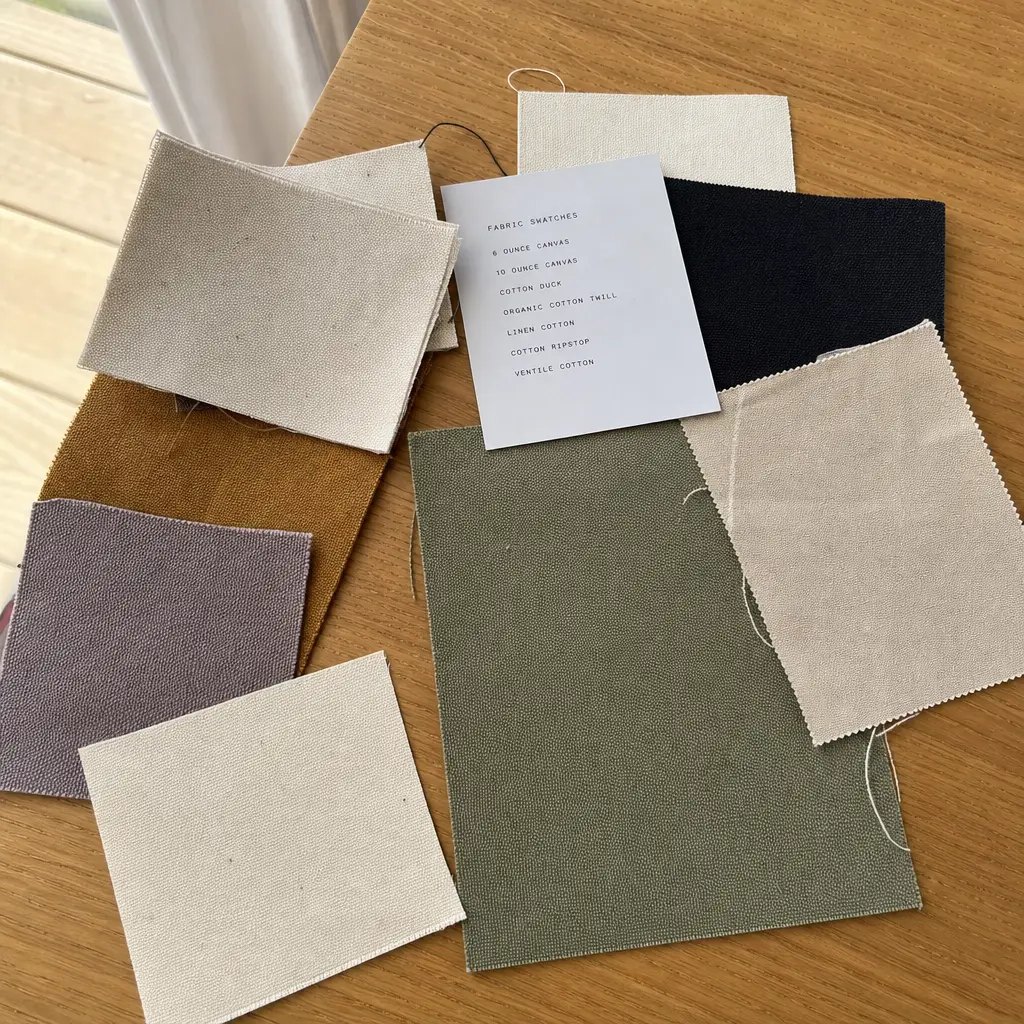
- Approve natural shade using physical swatches, a sealed sample, or a small acceptable range rather than screen photos.
- Define acceptable natural slubs separately from defects such as holes, oil marks, mold marks, dark stains, and broken yarn clusters.
- For laminated jute, inspect bubbling, delamination, edge sharpness, fold whitening, odor, and seam wrinkling on the sample.
- For lined jute, check lining looseness, inner seam cleanliness, color matching, usable volume, and whether the lining catches on product corners.
- Ask whether fabric will be sourced once for the full order or in multiple lots, especially for larger chain-wide programs.
Handle comfort, placement, and stitching details for salon product loads
Salon products are dense. A tote carrying several full-size bottles can experience more handle stress than a tote carrying event flyers or paper brochures. Handle failure is one of the most damaging defects because the customer feels it immediately and may associate the failure with the salon brand. For chain buyers, handles should be reviewed as a functional component, not as a small trim detail. Cotton webbing handles are often more comfortable than jute handles, especially when the bag is loaded, while wider handles distribute weight better across the hand or shoulder.
A common starting point is cotton webbing 2.5-3.8 cm wide with a loop length around 45-60 cm, depending on whether the bag is intended for hand-carry or shoulder-carry. The exact length should be checked on the real bag size. A long handle on a shallow tote may make the bag drag or look unbalanced. A short handle may not fit comfortably over a winter coat or staff uniform. Handle color also matters: natural cotton, bleached cotton, dyed beige, black, and brand-color webbing can all photograph differently and look different against natural jute.
The sample approval should include handle placement and reinforcement stitching. Handles too close to side seams can pull the top edge inward when loaded. Handles placed unevenly can make a centered logo appear crooked. For heavier kits, box stitching, cross stitching, or extended reinforcement can reduce failure risk. Procurement should conduct a realistic load check on the sample and note the target filled weight in the approved specification. This is much more useful than a general phrase like “strong handles.”
- Measure handle loop length flat and record the accepted tolerance, often around +/-1 cm for production.
- Record handle width, color, material, and whether the handle is cotton webbing, jute webbing, rope, or another material.
- Load the sample with the target product mix and lift repeatedly from the handles, including short carrying simulation if practical.
- Inspect thread breaks, webbing stretch, stitch tearing, jute panel tearing, and top-edge distortion after the load test.
- Confirm whether handle ends are folded, heat cut, bound, sewn into the seam, or exposed inside the bag.
- Approve handle placement from side seams and top edge so production can measure alignment rather than judge by eye.
Print approval on jute: logo clarity, color, and strike-off controls
Most salon chain jute totes use screen printing because it is cost-effective for solid logos, slogans, opening-event designs, and one to three color artwork. The main challenge is not screen printing itself; it is the uneven jute surface. Jute absorbs and breaks ink differently from paper, cotton canvas, nonwoven fabric, or a digital proof. Small type, thin hairlines, tight registration, metallic ink, and pale ink can look weaker on jute than on the artwork PDF. For this reason, the print strike-off should be made on the same jute fabric and finish as the production bag.
A good RFQ gives the factory vector artwork, Pantone references, print size, print position, and required readability. It should also flag important text such as salon URLs, promotional taglines, product claims, or small legal copy. If a tagline cannot be read at normal viewing distance, it should be enlarged, simplified, moved to a hangtag, or removed. Procurement should not let artwork complexity force poor production. A clean, readable one-color print often performs better on natural jute than a complicated multi-color graphic with small detail.
Heat transfer may be useful for fine gradients, photographs, or complex multi-color artwork, but it changes the surface feel and may look less integrated with natural jute. Embroidery may work for patches, labels, or small marks, but it can distort loose jute fabric and is not always efficient for large front logos. Screen print remains the practical choice for most salon programs, provided the buyer approves the real printed result. The approval should include logo dimensions, placement from top and side edges, acceptable registration, ink opacity, and rub performance.
- Use vector artwork and identify Pantone references, but expect visual adjustment because natural jute affects color perception.
- Request a strike-off on the actual jute if the design uses small text, pale ink, metallic ink, multiple colors, gradients, or tight registration.
- Avoid very small tagline text unless the strike-off proves it remains readable at normal customer viewing distance.
- Define print size and placement using measurements from top edge, side edge, or bag centerline, not by a visual mockup alone.
- For white, cream, pastel, metallic, or low-contrast ink, test opacity on the selected jute shade before bulk approval.
- Include a dry rub check so ink does not transfer onto light salon uniforms, towels, retail boxes, or tissue wrapping.
MOQ and version control for chains with many locations or campaigns
Salon chains often want one bag style with multiple artwork versions: corporate logo, seasonal promotion, new store opening, education event, holiday gift set, or local salon name. The challenge is that bag sewing MOQ and print setup MOQ are not always the same. A factory may efficiently sew one large batch of blank jute totes, but every artwork version requires separate screens or transfer setup, ink control, inspection, counting, and carton labeling. Small version splits can raise unit cost and increase the risk of mixed cartons.
The cleanest procurement approach is to approve one master bag construction and treat artwork versions as controlled print lots. This keeps the fabric, handle, shape, and packing method consistent while allowing marketing teams to update campaign graphics. If quantities per location are low, consider a common corporate logo with a separate hangtag, belly band, insert card, sticker, or product sleeve for local variation. This often reduces setup cost and prevents the factory from managing dozens of small print versions on similar-looking bags.
If local customization is unavoidable, the RFQ should list expected quantity by version and destination. A vague instruction such as “assorted local logos” is not enough. The factory needs artwork files, version names, proof approval, print sequence, carton labels, and packing list structure. Distribution centers also need carton marks that make allocation easy. Otherwise, the chain may save a small amount on bag production but lose time and accuracy during warehouse sorting.
- Separate MOQ by bag size, fabric color, handle color, lamination type, print method, and artwork version in the RFQ.
- Request pricing for one artwork, three artwork versions, and five artwork versions if campaign planning is not final.
- Ask whether screen charges, artwork changes, and small-version setup fees are included or charged separately.
- Use clear carton labels showing artwork version, PO number, quantity, destination, and campaign name to prevent DC sorting errors.
- If store-level customization is below efficient MOQ, compare hangtag, insert card, belly band, or sticker customization against printed bag customization.
- Keep one signed blank construction sample even when print versions change seasonally, so the base bag remains consistent.
How to approve the physical sample without missing production defects
A useful sample approval is not a beauty check. It is a controlled review of dimensions, material, sewing, print, smell, function, and packing suitability. The sample should be measured after it rests flat, not stretched by hand. Width, height, gusset, handle loop length, handle placement, print size, and print position should be recorded. If the buyer accepts a slightly different size or a modified handle during sampling, that change must be written into the approval record so the factory does not work from an outdated quotation.
The sample should be tested like the end user will use it. Fill it with the expected salon products, lift it, set it down, and check whether the base holds shape. If the tote is for shampoo and conditioner bundles, test with actual bottle shapes if possible, because round bottles and pump tops behave differently from flat boxes. Check whether the bag tips forward, whether corners push through the fabric, and whether the handles remain comfortable. For carryout programs, ask a staff member to simulate normal store handling: filling, lifting, handing to the customer, and placing the bag on a counter.
Odor and print rub are especially important for beauty retail environments. Jute can carry natural fiber smell, but strong mildew, chemical, oil, or damp warehouse odor is not acceptable. The bag should be smelled when opened and again after airing. Print should be rubbed lightly with a dry white cloth to check transfer. Loose fibers, thread ends, stained panels, crooked seams, and rough handle ends should also be reviewed. A signed approval should clearly state whether the sample is approved, approved with changes, or rejected.
- Dimension check: width, height, gusset, handle loop length, handle placement, print size, and print position.
- Load check: fill to expected product weight and lift from handles several times; note any tearing, seam stress, or shape collapse.
- Visual check: front panel symmetry, side seam straightness, bottom shape, handle alignment, fabric shade, stains, loose fibers, and loose threads.
- Print check: color, opacity, edge clarity, cracking, rubbing, registration, and alignment to bag center or defined measurement points.
- Odor check: reject strong mildew, oil, chemical, solvent, damp warehouse, or mold smell; document whether airing changes the result.
- Packing recovery check: compress or fold the sample as proposed and review whether creases relax after 24-48 hours.
- Decision record: mark approved, approved with changes, or rejected with required corrections, responsible person, date, and sample version.
Quote data that makes supplier pricing comparable
Jute tote quotes can appear close while hiding different assumptions. One supplier may quote 13 oz unlaminated jute with narrow jute handles and one-color print. Another may include 15 oz laminated jute, cotton webbing handles, reinforced stitching, screen charges, export cartons, and carton labels. A procurement team comparing only unit price may choose the wrong quote or create pressure for the factory to downgrade materials later. The RFQ must make each supplier quote the same measurable bag.
A complete quote should state fabric specification, finished size, gusset, inner finish, handle material, handle width, loop length, print method, number of colors, print size, MOQ, sample cost, sample lead time, correction sample cost, bulk lead time, packing method, carton quantity, carton size, estimated gross weight, trade term, and port or delivery point. For importers and distributors, carton data is not optional. Freight, storage, palletization, and warehouse handling can change the landed cost significantly, especially if cartons are bulky or poorly optimized.
Salon chain buyers should also ask what is included in artwork and sample work. Screen charges, strike-off fees, courier costs, Pantone matching, barcode labels, hangtags, and split packing may be included by one supplier and charged separately by another. If the order will ship to multiple destinations, carton marks and packing lists must be priced and confirmed before production. A clear quote reduces renegotiation after the sample is approved.
- Request unit price by quantity break, such as 1,000, 3,000, 5,000, and 10,000 pieces if those quantities are realistic.
- Ask whether printing screens, artwork adjustment, Pantone ink matching, strike-off samples, and repeat setup are included or separate.
- Require estimated carton dimensions, pieces per carton, gross weight, and carton material strength for landed-cost comparison.
- Identify whether the quote is EXW, FOB, CIF, DDP, or another trade term before comparing total cost.
- List retail packing, barcode labels, hangtags, polybag restrictions, carton marks, and DC routing labels in the RFQ.
- Ask suppliers to quote alternate constructions only as clearly labeled options, not as substitutes inside the base price.
Packing and carton approval for salon distribution centers
Packing is often treated as an afterthought, but it affects print damage, creasing, freight cost, carton handling, and distribution center receiving. Jute totes are commonly flat packed in export cartons, often 25-50 pieces per carton depending on size, fabric weight, handle bulk, lamination, and lining. Too much compression can create hard creases, especially on laminated jute or bags with large printed panels. Too little compression increases carton volume and landed cost. The sample approval should include packing method, not just the loose bag.
For salon chains, cartons may need to support allocation by region, store group, campaign, artwork version, or launch date. If totes ship to a third-party logistics warehouse, carton marks must match routing instructions. A carton that says only “jute bags” is not enough when there are five similar designs for five campaigns. The approved carton mark should include PO number, style, artwork version, quantity, carton number, destination, and any barcode or receiving label required by the buyer’s warehouse.
The approved packing can be documented with a packing photo set and carton specification. For large or retail-sensitive orders, one packed carton sample is useful because it confirms folding direction, print-to-print contact, interleaving needs, carton fit, carton strength, and recovery after unpacking. Interleaving paper may be needed when the print surface could rub or transfer, but unnecessary interleaving adds cost, labor, and waste. Individual polybags should also be justified; they may help moisture protection or retail handling but may conflict with a chain’s packaging-reduction goals.
- Approve pieces per carton, folding direction, carton dimensions, gross weight, carton board quality, and sealing method.
- Use interleaving paper only when print surfaces may rub, block, or transfer; confirm whether interleaving is recyclable or required by the buyer.
- Avoid individual polybags unless required for retail handling, moisture protection, barcode scanning, or distribution compliance.
- Show artwork version, quantity, PO number, destination, campaign name, and carton sequence on carton marks where needed.
- Check that carton labels match packing lists and supplier invoices so receiving teams do not need manual relabeling.
- Perform an unpacking check after 24-48 hours to see if creases relax acceptably and whether laminated panels show permanent marks.
Lead time risks from sample approval to bulk shipment
A realistic production schedule starts after the final sample and artwork are approved, not when the first inquiry is sent. For a new jute tote bag, the workflow normally includes specification confirmation, sample making, courier transit, buyer review, correction sample if needed, bulk material booking, fabric inspection, cutting, printing, sewing, trimming, inline inspection, final inspection, packing, and shipment booking. Each step depends on the previous approval. If artwork changes after screens are made or carton marks change after packing starts, the schedule can slip quickly.
Salon campaign dates are usually tied to store openings, holiday promotions, product launches, staff training, or seasonal retail merchandising. Procurement should work backward from the required in-store date and include ocean or air freight time, customs, receiving, allocation, and store delivery. The production date promised by a factory is not the same as the store-ready date. If the chain needs totes in salons on a certain week, the PO calendar should show when bulk goods must leave the factory, when they must arrive at the warehouse, and when allocation must be complete.
Several risks are common in jute tote programs. Artwork revisions can delay print approval. Unclear shade requirements can delay material approval. Special dyed handles, linings, or non-standard lamination can extend material lead time. Multiple artwork versions add setup and inspection time. Late barcode files, carton marks, or routing instructions can hold finished goods in the packing area. A supplier who gives a short lead time without defining the approval starting point is not providing a reliable production plan.
- Separate sample lead time, sample courier time, buyer review time, correction time, bulk production time, inspection time, shipping time, and warehouse receiving time.
- Freeze artwork before print screens or transfers are made to avoid restart costs, approval confusion, and schedule loss.
- Do not release bulk cutting until bag size, fabric finish, handle material, handle position, and print placement are approved.
- Add buffer for peak season, public holidays, new material sourcing, special dyed handles, multi-version printing, and multi-destination packing.
- Use a written production calendar showing responsibility dates for buyer artwork, sample approval, deposit, label files, carton marks, inspection, and shipment booking.
- Confirm whether the quoted lead time begins from deposit, signed sample approval, final artwork approval, material arrival, or another trigger.
Specification comparison for buyers
| Spec decision | Recommended option | When it fits | Buyer risk to check |
|---|---|---|---|
| Main jute fabric weight | 13-15 oz jute, roughly 440-510 GSM depending on weave, moisture content, and finish | Salon retail giveaways, gift-with-purchase bags, product bundles, opening kits, and customer carryout programs that need visible structure without excessive freight weight | Thin jute may collapse, show uneven weaving, or reduce perceived value; very heavy jute increases carton weight and may make screen print edges less clean |
| Fabric shade control | Approve a physical shade range using sealed swatches or approved samples, not only a photo | Natural, spa, clean-beauty, and premium salon branding where the jute color is part of the retail presentation | Natural jute varies from pale tan to golden brown; disputes happen if acceptable slubs, dark fibers, and shade variation are not defined before bulk production |
| Inner finish | Unlaminated for natural handfeel; light PP lamination only when moisture resistance or extra structure is required; lining only for higher-end retail presentation | Unlaminated suits eco-positioned salon promotions; laminated suits shampoo, conditioner, and wet-area product bundles; lined bags suit premium retail kits | Lamination can wrinkle near seams, affect odor, increase stiffness, and conflict with sustainability messaging; lining adds cost and more QC points |
| Handle material | Cotton webbing 2.5-3.8 cm wide, usually 45-60 cm loop length depending on hand-carry or shoulder-carry use | Comfortable carrying of bottles, brushes, towels, styling tools, or seasonal salon kits | Narrow jute handles can feel scratchy; handles that are too long drag on smaller bags; weak stitching can fail under dense product loads |
| Handle reinforcement | Box stitch, cross stitch, or extended reinforcement matched to expected filled weight | Retail bundles, staff training kits, loyalty gifts, and any bag carrying multiple liquid-filled bottles | A good-looking sample can still fail if the handle attachment tears the jute panel during repeated lifting |
| Print method | Screen print for 1-3 solid colors; heat transfer only when fine detail, gradients, or tight multi-color artwork cannot be simplified | Most salon chain logos, grand-opening graphics, loyalty slogans, and seasonal promotional artwork | Jute texture breaks fine lines; pale, metallic, or small text needs a strike-off on actual jute rather than approval from a digital mockup |
| Bag construction | Box bottom with gusset, reinforced handle stitching, clean inner binding, and trimmed loose threads | Retail display bags, product sets, gift-with-purchase bundles, and customer carryout bags that must stand better when filled | Flat bags cost less but look weaker on shelf, carry less volume, and may not protect product corners or bottle caps |
| MOQ planning | One approved master construction sample, one print strike-off per artwork group, then bulk MOQ managed by size, fabric color, handle color, and print version | Chains with multiple locations but one core corporate bag style or one seasonal campaign bag | Splitting local salon logos into many small print lots raises setup cost, version-control risk, and carton sorting complexity |
| Packing method | Flat packed 25-50 pcs per export carton, with interleaving only when the print surface requires protection | Bulk shipment to DCs, 3PLs, promotional warehouses, or direct allocation to salon locations | Over-compression can crease laminated jute; loose packing increases freight volume; unclear carton marks can create receiving and allocation errors |
Buyer checklist before sampling
- Define the exact commercial use: retail resale bag, gift-with-purchase tote, opening event giveaway, loyalty gift, stylist training kit, or in-store product carrier.
- Confirm the expected contents and filled weight, including full-size shampoo bottles, conditioners, treatments, tools, towels, brochures, gift cards, or boxed sets.
- Specify bag size as finished width x height x gusset, and include handle loop length or handle drop; do not rely only on a reference photo.
- Choose the jute weight range in oz or GSM and state whether natural shade variation, slubs, and small dark fibers are acceptable within an approved range.
- Decide if the inner side is unlaminated, PP laminated, cotton lined, laminated plus lining, or another backing construction, and check that the sample matches the quote.
- Select handle material, handle width, handle color, loop length, attachment position, and reinforcement stitching based on filled-weight testing.
- Send vector artwork with Pantone references, print size, placement dimensions, minimum line thickness, and any text that must remain readable on rough jute.
- Require a physical pre-production sample for any new size, new fabric finish, new logo, new handle material, new lamination, or new carton packing method.
- Request a print strike-off on the actual production jute if the artwork uses small text, pale ink, metallic ink, multiple colors, or tight registration.
- Set measurable tolerances for bag size, gusset, handle length, print placement, print color range, fabric shade range, carton quantity, carton weight, and carton marks.
Factory quote questions to send
- What jute fabric weight, yarn count if available, approximate GSM, weave type, and fabric grade are included in the quote?
- Is the quoted material unlaminated, PP laminated, cotton lined, laminated plus lined, or finished with another backing material?
- Can you provide a physical jute shade swatch range or previous production swatches before sample approval?
- What are the exact finished dimensions, gusset style, bottom construction, and allowed tolerance after sewing?
- Which handle material, width, color, loop length, handle drop, attachment position, and stitching pattern are included?
- What filled-weight or handle-pull test do you recommend for this construction, and can it be repeated during final inspection?
- Which print method is quoted, how many colors are included, what maximum print area is assumed, and is a print strike-off on production jute included?
- Are screen charges, artwork adjustment, Pantone ink matching, transfer film charges, or repeat setup charges included or separate?
- What is the MOQ per bag size, per fabric color, per handle color, per lamination type, and per artwork version?
- What sample fee, sample lead time, correction sample lead time, and courier cost apply, and is any sample fee refundable against the bulk order?
Quality-control points to confirm
- Finished bag size tolerance: commonly +/-1 cm for width and height and +/-0.5-1 cm for gusset, depending on construction and buyer requirement.
- Handle length tolerance: commonly +/-1 cm, with left and right handles aligned so the bag hangs evenly and the logo does not appear visually tilted.
- Handle placement tolerance: define distance from side seams and top edge; reject visibly uneven placement or attachment too close to seam stress points.
- Print placement tolerance: commonly +/-0.5 cm for small logos and +/-1 cm for large front panel designs, measured from defined edges rather than estimated by eye.
- Print color and opacity: compare to approved strike-off under consistent light; allow realistic jute influence but reject poor coverage, heavy bleeding, or unreadable text.
- Print adhesion: no obvious cracking, powdering, peeling, or transfer after appropriate dry rub, light scratch, or tape checks for the selected ink system.
- Seam strength: handle attachment, side seams, and bottom seams should withstand the buyer's filled-weight test without thread breakage, fabric tearing, or stitch unraveling.
- Odor control: no strong mildew, chemical, oil, damp warehouse, or solvent odor after opening the carton and airing the sample; mild natural fiber smell can be acceptable if approved.
- Fabric appearance: natural slubs and minor color variation allowed within the approved sample range; holes, broken yarn clusters, oil marks, heavy dark stains, and mold marks rejected.
- Lamination check: no major bubbling, delamination, sharp exposed edges, heavy fold whitening, or severe wrinkles near folded seams if laminated jute is selected.