Why museum shop jute totes need a different material decision
Museum shops sell more than a simple carry bag. A jute tote may need to hold exhibition books (up to 2 kg), children’s activity kits, ceramics, prints, boxed souvenirs, and donor gifts while still looking appropriate beside higher-value retail merchandise. The wrong jute specification can make the same design look either premium and natural or cheap, hairy, and poorly printed. For procurement teams, the buying problem is not just choosing jute instead of cotton or canvas; it is selecting the correct jute structure for the store environment, price point, and artwork.
A useful RFQ should convert visual expectations into factory terms: fabric weight (oz or GSM), weave density (picks per inch), lamination (type and weight), lining (GSM and attachment), handle type (material, width, drop), print method (screen or label), gusset depth (cm), and packing (carton strength, desiccant). If these are missing, two supplier quotes may look similar but include very different bags. One supplier may quote a light unlined jute tote with rope handles and simple screen print, while another includes cotton webbing handles, cotton lining, reinforced stitching, and better carton packing. The unit price difference is then not a negotiation issue; it is a specification mismatch.
For museum shops, the tote is often a retail product, not disposable packaging. It must survive the checkout counter, travel, and reuse. A material decision that works for a one-time event bag may fail for a museum shop that expects repeat use and brand consistency.
- Use jute when the shop wants natural texture, giftable appearance, and a stronger craft signal than plain non-woven bags.
- Avoid vague terms such as eco jute tote or premium burlap bag unless they are supported by measurable specs (weight, weave, finish).
- Treat the tote as retail merchandise if it will be sold, not as disposable event packaging.
Select jute weight by use, not by the lowest quoted GSM
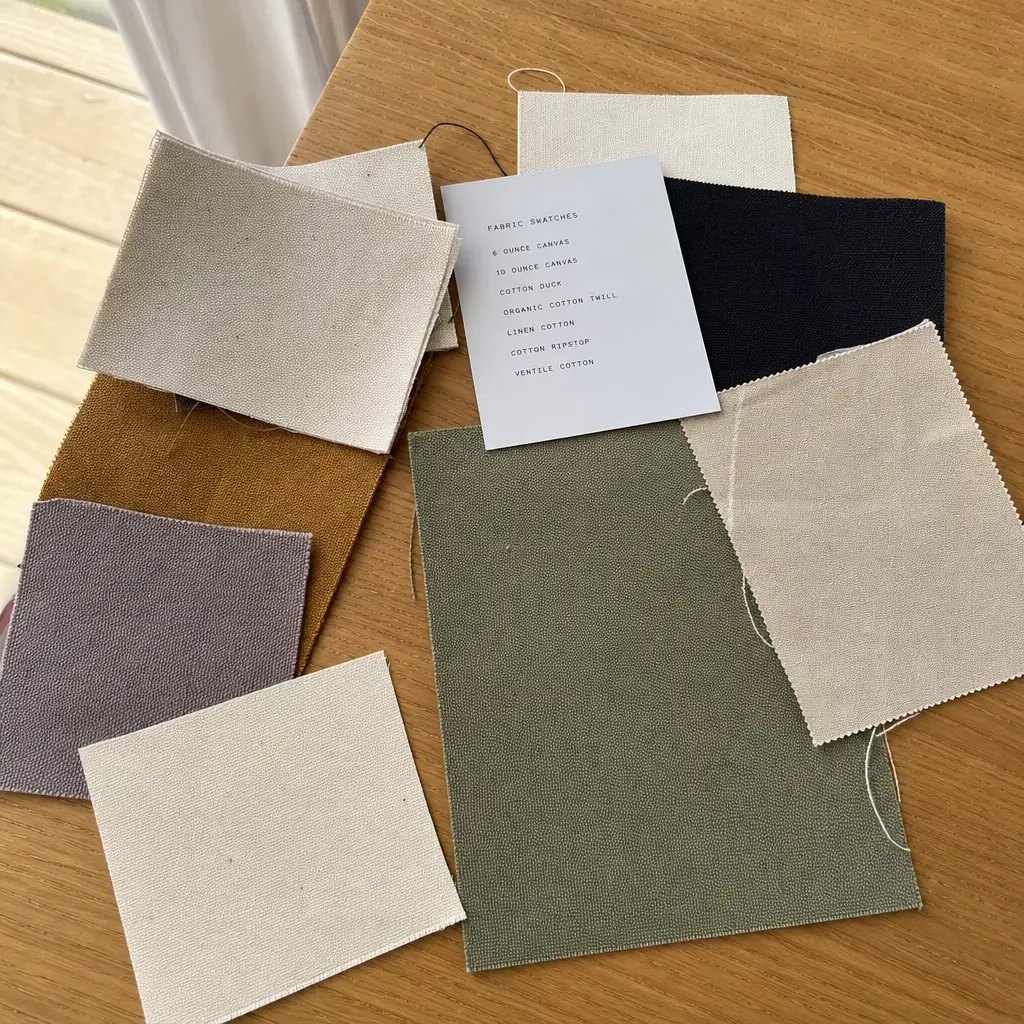
For museum shop totes, the practical range is often around 13-15 oz (270-330 GSM) with a tight plain weave (7-8 picks per inch). GSM alone is not perfect because jute yarn thickness and weave openness also affect hand feel, print surface, and strength. A 300 GSM loose weave may feel less stable than a slightly lighter but tighter fabric. Buyers should request both weight and a physical swatch because photographs rarely show transparency, shedding, or stiffness correctly.
A light jute tote (10-12 oz, 5-6 picks per inch) may work for small souvenirs, postcards, and soft goods. It is less suitable for heavy exhibition catalogues or hardcover books (e.g., 1.5 kg each). A heavier jute panel (14-15 oz) improves structure and perceived value, but it also increases material cost by 10-15%, carton weight, and ocean or air freight. If the museum shop sells at a modest retail price (e.g., $5-10), increasing GSM without improving handle comfort or print quality may not create enough value. The better decision is to match fabric weight to the heaviest normal basket, not to an extreme one-time load.
For catalog-heavy stores, prioritize handle reinforcement and gusset design as much as fabric weight. A 13 oz jute tote with cotton webbing handles and a 10 cm gusset can outperform a 15 oz tote with rope handles and no gusset.
- For light souvenir bags: consider around 10-12 oz only if the bag is small (e.g., 25 x 20 cm) and not expected to carry books.
- For general museum retail: 13-15 oz gives a better balance of cost, stiffness, and durability.
- For premium gift totes: combine heavier jute (14-15 oz) with lining and better handles rather than relying on weight alone.
- For catalog-heavy stores: prioritize handle reinforcement and gusset design as much as fabric weight.
Natural, laminated, or lined jute: the main tradeoff
Unlaminated natural jute gives the most authentic texture and a softer environmental message, but it may shed more fibers (up to 1 g per 100 cm²) and absorb humidity (up to 12% moisture regain). It also has a less even print surface. Laminated jute adds stiffness and moisture resistance, which helps a tote stand upright and protects the inside from light moisture. However, lamination can make the bag look more promotional, may crack at fold lines if over-compressed (test flex 10 cycles per ASTM F392), and complicates sustainability claims. For museum shops that emphasize conservation, local culture, or natural materials, unlaminated jute with good finishing is often easier to explain to customers.
Cotton lining is a different decision. It improves the inside appearance, reduces fiber contact with books and prints, and makes the tote feel more like a retail bag than packaging. It also adds cutting, sewing, inspection, and material cost (typically $0.50-1.00 per bag). A lined tote should not be quoted as an afterthought because lining changes seam construction, binding, and sometimes the turning method. If the tote carries art books, textile items, or gift sets, lining can be worth the extra cost. If it is a low-price visitor souvenir ($3-5), lining may be unnecessary.
The table below summarizes key vulnerabilities across natural, laminated, and lined jute to help buyers decide based on their specific use case.
- Choose unlaminated jute for a natural hand feel and simpler sustainability positioning.
- Choose laminated jute when shelf standing, moisture resistance, or extra stiffness matters more than softness.
- Choose cotton lining for premium retail, book protection, and a cleaner interior presentation.
- Avoid mixing lamination, lining, and heavy jute without checking fold thickness and seam bulk.
Handle selection affects comfort more than the main fabric
Many complaints about jute totes are actually handle problems. Twisted jute rope can look natural, but it may be rough on the hand and less comfortable for museum visitors carrying heavy books during travel. Cotton webbing is usually softer, more stable, and easier to sew securely. A jute-cotton blend handle can keep a natural look while improving comfort. For museum shops, handle width around 2.5-4 cm is common, but the best width depends on bag size and load. A 2.5 cm handle may be adequate for a small gift bag, while a 4 cm handle distributes weight better for a large tote carrying 3-5 kg.
Handle drop should be specified clearly. A short hand-carry drop (20-25 cm) may be acceptable for small gift bags, but larger totes should often allow shoulder carry. A drop of approximately 35-45 cm is common for shoulder use, depending on the market and bag height. Reinforcement matters as much as handle material. Box-X stitching or strong cross-stitching (4-6 stitches per corner) should be visible and consistent. If the jute fabric is loose, the handle stitch area may need backing or additional reinforcement to prevent yarn pullout. A pull test of ≥ 15 kg per ASTM D5034 is a reasonable benchmark for handle attachment.
For book-heavy museum shops, cotton webbing handles are strongly recommended over hard rope handles. Specify handle color tolerance (ΔE ≤ 2.0) if using dyed cotton webbing with natural jute, as color mismatch can be noticeable.
- For book-heavy museum shops, select cotton webbing handles rather than hard rope handles.
- State handle drop as a finished measurement from bag top edge to handle peak (e.g., 40 cm ± 1 cm).
- Specify handle color tolerance (ΔE ≤ 2.0) if using dyed cotton webbing with natural jute.
- Require reinforced handle stitching (box-X, 4-6 stitches per corner) on every bag, not only on approval samples.
Print method: design for jute texture before approving artwork
Jute is not a smooth poster surface. The woven texture interrupts fine lines, small type, gradients, and detailed museum artwork. Screen printing is usually the most practical method for solid logos, exhibition names, simple icons, and one to three color designs. It is durable and cost-efficient at bulk quantity, but ink coverage varies with weave openness. A large solid ink block may look uneven or feel stiff. Buyers should test artwork at actual size on the selected jute, not only approve a digital proof.
For screen printing, minimum line thickness should be ≥ 2 mm on coarse jute (13-15 oz, 7-8 picks per inch). Thinner lines may break or appear dotted. Color registration should be ± 1 mm for two-color designs, but jute stretch can cause misalignment. For fine artwork (e.g., exhibition logos with small text, gradients, or detailed illustrations), alternative branding may be better. A cotton patch, woven label (min line thickness 0.5 mm), heat transfer on a smoother fabric panel, or printed cotton pocket can preserve detail while keeping the jute body. This may cost $0.30-0.80 more per bag than direct screen print, but it avoids the common problem of art that looked elegant on PDF and broken on burlap.
For brand owners and distributors, it is useful to offer two artwork routes in the RFQ: direct print for simple branding (≤ 3 colors, ≥ 2 mm lines) and label or patch for fine detail (≥ 0.5 mm lines). Define Pantone colors but expect slight visual change because natural jute affects ink appearance (e.g., a warm brown undertone may shift cool colors).
- Use direct screen print for bold logos, limited colors (≤ 3), and simple exhibition graphics.
- Avoid very small text (< 6 pt), thin serif lines (< 2 mm), and delicate halftones on coarse jute.
- Use a sewn label, cotton patch, or smooth pocket panel for detailed artwork (min line thickness 0.5 mm).
- Define Pantone colors but expect slight visual change because natural jute affects ink appearance.
Size, gusset, and construction should match retail baskets
A museum shop tote often needs to carry flat items without bending corners. Before choosing a standard tote size, the buyer should list the largest common products: exhibition catalogues (e.g., 25 x 30 cm), children’s books, folded posters, boxed mugs, puzzles, or framed small prints. A bag that is too narrow (e.g., 20 cm width for a 25 cm catalogue) may technically hold the item but damage corners at the checkout counter. A gusseted bag with a box bottom (gusset depth ≥ 8 cm) improves usable volume and shelf display. A flat tote is cheaper and lighter, but it does not perform the same job.
Construction also affects how the bag looks in store. A box bottom can stand better if the jute has enough body (≥ 13 oz) or light backing. Side gussets add volume but introduce more seams and more points for print alignment issues. If the front logo must sit perfectly centered, the factory needs clear finished dimensions and print placement from the top edge and side seam (e.g., 5 cm from top, 10 cm from side). For bulk orders, it is safer to specify the product fit and finished capacity instead of only copying a previous bag size.
For multi-location retail, keep one core size unless there is a clear merchandising reason for multiple sizes. A standard size of 35 x 40 x 10 cm (width x height x gusset) with 40 cm handle drop works for most museum shop items.
- For catalogs and books, test actual products inside the sample before approval.
- For gift bundles, specify bottom width and side gusset depth (e.g., 10 cm), not just height and width.
- For shelf display, request a standing sample with the intended fabric and packing fold.
- For multi-location retail, keep one core size unless there is a clear merchandising reason for multiple sizes.
MOQ logic: why small design changes change the factory price
Jute tote MOQ is not only one total quantity. It depends on raw fabric availability, custom dyeing, handle material, lining color, print setup, cutting efficiency, and packing segregation. A supplier may accept 500 pieces for a stock natural jute tote with one-color print, but need a higher MOQ for custom handle color (e.g., 1000 m of webbing), dyed jute (e.g., 500 kg), cotton lining (e.g., 300 m), special size, or multiple print artworks. If a museum shop wants several exhibition designs, the print MOQ per artwork becomes important even when the total order quantity is attractive.
Procurement teams should separate the quote by SKU. A SKU is not just the same bag size; it includes artwork, print color count, handle color, lining, label, and packing. If three exhibitions share the same base bag but have different front prints, the supplier can sometimes combine cutting and sewing but must change screens and manage separate QC and packing. This should be visible in the quote. Otherwise, the buyer may receive a low blended price that later increases when the supplier calculates real production complexity.
A reorder is easier when the same base bag and handle are used across several designs. Consider a modular approach: one base bag (size, fabric, handle, lining) with interchangeable print or label for each exhibition.
- Base material MOQ may apply to jute fabric (e.g., 500 kg), lining (e.g., 300 m), or handle webbing (e.g., 1000 m).
- Print MOQ applies per artwork and sometimes per print color (e.g., 300 pieces per color per artwork).
- Packing MOQ applies when cartons must be marked by museum location or exhibition range.
- A reorder is easier when the same base bag and handle are used across several designs.
Sample approval should use production materials, not convenient stock
A showroom sample can prove sewing ability, but it may not prove bulk quality. Jute varies by lot, season, yarn source, and finishing. For museum shop orders, the approved sample should be made with the intended fabric weight, handle material, lining if used, and actual print method. If the factory uses available stock jute for the sample and changes fabric for production, the buyer may see different shade (ΔE > 2.0), stiffness, odor, and print sharpness in bulk.
The sample approval record should be practical and measurable. Keep one signed physical sample or sealed sample set, and record finished dimensions (height, width, gusset, handle drop), fabric feel, logo placement (distance from top and side), handle drop, stitch type, and packing fold. For importers or distributors, this sample becomes the reference for incoming inspection and for resolving disputes. Photos are useful, but they do not replace touch, smell, stiffness, and true color comparison under normal light.
Approve a material swatch before full sample making when lead time is tight. Measure finished bag dimensions on the approved sample. Rub the print lightly and bend the printed area to see cracking or ink loss. Place a book or catalog inside the sample to judge real carrying performance. Keep one approved sample at the buyer side and one at the factory side.
- Approve a material swatch before full sample making when lead time is tight.
- Measure finished bag height, width, gusset, and handle drop on the approved sample.
- Rub the print lightly and bend the printed area to see cracking or ink loss.
- Place a book or catalog inside the sample to judge real carrying performance.
- Keep one approved sample at the buyer side and one at the factory side.
Quote comparison: what should be separated in the cost sheet
A clean quote for jute museum shop totes should show more than a unit price. It should identify fabric weight (oz or GSM), lining (yes/no, GSM), handle (material, width, drop), print (method, colors, max size), labels (type, size), packing (carton strength, desiccant, pieces per carton), sample charges, screen charges, inland freight, and optional testing. This is especially important when comparing suppliers from different sourcing routes. A trading company may include more communication support and consolidation service; a direct factory may offer better control of production details; a specialized bag factory may handle complex lining and print better than a general promotional supplier.
The lowest quoted unit price may exclude export cartons strong enough for long transit (e.g., 5-ply, 200 lb burst strength), may use lighter fabric (e.g., 10 oz instead of 13 oz), or may assume no individual packing. It may also exclude pre-production samples or print setup. For distributors selling to museum groups, landed cost matters more than ex-factory price. Carton size, carton weight, number of cartons per shipment, and packaging method affect freight, warehouse handling, and damage risk. A heavier jute tote with bulky rope handles can increase freight cost enough to erase a small unit price saving.
Compare fabric weight and construction line by line before discussing price reduction. Request carton dimensions, gross weight, and pieces per carton for landed-cost calculation. Separate one-time setup charges from repeat-order unit price. Clarify whether samples are refundable or credited against bulk order only if that is part of the commercial agreement. Use the same Incoterm when comparing quotes, such as EXW, FOB, CIF, or DDP.
- Compare fabric weight and construction line by line before discussing price reduction.
- Request carton dimensions, gross weight, and pieces per carton for landed-cost calculation.
- Separate one-time setup charges from repeat-order unit price.
- Clarify whether samples are refundable or credited against bulk order only if that is part of the commercial agreement.
- Use the same Incoterm when comparing quotes, such as EXW, FOB, CIF, or DDP.
Packing and moisture control are not minor details for jute
Jute absorbs moisture and odor more readily than many synthetic materials. A bag that looks good at the factory can arrive with a musty smell if packed wet, stored in a humid area, or loaded without proper carton protection. Museum shops are sensitive to odor because bags may be displayed near books, paper goods, textiles, and food gifts. The packing plan should include dry storage before packing, clean cartons, sensible compression, and desiccant (≥ 5 g per bag) when the route or season requires it.
Individual polybags protect bags but may conflict with a museum shop’s plastic reduction policy. Alternatives include paper bands, bulk packing by count, recycled polybags if acceptable, or no individual bag with stronger master carton protection. The decision should be made before quoting because packing affects labor, material, carton count, and inspection. If the tote is a retail product with hangtag or barcode, packing also affects warehouse receiving and store replenishment.
For retail sale, define hangtag, barcode label, price sticker area, and carton assortment. For sustainability-focused shops, specify no individual polybag or approved alternative packing. For humid shipping seasons, consider desiccant and moisture barrier precautions. Avoid over-compressed cartons for laminated or structured jute bags. Mark cartons by SKU, artwork, quantity, gross weight, net weight, and destination if needed.
- For retail sale, define hangtag, barcode label, price sticker area, and carton assortment.
- For sustainability-focused shops, specify no individual polybag or approved alternative packing.
- For humid shipping seasons, consider desiccant (≥ 5 g per bag) and moisture barrier precautions.
- Avoid over-compressed cartons for laminated or structured jute bags.
- Mark cartons by SKU, artwork, quantity, gross weight, net weight, and destination if needed.
Specification comparison for buyers
| Spec decision | Recommended option | When it fits | Buyer risk to check |
|---|---|---|---|
| Main jute fabric weight | 13-15 oz / 270-330 GSM, tight plain weave (7-8 picks per inch) | Museum totes carrying books, catalogs, boxed gifts, and exhibition merchandise | 13 oz loose weave can look transparent and distort print; 15 oz dense weave raises freight and may feel too rustic for premium retail; verify GSM and weave density on a cut panel |
| Surface finish | Calendar-pressed or washed jute with fiber shedding ≤ 0.5 g per 100 cm² (tape test) | Shops needing a craft look but acceptable shelf presentation | Excessive shedding, strong odor, and uneven shade lots cause complaints; request a 24-hour closed-carton odor test and a shedding tape test on the approved swatch |
| Lamination or backing | Unlaminated for soft natural feel; light PE or starch-based coating (≤ 20 g/m²) only when stiffness or moisture resistance is required | Unlaminated for museum gift shops; laminated for wine, food, or structured promotional packs | Lamination can crack at folds (test flex 10 cycles per ASTM F392), reduce recyclability claims, trap odor, and change print adhesion; request a flex test on a folded sample |
| Inner lining | Cotton lining (≥ 120 g/m²) for premium reusable totes; no lining for cost-sensitive souvenir bags | Cotton lining fits higher retail price points and protects art books or boxed gifts | Lining adds labor, inspection points, and lead time; loose lining corners can catch products; specify lining attachment (turned or bound) and stitch type |
| Handle material | Cotton webbing (2.5-4 cm wide) or soft jute-cotton blend handles, drop 35-45 cm for shoulder carry | Museum visitors carrying the bag for several hours, especially with books and ceramics | Hard twisted jute handles can feel uncomfortable; short handles limit shoulder use; specify handle drop tolerance ± 1 cm and reinforcement stitch type (box-X or cross-stitch) |
| Print method | Screen print (max 3 colors, min line thickness 2 mm) for solid logos; woven label or cotton patch for fine artwork (min line thickness 0.5 mm) | Institution logos, exhibition titles, simple line art, and branded retail packaging | Jute texture breaks fine details; large ink areas may crack on coarse fabric; artwork must be tested on production fabric, not paper; request a print test with Pantone references and line thickness verification |
| Bag construction | Box bottom with side gusset (≥ 8 cm) and reinforced handle stitching (box-X, 4-6 stitches per corner) | Retail totes expected to stand on shelves and carry books or catalogues | Flat totes are cheaper but carry less volume; weak handle reinforcement fails before fabric tears; specify seam strength ≥ 15 kg for handle attachment per ASTM D5034 |
| MOQ and color planning | Plan MOQ by fabric lot, handle color, print color count, and size, not only by total pieces | Museum shops with multiple exhibitions, bilingual prints, or seasonal designs | Combining designs below print setup efficiency raises unit cost; custom dyed handles usually need higher MOQ (≥ 1000 m) and longer approval (≥ 2 weeks) |
| Packing method | Flat pack in export cartons (5-ply, ≥ 200 lb burst strength) with desiccant (≥ 5 g per bag) and bag count by SKU | Importers and distributors shipping to multiple museum retail locations | Over-compressed cartons crease laminated jute; poor humidity control risks odor, mildew, or rust stains from metal accessories; specify carton size, gross weight, and pieces per carton for landed-cost calculation |
Buyer checklist before sampling
- Define the real load: number of books, average catalog weight (e.g., 1.5 kg), boxed gift dimensions, and whether the tote must be shoulder-carried.
- Specify fabric as jute weight (oz or GSM) plus weave density (picks per inch), not only a vague description such as natural burlap.
- Decide if the bag must stand upright on a retail shelf; if yes, include gusset depth (≥ 8 cm), bottom width, and stiffness requirement (e.g., fabric weight ≥ 13 oz).
- Choose unlaminated, laminated, or lined construction based on product use, sustainability language, odor tolerance, and price point.
- Provide logo artwork at final size with Pantone references and minimum line thickness (≥ 2 mm for screen print, ≥ 0.5 mm for woven label); request print testing on the selected jute lot.
- Set handle material, width (2.5-4 cm), drop length (35-45 cm for shoulder), and reinforcement style (box-X stitch, 4-6 stitches per corner) before comparing quotes.
- List each SKU separately by size, print, handle color, lining, and packing method so suppliers do not average the wrong cost.
- Request pre-production samples using bulk materials (same jute lot, handle, lining, print method), not only available stock jute.
- Define inspection points with numeric metrics: fabric shade (ΔE ≤ 2.0), odor (closed-carton test, 24 hours), print placement (± 5 mm), seam strength (≥ 15 kg for handle per ASTM D5034), carton moisture protection (desiccant ≥ 5 g per bag), and carton marking (by SKU, quantity, gross weight).
- Confirm lead time by fabric procurement (≥ 2 weeks), sampling (≥ 1 week), printing (≥ 1 week), sewing (≥ 2 weeks), inspection (≥ 3 days), and export packing (≥ 3 days) stages.
Factory quote questions to send
- What jute fabric weight (oz or GSM), approximate weave density (picks per inch), and fabric width (cm) are included in your quote?
- Is the quoted jute stock fabric or newly woven bulk fabric, and can the bulk lot match the approved sample shade and texture (ΔE ≤ 2.0)?
- Does the price include lamination (type and weight), cotton lining (GSM and attachment method), inner binding, or only single-layer jute construction?
- What handle material, handle width (cm), handle drop (cm), and reinforcement stitching (box-X or cross-stitch, number of stitches) are included?
- Which print method is quoted, how many colors are included, and what is the maximum recommended artwork size (cm) and minimum line thickness (mm) on this jute surface?
- What is the MOQ per size, per artwork, per handle color, and per custom fabric or lining color?
- Can you provide a pre-production sample made with actual bulk jute, handle, lining, and print method before mass production?
- What packing is included: individual polybag (yes/no, recycled content), paper band, master carton (ply and burst strength), inner carton, desiccant (grams per bag), and carton drop resistance (tested or not)?
- What quality tolerances do you use for dimensions (± cm), print position (± mm), shade variation (ΔE), odor (closed-carton test), and handle pull strength (kg)?
- Please separate tooling, screen, sample, inland freight, export carton, and optional testing costs from the unit price.
Quality-control points to confirm
- Fabric weight should be verified against the approved specification using cut panel weighing (e.g., 10 cm x 10 cm sample) or supplier fabric test data, with visible comparison to the approved swatch.
- Jute odor must be assessed after the carton has been closed for at least 24 hours, not only on loose samples in an open room; use a scale of 1-5 (1 = no odor, 5 = strong musty smell).
- Print placement should stay within an agreed tolerance, commonly ± 5 mm for simple front panel logos unless artwork requires tighter control (e.g., ± 2 mm for fine artwork).
- Handle attachment should use reinforced cross-stitch or box-X stitching (4-6 stitches per corner), with no skipped stitches, loose threads, or weak penetration through coarse jute; pull test ≥ 15 kg per ASTM D5034.
- Finished dimensions should allow realistic sewing tolerance, usually ± 1 cm for jute totes unless a tighter retail fixture requirement is stated (e.g., ± 0.5 cm).
- Cartons should be dry, clean, correctly marked by SKU, and not packed so tightly that bags are permanently creased or distorted; check carton burst strength (≥ 200 lb).
- Laminated jute should be flexed at seams and bottom folds (10 cycles per ASTM F392) to check cracking, bubbling, and delamination before approving shipment.
- Any metal eyelets, snaps, or accessories should be checked for rust resistance (salt spray test, 24 hours) and staining risk because jute can absorb moisture during transport.