Why Handle Reinforcement Deserves Its Own RFQ Line
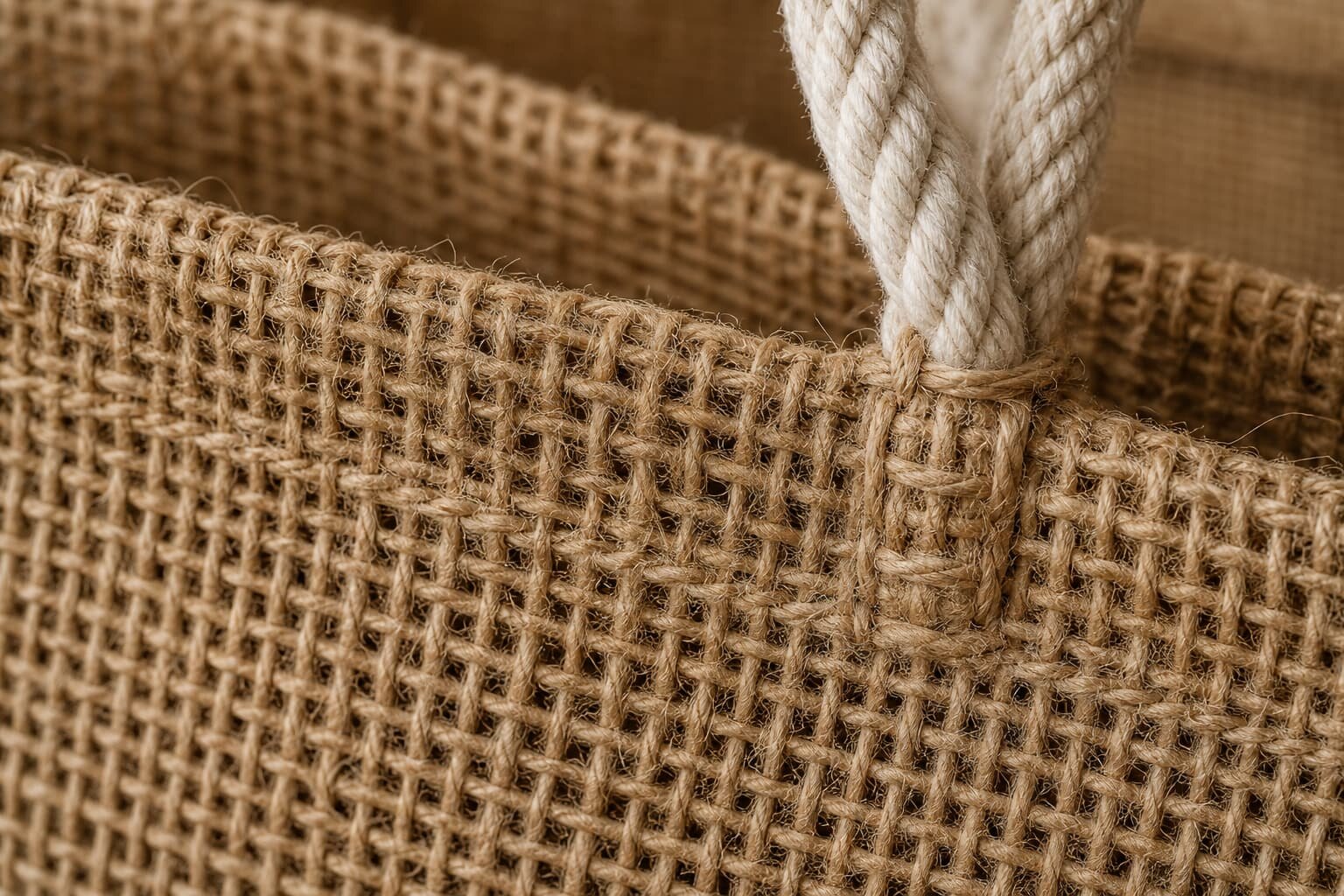
A jute tote bag can look acceptable in a supplier photo and still fail at the handle after a few uses. The weak point is rarely the handle webbing itself. More often, the jute body fabric tears around the stitch holes, the sewing line pulls out because the weave is too open, or the handle is attached with a simple straight stitch that cannot spread load across enough fabric area.
For procurement teams, the practical issue is quote comparability. One factory may quote a basic jute bag with handles stitched directly into the top hem. Another may include inside patches, wider webbing, box-X stitching, and heavier jute. Both quotes may use the same product name, but the performance and cost are different. If the RFQ does not define reinforcement, the cheapest offer may simply be a weaker construction.
- Treat handle reinforcement as a structural specification, not a sewing detail.
- Ask for photos of the inside handle area because many reinforcement choices are hidden.
- Connect reinforcement level to expected carrying weight, not only bag size.
- Put the approved handle construction into the purchase order and QC checklist.
Start With Load Use, Not Just Bag Dimensions
Many jute tote RFQs start with width, height, gusset, logo, and quantity. That is not enough for handle reinforcement. A 35 x 40 x 15 cm tote used for light apparel packaging does not need the same handle construction as the same size bag used for groceries, catalogs, wine bottles, or trade show samples. The shape may be identical, but the stress on the handle points is completely different.
Before requesting prices, define the practical load range. For light retail gift use, the bag may only carry 1-3 kg. For supermarket or reusable shopper use, buyers often expect 5-8 kg or more. For bottle carriers or heavy product kits, the reinforcement must be treated as a safety and claims-prevention item. The factory cannot design the correct reinforcement if the intended load is not stated.
- Light gift or apparel use: focus on neat stitching, visual consistency, and moderate reinforcement.
- Retail shopping use: specify stronger stitching, wider handles, and load testing.
- Bottle or catalog use: add inside patches and consider heavier body fabric.
- Long shoulder handles: increase reinforcement because the leverage on the stitch area is higher.
Choose Jute Fabric Weight That Supports the Handle
Handle strength depends on the body fabric as much as the handle. Natural jute tote bags commonly use fabric around 280-380 GSM for many retail and promotional programs. Lighter fabrics can reduce cost and carton weight, but they may not hold stitching well if the weave is loose. Heavier jute can improve structure and tear resistance, but it may increase price, make folding less compact, and create a more rustic hand feel.
The buyer should ask for both GSM and weave appearance, because GSM alone does not tell the full story. A dense 320 GSM fabric may perform better than a loose 360 GSM fabric at the stitch area. If the bag is laminated, the lamination can help shape and reduce fiber shedding, but it does not automatically solve handle stress. Stitch holes through laminated jute still need enough seam allowance and reinforcement.
- Ask for jute GSM and a close-up fabric photo or physical swatch.
- For standard retail totes, consider 280-380 GSM as a common working range.
- For large shoppers or heavy goods, discuss heavier jute or reinforced panels.
- Do not assume lamination replaces a handle patch or stronger stitch pattern.
Compare Handle Materials Before Comparing Prices
A quote for a jute tote bag may include cotton webbing, jute webbing, rope handles, canvas handles, or synthetic webbing. Cotton webbing is common because it is comfortable, printable in some cases, and works well with natural jute. Jute handles match the body visually but can feel rougher and may fray more easily if the edge quality is poor. Rope handles are attractive for gift and wine bags but require different attachment and reinforcement.
Handle width matters. A 20 mm handle can look neat on a small gift tote, but it may be uncomfortable and less stable on a large shopper. A 25-38 mm cotton webbing handle is often more suitable for reusable retail totes. The factory should quote the exact handle width, length, color, and material, not just say cotton handle. Buyers should also check whether dyed handles have colorfastness concerns when packed against natural jute.
- Use 25-38 mm cotton webbing for many reusable shopping tote programs.
- Use narrower handles only when the bag is small and load is light.
- Check handle edge quality for fraying, twisting, and uneven thickness.
- Request a webbing swatch when color or hand feel affects brand approval.
Specify the Stitch Pattern and Reinforcement Patch
The most important RFQ detail is how the handle is fixed to the bag. A single straight stitch may be acceptable for very light bags, but it concentrates stress in a narrow line. A box-X stitch spreads force over a larger area and is easier for QC inspectors to evaluate. Bar tacks can add strength at the top or ends of the handle, but they must be sewn cleanly without cutting through the jute fibers.
Inside reinforcement patches are especially useful when the bag body is medium weight, the handle drop is long, or the use load is uncertain. The patch can be made from jute, cotton canvas, nonwoven, or another agreed material. The key is not only patch material but also size and placement. A small patch that misses part of the box-X stitch does little. Ask the factory to show the patch dimensions and confirm whether it is visible inside the finished bag.
- Basic construction: handle inserted into top hem with double stitching for light use.
- Stronger construction: box-X stitch through handle and body panel.
- Higher-risk use: box-X plus inside patch or bar tack reinforcement.
- QC requirement: no skipped stitches, broken threads, or loose stitch ends at handle points.
Keep Printing and Labels Away From Stress Zones
Jute tote branding often uses screen printing, heat transfer, digital print on laminated surfaces, woven labels, or sewn side labels. These decoration choices can interfere with reinforcement if the logo is placed too high or if a label is sewn into the same area where the handle needs strength. A clean artwork approval should include the handle stitch location, not just logo size and Pantone reference.
For many natural jute bags, one-color screen printing is practical and cost-effective, especially for simple brand marks. Fine detail, small text, and large solid ink coverage can be harder on coarse jute. If the print is close to the handle, needle holes and stitch lines may pass through the print area, creating an uneven finish. Buyers should approve a print proof or pre-production sample that shows both the decoration and the reinforced handle together.
- Keep logos below the handle stitch zone unless the construction is intentionally visible.
- Use simpler artwork for coarse natural jute surfaces.
- Confirm whether printing happens before or after sewing, as this affects alignment.
- For side labels, check that the label seam does not weaken the handle attachment area.
Set Sample Checks That Predict Bulk Quality
A good sample review should not stop at size, logo, and color. For handle reinforcement, the buyer should measure handle drop, compare left and right handle symmetry, inspect inside patches, count stitches where needed, and pull the handles by hand to see whether the body fabric distorts. A beautiful front photo can hide a weak inside construction.
For higher-volume or higher-risk orders, ask for a pre-production sample made with bulk fabric, bulk handles, and the final sewing method. Sales samples are sometimes made with better available materials or extra care. The pre-production sample should become the reference for bulk inspection. If the factory changes jute GSM, handle webbing, thread, or patch material after sample approval, the buyer should approve the change before mass production.
- Measure bag size, handle length, handle drop, and gusset after the sample is flattened.
- Photograph outside and inside handle attachment points for the approval file.
- Check whether the handle twists when the bag is lifted with weight.
- Ask the factory to keep one approved sample and send one to the buyer for comparison.
Use Realistic Load Testing and Acceptance Criteria
Load testing does not need to be complicated, but it must be written clearly. A common approach is to load the bag with the expected weight, hang or lift it for a defined time, and inspect for tearing, stitch failure, handle elongation, or body distortion. For reusable shopping bags, repeated lift testing is more useful than a single static test because real users lift, swing, set down, and reload the bag.
The acceptance criteria should match the product promise. If the bag is sold as a premium reusable shopper, slight tearing at the handle after one test is not acceptable. If it is a decorative gift bag, the requirement may be lighter. The important point is consistency: the test weight, duration, and pass/fail rules should be the same for sample approval, production checks, and final inspection.
- Static load test: load the bag to the agreed weight and hold for a defined time.
- Repeated lift test: lift and set down the loaded bag for a defined number of cycles.
- Pass criteria: no handle pullout, no jute tearing, no broken stitches, no severe deformation.
- Bulk QC: test random production pieces, not only the original approved sample.
Understand MOQ and Cost Logic for Reinforced Handles
MOQ is not only about bag quantity. Reinforced jute tote bags may involve minimums for jute fabric, laminated rolls, dyed webbing, custom handle width, print setup, label production, and carton packing. If the buyer requests a special handle color or uncommon webbing width, the factory may need to purchase more material than the order consumes. This can affect MOQ, unit price, or leftover material charges.
Reinforcement also changes labor cost. Box-X stitching takes more time than a simple line. Inside patches require cutting, positioning, and extra sewing. Stronger thread or heavier webbing may slow production. When comparing quotes, ask whether the reinforcement method is included in the unit price. If one quote is much lower, it may exclude the patch, use narrower webbing, reduce GSM, or simplify the stitch pattern.
- Main cost drivers: jute GSM, lamination, handle material, reinforcement patch, print method, and sewing time.
- MOQ may increase for custom dyed webbing, woven labels, or special lamination.
- Lower price can mean lower GSM, fewer stitches, narrower handles, or no inside patch.
- Ask suppliers to itemize construction assumptions so quotes can be compared fairly.
Plan Lead Time, Packing, and Final Inspection Together
Lead time for jute tote bags depends on material availability, sample approval speed, printing method, sewing complexity, and factory capacity. A reinforced handle construction may add time during sampling and production because the factory needs to confirm patch placement, sewing templates, and load testing. Buyers should not approve artwork while leaving handle construction undecided; that creates late changes and may delay bulk cutting.
Packing also affects final product quality. Jute absorbs moisture and can develop odor or mildew if packed wet or stored poorly. Handles can be creased or distorted if bags are compressed unevenly. Export cartons should be strong enough for the packed weight, and the packing method should keep handles aligned. For final inspection, open cartons from different positions in the shipment and check handle reinforcement before only checking logo appearance.
- Confirm sample lead time after all specs, artwork, and reinforcement details are received.
- Confirm bulk lead time after pre-production sample approval, not only after deposit.
- Use moisture-aware packing for sea freight and long warehouse storage.
- Include handle pull checks, inside patch checks, and carton condition in final inspection.
Specification comparison for buyers
| Spec decision | Recommended option | When it fits | Buyer risk to check |
|---|---|---|---|
| Handle material | Cotton webbing 25-38 mm wide, 8-12 oz equivalent feel | Retail shopping totes, gift bags, and reusable grocery bags needing better hand comfort | Thin webbing may look acceptable in photos but elongates, twists, or cuts into the hand under load |
| Handle attachment | Box-X stitch plus top bar tack or double-row lockstitch | Orders where buyers expect repeated carrying, promotional reuse, or 5-10 kg loading | Single straight stitch can pull out from loose jute weave even when the handle itself is strong |
| Reinforcement patch | Inside jute, cotton canvas, or nonwoven patch behind handle area | Medium to large bags, laminated jute, wine totes, and bags with long handles | Patch size, placement, and stitch density must be confirmed because hidden reinforcement is easy to omit in bulk |
| Body fabric weight | Natural jute around 280-380 GSM for standard totes; heavier for large shoppers | Most branded jute tote bag programs where structure and cost must balance | Low GSM body fabric can fail around the handle before the handle breaks |
| Lamination | Inside PP lamination only when moisture resistance or shape retention is required | Grocery, beach, garden, and retail shopping bags | Stitch holes through lamination can create stress points if no patch or seam allowance control is used |
| Handle drop | Short hand carry 12-15 cm; shoulder carry 22-28 cm depending on bag height | Short drop for gift and retail; long drop for supermarket, conference, and lifestyle totes | Longer handles increase leverage on the attachment and need stronger reinforcement |
| Load test | Static load and repeated lift test based on declared use weight | Any import order where the bag will carry bottles, catalogs, groceries, or merchandise | A photo sample alone cannot prove performance; test method and pass criteria must be written into the PO |
| Packing method | Flat packed with handle alignment, moisture control, and carton compression limits | Export cartons for sea freight, warehouse storage, or distributor repacking | Crushed cartons can crease jute, distort handles, and hide loose stitching until unpacking |
Buyer checklist before sampling
- Define the intended carrying weight in kilograms and whether the bag is for hand carry, shoulder carry, or both.
- Confirm body fabric weight, jute weave density, lamination type, and whether the handle area needs an inside patch.
- Specify handle material, width, length, drop height, color, and shrinkage tolerance before requesting a quote.
- Require a clear handle attachment method such as box-X, bar tack, double-row lockstitch, or reinforced patch stitching.
- Ask the factory to provide close-up sample photos of the inside and outside handle attachment, not only front-view beauty shots.
- Set sample acceptance criteria for stitch count, thread color, loose ends, handle symmetry, pull strength, and patch placement.
- Include load testing requirements in the RFQ and purchase order, with realistic weight and test duration.
- Check whether printing, lamination, or label placement interferes with the handle stitch area.
- Confirm export packing, moisture protection, carton weight, and handle folding method before bulk production.
- Compare quotes using the same reinforcement structure; do not compare a patched box-X handle against a simple straight-stitched handle as if they are equal.
Factory quote questions to send
- What jute fabric GSM and weave density are included in your quote, and is the fabric laminated or unlaminated?
- What handle material, width, length, and weight are quoted, and can you provide a physical webbing swatch?
- Which handle reinforcement method is included: straight stitch, box-X, bar tack, inside patch, or another construction?
- What thread type and stitch density will be used at the handle attachment points?
- What static load and repeated lift test can your factory perform for this bag size and construction?
- Is the reinforcement patch visible inside the bag, and what material, size, and GSM is used for that patch?
- Will screen printing, heat transfer, embroidery, woven label, or side label placement affect the handle sewing area?
- What is the MOQ for this exact construction, and what changes if we reduce quantity, change handle color, or add lamination?
- What sample lead time and bulk lead time apply after artwork, fabric, and reinforcement construction are approved?
- How will the bags be packed to prevent handle deformation, moisture absorption, and carton crushing during export shipment?
Quality-control points to confirm
- Measure handle length and drop height on pre-production samples and random bulk pieces against the approved specification.
- Inspect stitch shape, stitch count, skipped stitches, broken threads, and loose thread trimming at every handle attachment point.
- Check inside reinforcement patch size, alignment, and material because it is often hidden during normal front-side inspection.
- Perform load testing on samples from bulk production, not only on the original sales sample.
- Confirm that jute fabric around the stitch area does not tear, fray, or separate when load is applied.
- Check that printing or labels do not cover stitch lines unless this was approved in the artwork and sewing plan.
- Inspect handle color consistency, webbing thickness, twisting, edge fraying, and hand feel across cartons.
- Verify carton packing direction, moisture control, gross weight, and whether handles are folded consistently without permanent creases.