Audit Purpose
A jute tote bag factory audit for salon chains should not be a general showroom visit. The useful audit answers one buying question: can this supplier repeatedly make the same branded jute tote, at the approved appearance and strength level, across a store rollout without creating logo, odor, packing, or delivery problems?
Salon chains often use jute totes for retail product bundles, seasonal gift sets, opening kits, franchisee events, and loyalty programs. These bags carry visible brand value at checkout, so a poor batch is not just a packaging issue. Loose stitching, weak handles, crooked printing, or mildew smell can turn a promotional tote into a customer complaint. The audit should connect factory capability with your actual bag specification.
- Audit the exact construction you plan to buy, not only the supplier's best showroom samples.
- Bring or ship real salon products so the factory can load-test the tote with bottle weight and shape.
- Separate visual brand risks from structural risks; both need acceptance limits before production starts.
- Treat the audit findings as RFQ data. If the factory cannot define material, process, packing, and QC controls, the unit price is not comparable.
Bag Specification
The first audit checkpoint is whether the factory can translate your retail use into a manufacturable jute tote spec. A salon chain tote usually needs more structure than a flat giveaway bag because haircare bottles create point load at the base and pull force at the handles. For most retail bundle applications, a gusseted bag around 35 x 40 x 15 cm is more practical than a flat tote because it stands better at checkout and packs product more neatly.
Fabric weight should be stated in GSM, not described only as standard jute or thick jute. Natural jute around 280-320 GSM is a common practical range for branded totes. Lighter fabric reduces price but may feel loose, stretch at the seams, and show more slub variation. Heavier jute can improve perceived value but increases CBM and may crack or crease if laminated and tightly folded.
- Define finished dimensions as width x height x gusset, not only panel size before sewing.
- State whether the bag must stand when loaded with 2-4 bottles or only carry light retail items.
- Use 280-320 GSM as a starting range for structured jute totes, then adjust after sample testing.
- Specify natural, bleached, or dyed jute because color treatment changes MOQ, lead time, and shade tolerance.
- Confirm whether inner lamination is PP, no lamination, or another lining because it affects claims, stiffness, odor, and print behavior.
Material Evidence
During the audit, material evidence should be physical and documented. A serious factory should be able to show jute rolls or incoming material records, fabric weight checks, and a method for separating approved material from rejected material. Jute is a natural fiber, so some slub, shade variation, and fiber smell are normal. The commercial question is whether variation stays within the approved sample and whether the factory controls moisture before packing.
For salon chains, material odor matters more than many buyers expect. Jute that is stored in a damp area can develop a mildew smell that becomes stronger inside cartons and distribution centers. If the tote will be sold or given with fragranced salon products, odor conflict is a real retail issue. The audit should include storage conditions, ventilation, moisture protection, and whether finished bags are packed only after full drying or curing.
- Weigh a cut fabric sample or request GSM test evidence for the actual order material.
- Compare roll shade under consistent light instead of relying on photos from the supplier.
- Reject jute with strong mildew, oil stain, large holes, or fiber clumps that affect logo visibility.
- Check whether laminated jute is flat, bonded evenly, and free from bubbling or peeling near fold lines.
- Record a signed material swatch with the approved sample so bulk inspection has a realistic reference.
Logo Production
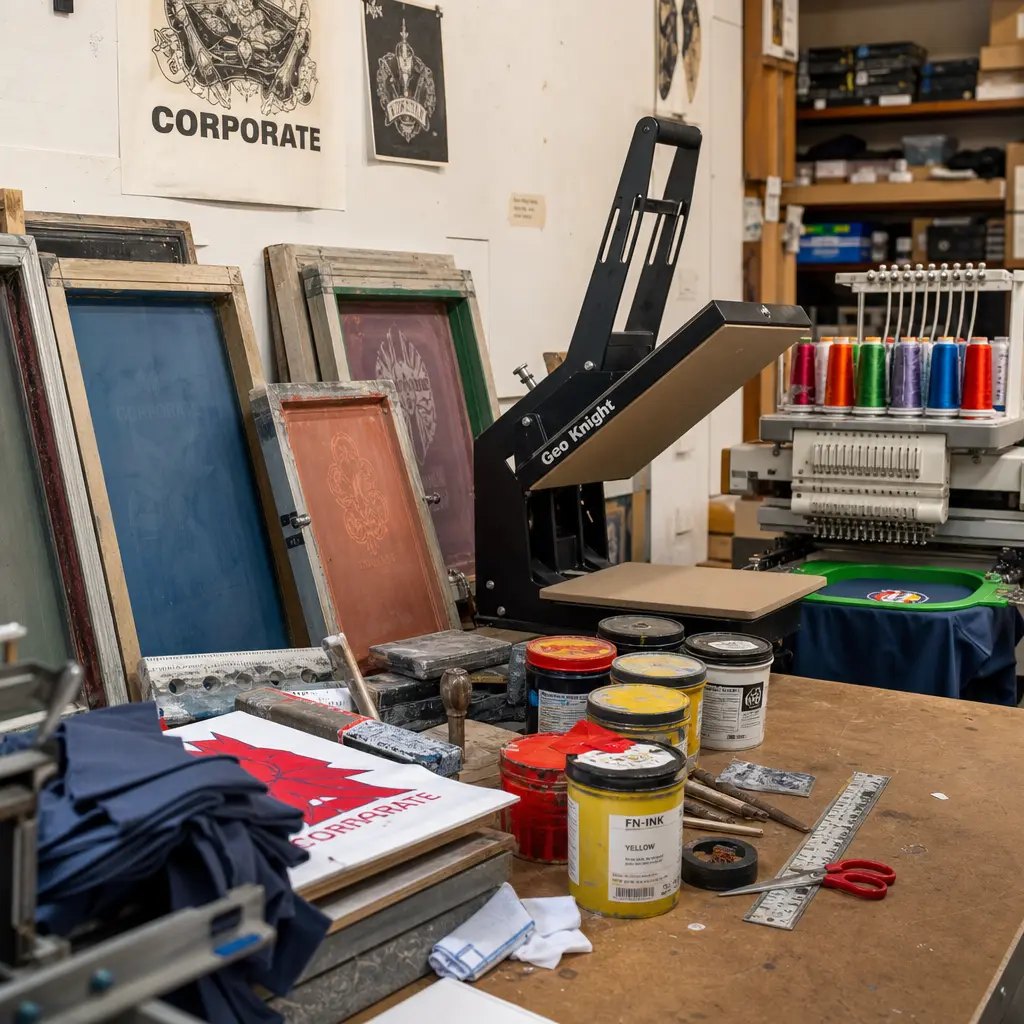
A salon chain usually has strict logo rules, but jute is not a smooth paper surface. The fabric texture interrupts fine lines, small letters, and gradient effects. Screen printing is normally the most economical method for bold one-color or two-color logos. Heat transfer can handle more detail on laminated jute, but it can look less natural and needs adhesion testing. Embroidery on jute is possible for premium designs, yet it adds cost and may pucker if the backing and stitch density are not controlled.
The factory audit should identify who actually prints the logo. Some sewing factories outsource all printing, and that is not automatically a problem if the process is controlled. The risk appears when the supplier cannot show print strike-offs, curing conditions, color records, or rejected print examples. For multi-store salon chains, a small logo shift or inconsistent Pantone match across batches can create visible inconsistency in retail displays.
- For screen print, define print size, Pantone color, mesh suitability, curing time, and rub resistance.
- For heat transfer, test edge adhesion, cracking on fold, and color change after light rubbing.
- For embroidery, define backing, stitch count, thread color, and acceptable puckering around dense areas.
- Avoid very thin type, hairline icons, and small taglines unless the factory proves the result on actual jute.
- Approve a print strike-off before the full sample if the logo is the main brand feature.
Construction Checks
The audit should move from material to sewing line, because most jute tote failures happen at seams, handle attachment, or gusset corners. Jute can fray at cut edges, so seam allowance and stitch coverage matter. A neat outside appearance is not enough if the handle is only caught by a narrow stitch line or if the gusset corner is not reinforced for bottle weight.
For salon retail use, cotton webbing handles are often more controlled than jute rope handles. Cotton webbing gives a cleaner branded look, accepts custom colors, and can be sewn with box-X reinforcement. Rope handles can fit a rustic design but may shed fibers and concentrate stress at the attachment point. If the tote is expected to carry liquid product bottles, handle pull testing is not optional.
- Look for even stitch length, secured thread ends, and no skipped stitches at handle attachment.
- Require box-X reinforcement or full-length handle anchoring for bags carrying heavier product bundles.
- Check that inner seams are overlocked, bound, or otherwise controlled to reduce fraying.
- Load test the sample with your real product weight and lift it repeatedly by the handles.
- Measure handle drop on multiple samples because customer comfort changes when the bag is worn over the shoulder.
MOQ And Cost Logic
A factory audit should make MOQ logic visible. Many jute tote quotes look attractive because they assume natural jute, standard fabric stock, standard handle color, one logo, and simple carton packing. The MOQ changes when you add dyed jute, custom cotton webbing, multiple branch logos, hangtags, individual polybags, barcode labels, or special carton marks. Procurement teams should separate base MOQ from customization MOQ before comparing suppliers.
Cost is driven by more than fabric and sewing. Print setup, number of colors, reject rate from rough jute surface, packing labor, carton size, and inspection requirements all affect the final price. A supplier with a slightly higher unit price may be cheaper in landed cost if the carton plan is tighter, the defect rate is lower, and the factory controls printing without rework delays.
- Base bag cost: jute GSM, lamination, size, gusset depth, handle type, and sewing reinforcement.
- Branding cost: screen setup, number of colors, print area, artwork complexity, strike-off, and curing time.
- Packing cost: hangtag, barcode, tissue, polybag, inner carton, master carton, and moisture barrier.
- MOQ triggers: dyed fabric, custom handle color, multiple logos, custom label, and retailer-specific carton marks.
- Comparison method: calculate price per approved packed bag and include estimated CBM per 1,000 pcs.
Sample Approval
The sample stage is where many salon chain buyers lose control because they approve appearance but not production conditions. A proper pre-production sample should use the actual material weight, actual handle, actual logo method, actual label, and intended fold or packing method. A sample made from substitute fabric is useful only for shape review, not for final approval.
The signed sample should become the factory's production reference. Keep one sample with the buyer, one with the factory, and one for the inspection team if possible. Approval notes should be specific: logo position from top edge, finished size tolerance, handle length, acceptable jute slub level, print edge quality, carton packing method, and any corrections before bulk production.
- Prototype sample: used to confirm size, structure, and general appearance.
- Print strike-off: used to confirm logo color, detail, and adhesion on actual jute.
- Pre-production sample: used as the final production standard after all corrections.
- Packing sample: used to confirm fold line, carton count, barcode, hangtag, and carton marks.
- Approval file: include artwork, Pantone reference, material swatch, sample photos, and signed comments.
Factory Audit Evidence
A useful audit does not require a complicated report, but it does require evidence. The factory should show how incoming jute is inspected, how cutting is controlled, how sewing operators follow a sample, how logo quality is checked, and how finished bags are counted and packed. If the supplier says every step is checked but cannot show forms, samples, rejected goods, or responsible staff, the process may depend too much on memory.
For importers and distributors, subcontracting is one of the biggest hidden variables. A supplier may be strong at sewing but weak at print coordination, or may trade the order to another workshop during peak season. The audit should identify the real production route: material source, cutting location, sewing location, print location, packing location, and final inspection point.
- Verify business license and production address match the facility being audited.
- Review recent production samples that are similar in size, GSM, print method, and packing style.
- Look for incoming material inspection records, inline sewing checks, print QC records, and final inspection reports.
- Confirm broken-needle control if the bags enter retail distribution or carry compliance requirements.
- Check whether the factory can segregate different salon branch logos to prevent mixed cartons.
Packing And Freight
Packing affects both cost and product condition. Jute totes are usually flat packed, often 25-50 pieces per export carton depending on size, handle bulk, and lamination. If laminated jute is compressed too tightly, fold marks can become permanent. If cartons are too loose, the bags shift during transport and cartons may crush. The factory should provide carton dimensions, gross weight, net weight, and CBM before the purchase order is issued.
Moisture protection is important for sea freight and warehouse storage. Jute should not be packed while damp, and cartons should be kept off wet floors. Some orders require a polybag liner or desiccant depending on route, season, and storage condition. Procurement should also confirm whether individual polybags are required by the retailer, because they add labor, material cost, packing volume, and sustainability concerns.
- Require carton size, pieces per carton, gross weight, net weight, and CBM in the quote.
- Use flat packing that protects logo surface and avoids hard creases across the print.
- Confirm carton strength for stacking during sea freight and distribution center handling.
- Add moisture barrier or desiccant only when route and storage risk justify it.
- Photograph the approved packing method so final inspection can compare real cartons.
Lead Time Risk
Lead time for jute totes should be broken into artwork confirmation, material preparation, sample making, sample approval, bulk cutting, printing, sewing, packing, inspection, and export handling. A single total lead time number is not enough for a salon chain launch because delays usually happen at artwork correction, dyed material, logo strike-off, or packing compliance.
A realistic schedule depends on order quantity and customization level. Natural jute with one-color screen print can move faster than dyed jute with custom handles and multiple logo versions. If a buyer needs phased delivery to different regions, carton marks and packing lists become part of the schedule risk. The factory should state weekly capacity for this bag construction, not only general factory capacity.
- Sample lead time should specify whether it includes print strike-off and courier transit.
- Bulk lead time should start after written approval of sample, artwork, material, and deposit or payment terms.
- Dyed jute and custom webbing require extra time for color matching and minimum dye lot control.
- Multiple logo versions need a version-control sheet to avoid wrong artwork on the right bag.
- Final inspection should be scheduled after at least 80% packed and 100% finished when possible.
Specification comparison for buyers
| Spec decision | Recommended option | When it fits | Buyer risk to check |
|---|---|---|---|
| Main jute fabric weight | 280-320 GSM laminated or unlaminated jute depending on structure | Good for salon retail gift bags, product bundles, and in-store promotional totes that need a natural look without collapsing | Below 260 GSM may feel loose and low value; above 350 GSM increases freight and can crack more easily on tight folding if laminated |
| Inside lamination | Thin PP lamination for shape and light moisture resistance; unlaminated for softer eco positioning | Laminated jute works better for shampoo, conditioner, and styling product bundles where bottle weight needs support | Some buyers reject PP lamination for sustainability claims, so the factory must state laminated or unlaminated clearly in the quote |
| Handle construction | Cotton webbing handles sewn with box-X reinforcement or full-length side seam anchoring | Best for salon chains carrying multiple retail bottles, samples, brochures, or welcome kits | Round jute rope handles can look rustic but may shed fiber and fail pull tests if the attachment is only stitched through one layer |
| Logo method | Screen print for bold single-color salon logos; heat transfer only for fine detail on laminated surface | Screen print suits most salon chain brand marks when artwork uses solid lines and limited colors | Jute texture breaks fine lines; require a print strike-off and define acceptable pinholes, edge fuzz, and color tolerance |
| Bag size | Common salon retail size around 35 x 40 x 15 cm, adjusted to bottle height and base width | Works for haircare gift sets and retail purchases without making the tote look oversized at checkout | A flat tote without gusset may be cheaper but will not stand with bottles; test with real product load before approval |
| MOQ logic | Separate MOQ for fabric color, print color, handle color, and carton mark requirements | Useful when salon chains need several regional logos or seasonal designs under one master order | A low quoted MOQ may only apply to natural jute with standard handles; dyed jute and custom webbing usually trigger higher minimums |
| Packing format | Flat packed 25-50 pcs per export carton with moisture barrier and carton compression suitable for sea freight | Best for distribution centers that need predictable carton count and low deformation on arrival | Over-compressed packing can crease laminated jute permanently; under-filled cartons raise freight cost and carton collapse risk |
| Audit evidence | Factory-owned cutting, sewing, printing coordination, inline QC records, needle control, and carton drop-test records | Important for salon chains planning repeat replenishment or multi-store launch quantities | Trading-company quotes may hide subcontracted printing or sewing; verify where each production step is actually done |
Buyer checklist before sampling
- Define whether the tote is a retail shopping bag, gift-with-purchase bag, stylist welcome kit, or event giveaway before requesting price.
- State the finished size, gusset, handle length, handle material, jute GSM, lamination preference, and target load weight in the RFQ.
- Send vector logo artwork and specify print size, position from top seam, Pantone color, and whether the logo must survive rub testing.
- Request a pre-production sample made with the actual jute, handle, logo method, sewing reinforcement, and packing fold method.
- Check whether the supplier controls sewing and printing in-house or uses subcontractors, especially for multi-color logo work.
- Require carton dimensions, pieces per carton, gross weight, net weight, and estimated CBM in the quotation.
- Set acceptance criteria for size tolerance, print registration, seam strength, odor, shedding, color variation, and carton condition.
- Confirm barcode, hangtag, polybag, carton mark, and retailer compliance needs before sample approval, not after mass production.
- Compare quotes on total landed cost per usable bag, not only unit price, because carton CBM and defect rate can change the real cost.
- Keep signed sample, approved artwork, material swatch, and packing photo as the production reference for inspection.
Factory quote questions to send
- What jute GSM, yarn density, and lamination type are included in this quote?
- Is the bag sewn in your own workshop, and where is the logo printing performed?
- What is the MOQ for natural jute, dyed jute, custom handle color, and each logo version?
- What finished-size tolerance and handle pull strength can you guarantee for mass production?
- Can you make a strike-off using our exact logo size and Pantone color before the full sample?
- What print method do you recommend for our artwork on this jute surface, and what detail may be lost?
- How many pieces are packed per carton, and what are the carton size, gross weight, and CBM?
- What is the sample lead time, bulk lead time after approval, and capacity per week for this construction?
- Which defects do you classify as critical, major, and minor during final inspection?
- Can you provide photos or records of fabric inspection, inline sewing QC, and finished carton checks for this order?
Quality-control points to confirm
- Finished bag size within agreed tolerance, commonly +/-1 cm for width and height and +/-0.5 cm for gusset on standard jute totes.
- Handle length consistent across the lot, with box-X or reinforced stitching clean and fully caught into the seam allowance.
- Jute fabric free from large holes, oil stains, heavy slubs, mildew odor, and loose fiber patches beyond the approved sample.
- Logo position measured from top edge and side seam, with registration, color, and edge sharpness matching the signed strike-off within agreed tolerance.
- Print surface passes light rub testing after curing, especially on laminated jute where poor ink adhesion can peel.
- Bag stands or loads correctly with the buyer's sample products when a gusseted retail tote is specified.
- Metal accessories, snaps, or eyelets, if used, are rust-free and firmly attached with no sharp edges.
- Cartons use correct marks, piece count, moisture protection, and carton strength for the selected shipment method.
- Random inspection includes packed cartons, not only loose bags pulled from the sewing line.
- Needle control and broken-needle records are available if the order is sold through retail channels with compliance requirements.