Why coffee roasters should audit a jute tote factory before bulk orders
A jute tote bag looks straightforward until it reaches a cafe shelf, a holiday gift bundle, or a subscription packing line. Then small decisions become visible. The fabric may smell damp. The logo may look broken on the coarse weave. Handles may feel rough, sit too short on the shoulder, or pull away after a customer carries several coffee bags home. These are not minor issues when the tote is part of a coffee brand’s retail presentation.
For coffee roasters, the tote is rarely just a carrier. It may be sold next to premium beans, packed with brewing accessories, used as a gift-with-purchase, or supplied to distributors across multiple locations. Each scenario has a different standard. A giveaway bag can allow more natural variation. A paid retail tote needs better stitching, cleaner print, tighter packing, and a more controlled odor profile.
A practical factory audit does not have to be a heavy corporate exercise. Start with the product. Can the supplier control the exact fabric, lamination, handle, print method, sewing quality, packing, and final inspection you are paying for? If the quote says 320 GSM laminated jute with cotton webbing handles and two-color screen print, the factory should be able to show the material source, sewing setup, printing control, QC process, and packing method behind that promise.
Coffee is also a sensory product. Jute absorbs moisture and odor more readily than synthetic fabric. Bags stored near solvents, wet cartons, machine oil, fuel, or damp wood pallets can carry smells into a retail environment. Even if the coffee itself is sealed, customers notice the odor when they open a tote or unpack a gift kit. A good audit treats smell, cleanliness, and storage conditions as brand risks, not afterthoughts.
- Separate coffee packaging and jute bags during production, packing, and storage to reduce odor transfer.
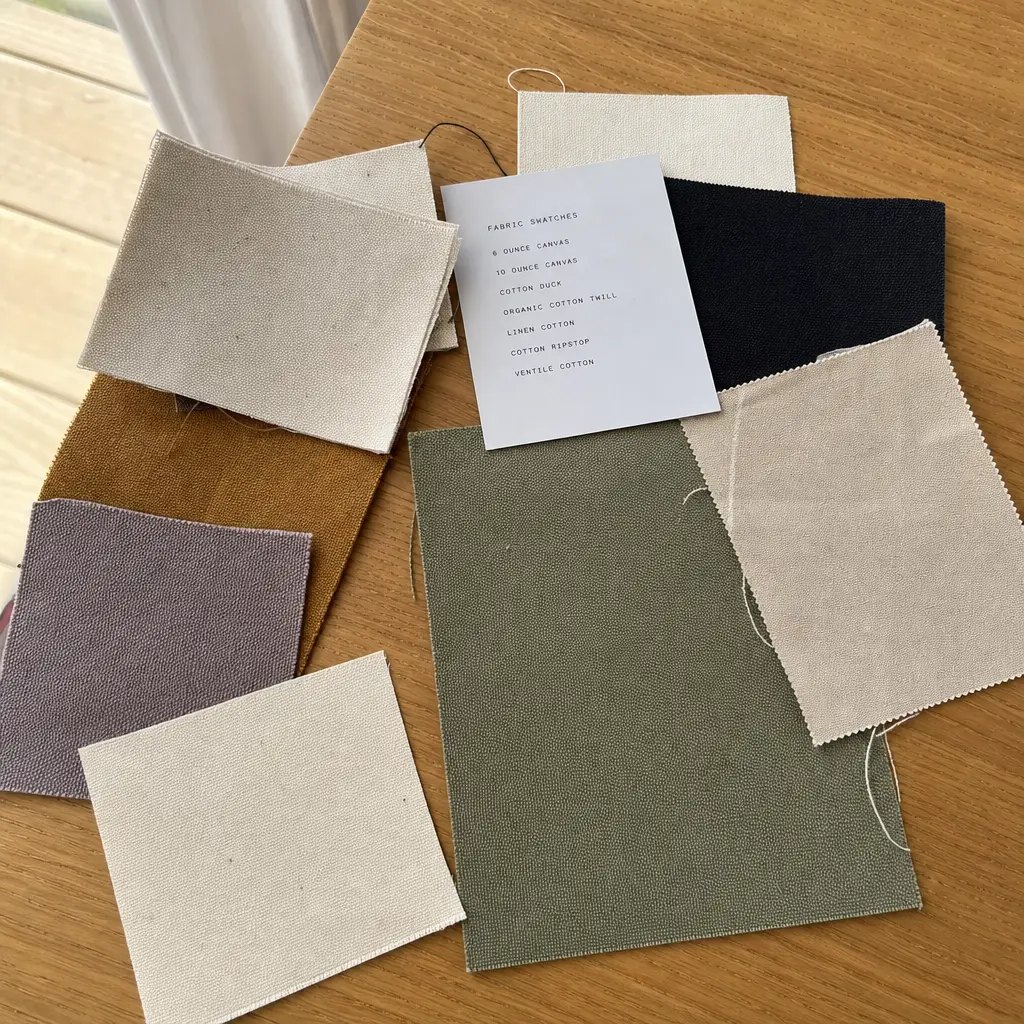
- Use an approved fabric swatch because natural jute shade changes from lot to lot.
- Do not expect jute print to look like canvas print; adjust artwork before bulk production.
- Judge strength by handles, bartacks, seams, and gussets, not only by fabric thickness.
- Give the factory the real coffee use case so it treats the tote as branded merchandise, not a generic sack.
Begin with the use case instead of a generic tote photo
Many sourcing problems start with a photo and a target price. The supplier quotes something similar, the buyer compares numbers, and only later does everyone discover that the bag is too small for the coffee pack, too rough for a paid item, or too bulky for the subscription carton. A stronger audit starts with a simple question: what must this bag do?
A tote for two 250 g coffee packs and a postcard can be lighter and smaller than a reusable retail tote expected to carry beans, cups, filters, and a grinder accessory. A cafe merchandise tote needs a cleaner front panel and more careful print placement than a warehouse insert. A distributor resale bag needs reliable carton counts, SKU separation, barcodes if required, and repeatable specifications for replenishment.
Use the intended load and retail environment as the audit baseline. If the bag will be sold in-store, odor, surface cleanliness, handle comfort, print alignment, and folded appearance are commercial defects. If it will be packed with roasted coffee, the inside surface becomes more important. Loose fibers, lint, oil marks, or sharp thread ends can make a premium coffee kit feel careless.
Write the use case into the specification sheet before requesting quotes. That one step prevents factories from defaulting to the cheapest stock tote. It also makes quote comparison fair. A subscription-kit tote, for example, may need tight fold control and lint management. A retail tote may justify heavier fabric and a smoother handle because customers will touch it before buying.
- Retail merchandise: prioritize consistent shade, clean stitching, stable print, and comfortable handles.
- Gift-with-purchase: balance cost, natural variation, acceptable strength, and compact packing.
- Subscription kits: control folded size, inside cleanliness, lint, and carton count accuracy.
- Wholesale distributor programs: require carton marks, SKU separation, packing lists, and repeatable specs.
- Trade show giveaways: focus on fast lead time, lightweight structure, and bold simple artwork.
Audit the jute fabric: GSM, weave, lamination, and natural variation
Jute is a natural fiber, not a single uniform material. A factory quote should state GSM, weave density if available, lamination status, color treatment, and tolerance. Many commercial jute totes sit around 270-320 GSM. Premium retail programs may move to 320-380 GSM, but heavier is not automatically better. Extra weight increases freight cost, stiffens the bag, and can create bulky corners or cracking along folded laminated seams.
During the audit, look at fabric storage first. Jute should not sit directly on the floor or near chemicals, fuel, wet pallets, or damp walls. Rolls should be protected from dust and moisture. Ask how incoming fabric is checked before cutting. A reliable factory should inspect roll width, weight, weave density, shade, hairiness, stains, broken yarns, and lamination quality.
Laminated jute deserves close attention. Clear LDPE lamination around 0.02-0.04 mm gives the bag more structure and helps it resist light moisture from handling. It also reduces shedding. But poor lamination can smell chemical, bubble, peel, or crack at folds. Unlaminated jute looks more natural and rustic, yet it sheds more fibers and offers less protection against moisture. For premium gift totes, a cotton lining can improve touch and inside cleanliness, but it adds cost, sewing time, and inspection points.
Ask the factory where the fabric comes from. Some factories buy from a stable mill. Others source from the open market based on price and availability. Both can work, but the risk is different. Stable sourcing usually improves repeat-order shade and weave consistency. Open-market sourcing may be cheaper, but buyers should insist on swatch approval before each order.
- Set a fabric target such as 320 GSM with ±10 GSM tolerance instead of accepting “standard jute.”
- Compare bulk material with the approved swatch under natural light and indoor light.
- Check roll edges for broken yarns, uneven lamination, stains, and shade bands before cutting.
- Reject damp, moldy, oily, or strongly chemical-smelling fabric before production starts.
- For higher-end coffee gifts, consider cotton lining, but budget for extra labor and lead time.
- Confirm whether the material is natural, bleached, or dyed jute; bleaching and dyeing add separate quality risks.
Inspect construction where jute tote bags usually fail
Most jute tote failures appear at predictable points: handle attachments, side seams, bottom gussets, top openings, and corners. Buyers often focus on the front logo because it is the most visible part of the bag. Customers, however, judge the product the moment they load it. A good-looking tote that fails after carrying several coffee packs can damage brand trust quickly.
Handle reinforcement is the first area to audit. Jute is coarse and loosely woven compared with canvas, so stitches must grip the fabric without cutting through it. A simple straight stitch is rarely enough for a reusable coffee tote. Bartacks, cross-stitch reinforcement, wider handle insertion, or top-edge binding can make the difference between a bag that survives real use and one that tears at the first stress point.
Walk the sewing line if possible. Check machine setup, needle size, thread type, operator consistency, and in-process QC. A needle that is too thin may break or fray jute yarns; a needle that is too thick can leave visible holes and weaken the seam. Thread should be strong polyester or cotton-poly, not weak spun cotton that degrades with moisture. Stitch density around 8-10 stitches per inch is a practical target for many constructions, but consistency matters as much as the number.
If the tote is laminated, seams become thicker and may be more slippery. If it has a cotton lining, the lining must fit cleanly and not twist when the bag is filled. Put real coffee packs inside the sample. The bottom should sit properly, the gusset should open without distortion, and the handles should carry the load without pulling the top edge out of shape.
- Check every handle attachment point for bartacks or equivalent reinforcement, not just a single stitch line.
- Specify handle drop, commonly 20-25 cm for shoulder carry, depending on finished bag size.
- Use top-edge binding when durability and a cleaner retail finish justify the added cost.
- Review bottom corners closely; gusseted totes carry stress there when loaded with coffee packs.
- Inside seam finishing matters when coffee bags will slide in and out repeatedly.
- Look for skipped stitches, loose threads, puckering, uneven seam allowance, and yarn breakage.
Print audit: make coffee artwork realistic for jute texture
For many roasters, the tote carries the brand as strongly as the coffee bag. That makes print quality important, but jute has limits. Its surface is coarse, uneven, and absorbent. A logo that looks crisp on a smooth cotton tote may look broken on jute unless the artwork is adjusted. Fine origin maps, tiny tasting notes, QR codes, halftones, and gradients are risky without a real print sample.
Screen print is usually the most reliable method for one to three spot colors and bold artwork. Keep line thickness at 2 mm or more where possible. Large solid areas should be tested for even coverage and rub resistance. Heat transfer can show more detail, but it must be tested on the exact jute surface and lamination. Poor transfer adhesion can peel at the edges, especially when the bag is folded or flexed.
Audit the printing area, not only finished samples. Ask how the factory controls artwork positioning, screen preparation, drying or curing, ink storage, and color matching. Previous jute samples show experience, but they do not prove your logo will print well. The approved pre-production sample must use the final fabric, final artwork size, final ink color, and final print position.
Odor also belongs in the print discussion. Coffee merchandise should avoid strong solvent smell. Water-based inks are often preferable when suitable because they tend to have lower odor. Whatever ink system is used, curing must be complete before packing. Ink that is not fully dried or cured can rub off on shelves, transfer to clothing, or create smell inside sealed cartons.
- Use vector artwork with Pantone references, print size, and measured placement from finished bag edges.
- Keep critical lines and text at 2 mm or thicker where the design allows.
- Allow realistic color tolerance, such as Delta E < 3.0, because natural jute affects ink appearance.
- Define print position tolerance, commonly ±2 mm, based on the finished bag, not only cut panels.
- Test dry rub, light scratch, and adhesion after curing, especially on large solid prints.
- Avoid critical artwork across seams, heavy wrinkles, gusset folds, or curved surfaces.
Understand MOQ and cost drivers before comparing quotes
A low MOQ can be useful, but it is not automatically safer or cheaper. Jute tote MOQ is driven by fabric roll consumption, lamination setup, handle material, print screens, sewing efficiency, packing labor, carton utilization, and whether the factory is using stock or custom material. If a supplier offers a very low quantity, ask what specification is being compromised or limited.
Quote comparison needs normalization. One supplier may quote 270 GSM unlaminated jute, narrow handles, one-color print, and bulk carton packing. Another may quote 340 GSM laminated jute, cotton webbing handles, individual packing, carton labels, and stronger export cartons. Those are different products. Procurement teams should compare fabric GSM, lamination, lining, handle, reinforcement, print, packing, carton data, and inspection terms before discussing price rank.
Ask the factory to explain MOQ logic during the audit. Is the minimum based on a 100-meter fabric roll, a lamination plant setup, a handle dye lot, or a printing line minimum? If the order uses part of a fabric roll, what happens to the balance? Will the factory reserve it for your repeat order, or use it elsewhere? This matters for coffee roasters planning seasonal replenishment, because shade mismatch between batches can make store displays look inconsistent.
Small orders can carry a higher unit cost for valid reasons. Sample handling, screen setup, cutting loss, line changeover, custom packing, and export documentation do not shrink in proportion to quantity. A good supplier should explain these costs clearly rather than hiding them inside vague charges.
- Main cost drivers include GSM, lamination, lining, handle material, print colors, print area, reinforcement, packing, and inspection requirements.
- Compare unit weight, pieces per carton, carton dimensions, gross weight, and estimated CBM per 1,000 pcs.
- Custom dyed handles or dyed jute often require higher MOQ and longer preparation time.
- Multiple artwork versions can add screen charges, usually quoted per screen, and increase changeover time.
- Retail-ready packing costs more per piece than loose bulk packing, especially on small orders.
- Clarify whether leftover fabric will be reserved for repeat orders or released for other production.
Approve samples as production evidence, not just attractive photos
A showroom sample is useful for early discussion, but it should not be the basis for bulk approval. The safest pre-production sample is made with the same jute, same lamination or lining, same handle, same thread, same print method, same sewing process, and same packing direction as the bulk order. If any material is substituted, the factory should identify it in writing.
Sample review should include practical use, not only appearance. Measure the bag flat. Fill it with the actual coffee packs or merchandise bundle. Check whether the gusset opens correctly and whether the bag stands as intended. Carry it by hand and on the shoulder. Rub the print after curing. Seal the sample in its planned packing for several days, then open it and smell it. That simple odor check often catches problems that photos never show.
For subscription kits and distributor programs, ask for a packed carton sample or at least a packing mock-up. One master carton with the planned inner packing and piece count helps the buyer confirm carton size, gross weight, crease risk, barcode position, and warehouse handling. If the carton is too heavy or too large, it is better to learn before mass production.
Keep signed samples on both sides. The factory should retain one approved sample near production and QC. The buyer, agent, or inspector should keep another for comparison. When repeat orders happen months later, that physical sample is often more useful than an email thread.
- Approve actual dimensions and tolerance, such as ±1.0 cm, after measuring the finished sample.
- Confirm handle drop by hand carry and shoulder carry, not only by ruler.
- Test with real coffee packs, filters, mugs, or inserts instead of paper filler.
- Do not approve bulk production from digital print placement images alone when logo position matters.
- Request a sealed packing sample to evaluate odor retention, crease marks, and carton fit.
- Keep one signed approval sample at the factory and one with the buyer or inspection agent.
Packing and freight: protect the tote before it reaches the roastery
Jute totes can arrive creased, musty, misshapen, or dusty if packing is treated as an afterthought. Flat packing is common and efficient, but over-compression can leave deep fold lines, especially on laminated jute. Individual polybags protect against dust and moisture, yet they may conflict with sustainability policies. Paper bands or recycled paper wraps look more natural, but they provide less moisture protection during ocean or truck transit.
Review packing during the audit. Look at the packing tables, carton quality, sealing method, desiccant use, carton storage, and loading conditions. Packed jute bags should not sit near inks, solvents, wet pallets, fuel, or damp warehouse corners. If cartons absorb odor before shipment, the buyer may receive a clean-looking product that smells wrong when opened.
Carton data affects landed cost. A tote that is slightly wider, folded poorly, or packed loosely can increase CBM across a few thousand pieces. Coffee distributors also need reliable carton counts and clear labels to avoid receiving delays. Carton marks should identify item number, quantity, gross weight, net weight, carton size, and destination reference if required.
For export shipments, carton strength matters. Jute is heavier and bulkier than many lightweight promotional bags. A 5-ply corrugated carton with suitable burst strength, such as ≥ 14 kg/cm², helps prevent collapse during stacking. For humid routes, rainy seasons, LCL shipments, or long storage periods, desiccant blocks can reduce moisture risk. They are not a cure for wet packing, but they are useful protection when the material is already dry.
- Set pieces per inner pack and export carton count before production, commonly 20-25 pcs per carton.
- Confirm whether each bag uses a polybag, paper band, paper wrap, or no individual packing.
- Avoid over-compression that creates permanent fold marks on laminated jute.
- Use desiccant where route, season, or warehouse conditions create moisture risk.
- Check carton marks, barcode placement, SKU separation, and packing list accuracy.
- Verify carton strength, sealing quality, gross weight, and pallet plan if freight handling is demanding.
Build lead time around coffee launch calendars
Coffee promotions are often date-sensitive. Totes may be tied to holiday bundles, cafe openings, subscription drops, origin releases, trade shows, or distributor launches. A delay of one week can force rushed shipping, split deliveries, or a campaign without the planned merchandise. Factory lead time should therefore be audited against the full coffee launch calendar, not treated as a standalone number.
A normal jute tote timeline includes material booking, possible lamination, sample making, sample revision, print screen preparation, cutting, printing, curing, sewing, trimming, packing, inspection, and shipping. Each step has its own failure points. One artwork revision, fabric shade rejection, late handle delivery, or QC hold can push the schedule. Good suppliers can show a production plan instead of simply saying “30 days.”
For first orders, allow time for at least one sample correction. Jute print often needs adjustment after the first trial because the weave breaks fine lines or changes color appearance. Construction may also need tuning if the gusset does not stand well or the handle drop feels wrong. Repeat orders can be faster, but only if fabric and handle material remain available.
Work backward from the actual launch date. If the tote appears in photography, the sample must be ready before the shoot. If it goes into a subscription kit, the bags must arrive before coffee roasting and fulfillment begin. Roasted coffee should not wait in a warehouse because a merchandise component is late. Include inspection time, export booking, customs clearance, domestic delivery, and warehouse receiving in the schedule.
- Plan sample development of about 7-10 days before final campaign photography.
- Leave 3-5 days for print screens, artwork checks, and color trials where needed.
- Check local holidays, peak export season, and material market delays before confirming launch commitments.
- Build final inspection time, often 2-3 days, into the purchase plan.
- Ship buffer stock early when the tote is part of a fixed retail kit or promotion.
- Create a backward schedule from launch date through fulfillment, roasting, inbound freight, inspection, and production.
Factory evidence that matters more than a polished sales profile
A glossy supplier profile can look impressive without proving production control. For jute tote bags, useful evidence is specific: fabric storage, cutting tables, sewing machines suitable for thick natural fibers, printing area, curing setup, QC checkpoints, trimming stations, packing tables, carton storage, and recent production records for similar constructions. A supplier does not need to disclose confidential customer names, but it should be able to prove that the process exists.
Remote audits can work when the buyer asks for the right evidence. Request live video walkthroughs, timestamped photos, material swatch mailing, print testing videos, load-test videos, packing photos, and sample measurement records. A brochure is not enough. Strong suppliers usually answer technical questions with numbers: GSM, handle width, tolerance, AQL level, carton count, lead time by step, and packing method.
Ask to see QC forms. A real manufacturer or well-managed sourcing partner should have incoming material inspection records, print approval records, in-process sewing checks, final inspection sheets, and packing count controls. If a supplier cannot provide any of these, it may be outsourcing production without much visibility. That is not always a dealbreaker, but it changes the risk. The buyer should then strengthen sample approval, third-party inspection, and pre-shipment evidence.
Communication quality is evidence too. A factory that challenges unrealistic artwork, warns about odor risk, explains MOQ logic, and suggests practical cost reductions is often safer than one that only promises low price and fast delivery. Procurement teams should reward specificity.
- Look for product-specific QC records rather than generic inspection stamps.
- Request photos of the booked material lot before cutting starts.
- Confirm whether printing, sewing, lamination, and packing are in-house or outsourced.
- Check how defective panels are removed before sewing, not only how finished bags are sorted.
- Verify that approved samples are kept for bulk production and repeat-order comparison.
- Treat specific technical answers as a stronger signal than broad sales promises.
Specification comparison for buyers
| Spec decision | Recommended option | When it fits | Buyer risk to check |
|---|---|---|---|
| Jute fabric weight | 14x15 weave at 270-320 GSM with ±10 GSM tolerance; 320-380 GSM for premium retail totes | Coffee bean retail bags, cafe merchandise, gift bundles, grocery-style reusable bags, and distributor promotions | Low GSM can look loose, hairy, and cheap; very heavy jute increases freight weight and may crack or bulk up at folded seams |
| Inner construction | Natural jute with 0.02-0.04 mm clear LDPE lamination, or 4-6 oz cotton lining for a softer interior | Lamination suits coffee packs, shelf structure, and light moisture resistance; cotton lining suits higher-end gift totes | Lamination odor, bubbles, peeling, or uneven coverage damage the retail impression; cotton lining adds labor cost and often 5-7 days of lead time |
| Handle type | Cotton webbing 2.5-3.8 cm wide, or rolled/padded jute handle with 4-6 bartack reinforcements | Cotton webbing is smoother for daily carry; jute handles keep a rustic look for roaster gift sets and origin-themed launches | Handle drop under 20 cm, rough grip, weak bartacks, poor seam pullout resistance, and color bleeding from dyed handles |
| Bag size | Retail: 35 W x 40 H x 15 cm gusset; Gift: 30 W x 35 H x 12 cm gusset; tolerance ±1.0 cm | Large size fits several coffee bags plus merchandise; smaller size fits subscription sets, gift-with-purchase, and giveaways | Oversized bags raise carton volume and landed cost; undersized gussets may not stand upright with coffee packs inside |
| Print method | Screen print for 1-3 spot colors with minimum 2 mm line thickness; heat transfer only after adhesion testing | Simple roaster logos, cafe names, origin graphics, seasonal marks, and bold retail campaign artwork | Jute texture causes broken edges; fine text under 2 mm, gradients, QR codes, and tight registration need real sampling |
| Minimum order logic | MOQ based on fabric roll consumption, lamination setup, print screens, handle material, and packing style | Annual retail programs, seasonal gift packs, distributor launches, and multi-location cafe replenishment | A low MOQ may hide higher unit cost, stock fabric limitations, inconsistent shade, or fewer packing options |
| Sampling route | Pre-production sample using actual jute, actual handle, actual print color, actual lining or lamination, and final packing method | Required before first orders, new artwork, new size, new lining construction, or any change in handle style | Sales samples made from substitute fabric can approve the wrong stiffness, odor level, print result, or load-bearing performance |
| Packing method | Flat packed with individual 0.03 mm polybag or paper band, 20-25 pcs per 5-ply export carton | Retail-ready programs, warehouse receiving, subscription kitting, and distributor shipments | Over-compressed cartons create permanent creases; damp cartons transfer odor and raise mildew risk |
| Inspection threshold | AQL 2.5 for major defects, 4.0 for minor defects; add functional tests for seam strength, print rub, odor, and carton count | Importers, coffee chains, and distributors needing consistent store presentation across multiple locations | Visual-only inspection misses handle failure, lamination defects, print flaking, odor problems, and packing quantity errors |
Buyer checklist before sampling
- Define the use case first: retail sale, gift-with-purchase, subscription kit, trade show giveaway, cafe merchandise, or distributor resale.
- Specify finished dimensions with width, height, gusset, handle drop, and measurement tolerance, such as ±1.0 cm. Do not send only a reference photo.
- State the target jute fabric weight, such as 320 GSM ±10 GSM, or approve a physical reference swatch. Avoid vague terms like “standard jute.”
- Choose the inner construction: unlaminated jute, LDPE laminated jute with stated thickness, cotton lining with stated oz weight, or lamination plus bound seams.
- Provide artwork as vector files with Pantone references, print size, print position, and minimum line thickness of 2 mm or more for jute texture.
- Confirm the load requirement: 1 kg, 3 kg, 5 kg, or heavier coffee merchandise. Add a test method, such as 5 kg static load for 4 hours.
- Review handle comfort, handle drop of about 20-25 cm for shoulder carry, bartack location, thread type, and reinforcement before approving the sample.
- Set acceptance criteria for odor, loose fibers, stains, broken yarns, lamination bubbles, print registration, loose threads, and carton moisture damage.
- Request carton dimensions, gross weight, pieces per carton, packing photos, and pallet loading plan if freight cost or warehouse space matters.
- Align sample approval, bulk material booking, printing, sewing, inspection, and shipping dates with your coffee launch calendar.
Factory quote questions to send
- What jute fabric construction and GSM are included in this quote, and what tolerance will you guarantee? Can you send a swatch from the same material lot?
- Is the quoted fabric laminated, unlaminated, or lined? If laminated, what is the LDPE thickness, such as 0.02-0.04 mm, and how is it applied?
- What handle material, width, length, color, and reinforcement method are included? How many bartacks are used at each handle point?
- Which print method is quoted, how many colors are included, and what is the maximum printable area on the selected bag size?
- Are print screens, sample charges, artwork adjustment, custom labels, inner packing, barcode stickers, and export cartons included or charged separately?
- What is the MOQ for this exact size, fabric, handle, lining, print, and packing combination? Is that MOQ based on a full fabric roll?
- What are the sample lead time and bulk lead time after sample approval and deposit? What steps could delay the schedule?
- What size tolerance, color tolerance, and AQL level will you use for final inspection? Can you accept AQL 2.5 major / 4.0 minor?
- Can you provide pre-shipment photos, carton markings, packing list, production records, and support for third-party inspection before shipment release?
- What specification changes would reduce cost without weakening the bag or harming retail appearance, such as using standard fabric width or fewer print colors?
Quality-control points to confirm
- Measure finished width, height, gusset, handle length, and handle drop against the approved sample and agreed tolerance, commonly ±1.0 cm.
- Verify jute GSM with the agreed ±10 GSM tolerance, or compare bulk fabric to the approved swatch for weight, weave density, shade, and hairiness.
- Inspect lamination for odor, bubbles, peeling, cracking at folds, cloudy patches, and weak bonding near seams.
- Check print color, position, edge clarity, curing, dry rub resistance, and adhesion on the actual jute surface. Use ±2 mm print-position tolerance where suitable.
- Test handle strength using the agreed load weight and hold time, such as 5 kg for 4 hours, with close attention to bartacks and seam pullout.
- Review seam allowance, stitch density of about 8-10 stitches per inch, skipped stitches, loose threads, broken yarns, and corner reinforcement.
- Check inside cleanliness for lint, loose jute fiber, oil marks, stains, sharp thread ends, and anything that may damage coffee retail packs.
- Confirm unit packing, carton count, carton strength, moisture protection, shipping marks, barcode placement, and SKU separation if required.
- Smell-test random cartons after opening. Musty, chemical, fuel-like, or damp odor is a serious risk for coffee brands and should trigger investigation or rejection.
- Keep the signed approval sample, bulk inspection report, carton photos, and fabric swatch for repeat-order comparison.