Why Museum Shops Need a Dedicated Jute Tote Bag Order Guide
Museum gift shops have unique requirements: bags must be sturdy enough to carry exhibition catalogs and gift items, visually appealing to reflect the museum's brand, and sustainable to align with institutional values. Jute tote bags are a natural choice, but ordering them in bulk requires navigating fabric grades, print methods, and supplier capabilities that differ from standard cotton or polypropylene bags.
This guide is written for procurement teams, brand managers, and retail buyers who need to write a clear RFQ, compare supplier quotes, and avoid common production pitfalls. We focus on the specific decisions that affect cost, quality, and delivery for museum shop orders.
- Jute is a natural fiber with variable texture; standardizing GSM and finish prevents surprises.
- Museum branding often involves fine details (logos, exhibition artwork) that require precise print registration.
- Seasonal exhibition schedules demand reliable lead times; a 2-week delay can miss a launch window.
Understanding Jute Fabric Weight (GSM) for Museum Totes
Jute fabric weight is measured in grams per square meter (GSM). For museum shops, the sweet spot is 270–350 GSM. Below 250 GSM, the bag feels flimsy and may tear under the weight of a hardcover catalog or a ceramic gift. Above 350 GSM, the bag becomes stiff and heavy, increasing shipping cost and reducing foldability for storage.
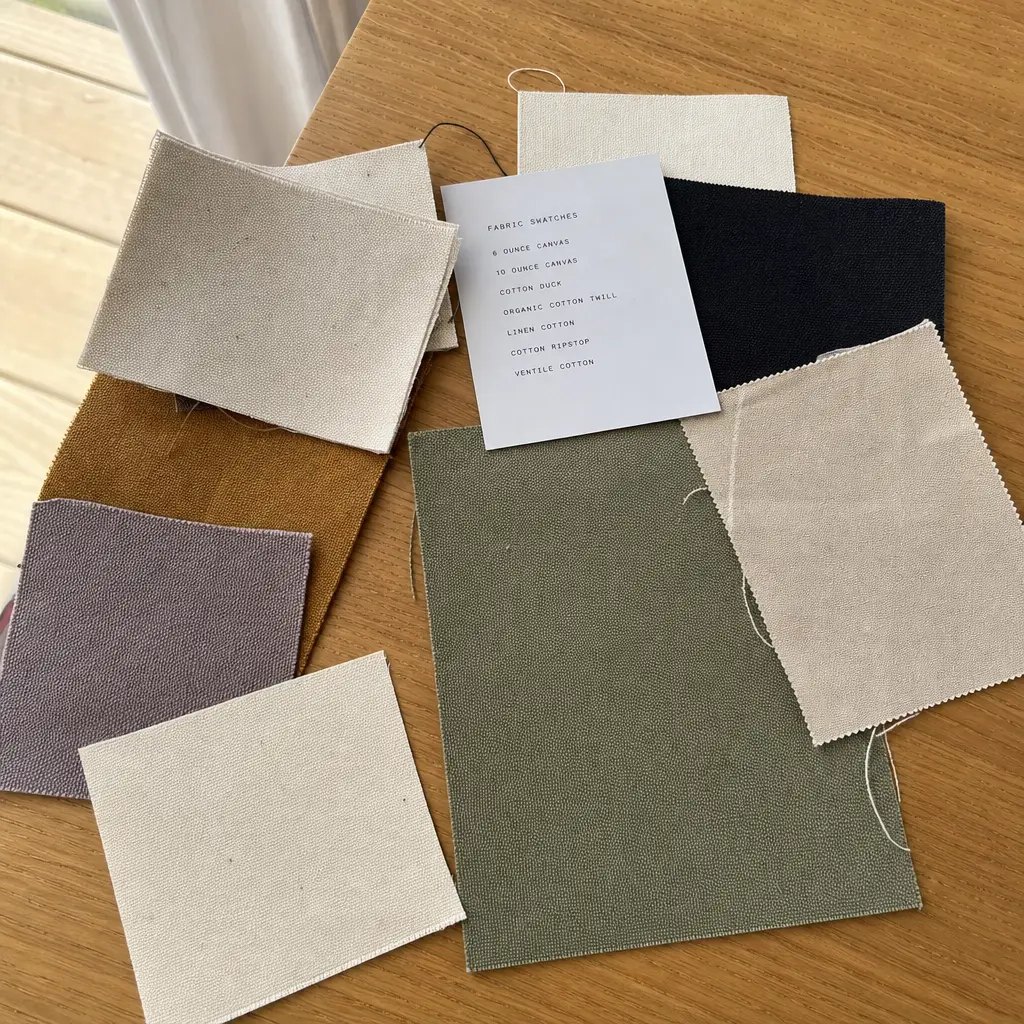
When requesting quotes, ask for a swatch card that includes 270, 300, and 350 GSM samples. Feel the fabric yourself: a 300 GSM jute tote offers a good balance of stiffness and flexibility. Also check for fiber shedding: lower-grade jute may leave loose fibers on clothing, which is unacceptable for a museum shop environment.
- Request a 10x10 cm swatch for each GSM option; weigh it to confirm the GSM.
- Check for uniform weave: no large gaps or uneven yarn thickness.
- Avoid bleached or heavily dyed jute if you want a natural, earthy look; it may weaken fibers.
Choosing the Right Bag Size and Gusset
A standard museum tote bag size is 35 cm (length) x 40 cm (height) x 10 cm (gusset). This fits a typical exhibition catalog (A4 or slightly larger) along with a small gift item. If your museum sells larger items (posters, framed prints), consider increasing the height to 45 cm or the gusset to 12 cm.
Custom sizes are possible but increase MOQ and tooling cost. Ask your supplier for a paper mock-up of the proposed size before committing to a sample. Verify that the handle attachment points are reinforced: a bag that carries heavy items needs double stitching at the stress points.
- Standard size (35x40x10 cm) is the most cost-effective; custom sizes may add 10–15% to unit cost.
- Gusset width affects bag volume and shape; a 10 cm gusset gives a rectangular base that stands upright.
- Always test the bag with your actual merchandise before approving the sample.
Handle Specifications: Length, Width, and Attachment
Museum visitors often carry bags over the shoulder, so handle length should be at least 60 cm from bag top to handle end. Handle width of 2.5 cm is standard; narrower handles dig into the shoulder, while wider handles add cost. Cotton webbing is preferred over jute handles because it is softer and more durable.
The most common failure point is handle detachment. Require double stitching at the attachment point and ask for a handle pull test report. A bag that fails under 10 kg load is not suitable for museum use. If your supplier cannot provide a test report, consider ordering a third-party inspection.
- Double-stitched handles with a bartack at the stress point add minimal cost but significantly improve durability.
- Cotton webbing handles cost about $0.10–$0.15 more per bag than jute handles but last longer.
- Request a handle pull test on the pre-production sample; reject if any stitch breaks under 10 kg.
Print Methods for Jute: Screen Print vs. Heat Transfer vs. Woven Label
Screen printing with water-based ink is the most reliable and cost-effective method for jute tote bags. It bonds well with the fibers and can achieve good color opacity with 1–3 colors. Heat transfer (vinyl or sublimation) is not recommended because jute's rough surface causes poor adhesion and peeling after a few uses.
Woven labels are an excellent option for museum branding: they look premium and last the lifetime of the bag. However, they add cost (approx. $0.20–$0.30 per bag) and require a minimum order of 500–1,000 labels. For a museum shop that values a clean, minimalist look, a woven label stitched onto the bag front or side seam is a strong choice.
- Screen print: best for 1–3 colors, cost-effective for 500+ pcs, good durability.
- Heat transfer: avoid for jute; test a sample if you must use it, but expect peeling.
- Woven label: premium look, higher cost, suitable for small logos or text.
- Always request a digital print proof at 300 DPI before screen making.
MOQ Logic: How to Optimize Your Order Quantity
Most jute bag suppliers set a minimum order quantity (MOQ) of 500 pcs per design per color. If you need 200 bags in red and 300 in blue, you may have to pay a higher unit price or meet a combined MOQ of 500 pcs across colors. Some suppliers allow splitting MOQ across color variants, but this is negotiable.
For a museum chain with 3–5 locations, ordering 1,000–2,000 pcs per design is usually the sweet spot: you get a competitive unit price (often $1.50–$2.50 per bag depending on specs) and can amortize the screen-making cost. If your order is smaller, consider sharing a container with another buyer or ordering a standard size that the supplier stocks.
- MOQ of 500 pcs per design is standard; negotiate for color splitting if needed.
- Unit price drops significantly between 500 and 1,000 pcs (often 15–20% reduction).
- Ask if the supplier offers stock bags that can be customized with a small print run.
Sample Approval Process: What to Check Before Bulk Production
A pre-production sample is non-negotiable. It should be made with the exact fabric, print, and handle specs you intend to order. Check the sample under natural light and compare the print color to your Pantone reference. Measure the bag dimensions, handle length, and gusset width with a tape measure.
Also perform a simple load test: fill the bag with 5 kg of weight (e.g., books) and carry it for 5 minutes. Check for stitch loosening, handle stretching, or fabric tearing. If the sample fails any of these checks, request a revised sample before approving bulk production. Never approve bulk production based on photos alone.
- Request a pre-production sample at least 2 weeks before bulk production deadline.
- Measure all dimensions; tolerance should be ±0.5 cm for bag size and ±1 cm for handle length.
- Perform a load test with your actual merchandise; document any issues with photos.
- Keep the approved sample as a reference for final QC inspection.
Packing and Carton Specifications for Museum Shop Orders
Standard packing for jute tote bags is 50 pcs per polybag (to protect from dust and moisture) and 200 pcs per export carton. Cartons should be made of 3-ply corrugated board with corner protectors if the bags are heavy. Ask the supplier to provide carton dimensions and weight so you can calculate shipping costs accurately.
If your museum shops require retail-ready display, you can request that bags be packed with tissue paper or a header card. This adds cost (approx. $0.05–$0.10 per bag) but saves labor at the retail location. Confirm the packing method in writing and request photos of the packed cartons before shipment.
- 50 pcs per polybag prevents scuffing and dust accumulation during transit.
- 200 pcs per carton is standard; verify carton weight to avoid exceeding shipping carrier limits.
- Retail-ready packing (tissue, header card) is available but increases unit cost and lead time.
- Request carton packing photos before shipment to confirm quality.
Lead Time and Schedule Risk Management
Typical lead time for a jute tote bag order of 1,000 pcs is 30–35 days from sample approval. This includes fabric weaving, cutting, printing, stitching, and packing. If you need the bags for a specific exhibition opening, add at least 2 weeks of buffer for sea freight (if importing) and potential customs delays.
Rush orders (15–20 days) are possible but usually incur a 15–25% surcharge. Before committing to a rush order, confirm that the supplier has available production capacity. Ask for a production schedule with milestones (fabric arrival, printing start, stitching start, packing) and request weekly progress updates.
- Standard lead time: 30–35 days for 1,000 pcs; add 2 weeks for sea freight.
- Rush orders: 15–20 days with 15–25% surcharge; confirm capacity before ordering.
- Request a production schedule with milestones and weekly updates.
- Always have a contingency plan: order 10–15% extra to cover defects or last-minute needs.
Comparing Supplier Options: Factory vs. Trading Company vs. Local Printer
For museum shops, the best sourcing route is usually a direct factory that specializes in jute bags. Factories offer the lowest unit price (often 20–30% lower than trading companies) and better control over fabric quality and production timelines. However, they require larger MOQs and may have longer lead times.
Trading companies can be useful for smaller orders (100–500 pcs) or if you need multiple product types in one shipment. Local printers are an option for very small orders (50–100 pcs) but charge significantly more per bag. For a museum chain ordering 1,000+ pcs, a direct factory is the most cost-effective and reliable choice.
- Direct factory: best for 1,000+ pcs, lowest unit price, direct quality control.
- Trading company: good for small orders or multi-product consolidation; higher unit price.
- Local printer: convenient for small runs (50–100 pcs) but expensive per bag.
- Ask for factory audit reports or third-party inspection certificates to verify capabilities.
Specification comparison for buyers
| Supplier option | What to verify | Commercial advantage | Buyer risk to control |
|---|---|---|---|
| Direct sewing factory | jute roll photos, lamination sample, odor-control process, handle pull evidence, and pre-shipment carton condition photos | Better sample-to-bulk control and faster production feedback | May be weaker on export paperwork or branded packing unless checked early |
| Trading company | Factory name, production photos, trim-source proof, and who owns QC decisions | Can coordinate small mixed orders and extra services | Markup can hide real factory capability and slow defect decisions |
| Specialized bag workshop | handle stitching, side gusset, lamination edge control, inner seam cover, and fiber shedding tolerance | More practical for detailed construction, trims, and repeat programs | Capacity may be limited during peak seasons |
| Low-price general supplier | laminated or unlaminated jute, cotton-jute blend, inner coating, odor control, yarn thickness, and color shade variation | Useful for simple promotional runs with loose specs | Material downgrades, weak packing, and vague inspection scope can erase savings |
| Retail-ready supplier | airing time, moisture absorber, carton liner, bundle wrap, odor separation, and warehouse ventilation before loading | Can handle labels, SKU separation, carton marks, and receiving rules | Higher unit cost must be compared against reduced warehouse work |
| Compliance-focused supplier | Fabric records, labeling review, test plan, and production traceability | Safer for retail programs and repeat brand orders | Documentation claims need evidence, not only sales language |
| Local sample room plus bulk factory | Signed sample, bulk factory handoff, first-piece photos, and deviation owner | Good for complex branding before large production | Sample room quality may not match bulk line unless handoff is controlled |
Buyer checklist before sampling
- Confirm jute GSM (270–350) and request a swatch card before bulk order.
- Verify handle attachment: double-stitched, minimum 2.5 cm width, 60 cm length.
- Request a pre-production sample with final print color and placement.
- Ask for a handle pull test report (minimum 10 kg load).
- Specify packing: 50 pcs per polybag, 200 pcs per carton with corner protection.
- Check MOQ per design and whether color variants can be combined.
- Confirm lead time in writing, including buffer for sea freight.
- Request a digital print proof at 300 DPI before screen making.
- Inspect carton dimensions and weight for shipping cost estimation.
- Ask for a factory audit report or third-party inspection certificate.
Factory quote questions to send
- What is your standard jute GSM range, and can you provide a swatch card for 270, 300, and 350 GSM?
- Do you offer a pre-production sample before bulk production? If yes, what is the sample cost and turnaround time?
- What is your MOQ per design, and can we combine multiple color variants in one order?
- What print methods do you recommend for jute, and what is the durability guarantee (wash cycles, rub resistance)?
- Can you provide a handle pull test report for your standard tote bag?
- What is your standard packing method, and can we customize polybag or carton labeling?
- What is your typical lead time from sample approval to shipment for 1,000 pcs?
- Do you offer third-party inspection (e.g., SGS, Bureau Veritas) at buyer's cost?
- What is your payment term structure (e.g., 30% deposit, 70% before shipment)?
- Can you share a recent reference order from a museum or cultural institution?
Quality-control points to confirm
- Fabric weight: Verify GSM using a digital scale on a 10x10 cm swatch; tolerance ±5%.
- Print adhesion: Perform a rub test (dry and wet) on printed area; no fading after 20 rubs.
- Handle pull test: Apply 10 kg static load for 1 minute; no stitch breakage or handle separation.
- Stitch density: Minimum 8–10 stitches per inch on all seams; check for skipped stitches.
- Color accuracy: Compare print to Pantone reference under D65 daylight lamp.
- Bag dimensions: Measure length, height, and gusset width; tolerance ±0.5 cm.
- Handle length: Measure from bag top to handle end; tolerance ±1 cm.
- Packing integrity: Check carton weight, seal, and polybag condition; no moisture or tears.
- Label placement: Verify woven label position and seam alignment; no crooked labels.
- Overall appearance: No loose threads, stains, or fiber shedding inside bag.