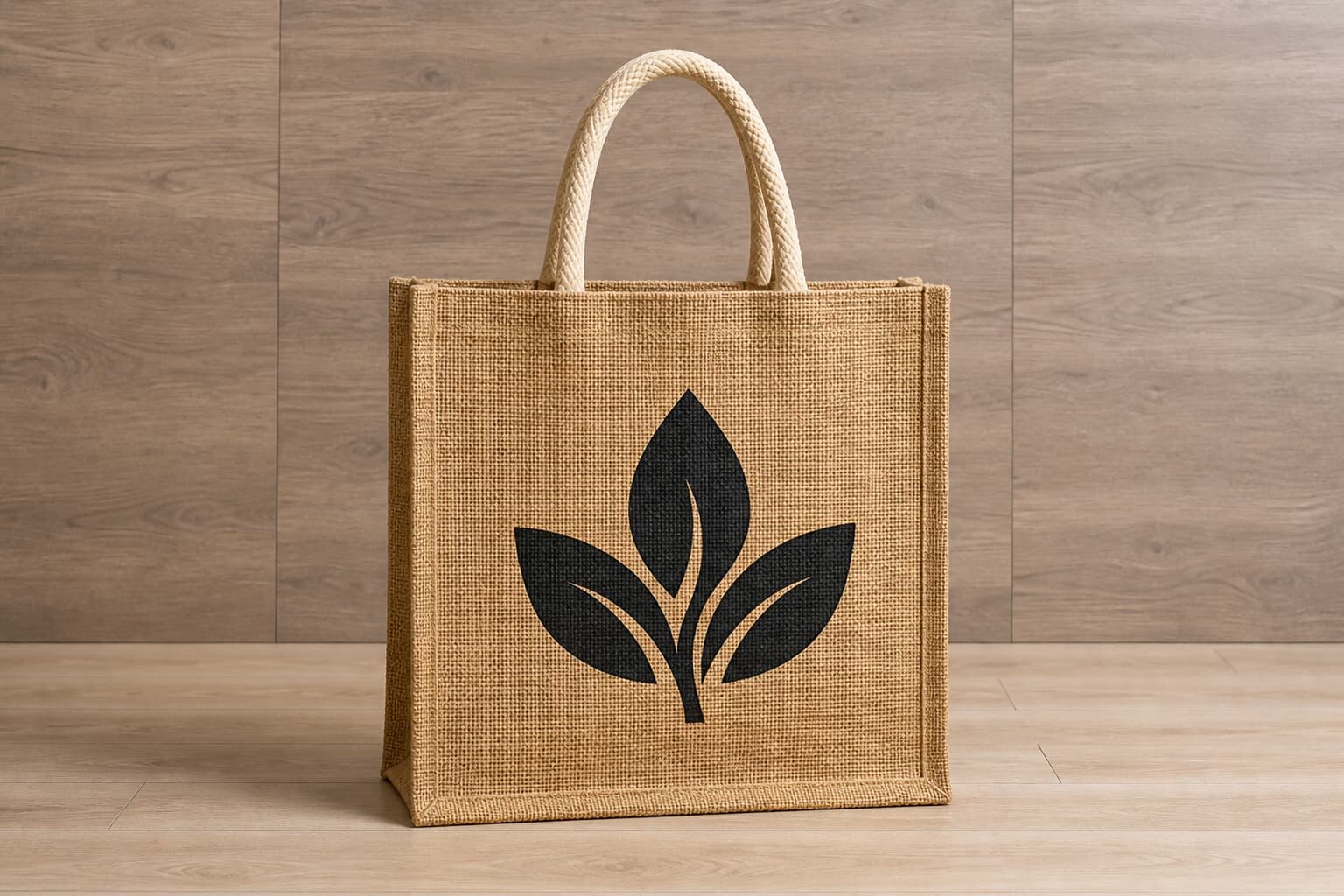
Why the print proof is the real risk point
For a jute shopping bag, the artwork file is never the whole story. The material is coarse, the surface is uneven, and the ink behavior changes as soon as the design moves from a screen to the actual fabric. A logo that looks sharp on a PDF can blur, compress, or shift once it hits a 300 to 450 GSM jute body, especially if the weave is open or the surface has dust, lint, or natural shade variation. That is why the proof stage matters more than the design stage in bulk buying.
Most disputes on printed jute bags are not about the existence of the logo. They are about where it sits, how large it prints, whether the edges stay clean, and whether the buyer approved a paper file when they really needed a production proof. If you are buying for retail, promotions, or resale, treat the proof as a commercial control point, not a courtesy sample. A good checklist prevents rework, protects margin, and keeps every department aligned before the first carton leaves the factory.
- Use the proof to verify print appearance on the real bag, not only the artwork layout.
- Treat the jute texture, color, and weave as part of the print spec.
- Lock the proof before bulk if your order has multiple colors, sizes, or pack formats.
Lock the bag spec before you review the artwork
A print proof is only useful if the bag spec is already fixed. Start with the exact size, gusset depth, handle type, handle length, stitch pattern, and jute weight. For many shopping bags, the fabric sits around 300 to 450 GSM, but the right choice depends on capacity, hand feel, and whether the bag needs to stand upright on retail shelves. If the fabric is too light, the print can distort when the bag is filled. If it is too heavy, the surface can become stiff and the ink may sit differently across the weave.
Also confirm whether the bag is plain jute, laminated on the inside, or finished with a coating that changes ink adhesion. A laminated bag can give cleaner print edges, while an untreated bag can absorb more ink and show more fiber texture. Buyers should define the print zone too, because a centered logo on the body is not the same as a side print near the gusset or a mark below the handle. The factory needs the same spec that will be used in production, or the proof will not protect you in bulk.
- Confirm size in cm or inches, plus tolerance for finished measurements.
- Specify GSM and whether the bag is raw, laminated, or coated.
- State handle style, handle length, and whether the print must avoid seam lines.
- Identify the exact print zone on front, back, gusset, or bottom panel.
Choose the print method that fits jute, not just the artwork
On jute shopping bags, screen printing is often the default because it handles solid logos, strong color blocks, and practical run sizes. It is usually the safest choice when the buyer wants a clear brand mark and repeatable placement. For simple one-color artwork, it can be cost-effective and easy to control. If the design needs sharper small type, the buyer should still test the line weight carefully, because the weave can swallow thin strokes. Dark ink on natural jute usually reads better than pale ink, but the final result depends on the base shade and the fabric finish.
Some buyers ask for digital print, transfer print, or embroidery-like decoration, but those methods are not always ideal for the bag structure or target price. Digital print can be useful for short runs or artwork with more detail, yet it may not match the durability or texture preference of a traditional jute shopper. Multi-color designs also need extra caution because register shift can appear on the rough surface. The proof should tell you not only how the image looks, but whether the chosen method is stable enough for the MOQ and lead time you are buying.
- Use screen print for strong logos, simple art, and repeatable bulk output.
- Test small text and thin lines before approving any method on jute.
- Ask the factory to explain how many colors each method can hold without visible drift.
- Match the method to the order size, not to a marketing preference.
What to send the factory so the proof is actually usable
A good proof starts with a good brief. Send the logo in vector format, a clean PDF, or a high-resolution file that preserves edges. Include Pantone references if your brand cares about color, but do not assume Pantone alone solves the issue on natural jute. The factory still needs a real sample surface or swatch to see how the ink behaves. Also include the exact placement, logo size in millimeters, safe margins from the top seam, and whether the same print must appear on both sides. If your artwork includes fine type, ask the factory to flag any line that may disappear in print.
For approval control, ask for one document or image set that shows the bag front, back, and close-up of the print at actual scale. If there is a revision, label it clearly by version number and date. The worst sourcing mistake is approving a conversation thread with no control record. A buyer can avoid that by requiring a proof sheet that states bag size, GSM, print method, ink color, and the exact revision being approved. That proof sheet becomes the reference when the bulk lot arrives.
- Send vector artwork and a clean proof file with version control.
- Specify print size, location, and safe margin from seams and edges.
- Define color references, but ask for a real fabric proof for final approval.
- Request close-up and full-view images before you sign off.
How to review the proof like a procurement buyer
When the proof arrives, do not just ask whether the logo looks nice. Compare it against commercial acceptance points. First, check placement: is the logo centered, is it level, and does it respect the top edge and handle spacing? Second, check size: if the logo is too small, it can disappear into the jute weave; if it is too large, it can crowd the seam or fold line. Third, check color: the same brand color can look duller on natural fiber than it does on coated paper, so the proof should be judged under steady light, not by phone photo alone.
Then inspect the print surface itself. Look for ink bleed, pinholes, broken letters, uneven pressure, and distortion caused by fabric tension. If the bag is stitched before printing, make sure the stitching does not pull the artwork off center. If the bag is printed first, confirm the later sewing step does not damage the image. A clean proof is not just attractive; it is repeatable. The buyer needs enough evidence to know that the bulk run can match the approved sample without hidden surprises.
- Check centering, level, and distance from seams before judging color.
- Compare the proof in steady light, not only on a phone screen.
- Reject thin lines or small text that break into the jute texture.
- Confirm the print still looks acceptable after the bag is folded or filled.
Set a sample approval process that the factory can follow
For bulk orders, one approval step is rarely enough. The practical sequence is usually artwork confirmation, strike-off or printed swatch, pre-production sample, then first production article. Each step should answer a different question. The strike-off checks how the ink sits on the fabric. The pre-production sample checks the entire bag construction. The first article checks whether the production line is still running to spec after the order starts. If you skip one of these, you often discover the error only after cartons are packed.
Make the approval process simple and visible. Ask the factory to mark each sample with date, version, and PO number, then keep one sealed reference sample on both sides if possible. If a revision is needed, require the factory to state exactly what changed. This matters because jute is a natural material and slight shade variation is normal, but uncontrolled variation is not. Buyers should approve the acceptable range in writing so the factory knows what is normal and what is a reject.
- Use a strike-off for print appearance and a full sample for construction.
- Keep one sealed reference sample tied to the purchase order.
- Require version numbers on every revised proof or sample.
- Approve a first production article before the line completes the full order.
Compare quotes by the proof work, not only by the bag price
A quote for a jute shopping bag should show more than unit price. Buyers need to know whether the price includes blank bag construction, print setup, screens or plates, sample charge, revision charge, packing method, and any testing or certification documents requested by the market. A low per-unit quote can hide setup fees that make the order expensive once the proof process begins. Ask each supplier to separate the costs so you can compare them on the same basis, especially if one factory uses screen print and another suggests a different method.
MOQ logic should also be explained. A factory may set MOQ by print color, by bag size, by handle style, or by total order value. If your design uses two colors on front and back, the real MOQ may be higher than the headline number. Lead time should be split into proof time, sample approval time, bulk production time, and packing time. That breakdown helps you see whether a supplier is genuinely faster or simply compressing the schedule by skipping control steps. If the schedule looks too short for the artwork complexity, it usually is.
- Compare setup fees, not just unit cost.
- Ask if MOQ changes by color count, print side, or bag size.
- Request separate time lines for proofing, sample approval, and bulk.
- Make sure the quote states what packing standard is included.
Packing details can damage a perfect print if you ignore them
Jute bags are sturdy, but the print is still vulnerable to scuffing, moisture, and pressure marks if packing is sloppy. Ask whether the bags will be folded with tissue, packed in inner polybags, or stacked directly in cartons. If the ink is not fully cured, bags can block against each other. If the fabric absorbs moisture in transit, the surface can look uneven on arrival. The buyer should also confirm carton quantity, carton dimensions, and whether the print side is facing in or out during packing. Those details affect how the bags rub against each other.
Carton marks matter as well. If the product is a retail SKU, the outer carton should carry clear item code, size, color, quantity, and PO reference. If the bags are shipped for distribution centers or store replenishment, carton labeling needs to match the receiving system. A proof checklist that ignores packing is incomplete, because a printed bag can leave the factory in good condition and still arrive with smudges or creases. Packaging is part of product quality when the surface decoration is visible.
- Confirm print cure time before cartons are closed.
- Ask how each bag is folded and whether tissue or polybags are used.
- Check carton quantity, carton mark, and the print orientation inside the box.
- Protect the lot from moisture, pressure, and long storage before shipping.
The mistakes that create claims, and how to prevent them
The most common mistake is approving a proof without matching the production material. A buyer sees a clean sample on a smooth swatch, then bulk arrives on a rougher jute weave and the print looks heavier, blurrier, or slightly off. Another mistake is approving color from an uncalibrated screen photo. That can lead to color disputes even when the factory followed the file correctly. Buyers also get caught when they do not specify acceptable tolerances for placement and size. Without numbers, every side starts arguing after the order is already in motion.
A second group of mistakes comes from schedule pressure. If the buyer asks the factory to skip the sample stage, the risk simply moves downstream into the bulk lot. If the design has two or more colors, a tight registration check is not optional. If the logo sits near stitching, the bag must be tested after sewing and folding, not only on a flat sheet. The safest sign-off is the one that tells the factory exactly what is acceptable, what is not, and which document controls the final production run.
- Never approve a proof on the wrong material or finish.
- Do not rely on phone photos for final color judgment.
- Write tolerances for size, placement, and registration.
- Test the print after the bag is fully constructed and folded.
Specification comparison for buyers
| Spec decision | Recommended option | When it fits | Buyer risk to check |
|---|---|---|---|
| Digital artwork proof | Use for layout only, not final color approval | Early stage when you need to confirm logo position, size, and text | It will not show weave distortion, ink spread, or real fabric color |
| Printed strike-off on actual jute | Use for first color and line check on the chosen fabric | When artwork is almost final and the bag material is confirmed | Make sure the strike-off uses the same GSM, coating, and print method as bulk |
| Pre-production sample | Use for full bag approval including print, trim, and construction | When the buyer needs to sign off the complete product before mass run | A sample can be made by a senior operator, so verify it against production standard |
| First production article | Use for line control after bulk starts | When you want to catch setting drift before the whole order is finished | Do not wait until the entire order is printed before checking the first pieces |
| Golden sample seal | Use as the master reference for QA and receiving | When the buyer wants one approved example tied to the PO | Version control matters; the golden sample must match the final artwork revision |
Buyer checklist before sampling
- Confirm the bag size, gusset, handle length, and final GSM before discussing print proof.
- Ask the factory to proof on the same jute fabric, coating, and ink system that will be used in bulk.
- Approve artwork in a vector file and specify Pantone or other measurable color references.
- Set logo size, print position, and acceptable placement tolerance in millimeters.
- Request one strike-off or sample per print color if the design uses more than one ink.
- State whether the bag will be folded, tagged, polybagged, or carton-packed before printing starts.
- Ask for a pre-production sample and a dated approval photo before mass production.
- Confirm lead time for proofing, sample revision, bulk production, and packing.
- Require a sample sign-off record that includes the artwork version and PO number.
- Check that the quote separates blank bag cost, print setup, sample cost, packing, and freight-ready packing terms.
Factory quote questions to send
- Which jute GSM and weave count will you use for the quoted bag, and is it the same material used for the proof?
- What print method do you recommend for this artwork, and why is it the best choice for this surface?
- How many print colors are included, and do you charge separate setup fees, screens, plates, or digital steps?
- What is the minimum order quantity by size, color count, and print side?
- Can you provide a strike-off or pre-production sample before bulk, and what is the sample lead time?
- What dimensional tolerances do you allow for logo placement, bag size, and handle position?
- What is included in the quotation for packing: inner packing, carton quantity, carton mark, and palletization if needed?
- How long is the bulk lead time after sample approval, and what part of the schedule is critical path?
- What happens if the first sample shows color shift, fabric variation, or line distortion?
- Can you confirm whether the approved proof will be archived as the production reference for QA?
Quality-control points to confirm
- Verify the artwork version, approval date, and PO number against the sealed sample.
- Check logo placement against the agreed center line, top edge, and gusset reference.
- Measure print size and repeatability across the first-off, middle-run, and final cartons.
- Inspect color against the approved reference under consistent light, not only under warehouse lighting.
- Confirm there is no ink bleed into loose jute fibers, edge feathering, or broken fine lines.
- Check for distortion caused by seams, folds, handles, or the natural slope of the woven fabric.
- Review stitch quality around the printed area so handling does not damage the print surface.
- Open random cartons to confirm packing method has not created scuffing, moisture marks, or transfer.
- Compare carton labels and quantity counts against the packing list and the approved shipment structure.
- Reject any lot where the production run does not match the approved proof on material, print, or construction.