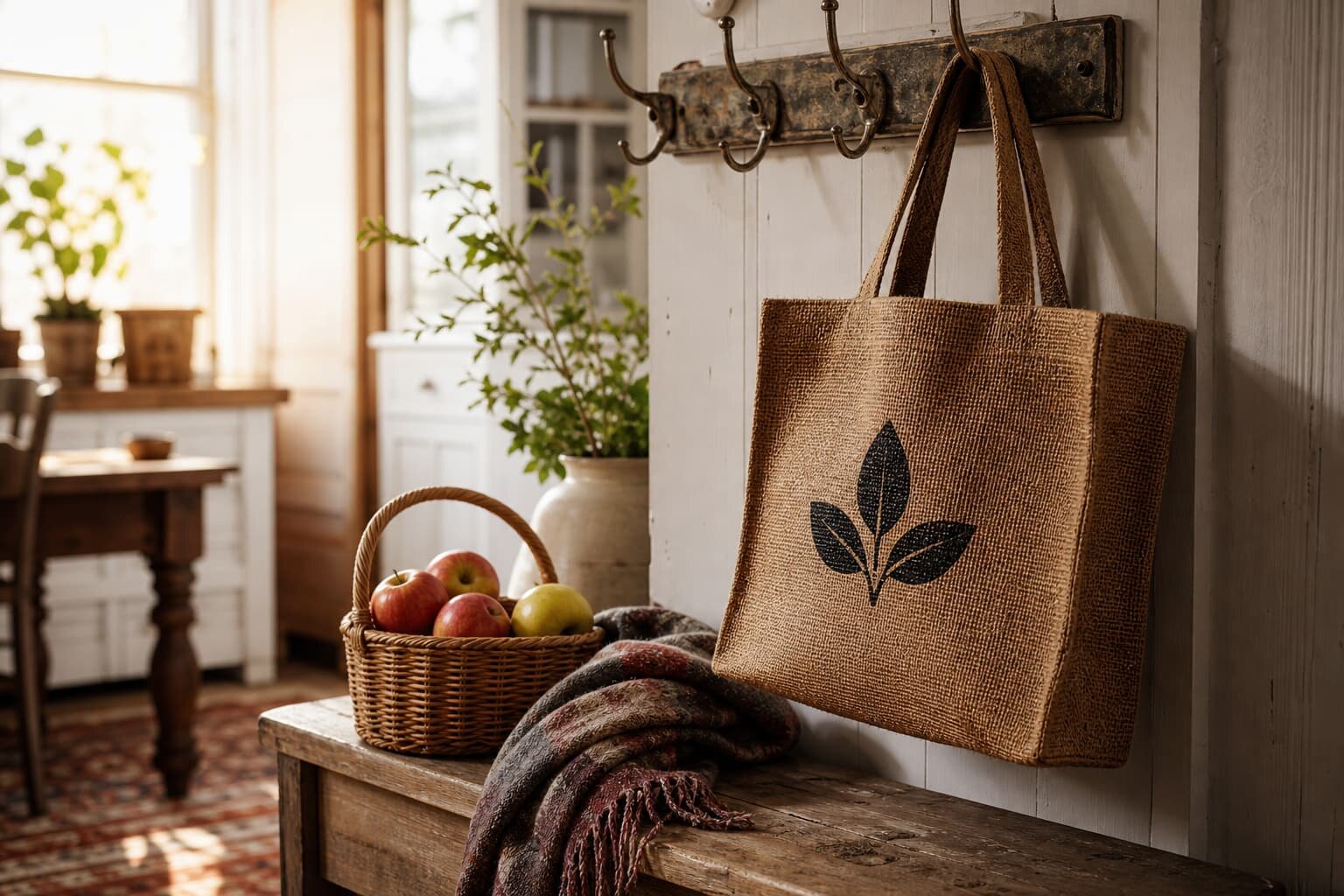
1. Start With the Launch Use Case, Not the Bag First
Most jute burlap bag problems start when the RFQ says only "jute bag" and leaves the rest to the factory. That sounds flexible, but it usually forces each supplier to assume a different fabric weight, finish, handle, and packing method. The result is not a clean quote comparison. It is a stack of numbers based on different products that happen to share the same material family.
A wholesale launch checklist exists to stop that drift before you spend time on samples. For procurement teams and brand owners, the first decision is not the decoration. It is the launch use case: retail carry, event giveaway, gift packaging, wine, trade show, or e-commerce fulfillment. Each use case pushes the bag toward a different construction, cost structure, and acceptable finish.
- Define the bag's job before you ask for price.
- State who will carry it and how often it will be reused.
- Choose whether shelf appearance or durability matters more.
- Decide if the bag is meant to be seen as natural, rustic, premium, or utility-grade.
2. Lock the Fabric Spec Before You Quote
Jute and burlap are often used interchangeably in sourcing conversations, but the factory still needs a clear cloth spec. Ask for the material type, fabric weight or GSM, weave density, and whether the cloth is natural, bleached, laminated, or blended. If the supplier cannot explain the basis of the quote, you risk comparing two very different materials under one generic name.
For a standard wholesale launch, many buyers will land in the 300-350 gsm range when they want a reasonable hand feel without overbuilding the bag. Heavier retail or gift bags often move to 400 gsm or above, especially when the bag needs more structure. If you want a softer or more budget-oriented bag, a lighter cloth may work, but the tradeoff is more wrinkling, more see-through gaps, and less perceived value.
- Ask for fabric GSM, not just a loose material description.
- Confirm whether the supplier is quoting finished bag weight or raw cloth weight.
- Specify the color or finish of the base cloth, including natural, bleached, or dyed.
- If the bag will carry sharp or heavy contents, ask for extra reinforcement or lining.
3. Match Construction to Carry Weight and Reuse
The strongest launch mistake is to spec a bag for appearance and forget how it will be used. Jute burlap can look rustic and premium, but the bag still has to hold weight, keep its shape, and survive repeated handling. That means you need to decide on side gussets, bottom construction, seam type, and handle reinforcement before you approve the sample. A flat bag that looks fine in a photo may fail in the field once it is loaded.
Handle choice matters more than many buyers expect. Self-fabric handles are common for value programs, but cotton webbing or rope-style handles can improve comfort and load spread. If the bag is meant for bottles, heavier grocery items, or premium gifting, ask the factory how the handle is attached, how many stitch passes are used, and where the stress points are reinforced. The bag should feel balanced when full, not just look neat when empty.
- Use side gussets when the bag needs room and a better retail profile.
- Ask for bottom reinforcement if the bag will carry heavier product or stacked contents.
- State handle length and drop clearly so the bag carries comfortably in hand or on shoulder.
- Request bar-tacks or reinforced seam paths on any carry point that will take real load.
4. Choose Print and Decoration for Rough Natural Fiber
Jute burlap is not a smooth canvas tote surface. It has texture, slub, and irregular absorption, which changes how ink and decoration sit on the bag. Screen print is usually the safest choice for simple logos, one or two solid colors, and repeatable wholesale runs. It gives better control than a decoration method that depends on ultra-fine detail. If the artwork uses small text, thin lines, or tight registration, simplify it before production begins.
For premium programs, woven labels, stitched patches, or embroidery can lift the product without fighting the rough cloth surface. The right choice depends on your brand position and volume. If you are launching a large retail program, a clean screen print may be more commercially sensible than a high-cost decoration that slows production and increases error risk. Whatever you choose, insist on a print placement guide, color count limit, and pre-production approval on an actual bag.
- Keep artwork simple enough for a textured surface.
- Limit color count unless the design has a real commercial reason to be more complex.
- Ask for print placement measured from the top edge and side seam.
- Reject approval based only on digital artwork or a flat paper proof.
5. Set a Sample Path That Prevents Guesswork
A good sample process is not about getting a pretty one-off bag. It is about proving that the spec can be repeated at bulk scale. For a launch order, the factory should know whether it is making a prototype, a corrected sample, or a pre-production sample. Those are not the same thing. A prototype helps you confirm the direction. A corrected sample checks whether the factory can follow revisions. The pre-production sample becomes the reference for bulk approval.
Do not skip physical checks just because the photos look clean. Measure the sample, feel the fabric, inspect odor, test the handle strength, and look at the seam finish under normal light. If the bag includes print, compare the actual placement to the drawing. If it includes lining or lamination, check for wrinkles, glue marks, or a stiff hand that makes the bag less usable than expected.
- Approve only one reference sample as the bulk standard.
- Check size, print position, handle length, and seam finish on the physical sample.
- If there are revisions, list them in writing and keep the earlier sample out of bulk approval.
- Ask for one untrimmed and one fully finished sample if the factory can provide both.
6. Build a Quote That Lets You Compare Apples to Apples
The cleanest way to compare suppliers is to force every quote into the same cost structure. Ask for separate lines for fabric, cutting, sewing, handle material, printing, lining or lamination, packing, carton, and any setup fee. That way you can see whether one quote is truly cheaper or just hiding cost in a different bucket. A low number means little if one supplier quietly excluded packing, print setup, or a more expensive handle spec.
You should also ask suppliers to state what assumptions are behind the quote. Is the price based on one color print or two? Does it include one side or two sides of print? Is the packing bulk-packed, polybagged, or retail-ready? If the supplier has no problem with the spec, the answer will be straightforward. If they keep the details vague, the quote is not ready for procurement use.
- Request itemized pricing, not only a single unit price.
- Separate one-time setup charges from repeat production cost.
- Confirm whether packaging, carton marks, and labels are included.
- Make the factory quote the same spec across all suppliers before comparing numbers.
7. Use MOQ and Lead Time Logic to Avoid False Savings
MOQ on jute burlap bags is rarely about a random number. It usually depends on fabric width, print color count, handle type, and whether the supplier needs to set up special cutting or decoration equipment. A supplier that quotes a low MOQ may be flexible, but the unit price can rise sharply once the bag includes more complex construction or packing. A higher MOQ may be acceptable if it locks in a better fabric and a more reliable production flow.
Lead time deserves the same discipline. The right question is not just "How many days?" It is "How many days after sample approval and deposit, and what events can move the schedule?" If artwork is still pending, the lead time is not real. If the factory needs to source a special lining or handle tape, the clock starts later than the initial inquiry. Put that logic into the RFQ so the schedule can be compared honestly.
- Ask MOQ by color, design, and handle type.
- Ask whether mixed sizes can share one order or require separate lots.
- Define lead time from approved sample, not from first contact.
- Confirm whether artwork signoff, material sourcing, or carton printing changes the timeline.
8. Approve Packing and Labeling Before the First Bulk Run
Packing is often treated as an afterthought, but it can change cost, damage rate, and warehouse handling. Jute burlap bags are natural products, so they need a packing method that protects them without trapping odor or moisture. Bulk carton packing is usually the simplest option for wholesale. If the bags will sit in retail channels, you may need individual polybags, inserts, hangtags, or barcode labels. Each of those choices adds labor and can change carton efficiency.
Ask for carton dimensions, units per carton, gross weight, carton marks, and label content before production starts. If your distribution team needs a specific pallet pattern or inner pack count, say so early. You do not want the factory guessing the pack format while the order is already in process. A clean pack spec also reduces receiving problems later, because the warehouse can count, scan, and distribute the bags without opening and repacking cartons.
- State units per inner pack and units per outer carton.
- Confirm whether the bags need individual polybags or bulk pack only.
- Specify label content, barcode format, and carton marks before production.
- Ask how the factory will protect the bags from moisture and crush damage.
9. Run QC on the Things That Actually Fail in Market
A jute burlap bag can pass a quick visual check and still fail once it reaches the buyer or end user. The usual issues are simple: stitching that opens at the handle, uneven print placement, a strong odor that customers notice, or dimensions that drift outside the agreed tolerance. If you only inspect appearance, you will miss the structural failures that create returns, complaints, or markdown risk after launch.
A solid QC plan checks the sample, the first bulk pieces, and the shipment as a whole. Inspect measurement, fabric consistency, print registration, handle reinforcement, seam quality, and carton accuracy. If the bag will be sold in a premium environment, the interior finish matters almost as much as the exterior. There should be no loose threads, obvious stains, glue marks, or inconsistent color that makes the bag look like a different product from the approved reference.
- Check handle pull points and reinforcement on real load-bearing seams.
- Measure sample-to-bulk variation on the first production pieces.
- Inspect for odor, dust, loose fibers, and staining.
- Verify that the bulk carton count matches the packing list without manual correction.
10. Use a Simple Go or Revise Gate Before You Place the PO
The launch decision should be straightforward: go, revise, or hold. Go only when the spec is locked, the sample matches the brief, the quote is itemized, and the packing is clear. Revise when the supplier is close but the cloth, print, or construction still needs correction. Hold when the quote cannot be compared, the sample is not repeatable, or the factory is still guessing on basic details. That discipline saves more money than pushing a weak order through because the calendar is tight.
For procurement teams, the checklist is also a communication tool. It tells sales, merchandising, and logistics what has already been decided and what still needs input. That reduces the usual back-and-forth between departments and keeps the launch from slipping into a vague "approved in principle" state. A jute burlap bag order is simple only when the buyer has already done the hard work of defining the spec.
- Go when the sample, quote, and pack spec all match.
- Revise when the issue is fixable but still visible in the approved sample.
- Hold when the supplier cannot reproduce the same result twice.
- Treat the checklist as the launch gate, not just a paperwork exercise.
Specification comparison for buyers
| Spec decision | Recommended option | When it fits | Buyer risk to check |
|---|---|---|---|
| Fabric weight / GSM | Use 300-350 gsm for standard retail or promo bags; move to 400+ gsm when the bag must feel stiffer or carry heavier contents | Launches that need a balance of cost, structure, and decent shelf appearance | Check whether the supplier is quoting raw fabric weight, finished bag weight, or an assumed cloth spec |
| Decoration method | Use 1-2 color screen print for most natural jute bags; reserve woven labels, embroidery, or embossed patches for premium positioning | When the logo is simple and the order needs stable repeatability | Fine lines, gradients, and small text can break on rough burlap unless the artwork is simplified |
| Handle construction | Use self-fabric handles for lower-cost programs or cotton webbing handles for more comfortable carry and better load spread | When the bag will be reused and handled in-store, at events, or for gifting | Confirm stitch density, bar-tack placement, and handle length before sample approval |
| Inner finish | Keep it unlined for value programs; add cotton lining or lamination only when product protection and a cleaner interior matter | When the bag will touch apparel, cosmetics, food gifts, or premium packaging | Watch for odor, stiffness, or peeling if the supplier uses low-grade lamination |
| Packing format | Bulk pack with carton marks and moisture protection; add polybags only if retail presentation or cleanliness requires it | When export handling and carton efficiency matter more than shelf-ready display | Do not approve a pack format that increases odor, creasing, or carton count without reason |
Buyer checklist before sampling
- Confirm the end use: retail carry, gift packaging, trade show giveaway, wine bottle pack, or supermarket-style reusable bag.
- Lock the target size in finished dimensions, not just nominal size, and include tolerance on length, height, and gusset.
- Specify fabric weight or GSM, weave style, and whether the surface is natural, bleached, laminated, or lined.
- Choose one primary decoration method and state the maximum number of print colors or stitch elements.
- Define handle type, handle length, handle width, and whether reinforcement or bar-tacks are required.
- Set the sample path: proto sample, corrected sample, and pre-production sample if the order is critical.
- Request an itemized quote with packaging, carton marks, and any extra setup charges called out separately.
- Agree on a lead-time start point, usually after sample approval and deposit, not after the first inquiry.
- State carton quantity, inner pack requirement, and label content before production begins.
- Define acceptance criteria for stitching, odor, print placement, measurement tolerance, and color variance.
Factory quote questions to send
- What exact jute or burlap fabric weight are you quoting, and is it the raw cloth weight or the finished bag basis?
- Is the bag unlined, cotton-lined, or laminated, and what is the inner finish material if it is not plain jute?
- Which decoration method is included in the quote, how many colors are covered, and what is the setup charge if artwork changes?
- What is the MOQ by color, by print design, and by handle type?
- What sample stages do you provide before bulk production, and what is charged for each sample?
- What are the carton dimensions, units per carton, and inner pack method you are planning to use?
- What lead time applies after sample approval and deposit, and what parts of the schedule are affected by print approval or material sourcing?
- Which inspection points are included before shipment, and can you share the measurement tolerance and stitch standard you work to?
Quality-control points to confirm
- Measure finished size against the approved spec and check tolerance on height, width, and gusset after the bag is fully sewn.
- Inspect fabric weight, weave density, and surface consistency so one lot does not look much looser or heavier than the approved sample.
- Check odor, dust, and loose fiber shedding, especially if the bag will sit near apparel, gifts, food, or premium packaging.
- Inspect print alignment, ink coverage, curing, and edge clarity on the actual rough burlap surface, not just on paper proof.
- Pull-test handles and seam points to confirm the handle stitch path, bar-tacks, and reinforcement can hold the expected load.
- Check stitch quality for skipped stitches, seam waviness, loose thread tails, and uneven seam allowance.
- Review inner finish, lamination, or lining for peeling, wrinkling, trapped debris, or uneven adhesion.
- Confirm carton count, label content, and pack sequence so the warehouse can receive, count, and distribute without relabeling.
- Check color consistency against the approved sample, allowing for normal natural-fiber variation but rejecting obvious shade drift.
- Verify that the pre-shipment sample matches the bulk run in size, print position, handle placement, and overall hand feel.