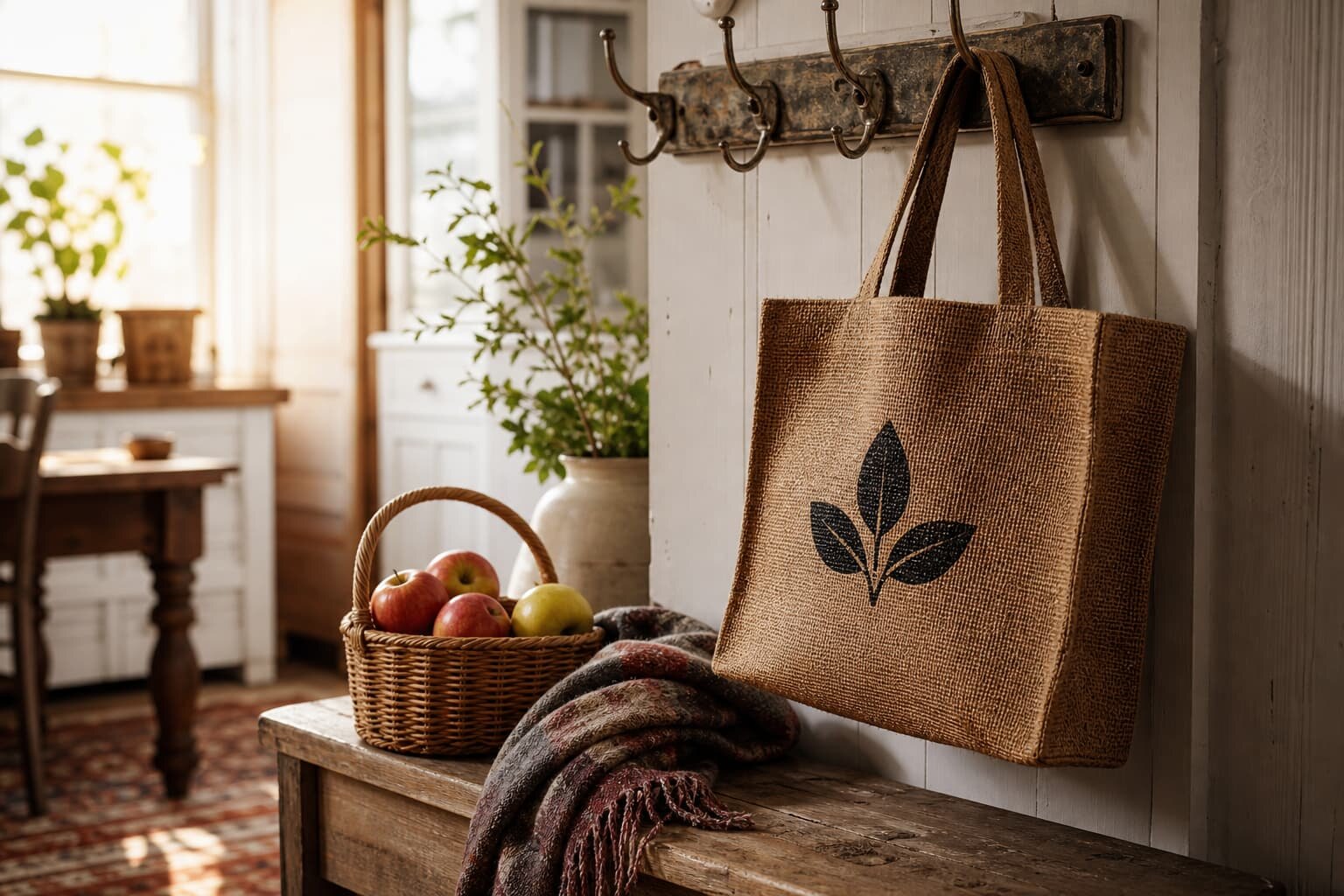
Why Weave Defects Matter in Jute Burlap Bag Buying
Jute burlap is not a uniform industrial fabric like polyester oxford or tightly woven cotton canvas. It is a natural fiber fabric with visible yarn thickness variation, hairiness, shade movement, and occasional slubs. That character is part of why many brands choose it. The buying problem starts when normal rustic texture is confused with defects that weaken the bag, distort printing, or make retail units look inconsistent on shelf.
For procurement teams, the key is not to demand a perfectly flat jute surface. That will either raise cost sharply or create constant dispute with the factory. The better approach is to define which weave conditions are acceptable for your product use and which are reject defects. A wine bag, grocery tote, promotional gift bag, and boutique retail shopper can all use jute, but they do not need the same weave tolerance.
- Treat minor yarn thickness variation as normal when it does not affect strength, print, or appearance.
- Reject holes, missing yarns, broken yarns, severe open gaps, stains, and weak areas near handles or seams.
- Use stricter appearance criteria on the front logo panel than on the inner bottom fold.
- Do not approve bulk production from photos only when the order has large logo printing or dyed jute.
Define the Bag Use Before Setting Weave Tolerance
A useful weave checklist starts with the bag's job. A 220 GSM jute promotional bag for a gift pack may pass with a more open natural weave if it carries light items and has a small logo. A 340 GSM laminated grocery bag with long cotton handles needs a denser, more stable weave because it will carry weight, stand upright, and receive repeated handling. If the RFQ only says natural burlap bag with logo, suppliers may quote different fabric qualities that look similar in a small photo but perform very differently.
Before requesting prices, state the intended load, sales channel, and appearance level. Retail buyers should also specify whether the bag will be sold as a product, used as packaging, or given away as a promotion. The stricter the shelf-facing role, the more control you need over fabric lot, panel selection, print area, and packing recovery.
- Light promotional pouch or bag: usually lower GSM, simple print, wider commercial tolerance.
- Retail shopping bag: medium to heavy GSM, cleaner front panel, controlled shade lot, better packing.
- Wine or bottle bag: dense weave, strong bottom seam, vertical stability, reinforced handle or rope.
- Grocery tote: heavier GSM or laminated jute, stronger handle stitching, load test requirement.
- Private label retail unit: consistent front appearance, barcode label control, carton packing plan.
Set Fabric Weight and Weave Density in the RFQ
GSM is one of the first quote variables, but it is not enough by itself. Two jute fabrics can both be called 280 GSM while one has a more balanced weave and the other has thick yarns spaced farther apart. The second fabric may feel heavy in the hand but still show open gaps, uneven printing, and weak points at stitch lines. Buyers should request both GSM range and a reference swatch so the factory cannot switch to a rougher fabric after sample approval.
For most jute burlap bags, ask the supplier to quote a GSM tolerance rather than a single number. A practical example is 280 GSM plus or minus 5 percent for unlaminated jute, or state whether the weight is measured before lamination or after lamination. If the bag has inner lamination, confirm if the quoted GSM includes the film and adhesive. Otherwise, one supplier may quote fabric-only weight while another quotes laminated total weight, making the comparison misleading.
- Ask for actual GSM range and test method, not only catalogue fabric description.
- Confirm whether lamination weight is included in the quoted GSM.
- Request a bulk fabric swatch from the same planned material source before production cutting.
- Compare fabric hand feel, openness, smell, and panel stability, not only weight.
- For heavy loads, prioritize dense weave and seam strength over rustic open texture.
Classify Common Weave Defects Before Sampling
A factory can only inspect against criteria that are clear enough for the cutting and sewing floor. If your purchase order says no weave defects, it will not help much because jute always has some natural variation. A better method is to classify defects by risk. Some defects are appearance issues, some are strength issues, and some affect logo printing. Once the defect type is named, you can set acceptance criteria by bag area.
The front logo panel should receive the strictest control because the buyer, retailer, and end customer all judge the bag there. The bottom fold, inside seam allowance, and non-visible inner areas may allow more minor yarn variation. However, any weak weave defect near handle stitching, bottom load-bearing seams, or bottle contact points should be treated seriously even if it is not very visible.
- Holes: reject when visible through the panel or large enough to weaken the area.
- Missing yarns: reject on front panels and near seams; review minor cases on hidden areas.
- Broken yarns: reject when they create spreading gaps or loose ends after handling.
- Thick slubs: accept small natural slubs if not in logo detail or seam line.
- Reed marks or lines: reject if they create obvious vertical or horizontal bands on retail-facing panels.
- Foreign fibers or contamination: reject when colored threads, plastic, oil, or dark specks are visible.
Check the Logo Area Before Approving Print Method
Printing on jute is different from printing on canvas. The surface is coarse, hairy, and uneven. Fine text, thin lines, small QR codes, and multi-color registration are more difficult on open burlap. A logo that looks clean in a digital file may break across yarn ridges or sink into gaps. For this reason, the weave checklist should be connected directly to print approval.
Screen printing is often the most practical method for bold one-color or two-color logos on jute bags. Heat transfer can help when the artwork has finer edges, but it may change the natural feel and needs adhesion testing on the actual surface. Woven labels or side labels are another option when the fabric is too rough for small artwork. Buyers should ask the factory to test the print on the approved jute swatch, not on a smoother sample kept in the showroom.
- Avoid very fine logo lines when the jute has a coarse or open weave.
- Use screen print for bold solid graphics and simple brand marks.
- Consider sewn labels for small text, care information, or detailed icons.
- Check print edge sharpness after drying, rubbing, and folding.
- Confirm whether ink coverage hides or emphasizes weave bands.
- Do not approve print color only from a paper proof; jute base shade changes the result.
Sample Checks That Prevent Bulk Production Disputes
The sample stage should not be treated only as a size and logo approval step. It is the best chance to lock the acceptable fabric character. When reviewing a jute burlap bag sample, keep one approved reference sample and one loose fabric swatch. Mark the acceptable weave, shade, hairiness, and logo result. This becomes more useful than written comments alone when the factory starts cutting bulk fabric.
For serious orders, ask for a pre-production sample made from the intended bulk material or at least a cutting from the same planned roll group. A sales sample made from old stock may not represent the final fabric. If your order depends on dyed jute, laminated jute, or a special handle color, the sample approval should also include odor, stiffness, fold marks, and handle attachment. Many disputes happen because the buyer approved a neat sample but never approved the actual bulk fabric.
- Measure bag width, height, gusset, handle length, and seam allowance after the sample relaxes.
- Check GSM with a sample cutter or request factory test photos with the measurement report.
- Place white paper or a contrasting board behind the panel to see open gaps and holes.
- Inspect the front logo panel under normal room light and side light.
- Load the bag to the intended weight and review handle stitch areas for yarn spreading.
- Keep signed or photographed approval records for fabric, print, stitching, and packing.
MOQ Logic: Why Small Changes Can Change the Quote
Jute bag MOQ is affected by fabric sourcing, dyeing, lamination, printing, and handle material. A supplier may accept a lower MOQ for natural jute fabric already in stock, but need a higher MOQ for dyed jute, custom GSM, special lamination, or non-standard handle webbing. If your RFQ changes from natural 280 GSM to dyed 320 GSM laminated jute after the first quote, the factory may need to recalculate material wastage and minimum fabric purchase.
Procurement teams should separate must-have specifications from adjustable specifications. If the brand requires exact dyed color and tight weave, MOQ and lead time may increase. If the buyer can accept natural shade variation and standard cotton webbing handles, the supplier has more sourcing flexibility. A clean RFQ should ask the factory to state the MOQ driver, not only the final MOQ number.
- Natural stock jute usually allows more flexible MOQ than custom dyed jute.
- Custom GSM or tighter weave may require mill-level minimum fabric quantity.
- Laminated jute can require separate setup and additional production days.
- Multiple logo colors increase sampling and print setup complexity.
- Special handles, metal eyelets, snaps, or inner pockets can raise MOQ or unit cost.
- Ask whether the MOQ is driven by fabric, printing, sewing line setup, or packing material.
Compare Supplier Quotes Using the Same Data Points
Jute burlap bag quotes are easy to misread because suppliers may describe material differently. One quote may say 300 GSM jute bag with cotton handles. Another may say laminated burlap tote with 300 GSM material. A third may quote a lower price with a looser weave and thinner handle, while still using similar product photos. Without a data checklist, the cheapest quote may simply be a different product.
Ask each factory to quote against the same bag drawing, fabric requirement, print size, packing method, and inspection level. The most useful quote includes dimensions, GSM range, handle material, print method, logo size, carton quantity, carton size, estimated gross weight, sample charge policy, bulk lead time, and payment terms. If a supplier avoids confirming GSM tolerance or weave quality, treat the price as incomplete.
- Bag size: width, height, gusset, and handle drop in centimeters or inches.
- Fabric: jute GSM range, lamination status, color, and weave reference.
- Logo: method, color count, print position, and maximum print area.
- Construction: handle type, stitch method, bottom reinforcement, and seam binding if any.
- Packing: units per polybag if used, pieces per carton, carton dimensions, and moisture protection.
- Timeline: sample days, material sourcing days, production days, inspection date, and shipment readiness.
Packing and Lead Time Risks Linked to Weave Quality
Packing can turn acceptable jute bags into disputed goods if it is too tight, too humid, or too early after printing. Burlap has body and texture. If finished bags are compressed heavily into cartons, the weave can flatten unevenly, the front panel can crease, and printed areas may show pressure marks. If the goods are packed before odor and moisture are controlled, importers may receive cartons with a musty smell that is difficult to remove before retail distribution.
Lead time should include more than sewing days. Material sourcing, cutting, printing, drying, sewing, trimming, inspection, and packing all affect the final result. For dyed or laminated jute, allow time to check bulk fabric before cutting. For screen printing, allow proper drying and curing time before stacking. Rushing these steps increases the chance of print transfer, distorted panels, odor complaints, and carton deformation.
- Use flat packing when the bag shape and front panel appearance matter.
- Avoid over-compressed cartons that create permanent fold lines in the weave.
- Use carton liners or moisture barriers when shipping during humid seasons.
- Confirm the bags are dry and aired before final packing.
- Ask for carton drop and compression considerations if goods go through distributor warehousing.
- Build inspection time into the lead time rather than treating it as an afterthought.
Practical Acceptance Criteria for Buyer QC
A buyer QC checklist should help inspectors make consistent decisions. It should not rely on subjective language such as nice weave or bad burlap. Define major defects, minor defects, and area-specific tolerance. For example, a small slub on the back panel may be minor, while a hole in the logo panel is major. A broken yarn near the handle stitch may be critical because it can spread when the bag is loaded.
For importers using third-party inspection, attach the approved sample photos and defect definitions to the booking. Inspectors who are not familiar with your brand expectation may otherwise use a general textile approach that is either too strict for rustic jute or too loose for retail packaging. The best result comes from combining fabric inspection, finished product inspection, load testing, and packing review.
- Critical: handle failure, bottom seam failure, severe fabric weakness, mold, wet cartons, unsafe contamination.
- Major: holes on visible panels, missing yarns in logo area, severe shade bands, print defects caused by open weave.
- Minor: small natural slubs, slight hairiness, limited shade variation within approved range.
- Area rule: front panel and handle zone should have stricter tolerance than hidden folds.
- Testing rule: load test finished packed samples after they recover from carton compression.
- Documentation rule: record whether each defect is fabric-related, print-related, sewing-related, or packing-related.
Specification comparison for buyers
| Spec decision | Recommended option | When it fits | Buyer risk to check |
|---|---|---|---|
| Base fabric weight | 220-280 GSM jute for retail gift bags; 300-360 GSM for grocery or wine loads | Use lighter GSM for low-load promotional bags and heavier GSM for reusable retail programs | Low GSM may expose open weave, weak seams, print bleeding, and poor bag shape after packing |
| Weave density | Balanced plain weave with agreed yarn count and limited open gaps | Best for screen print logos, laminated inner lining, and consistent panel cutting | Loose sections can cause logo distortion, seam slippage, and inconsistent color shade across panels |
| Panel selection | Cut front and back panels from the same fabric roll or same approved shade lot | Important for private label bags sold as shelf-facing retail units | Mixed roll cutting may create visible shade bands and uneven weave direction between panels |
| Print method | Screen print for bold logos; heat transfer label only when surface is too coarse | Screen print suits one to three solid colors on stable jute weave | Ink can sink into open weave, break at yarn ridges, or look patchy on hairy burlap |
| Handle construction | Cotton webbing, jute webbing, or rope handles reinforced with box stitch or bar tack | Choose based on load weight, brand look, and retail price point | Weak handle anchoring can hide behind good front-panel appearance until load testing |
| Lamination choice | Unlaminated for rustic feel; laminated inner backing when shape and print stability matter | Laminated jute works for grocery, trade show, and structured retail bags | Poor lamination may delaminate, create bubbles, trap odor, or crack at folded seams |
| Packing method | Flat pack with moisture barrier carton liner and no over-compression | Useful for export cartons, warehouse receiving, and store distribution | Over-tight packing can create permanent creases, weave distortion, and musty odor risk |
| Inspection timing | Check greige or dyed fabric before cutting, then inspect finished bags after printing and sewing | Needed when the logo area is large or the bag has strict retail appearance standards | Only inspecting finished goods may be too late to remove roll-level weave defects cost effectively |
Buyer checklist before sampling
- Define acceptable fabric GSM range, not only a target GSM, and require the factory to state testing method.
- Approve a reference swatch showing acceptable weave density, shade, hairiness, and odor before sample approval.
- Check whether front and back panels are cut from the same roll or controlled shade lot.
- Measure open weave gaps in the logo area, handle area, bottom fold, and side seam allowance.
- Confirm the print method against the actual jute surface, not a smoother substitute fabric.
- Request pre-production photos of fabric rolls before cutting when the order uses dyed or laminated jute.
- Set a clear defect classification for holes, slubs, broken yarns, reed marks, shade bars, and contamination.
- Inspect handle attachment after load testing because weave weakness often appears around stitch holes.
- Check packing compression, carton liner, and moisture control before approving shipment.
- Ask the supplier to separate roll-level defects from sewing defects in the inspection report.
Factory quote questions to send
- What fabric GSM range are you quoting, and is the GSM measured before or after lamination?
- What yarn count or weave density will be used for the quoted jute burlap fabric?
- Will front and back panels be cut from the same roll, same dye lot, or mixed production rolls?
- Which weave defects are included in your normal commercial tolerance, and which are treated as reject defects?
- Can you provide a fabric swatch from bulk material before cutting the pre-production sample?
- What print method do you recommend for our logo size and number of colors on this jute surface?
- What is your MOQ for this GSM, color, handle type, and print method combination?
- How many days are needed for fabric sourcing, sample making, bulk cutting, printing, sewing, packing, and final inspection?
- What packing method prevents crease marks, odor, and moisture exposure during export shipping?
- What quote data is included: fabric GSM, bag dimensions, handle material, print size, carton quantity, carton size, gross weight, and sample cost?
Quality-control points to confirm
- Fabric GSM must be checked against the approved tolerance before cutting and again on finished panels if lamination is used.
- Weave gaps, holes, missing yarns, and broken yarns should be inspected under normal light and against a contrasting backing.
- Logo panels require stricter weave control because open yarn spacing can break print edges and distort registration.
- Side seams and bottom seams should not run through major weak weave areas or thick slub clusters.
- Dyed jute should be checked for shade bands, uneven dye absorption, rubbing risk, and odor before production approval.
- Laminated jute should be checked for bubbles, delamination, stiffness change, and cracking at folded corners.
- Finished bags should be load tested after packing recovery, not only directly after sewing.
- Cartons should protect against moisture, excessive compression, and odor transfer from untreated raw jute.