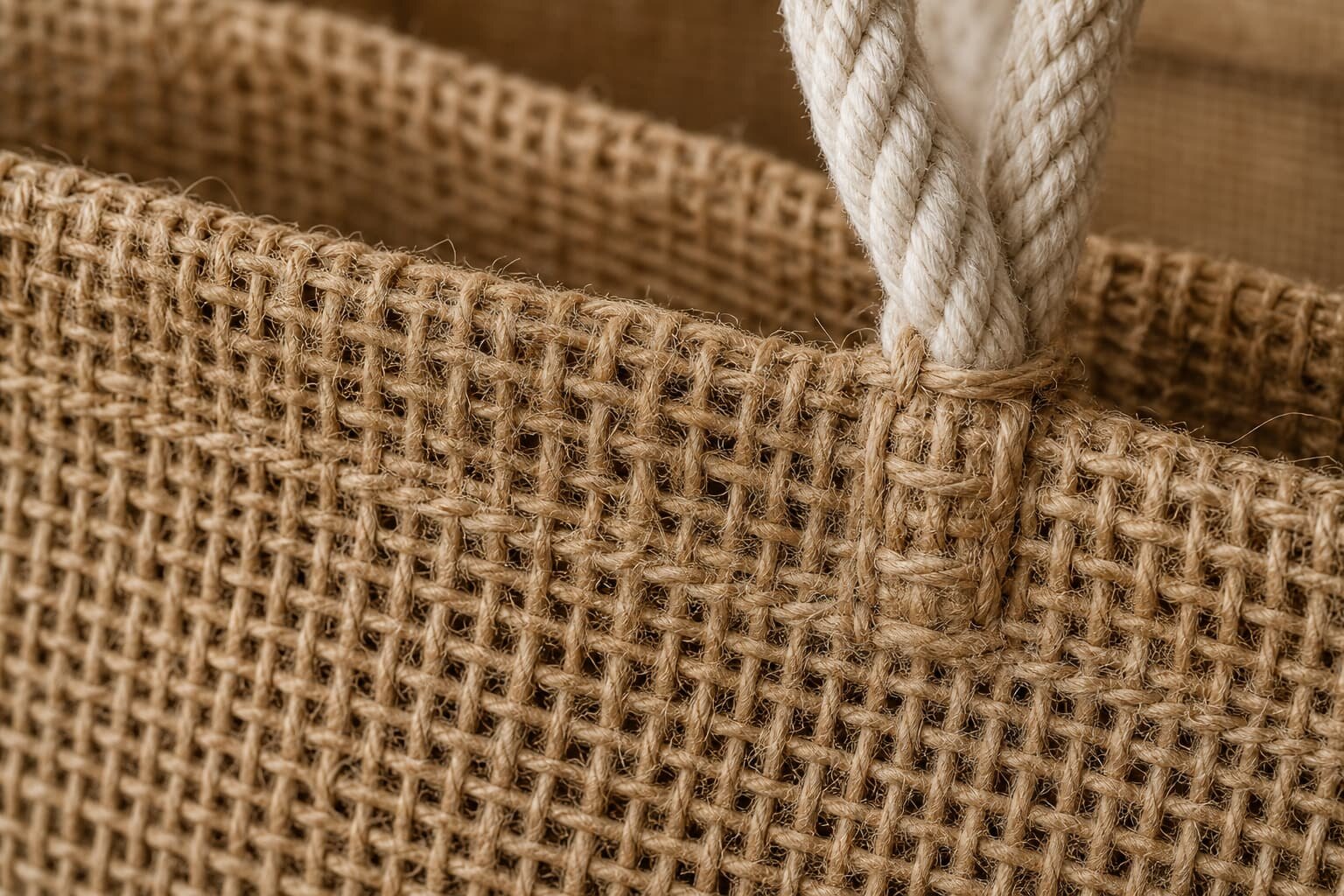
Why the top hem fold is a packing issue, not just a sewing detail
For jute burlap bags, the top hem fold affects more than appearance. It changes the bag opening, the way the fabric sits in a carton, how a logo reads after folding, and whether the bag arrives with a clean edge or a crushed mouth. If you treat the hem as a sewing detail only, you can end up comparing quotes that look similar on paper but behave very differently in packing, storage, and shelf presentation.
Import buyers usually feel the problem only after bulk is ready: one factory packs the bags flat and neat, another bundles them tight, and a third folds them in a way that hides the logo or creates hard creases. A good checklist keeps the spec tied to packing reality. That means the hem width, stitch type, print position, carton count, and unit packing format need to be written together, not split across separate emails.
- The hem changes carton utilization and final presentation.
- A narrow fold can expose raw fibers and weak stitch control.
- A thick fold can make the bag harder to stack or fold for shipping.
- Logo placement must be judged after the hem is formed, not before.
Start with the bag spec before you ask for numbers
A quote for a jute burlap bag is only comparable when the base spec is locked. Ask for fabric weight in GSM, not just a vague description like light or heavy. For retail jute bags, many buyers start around 280 to 350 GSM; for more rigid carry bags or premium presentation bags, 400 GSM and above is common. The right number depends on fill weight, whether the bag needs body, and how much compression it can take in export packing.
The hem fold should also be defined in measurable terms. State whether it is a single fold or double fold, the finished fold width, and whether the edge is turned in to hide loose fibers. If you leave this open, one factory may quote a quick fold with minimal seam allowance while another builds in extra material and tighter stitching. Those are not equivalent products, even if the price looks close.
- Write bag size in finished dimensions, not rough cut size.
- State GSM, weave density, and any lining or coating.
- Define handle type and handle length if the bag has handles.
- Specify the fold width and whether raw edges must be hidden.
Choose a hem construction that survives transport and display
The most common mistake is choosing a hem that looks neat in a sample photo but fails once the bags are packed. A single-fold hem can work if the bag is simple, the fabric is consistent, and the buyer accepts a slightly softer edge. A double-fold hem usually gives a cleaner visual line and better control of loose fibers, but it uses more fabric and can add stiffness near the opening. That stiffness may be good for retail display or gift use, but it can also make the bag harder to compress in cartons.
For branded jute bags, the fold line and the print zone need to work together. If the logo sits too close to the top edge, the fold can clip the artwork or make the printed area look crowded. If the fold is too deep, it may cover part of a woven label or side tag. Buyers should ask the factory to show the bag both flat and folded, because the acceptance standard should be based on the actual packed form, not a still-unfolded sample on a table.
- Single fold: simpler, lower material use, but less edge control.
- Double fold: cleaner edge, more fabric use, usually better retail presentation.
- Narrow fold: better carton efficiency, but more risk of fraying.
- Wide fold: better finish, but can interfere with print or label placement.
Print method and logo placement must be checked after folding
If the bag has a logo, the print method matters as much as the fold. Screen printing is usually the first option for jute burlap because it is clear, cost-effective, and suitable for simple artwork. For more premium branding, a woven label, sewn patch, or side label can be more stable than a heavy printed area near the fold. Heat transfer can work for some designs, but it needs testing because the texture of jute is uneven and the surface can show minor distortion after pressing.
Ask the factory where the print will sit relative to the hem line, seam, and handle attachment. Do not approve a flat-panel artwork proof only. The real question is whether the logo still looks centered and readable after the top hem fold is sewn, pressed, and packed. For one-color screen print, a practical quotation should state the print size, ink type, curing method, and whether there is any risk of cracking at the fold line.
- Use screen print for simple logos and repeated orders.
- Use woven or sewn labels when the fold area is crowded.
- Check print registration after the bag is fully assembled.
- Ask for a packed sample photo, not only an artwork mockup.
Build the packing method into the quote so all suppliers price the same way
Packing is where many quote comparisons break down. One supplier may price the bag only, another may include inner polybags, tissue sheets, carton labels, and tighter folding labor. If you are buying jute burlap bags for retail, export, or distributor stock, you need the packing method written as a product spec. Otherwise the cheapest quote can become the most expensive once rework, repacking, or carton damage shows up at inspection.
A practical packing setup is flat packing with a fixed piece count per inner pack and carton. That makes it easier to track quantity, keep the hem fold aligned, and control shipping volume. In some cases, a bundle tie or loose carton pack may be acceptable for warehouse use, but it is rarely the best choice for retail presentation. Ask the factory to provide carton dimensions, gross weight, and the packed unit orientation so you can judge freight efficiency before approval.
- Flat pack improves carton control and presentation consistency.
- Polybag use should be justified by dust, moisture, or retail needs.
- Tight compression can mark the top hem and distort the edge.
- Carton labels must match the packed quantity and bag SKU exactly.
Use sample checks to catch fold problems before bulk cutting
Sample approval should test the fold, not only the artwork. Ask for a pre-production sample made from the actual fabric weight, thread, and print method that will be used in bulk. Then check the fold width, seam finish, printed area, handle alignment, and the way the bag behaves when stacked flat. If the sample looks neat but the top edge springs open or the weave frays under light handling, that is a warning sign.
You also need a packed sample, because some problems only appear after carton loading. The bag may look perfect on the sewing table and still become wrinkled, badly aligned, or oversized once packed with the wrong orientation. A good sample pack should show the bag in the same carton count and the same unit structure you expect in bulk. If the sample carton cannot be stacked cleanly, the bulk shipment will not improve later.
- Check the hem width with a ruler, not by eye.
- Open and refold the sample to see whether the seam holds shape.
- Inspect the logo after folding and after carton compression.
- Review one packed carton before authorizing mass production.
What a useful factory quote should include line by line
A usable quote for jute burlap bags should tell you exactly what you are buying, not just a unit price. At minimum, it should name the fabric GSM, bag dimensions, handle type, top hem fold detail, print method, packaging method, carton count, sample lead time, bulk lead time, and whether the price changes by logo color or packing format. If any of those items are missing, the quote is not strong enough for sourcing comparison.
Quote data should also reveal what is included versus excluded. Ask whether the factory has priced cutting, sewing, pressing, printing, folding, inner pack, outer carton, and carton labeling. A buyer can only compare two suppliers fairly if both are quoting the same work scope. If one supplier excludes inner packs and another includes them, the lower number is not a real saving; it is a scope gap that will show up later.
- Fabric spec and finish.
- Finished dimensions and hem width.
- Decoration method and decoration area.
- Packing format, carton size, and carton count.
- Lead times for samples, bulk, and repeat orders.
Common production mistakes that create claims after delivery
Most claims on top-hem jute bags come from small, preventable mistakes. One is inconsistent fold depth across cartons, which makes some bags look neat while others look bulky or uneven. Another is sewing too close to the edge, which can cause fraying after handling. A third is printing too near the fold, so the logo sits awkwardly or loses legibility once the bag is packed. These are not dramatic defects, but they are exactly the kind of issues that lower sell-through in retail or create rework at your warehouse.
Moisture and odor are also worth checking, especially if the bags are packed tightly or held in storage before shipment. Jute can carry a natural fiber smell, but that should not turn into a damp or moldy odor. If the factory uses polybags, tissue, or desiccant, ask how those materials are selected and whether they affect breathability. For a buyer, the real goal is not just a clean-looking sample; it is consistent delivery condition from first piece to last carton.
- Uneven fold depth makes mixed-looking cartons.
- Loose seam ends become visible after handling and shipping.
- Print too close to the hem creates visual crowding.
- Poor moisture control can lead to odor or stain issues.
Turn the spec into an acceptance checklist before you sign off
Your final acceptance should be based on a simple set of pass-or-fail criteria. Confirm the bag dimensions, GSM, fold width, stitch quality, print placement, and packed unit count against the approved sample. If the order is for retail, also confirm visual consistency across the first carton and the last carton of the production lot. A jute bag can be technically within tolerance and still look wrong if the fold angle, label position, or print center drifts too much.
A good acceptance process also protects your sourcing team when a supplier later asks for a tolerance change. If the approved sample shows a clear fold, a centered logo, and a specific carton build, that becomes your baseline. Without that baseline, disagreements get subjective very quickly. Buyers who document the hem fold, packing method, and photo approval set can resolve most disputes before shipment rather than after arrival.
- Compare bulk pieces to the signed sample, not a verbal description.
- Check carton count and carton labeling before sealing.
- Reject batches with obvious fold drift or logo misplacement.
- Keep packed sample photos with the PO and spec sheet.
A practical buyer workflow for RFQs, samples, and bulk release
The easiest way to manage a jute burlap bag order is to sequence the project properly. First lock the bag structure and hem fold. Then approve the artwork position on a sewn sample. After that, request the factory quote with the same packing method you want in bulk. When the pre-production sample arrives, verify the fold, the print, the carton count, and the packed condition together. This order avoids the common mistake of approving artwork before the bag is physically built.
For repeat orders, keep the previous approved sample, quote sheet, and carton photo set in one file. Then you can compare future supplier responses against a real standard instead of trying to remember what was accepted last time. That matters most when you switch mills, change carton size, or ask for a new logo method. Jute burlap bags are simple products only when the spec is controlled; otherwise the fold, packing, and finish can vary enough to affect retail value.
- Lock structure first, artwork second, packing third.
- Keep one approved sample as the master reference.
- Use the same carton and pack format for comparison across suppliers.
- Review repeat orders for drift in fold depth, stitch, and print position.
Specification comparison for buyers
| Spec decision | Recommended option | When it fits | Buyer risk to check |
|---|---|---|---|
| Top hem construction | Double-fold hem with even stitch line | Retail bags, gift bags, and any order that will be displayed flat | Check hem width, stitch density, and whether the fold traps loose fibers |
| Fabric weight | 280-350 GSM for light retail use; 400+ GSM for heavier carry use | Choose based on fill weight, handle load, and whether the bag must stand better | Confirm GSM on the same roll batch that will be cut and sewn |
| Print method | 1-color screen print or woven label for most orders | Good for simple branding and repeat orders with stable artwork | Check print cracking at the fold and whether curing affects hand feel |
| Packing format | Flat pack with tissue or interleaf and fixed carton count | Best when you need carton efficiency and consistent presentation | Verify carton compression does not crease the top hem or distort shape |
| Sample approval | Pre-production sample with packed-unit photo set | Use before bulk on new styles, new artwork, or new packing specs | Approve the actual fold, label position, and carton layout, not just the bag body |
Buyer checklist before sampling
- Confirm bag dimensions, fabric weight, handle length, and top hem fold width before asking for price.
- State whether the bag must ship flat, stuffed, bundled, or folded inside a polybag.
- Ask the factory to show one packed sample with the exact carton count and inner pack structure.
- Approve print position after the hem fold is formed, not on a flat unsewn panel only.
- Specify whether loose threads, jute fiber shedding, or small weave knots are acceptable.
- Request carton dimensions, gross weight, and palletization method in the quote.
- Check that the fold does not cover the logo, warning label, barcode, or care tag.
- Lock the sample approval photo set before bulk cutting starts.
Factory quote questions to send
- What GSM, weave, and fabric finish are you quoting, and are those values from the same roll lot used for bulk production?
- Is the top hem fold single or double folded, and what finished hem width will you hold in bulk?
- How will you print the logo, and what is the acceptable registration tolerance after folding and stitching?
- What is the MOQ by color, by logo method, and by packing format?
- How many pieces per inner pack and per export carton are included in the quote?
- Will the price change if we request a tissue sheet, barcode sticker, desiccant, or polybag?
- What is the sampled lead time, the bulk lead time, and the repeat-order lead time?
- Can you send a pre-production sample photo showing the front, back, hem, and packed carton layout?
Quality-control points to confirm
- Hem width matches the approved sample within the agreed tolerance.
- Stitch line is straight, secure, and does not skip at the corners of the fold.
- Print is centered after the fold is formed and does not sit too close to the seam.
- No broken yarns, holes, oil marks, or excessive fiber shedding on visible faces.
- Handle attachment remains flat and does not distort the top hem area.
- Carton count matches the packing list and the bag orientation is consistent.
- Polybag, tissue, or interleaf does not trap moisture or create odor issues.
- Barcode, size label, and country-of-origin label remain readable after packing.
- Carton compression does not crush the folded edge or cause permanent creases.
- Packed sample reflects the same condition you will receive in the first shipment lot.