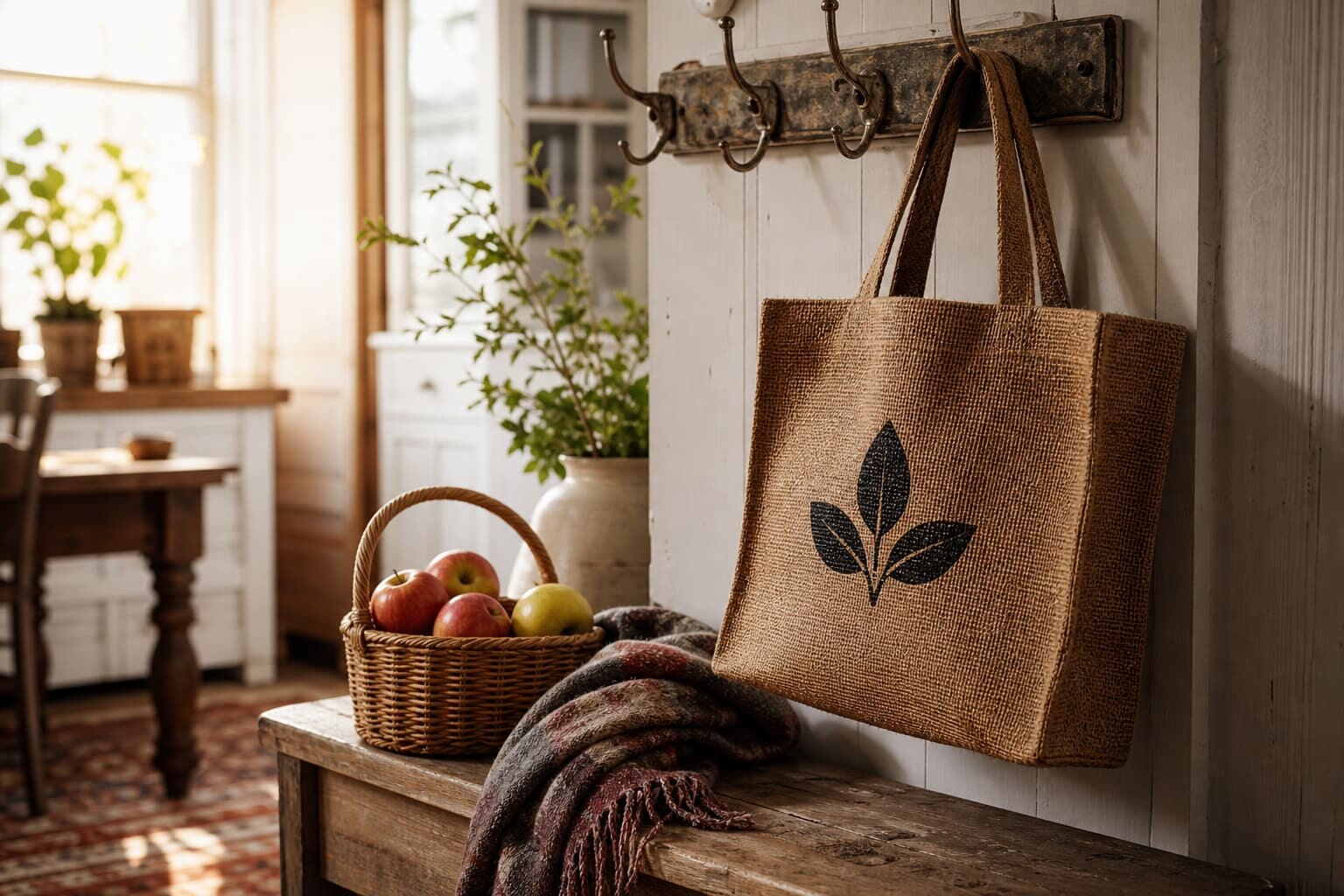
Why a scorecard file is better than a loose quote stack
A jute burlap bag supplier scorecard file is the fastest way to stop quote confusion before it becomes a buying mistake. When a procurement team receives three or four offers that all look similar at first glance, the real differences are usually buried in fabric weight, handle construction, print method, and packing. A low unit price can hide a lighter cloth, fewer stitches, smaller carton counts, or a simpler print process that will not hold up in retail use. The scorecard makes every supplier answer the same questions in the same format, so the team compares construction and commercial terms instead of comparing marketing language.
For jute and burlap bags, this matters more than it does for many soft goods because the material itself is naturally variable. Two samples can look close in a photo and still behave very differently in the hand, in print, and in transit. A supplier scorecard file gives the buyer one place to record the quoted spec, the sample result, the quote assumptions, and the risks that could change the landed cost later. It also gives merchandising, QA, and logistics one shared reference when they need to decide whether a quote is truly acceptable or only cheap on paper.
- Use one format for every supplier so the team compares like with like.
- Keep spec, cost, sample, and packing data in the same file.
- Record any deviation from the request, even if the supplier says it is minor.
- Treat the scorecard as a decision file, not just a spreadsheet.
Lock the bag spec before you ask for pricing
A clean RFQ starts with a bag that is already defined. State the finished dimensions, gusset depth, handle drop, handle width, and intended end use before you request a quote. For a jute burlap bag, also name the body fabric weight in GSM or the factory equivalent, because a 250 GSM bag and a 320 GSM bag are not the same product even if the size is identical. If you need the bag for grocery, gift, or premium retail use, say so clearly, because the load expectation changes the right construction. The same is true for natural, bleached, dyed, or blended fabric; those choices affect look, odor, print clarity, and cost.
The spec should also cover the handle and the stress points. A self-fabric handle may be acceptable for a light promo bag, but a cotton webbing handle or a wider sewn jute handle is usually safer when the bag carries real weight. Ask for seam allowance, stitch type, and reinforcement at the handle root. If you need an inner lining, lamination, or binding at the top edge, include it in the first request instead of adding it after the quote comes back. Late changes are one of the most common reasons suppliers redo samples and extend lead time.
- State the final use case so the factory does not guess the load requirement.
- Name the fabric weight and allow for a tolerance range in the approval file.
- Specify handle material, reinforcement, and seam style up front.
- Include any lining, lamination, closure, or edge binding in the first RFQ.
Use the comparison table to separate real differences from noise
The comparison table is where the scorecard becomes commercially useful. Many buyers see a low quote and assume it is the better deal, but the price only means something when the construction is matched. A 30 x 35 x 15 cm tote made with 250 GSM jute, cotton webbing handles, and one-color screen print is not equivalent to the same size bag built with 210 GSM cloth, self-fabric handles, and transfer print. The table forces the team to record the construction choice behind each offer, which is the only honest way to compare prices across suppliers.
This is especially important when a supplier offers a lower quote by simplifying the bag in ways that do not show up in a quick photo. The scorecard should capture fabric weight, handle construction, print method, lining or lamination, and packing method because each of those affects both quality and landed cost. If the quote does not state these items clearly, the unit price should not be treated as a usable comparison. In practice, the best scorecard files turn a vague supplier reply into a clear business choice: where to save, where to hold the spec, and where a lower price would create a production risk.
- Compare construction first, then compare price.
- Record any missing data as a red flag, not a small note.
- Use the same quantity and the same incoterm across all quotes.
- Do not compare a sample quote against a bulk quote without adjustment.
Sample checks that catch most production mistakes
The first sample should be treated as a control point, not as a gift item. Inspect the weave for consistency, the color for lot variation, the seam lines for straightness, and the handles for symmetry and stitch quality. Jute and burlap naturally have slubs and texture, but the sample still needs to stay within an agreed visual band. If the bag is printed, check the print against the artwork file for placement, sharpness, and edge control. A good scorecard file includes one approved sample photo set and one retained physical sample so the team can refer back to the same standard when bulk production starts.
Add simple tests that mirror how the bag will be used. Load it with a realistic weight, fold it where the customer will fold it, and check whether the handles pull cleanly without breakout or seam distortion. For print, rub the ink at the fold points and check for cracking or powdering. If the bag has lining or lamination, inspect the corners and the inside surface for delamination, odor, or puckering. The point is not to overcomplicate the check; the point is to catch the issues that would lead to claims, rework, or customer complaints after the order ships.
- Check weave, odor, stitch straightness, handle symmetry, and print registration.
- Retain one approved sample and one backup reference sample.
- Run a practical load test based on the bag's real use case.
- Record pass/fail and comments instead of only writing OK.
Packing and carton rules can change the real landed cost
Packing is one of the most under-specified parts of a jute bag quote. A flat-packed bag can save cube and reduce freight, but it can also leave deep fold marks or press the print if the fabric is stiff. Nested packing may improve carton density, but it may also crush handles and make the bag harder to present at receiving. The scorecard should record the agreed packing method, whether the bags go in polybags, bundles, or bulk cartons, and whether the factory adds a carton liner or desiccant for moisture control. Jute can pick up smell and moisture faster than many synthetic bags, so this is not a small detail.
Ask the supplier to quote carton dimensions, piece count per carton, gross weight, and any pallet or master carton requirement. That information is part of the commercial picture because freight often changes more than buyers expect when the piece count per carton shifts. Good packing data also helps warehouse teams receive, count, and store the order cleanly. If the buyer team later needs to file a claim or ask for a rework, they will want packing photos, carton marks, and count data already in the file.
- State whether the order is flat packed, nested, or bundled.
- Record carton size, pieces per carton, and gross weight.
- Ask for moisture protection if the route is humid or the storage period is long.
- Keep carton mark content consistent with the shipping label plan.
MOQ and lead time need their own line items
MOQ for jute burlap bags is rarely a single number that applies to every version. The minimum usually changes with fabric sourcing, print colors, handle type, lining, and whether the factory is cutting from stock or ordering fresh material. That is why the scorecard file should capture MOQ by color, MOQ by print version, and MOQ by accessory change. A simple natural bag with one-color print may be easier to run in a smaller quantity than a dyed body with a woven label and custom lining. If the supplier only gives one MOQ number, ask them to break down which part of the spec is causing the floor.
Lead time should be split into sample turn time, pre-production approval, bulk production, and packing. Many factories can make a sample in roughly 5 to 10 working days and complete bulk in roughly 25 to 45 days after approval, but that only works when raw materials are available and the line is not overloaded. The file should record when artwork freezes, when sample approval freezes, and whether rush orders cost extra. Buyers who ignore capacity risk usually find out too late that a low price is just a slow queue.
- Ask for MOQ by color, print, and accessory change, not only one total number.
- Record sample lead time separately from bulk lead time.
- Ask what material or process is the real bottleneck.
- Note any rush surcharge or peak-season delay risk.
What the scorecard file should capture in one place
A useful scorecard file is simple enough for the team to update and detailed enough to make a buying decision. At minimum, it should capture supplier name, factory role, quoted incoterm, MOQ, sample charge, unit price by volume tier, fabric weight, handle spec, print method, carton spec, lead time, payment terms, and any setup charge. Add a notes field for anything that changes the bag but may not appear in the headline price, such as extra reinforcement, inner polybag, or a second line of stitching. If the team keeps this information in scattered email threads, the record becomes unreliable the moment one person leaves the project.
The file should also include a risk score. Common jute bag risks include loose weave, odor, uneven dye lot, handle breakout, print bleed, carton collapse, and incomplete pack marks. A simple weighted score works well: commercial fit, construction compliance, sample quality, and responsiveness can each be scored and weighted according to the buyer's priorities. This approach lets merchandising and QA support the same decision without arguing over a single low number. It also gives the buyer a clean way to explain why a mid-priced supplier won if the quality and execution are safer.
- Record quote terms, sample data, and construction details in one file.
- Use a risk column for the issues most likely to create claims.
- Score every supplier on the same scale.
- Keep notes on deviations, even when the supplier says they are small.
How to read quote data without being fooled by low unit price
A low unit price is only useful if the quote matches the request. Before comparing suppliers, line up the details: fabric GSM, handle material, print area, number of colors, seam reinforcement, packing method, carton count, and incoterm. If one factory quotes EXW and another quotes FOB, the numbers are not directly comparable until you normalize freight and export handling. If one supplier includes cartons and another does not, the unit price is also misleading. A good scorecard file adds a landed-cost column so the buyer can see what the order really costs after setup, packaging, and logistics assumptions are included.
Quote data should also show how the price changes at higher volume. A fair supplier will usually show the setup charge separately, then step the unit price down as volume rises. That structure is more useful than a suspiciously low first price with no clarity on repeat orders. Record screen charges, plate charges, label charges, sample freight, and rush fees if they apply. Those costs often explain the gap between two apparently similar offers and help the team decide whether the cheaper quote is truly cheaper or only cheaper at first glance.
- Normalize every quote to the same incoterm and quantity.
- Separate setup charges from unit price.
- Add a landed-cost column for an honest comparison.
- Check repeat-order pricing, not only first-order pricing.
Turn the scorecard into a repeatable sourcing workflow
The best scorecard files are part of a repeatable workflow, not a one-time audit exercise. Start with one RFQ template and send it to every supplier with the same tech sketch, same material target, same artwork, and same packing requirement. Ask the factory to quote in the same format every time. That sounds strict, but it saves days of follow-up questions and keeps the purchasing team from rebuilding the brief each time a new supplier enters the project. A clean intake process also makes it easier to spot which suppliers can actually follow instructions.
After award, keep the scorecard file alive through pre-production and shipment. Add approved sample photos, carton photos, and any email-approved deviation so the order history stays intact. For repeat orders, that file becomes the buyer's memory. It shows what spec was approved, what packing was used, and where the last order created friction. The next negotiation is stronger because it starts with facts, not recollection. Over time, that is where the buyer saves real money: fewer avoidable reworks, fewer disputes, and less time spent explaining what should have been captured the first time.
- Use one RFQ pack for every supplier.
- Reject incomplete quotes instead of trying to infer missing data.
- Update the file with approved samples and shipping photos.
- Use the prior order record to improve the next round of pricing and control.
Specification comparison for buyers
| Spec decision | Recommended option | When it fits | Buyer risk to check |
|---|---|---|---|
| Body fabric weight | 250-320 GSM natural jute or burlap for most retail bags | Gift retail, grocery, promo, and general store use where the bag must feel substantial | Ask for actual fabric weight, not only a bag photo; thin cloth can look similar in pictures |
| Handle construction | Cotton webbing or self-fabric handles with bar-tack or X-box reinforcement | When the bag carries real weight or will be reused many times | Check handle width, stitch count, and breakout at the seam end |
| Print method | One to two color screen print for textured jute; woven label or sewn patch for premium branding | When you want durable branding that reads clearly on coarse weave | Watch for ink bleed, poor registration, and cracking at fold lines |
| Lining or lamination | Unlined for rustic use; light lining or lamination for shape and cleaner interior | When the bag needs a neater hand feel or better content protection | Confirm odor, stiffness, delamination risk, and whether lamination affects fold marks |
| Packing method | Flat packed with agreed carton count and moisture protection | When freight cost, warehouse space, and carton control matter | Check piece count per carton, carton cube, and whether print is crushed in packing |
Buyer checklist before sampling
- Confirm final bag size, gusset, handle drop, and the exact product use before asking for price.
- Lock the target fabric weight in GSM or equivalent and ask the supplier to state the tolerance.
- Specify natural, bleached, dyed, or blended jute and note any lining or lamination requirement.
- State the print method, number of colors, print area, and whether the artwork must stay within a safe margin from edges and seams.
- Request sample photos and one physical approved sample before bulk starts.
- Ask for carton dimensions, pieces per carton, carton mark content, and moisture protection details.
- Compare quotes on the same incoterm, same quantity, and same packaging assumption.
- Record sample charge, plate or screen charge, freight handling, and any setup fee separately from unit price.
- Check whether the factory can support repeat order pricing and the same material lot for reorders.
- Score the supplier on construction, commercial terms, lead time, and responsiveness in the same file.
Factory quote questions to send
- What is the exact fabric weight, weave style, and material composition for the quoted bag?
- Is the quote based on natural, bleached, or dyed jute, and what color variation should we expect?
- What handle material, handle width, and reinforcement method are included in the price?
- Which print method is included, how many colors are covered, and what is the setup charge?
- What is the MOQ by color, print version, and accessory change such as lining or woven label?
- What are the sample charge, sample lead time, and whether the sample fee is deductible from bulk order?
- What is the bulk lead time after sample approval and artwork confirmation?
- What packing method is included, including polybag, bundle count, carton size, and desiccant if needed?
- Which incoterm is quoted, and what local charges are excluded from the unit price?
- What changes the price at the next volume tier, and what cost items stay fixed?
Quality-control points to confirm
- Fabric weight matches the quoted GSM and does not feel noticeably lighter than the approved sample.
- Weave quality is consistent, with no excessive slubs, holes, loose strands, or weak spots near seams.
- Handle stitching is even, reinforced, and strong enough to pass a practical load test for the intended use.
- Print placement matches the approved art file and does not bleed, crack, or skew across the weave.
- Stitching is straight, seam allowance is consistent, and stress points use bar-tacks or other agreed reinforcement.
- Lining or lamination, if used, is smooth and free from bubbling, odor issues, or edge delamination.
- Bag shape and size match the spec sheet, including gusset depth, handle drop, and opening width.
- Packing count is correct, carton marks are legible, and carton strength holds during stacking and transit.
- Moisture protection is adequate for the route and storage conditions, especially for humid lanes.
- Approved sample, pre-production sample, and bulk shipment all remain traceable in the scorecard file.