Why jute burlap quotes are easy to misread
A jute burlap bag supplier quote can look simple: size, quantity, logo, unit price, and lead time. In real production, that unit price may be built on very different assumptions. One supplier may quote a 14 oz unlaminated jute body with cotton webbing handles and screen print. Another may quote a lighter burlap, narrower handles, no inner packing, and a smaller print area. The cheaper quote is not always wrong, but it may not be quoting the same bag.
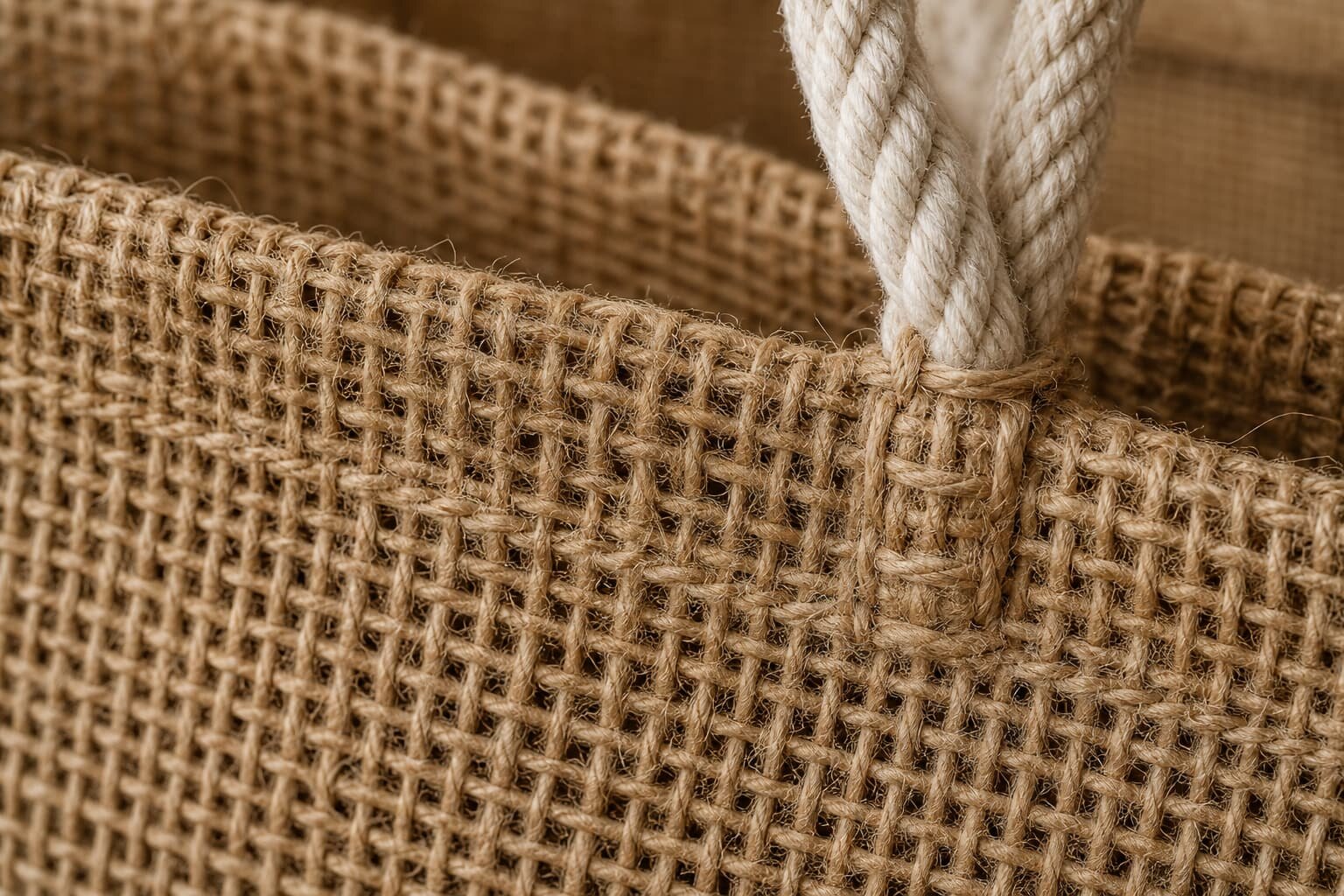
Procurement teams should compare jute burlap bag quotes like a technical product, not like a commodity. The open weave, natural fiber variation, lamination choice, print limitation, handle construction, and packing method all affect cost and performance. If these details are not made visible before order confirmation, they usually appear later as quality arguments, sample delays, carton volume surprises, or brand approval failures.
- Do not compare unit price until size, GSM, handle, print, packing, and MOQ basis are aligned.
- Treat vague material words such as thick, premium, eco, or natural as sales language, not specifications.
- Ask the supplier to mark which quote items are included, optional, or excluded.
- Keep a quote comparison sheet that separates product cost from setup cost, sample cost, and packing cost.
Start with the finished bag specification, not the price
The most useful RFQ begins with finished dimensions and intended use. A jute shopping bag for supermarket retail, a wine bottle carrier, a gift pouch, and a trade show giveaway bag may all use burlap, but they need different panels, gussets, handles, stitching, and packing. If the RFQ only says jute bag with logo, suppliers will fill the blanks in the way that best fits their production line or target price.
For quote comparison, define width, height, gusset, handle drop, handle width, print size, print position, and packing method before asking for the final price. Also state whether the measurements are finished size after sewing. Jute fabric has natural thickness and edge variation, so a small tolerance is normal. What matters is that every supplier quotes the same finished construction.
- Example shopping bag spec: 38 cm W x 35 cm H x 15 cm gusset, cotton webbing handles, 55 cm total handle length.
- Example wine bag spec: single bottle size, reinforced base, rope or cotton handle, logo centered on front panel.
- Example gift burlap pouch spec: drawstring closure, overlock side seam, logo print on one side, bulk packed.
- Use drawings or marked photos when the bag has special handle placement, side labels, window panels, or inner pockets.
Compare fabric weight and burlap construction line by line
Fabric weight is one of the first places where quote differences hide. Jute and burlap may be described by oz, GSM, yarn count, weave density, or local mill grade. For buyer comparison, GSM or oz should be stated clearly. A lighter fabric may look acceptable in a small photo but feel soft, collapse easily, or allow too much see-through when used as a retail bag.
For many reusable jute shopping bags, a 14 oz to 16 oz jute range, or roughly 260-320 GSM depending on mill standard, is a practical starting point. Gift pouches can use lighter burlap. Heavy-duty grocery or bottle bags may need stronger fabric, lamination, or reinforced base construction. The key is not to demand the heaviest fabric by default. The key is to match fabric weight to load, handfeel, print result, and target landed cost.
- Ask whether the quote uses stock jute, custom-dyed jute, laminated jute, or special weave burlap.
- Request a physical swatch when the order depends on handfeel, color tone, or retail shelf appearance.
- Check if fabric weight is measured before or after lamination because lamination can make a lighter fabric feel stiffer.
- Define acceptable natural fiber variation so normal slubs are not confused with defects.
Check lamination because it changes more than the price
Lamination is often added to jute bags to improve structure, moisture resistance, and print surface stability. It can make a bag stand better and reduce loose fiber transfer. However, it also changes the environmental claim, the touch, the smell risk, the folding behavior, and sometimes the printing method. If one quote includes lamination and another does not, the two prices should not be compared as equal.
Unlaminated jute gives a raw, natural handfeel and is common for rustic retail packaging, wine bags, and brand merchandise. Light inner lamination can help shopping bags keep shape and protect the inside from dust or minor moisture. Outside lamination or full lamination should be specified carefully because it can make the surface look less natural. Ask the supplier to describe the lamination location and thickness instead of simply saying laminated.
- Unlaminated jute: better natural look, softer structure, more fiber shedding, more print bleeding risk.
- Inner laminated jute: better shape and cleaner inside, still natural outside, possible odor and recyclability questions.
- Outer laminated jute: smoother print surface, less natural touch, higher risk of visible shine.
- Always smell and fold the sample after storage for several days, not only when it arrives freshly packed.
Print method is where many low quotes become expensive
Jute burlap is not a smooth cotton canvas. The open weave absorbs ink differently, and fine lines can break or bleed. A logo that prints well on paper or polyester may need adjustment for burlap. When comparing supplier quotes, check whether the print method, color count, print size, setup charge, and artwork adjustment are included. A quote that includes only one-color screen print is not equal to a quote allowing a four-color logo or transfer patch.
Screen printing is usually the practical choice for bold logos, simple text, and strong solid marks. Heat transfer can help with fine detail, but the surface may look less integrated with natural burlap. Woven labels, cotton patches, or printed cotton labels can be better for premium retail bags where the main jute surface should stay clean. The best quote is not the one that promises every print method; it is the one that honestly tells you which method fits your artwork and order quantity.
- For screen print, ask how many colors are included and whether each color requires a separate screen charge.
- For fine logo text, request a printed sample or strike-off before approving mass production.
- Define logo position tolerance, for example centered within an agreed millimeter range from top edge or side seam.
- Check ink color on actual jute, because natural tan fabric changes the appearance of white, black, green, and metallic colors.
Understand MOQ logic before negotiating the unit price
MOQ for jute burlap bags is not only about the total order quantity. It may be controlled by fabric roll minimums, lamination setup, cutting efficiency, printing setup, color mixing, label production, and packing style. A supplier may say the MOQ is 500 pieces, but that may apply only to one size, one logo, one print color, and stock fabric. If the buyer later splits the order into several SKUs, the factory cost changes.
Procurement teams should ask for MOQ by decision point. This prevents a common mistake: comparing a low quote based on one bulk SKU with another quote that already includes multiple logo versions or retail packing. If your program includes several bag sizes or distributor-branded versions, show the full SKU matrix early. A good supplier can suggest consolidation, such as using the same fabric and handle across sizes or printing multiple logos in one production schedule where feasible.
- Ask for MOQ per size, per fabric color, per logo, per print color, per label, and per packing version.
- Confirm whether a mixed-size order can share the same fabric roll purchase.
- Check whether low-quantity sample or trial orders use stock fabric that may differ from later bulk production.
- If distributors need different carton marks or barcodes, ask whether this affects MOQ or packing labor.
Break the quote into visible cost components
A single unit price is easy to read but hard to control. For a commercial RFQ, ask the factory to show what is included in the price. This does not mean the supplier must reveal its profit margin. It means the buyer needs to know whether the quoted price includes fabric, cutting, sewing, printing, handle, labels, inner packing, export carton, carton mark, sample charge, screen charge, and inspection preparation.
This breakdown is especially important when comparing suppliers from different regions or factories with different capabilities. One factory may have in-house printing and lower setup cost. Another may subcontract printing but have stronger sewing quality. One quote may include FOB export carton packing; another may assume loose bulk packing. Without visible cost components, procurement may choose the lower number and later pay more through change charges.
- Separate one-time costs such as screen charge, mold charge, sample charge, and artwork adjustment.
- Separate recurring costs such as unit bag cost, label cost, inner polybag, hangtag, and carton upgrade.
- Ask whether quote validity depends on jute market price or exchange rate changes.
- Request INCOTERM, port, currency, payment term, and tax treatment on the same quote sheet.
Sample checks should match bulk production conditions
A jute burlap sample can be misleading if it is made from available stock fabric or hand-finished by the sample room. The purpose of a sample is not to receive a beautiful individual piece. It is to confirm that the planned bulk process can meet the buyer's requirements. Before approval, check whether the sample uses the quoted GSM, same lamination, same handle material, same print method, and same packing fold.
For brand buyers and distributors, the pre-production sample should become the control reference. Take photos, record measurements, mark acceptable slubs or shade, and keep the approved sample sealed or labeled. If there is a print color concern, keep the strike-off together with the sample. If there is a load concern, test the sample with a realistic product weight and lifting cycle rather than only checking appearance.
- Measure finished size and handle drop, not only flat fabric panels before sewing.
- Rub the print surface lightly and check for ink dusting, cracking, or poor coverage on raised yarns.
- Load the bag with expected product weight and inspect handle attachment and bottom corners.
- Review packed sample condition after compression to see whether creases, odor, or deformation are acceptable.
Packing and carton data can change the landed cost
Jute bags are bulky compared with thin cotton pouches. Carton volume can affect freight cost enough to change the real quote ranking. A lower unit price may not be cheaper landed if the packing method creates high CBM, weak cartons, or deformation that causes retailer rejection. Ask every supplier for pieces per carton, carton dimensions, gross weight, net weight, and estimated CBM per 1,000 pieces.
Packing choice should follow the sales channel. Retail-ready bags may need careful flat packing, inner polybags, hangtags, barcodes, and clean carton marks. Promotional giveaway bags may allow bulk carton packing if creases are acceptable. Compressed packing can reduce freight, but jute can hold fold marks, especially with lamination. If the bag must look good when unpacked at store level, packing should be tested before mass production.
- Flat packing protects shape but increases carton volume.
- Folded packing reduces CBM but may create crease lines across the logo or front panel.
- Inner polybags protect from dust and moisture but add cost and may conflict with plastic reduction targets.
- Carton strength should match weight, stacking time, and export handling conditions.
Lead time comparison must include approval steps
Lead time in supplier quotes is often stated in the shortest possible way. A quote may say 25 days, but that might mean 25 days after deposit, artwork approval, fabric arrival, print approval, and pre-production sample approval. For procurement planning, the practical lead time is the full calendar path from RFQ clarification to ready-to-ship goods.
Ask each supplier to break lead time into sample making, sample shipping, buyer approval, material preparation, cutting, printing, sewing, packing, inspection, and vessel or truck booking. This is not only for scheduling. It shows where the supplier understands the process. A factory that clearly explains approval gates is usually easier to manage than one that gives a short lead time with no conditions.
- Confirm whether production starts after deposit only or after sample approval plus deposit.
- Ask which material has the longest lead time: jute fabric, dyed fabric, handle webbing, label, or packaging.
- Build extra time for print correction if the logo has small text or strict brand color requirements.
- For seasonal retail programs, confirm inspection booking and final carton mark approval early.
Specification comparison for buyers
| Spec decision | Recommended option | When it fits | Buyer risk to check |
|---|---|---|---|
| Fabric weight | 14 oz to 16 oz jute or 260-320 GSM burlap equivalent | Retail shopping bags, brand giveaways, supermarket promotions, wine or gift packaging | Suppliers may quote lower GSM without showing it clearly, causing thinner body panels and weaker shape retention |
| Lamination | Unlaminated for eco look; light PP lamination only when moisture resistance is required | Unlaminated fits natural retail packaging; laminated fits grocery, wine, or damp transport exposure | Lamination changes handfeel, recyclability claims, odor level, print surface, and folding behavior |
| Handle type | Cotton webbing, jute webbing, or rope handle with stated width and length | Cotton webbing is comfortable for shopping bags; jute webbing keeps a fully natural look; rope suits gift bags | Quotes often omit handle GSM, width, or reinforcement stitching, making load capacity unclear |
| Print method | Screen print for bold logos; heat transfer or label patch for fine detail | Screen print fits 1-3 color logos; transfer fits small type and gradients; woven or cotton label fits premium branding | Ink bleeding on open-weave jute, poor color matching, and extra screen charges can distort quote comparison |
| Bottom construction | Box gusset with reinforced corner stitching for shopping bags | Needed when the bag must stand, carry cartons, jars, bottles, or apparel sets | Flat bags are cheaper but may not match retail use or buyer load expectations |
| MOQ logic | Separate MOQ by fabric stock, color, print colors, size, and packing style | Useful when consolidating multiple SKUs under one order | A supplier may accept a low total MOQ but apply hidden minimums for each logo, print color, or carton mark |
| Packing | Flat packed or semi-folded with inner polybag ratio and export carton size confirmed | Flat packing protects shape for retail bags; compressed packing reduces freight but can crease jute | Packing method changes CBM, carton strength, deformation risk, and landed cost |
| Sample approval | Pre-production sample using correct GSM, handle, print method, and packing fold | Required before bulk for any retail, brand, or distributor order | A nice reference sample made from available material may not represent bulk fabric or production process |
Buyer checklist before sampling
- Confirm whether each quote is based on the same bag size, gusset size, seam allowance, handle length, handle width, and finished tolerance.
- Ask for fabric weight in GSM or oz, not only descriptions such as natural jute, burlap, thick jute, or premium material.
- Separate the price impact of fabric, lamination, handle type, print method, label, packing, and carton marking instead of accepting one unexplained unit price.
- Check whether the quoted MOQ applies per order, per size, per color, per logo, per print color, or per packing version.
- Require a pre-production sample made with the same fabric weight, print process, handle material, and packing fold planned for bulk production.
- Compare lead time from confirmed artwork, approved sample, and deposit date, not from the first inquiry date.
- Ask for carton dimensions, pieces per carton, gross weight, net weight, and estimated CBM so freight cost can be compared with the product price.
- Review the print position tolerance, logo color tolerance, stitching standard, loose thread trimming, odor control, and acceptable jute slub level.
- Confirm whether the supplier price includes inner polybag, hangtag, barcode label, care label, warning label, carton mark, and pallet requirement.
- Keep all final approved details in one quote comparison sheet before issuing the purchase order.
Factory quote questions to send
- What exact fabric weight is quoted, and can you provide a swatch photo or physical swatch from the same jute lot before sampling?
- Is the quoted jute unlaminated, laminated inside, laminated outside, or laminated both sides, and what is the lamination thickness if used?
- What are the finished bag dimensions, gusset dimensions, seam allowance, and accepted production tolerance?
- What handle material, handle width, handle length, stitching pattern, and reinforcement method are included in the unit price?
- Which print method is included, how many colors are included, what is the maximum print area, and are screen charges or setup charges separate?
- Can you confirm MOQ by size, logo, print color, fabric type, and packing style rather than only total order quantity?
- What is the sample cost, sample lead time, and will the sample use bulk-correct fabric and printing?
- How many pieces per carton are quoted, what are the carton dimensions, gross weight, and estimated CBM per 1,000 pieces?
- What is the production lead time after sample approval and deposit, and what material or print approval steps can delay it?
- What quality control checks are performed before packing, and what photos or inspection data can be shared before shipment?
Quality-control points to confirm
- Measure finished width, height, gusset, and handle drop against the approved sample and tolerance sheet.
- Check fabric GSM or oz with a weighed cut panel method or approved mill data, especially when comparing similar-looking jute.
- Inspect jute weave density, slubs, broken yarns, dark fibers, holes, and excessive odor before printing starts.
- Test handle strength with a realistic load based on the buyer's product use, not only a light pull by hand.
- Check print adhesion, ink coverage, edge sharpness, bleeding, color match, and logo position on the uneven jute surface.
- Review seam strength, bottom corner reinforcement, loose threads, skipped stitches, and handle bar-tack consistency.
- Confirm packing fold direction, pieces per polybag, carton compression, carton marks, barcode labels, and moisture protection.
- Keep an approved pre-production sample and bulk inspection sample for dispute comparison.