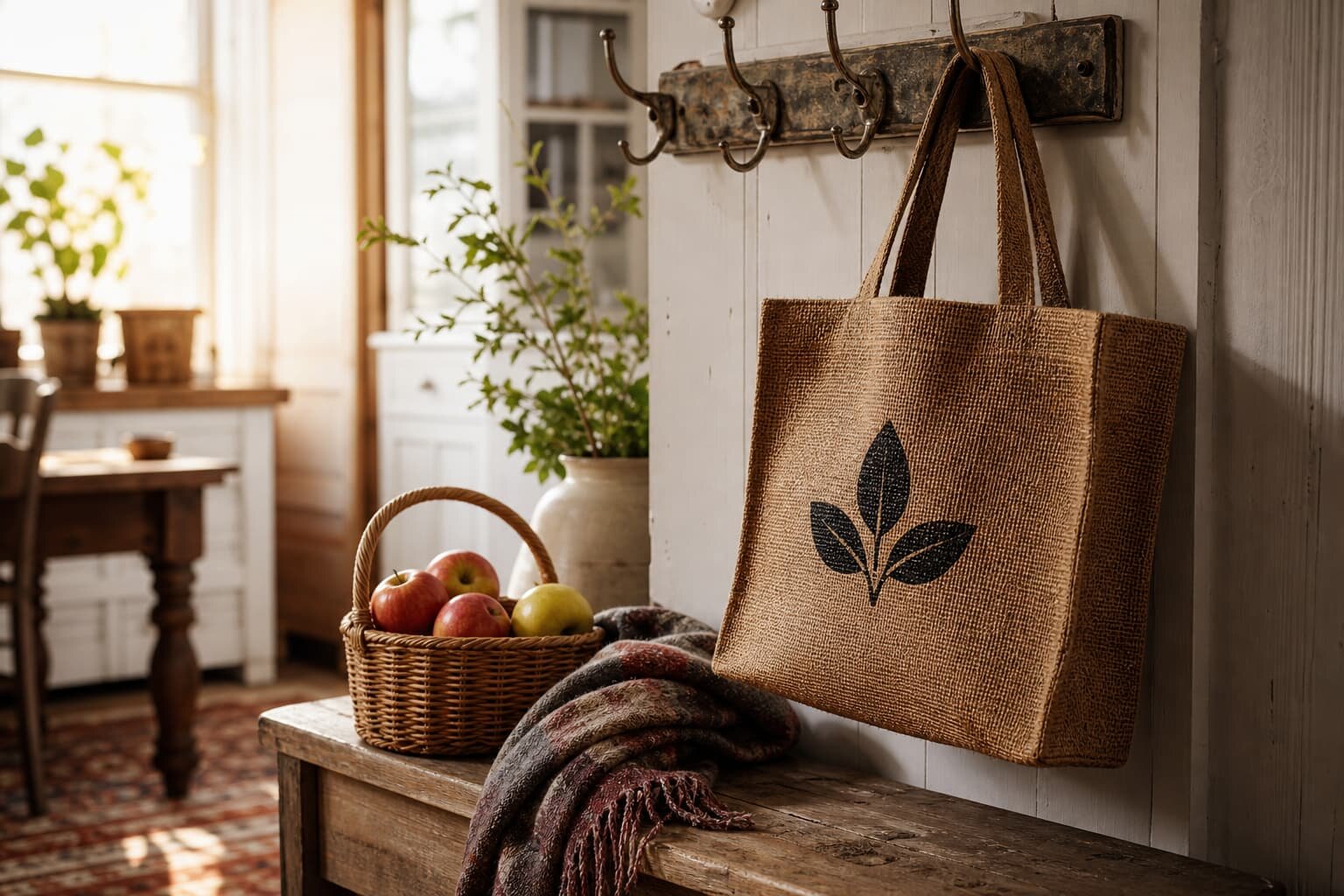
Why a Capacity Memo Matters Before the Purchase Order
A jute burlap bag supplier capacity memo is a short buying document that connects your requested quantity with the factory's real production ability. It is not the same as a price quote. A quote tells you what the supplier wants to charge. A capacity memo tells you whether the supplier can buy the correct jute, print it, sew it, inspect it, and pack it within the time window you need.
This matters because jute bags are not produced like plain non-woven bags or simple cotton totes. Jute fabric has heavier roll handling, stronger needle requirements, slower cutting, more visible natural variation, and longer print drying risk. If a supplier says they can make 100,000 bags per month, procurement should ask whether that means your laminated gusseted jute tote with cotton handles and two-color screen print, or a much simpler unprinted pouch.
- Use the memo before deposit payment, not after the supplier has already booked material.
- Attach the memo to the RFQ, sample approval, and purchase order so the capacity assumptions are traceable.
- Separate total factory capacity from available capacity for your order period.
- Confirm whether capacity includes printing, sewing, QC, packing, and export carton preparation.
Define the Exact Bag Before Asking About Capacity
Factory capacity has no meaning until the product construction is fixed. A simple flat jute pouch, a laminated grocery bag, a six-bottle wine carrier, and a burlap gift bag with drawstring all run at different speeds. Even when the same jute fabric is used, the number of seams, handle operation, gusset shape, label placement, and print coverage can change daily output.
Your capacity memo should start with a technical description that a production manager can recognize. Include the finished size, gusset, fabric weight, lamination status, handle style, print method, label position, packing format, and tolerance. Do not write only natural jute bag with logo. That phrase is enough for a catalog inquiry, but not enough for a reliable supplier capacity check.
- Example specification: 38 W x 35 H x 15 cm gusset, 14 oz natural jute, laminated inside, 60 cm cotton webbing handles, one-color front screen print.
- State whether sizes are finished dimensions after sewing, not cut-panel dimensions.
- Identify whether the bag must stand upright when filled, because this affects gusset construction and packing.
- If the bag carries bottles, jars, books, or heavy grocery items, state the expected load weight.
Read Capacity by Process, Not by Factory Slogan
Many supplier profiles show monthly capacity as one large number. That number can be useful for screening, but it is not enough for order planning. Jute burlap bag production usually moves through material inspection, cutting, printing, drying, sewing, trimming, QC, packing, and carton sealing. The slowest step controls your actual output.
For example, a factory may have enough sewing machines for your quantity but limited print tables for large front logos. Another supplier may have good printing capacity but not enough workers skilled in sewing stiff laminated jute corners. The capacity memo should ask the supplier to name the bottleneck instead of giving only a general promise.
- Fabric preparation: roll inspection, shade grouping, GSM checking, lamination checking.
- Cutting: panel cutting, gusset cutting, handle cutting, label preparation.
- Printing: screen setup, ink mixing, print drying, registration checking.
- Sewing: side seams, bottom seams, handle reinforcement, binding, trimming.
- Packing: flattening, moisture protection, carton loading, carton marking, final random inspection.
Fabric Weight and GSM Affect Both Cost and Output
Jute fabric weight is one of the biggest quote drivers and one of the easiest areas for misunderstanding. Buyers may describe a bag as burlap, hessian, jute, or natural fiber, but the factory needs a measurable fabric weight. Common bag fabrics may sit around 300 to 420 GSM, or be quoted in ounces such as 13 oz, 14 oz, or 15 oz, depending on the supplier's local convention and whether lamination is included.
Heavier jute usually improves structure and perceived value, but it may slow cutting and sewing, increase carton weight, and reduce the number of pieces packed per carton. Lighter jute may reduce cost but can feel loose, shed more fiber, wrinkle faster, or distort under print. Ask whether the quoted weight is based on the raw jute fabric alone or the laminated finished material.
- For retail shopping bags, ask for fabric handfeel and standing shape, not only GSM.
- For wine bags, check bottle weight support and divider construction if required.
- For gift packaging, check color shade, odor, and surface cleanliness because customers handle the bag closely.
- For promotional giveaways, balance unit cost with print readability and seam strength.
Print Method Can Become the Hidden Capacity Limit
Screen printing is often the practical choice for jute burlap bags with simple logos, bold text, and limited color count. The coarse surface of jute does not behave like smooth cotton canvas. Fine lines, small registered colors, gradients, and very small letters can break or fill in. A supplier may quote the artwork, but production capacity depends on print area, ink type, drying space, and how much rework is acceptable.
Heat transfer and digital transfer can work for some designs, but they need adhesion checks on the exact jute surface, especially when the fabric is laminated, dusty, or heavily textured. Embroidery is possible on some jute items but can distort the panel and is usually slower. Woven labels or sewn side labels are often better for premium branding when the logo is detailed and the buyer wants consistent appearance.
- Request a print strike-off on actual bulk jute, not on paper or smooth cotton.
- Ask how many colors and how many print positions are included in the quoted capacity.
- Confirm whether print drying time is included in lead time.
- Set acceptance criteria for broken lines, ink bleeding, off-center print, and shade variation.
- Avoid artwork with tiny legal text unless the supplier proves readability on a real sample.
MOQ Logic: Material, Color, Logo, and Packing Are Separate
A supplier's MOQ is not only a sales rule. It often comes from several smaller minimums inside the order. Jute fabric may have a roll or dye lot minimum. Cotton webbing may have a color minimum. Printed logos may require screen setup. Custom labels may have their own minimum. Export cartons and inner packing can also affect the practical order quantity.
Procurement teams should ask the supplier to break MOQ down by component. This helps compare quotes fairly. One supplier may offer a lower bag MOQ but require standard handle color and plain carton. Another may allow custom handle color only above a higher quantity. Without MOQ logic, buyers may think suppliers are inconsistent when they are actually quoting different material conditions.
- Fabric MOQ: natural, dyed, bleached, laminated, or special weave.
- Handle MOQ: cotton webbing width, color, length, and strength.
- Print MOQ: screen charge, color count, artwork size, and print position.
- Label MOQ: woven label, cotton label, paper hangtag, or care label.
- Packing MOQ: individual polybag, master carton, palletization, retail barcode label.
Lead Time Should Be Built From Production Steps
A reliable lead time is a sequence, not a single number. For jute burlap bags, the buyer should separate sample time, material sourcing, bulk fabric inspection, cutting, printing, sewing, finishing, inspection, packing, and shipment booking. If any step is missing, the delivery date may be based on hope rather than production planning.
Seasonal pressure also matters. Many jute bags are ordered for retail events, wine promotions, holiday gifting, and sustainability campaigns. If the order must arrive before a fixed launch date, ask the supplier what date they need final artwork, deposit, sample approval, and packing instruction. A capacity memo should show the latest approval dates, not only the expected ex-factory date.
- Sample lead time: prototype, revised sample, and pre-production sample if needed.
- Material lead time: jute roll booking, lamination, dyeing, handle procurement, label making.
- Production lead time: cutting, printing, drying, sewing, trimming, QC, packing.
- Buffer time: artwork correction, fabric shade issue, reprint, carton adjustment, inspection booking.
- Shipping preparation: carton measurement, packing list, export documents, forwarder coordination.
Quote Data Needed to Compare Suppliers Fairly
A low unit price is not useful if the quote hides important cost items. For jute burlap bags, procurement should ask each supplier to quote against the same specification and list what is included. If one quote includes laminated jute, reinforced handles, individual packing, and screen charge, while another excludes these items, the price comparison will be misleading.
Good quote data also helps when you negotiate. Instead of asking for a general discount, you can discuss specific cost levers: reduce print size, change from custom handle color to stock color, adjust carton quantity, simplify label type, or move from individual polybag to bulk packing if retail requirements allow. A supplier capacity memo should keep commercial and production assumptions in one place.
- Fabric: jute weight, lamination, color, estimated consumption, and tolerance.
- Accessories: handle material, thread, binding tape, label, hangtag, drawstring, zipper if used.
- Printing: method, color count, print size, screen charge, setup charge, sample print charge.
- Packing: pieces per polybag, pieces per carton, carton size, gross weight, carton mark.
- Terms: MOQ, sample cost, payment term, Incoterm, validity date, production lead time.
Sample Approval Should Test the Supplier's Real Process
A showroom sample can show style, but it does not prove bulk control. For a serious order, request a pre-production sample made with the planned bulk jute fabric, handle material, thread, printing ink, label, and packing method. If the approved sample uses softer fabric, different handle tape, or cleaner printing conditions than bulk production, the order may drift after approval.
The sample should be checked like a small shipment. Measure finished size, inspect seam alignment, pull the handles, rub the print, smell the bag, fold it into the proposed carton condition, and check whether it recovers shape. Jute is a natural material, so some slubs and color variation are normal, but workmanship problems should not be accepted as natural variation.
- Keep one signed sample with the buyer and one with the supplier.
- Photograph key details: front print, side gusset, bottom seam, handle stitching, label, inner lamination, carton packing.
- Record approved tolerances for size, shade, print position, and natural fabric marks.
- If the bag is for food-related gift packaging, check odor and cleanliness requirements carefully.
- Do not approve bulk production from a digital artwork file alone.
Packing and Freight Impact the Final Buying Decision
Jute burlap bags are bulky compared with many folded textile accessories. Handle thickness, gusset depth, lamination stiffness, and carton compression all affect freight cost and storage. A supplier quote should include packing details early, not after the order is finished. Carton size, carton weight, and loading volume can change the landed cost more than a small unit price difference.
Packing also protects quality. If bags are compressed too heavily, laminated jute can crease and handles can bend. If cartons are weak or stored in humid conditions, natural jute may absorb moisture or develop odor. Ask for a packing photo or packing trial before mass packing when the order is large, retail sensitive, or shipped by sea for a long transit.
- Confirm flat pack, folded pack, individual polybag, bundle pack, or retail-ready packing.
- Ask for pieces per carton, carton dimensions, gross weight, net weight, and estimated CBM.
- Check whether desiccant, inner liner, or moisture protection is needed for the destination climate.
- Confirm carton marks, barcode labels, mixed SKU rules, and pallet requirements before production ends.
- Make sure final inspection can open cartons without destroying retail packing.
Specification comparison for buyers
| Spec decision | Recommended option | When it fits | Buyer risk to check |
|---|---|---|---|
| Main jute fabric weight | 13 oz to 15 oz jute, or about 300-420 GSM depending on weave density | Retail gift bags, grocery bags, wine bags, and reusable promotional bags needing a natural burlap texture | Low GSM may collapse, shed fiber, or wrinkle badly; ask supplier to confirm GSM tolerance and whether weight is measured before or after lamination |
| Inner lamination | Unlaminated for breathable natural look; laminated PE or PP for better shape and moisture resistance | Unlaminated suits dry goods and rustic packaging; laminated suits retail shopping bags and heavier contents | Lamination changes handfeel, recyclability claims, print adhesion, and odor; request sample aging and rub checks |
| Handle construction | Cotton webbing handle stitched with reinforced box or cross stitch | Best for brand buyers needing better comfort than twisted jute rope on medium to heavy bags | Handle length, webbing GSM, and stitch density are often missing in quotes; check load test requirement |
| Print method | Screen print for simple 1-3 color logos; heat transfer only after adhesion testing; woven label for premium low-color branding | Screen print is usually stable for flat logo areas on jute; label works when fine details are difficult on coarse fabric | Jute weave is uneven, so small text and thin lines may break; approve strike-off on actual bulk fabric |
| Side and bottom structure | Gusseted side and bottom with binding tape or internal seam overlock | Needed for shopping bags, wine carriers, and boxed gift packaging where standing shape matters | Poor gusset cutting causes twisted bags and unstable standing; ask for finished size tolerance by width, height, and gusset |
| Packing method | Flat pack in export carton with moisture protection and carton marking | Best for sea freight, distributor storage, and retail DC receiving | Over-compression may crease lamination and deform handles; confirm pieces per polybag, carton size, gross weight, and humidity control |
Buyer checklist before sampling
- Define the bag type clearly: shopping tote, wine bag, drawstring pouch, gift bag, or promotional carrier.
- State finished size with width, height, gusset, handle drop, and measurement tolerance.
- Confirm jute weight in GSM or oz, plus whether the fabric is laminated, dyed, bleached, or natural.
- Ask for monthly capacity by the exact style, not general factory output across all bag categories.
- Request line capacity, current booked orders, and realistic earliest production slot before confirming delivery promises.
- Separate sample lead time, bulk material preparation, printing, sewing, inspection, and packing in the schedule.
- Approve print artwork only after a strike-off on actual jute fabric or final bag panel.
- Check handle strength, seam strength, print rub resistance, odor, shedding, and carton compression before shipment.
- Require quote data for fabric, handle, print, label, packing, tooling, sampling, inland freight, and export terms.
- Keep a signed capacity memo with the purchase order so both buyer and supplier work from the same production assumptions.
Factory quote questions to send
- What is your monthly capacity for this exact jute burlap bag style, size, handle type, print method, and packing method?
- How many sewing lines and printing tables can be assigned to this order without delaying other confirmed orders?
- What fabric GSM or oz range is available now, and what is the normal tolerance for bulk jute weight?
- Is the quoted fabric natural jute, dyed jute, bleached jute, laminated jute, or blended material?
- What is the MOQ for the fabric, handle color, printing color, label, and carton packing separately?
- Can you provide a pre-production sample made with bulk fabric, bulk handle, bulk thread, and final print ink?
- What lead time is required for fabric procurement, cutting, printing, sewing, QC, packing, and shipment booking?
- What are the main production bottlenecks for this order: fabric availability, printing capacity, sewing labor, drying time, or packing space?
- What inspection standard will you accept for size tolerance, seam defects, print defects, odor, stains, and broken jute yarns?
- Which quote items are included and excluded, including sample charge, screen charge, mold charge, export carton, polybag, pallet, documents, and local transport?
Quality-control points to confirm
- Measure finished bag size after sewing and packing recovery, not only flat cut panels before stitching.
- Check fabric GSM from multiple rolls because jute density can vary between batches.
- Inspect jute odor, oil spots, mildew marks, dust, broken yarn, heavy slubs, and color shade variation before cutting.
- Review handle attachment with pull testing, stitch density, thread quality, and reinforcement shape.
- Rub test printed logos on the actual jute surface, especially for dark ink on coarse natural burlap.
- Check lamination adhesion, cracking, bubbling, edge peeling, and smell if laminated jute is used.
- Confirm standing shape and gusset alignment by loading the bag with the buyer's expected product weight.
- Verify packing quantity, carton strength, carton marking, moisture protection, and export carton weight.
- Keep approved sample, fabric swatch, print strike-off, label sample, and packing photo as the shipment reference.
- Record defects by severity so cosmetic natural jute variation is not confused with workmanship failure.