Treat the Action Closure File as the Last Gate Before PO
For a jute burlap bag order, the action closure file is not a paperwork habit. It is the last control point before you release the purchase order or tell a factory to start bulk work. The purpose is simple: every open comment from quote review, sample review, and packing review must have one owner, one due date, one proof of completion, and one buyer sign-off. If the file is weak, the order usually fails later in the same places: print quality, handle strength, carton count, or size drift.
Buyers often think the quote is the real negotiation point, but in practice the expensive mistakes show up after the quote is accepted and before bulk starts. That is why the closure file should include the final spec sheet, artwork revision, sample comments, packing instruction, lead time milestones, and a list of closed actions. If your supplier says yes to everything in email but never resends the proof, the file is not closed. It is only paused.
- Use the file to close open items from sample comments, artwork changes, and packing questions.
- Keep one revision number for the spec sheet, print file, carton mark, and approval sample.
- Do not release bulk until every open action has evidence, not just a verbal reply.
Freeze the Bag Spec in Measurable Factory Terms
A jute burlap bag spec has to be written the way a production team can build from it. That means you need more than a size and a logo. Define the fabric weight in GSM, the weave feel, whether the bag is lined or unlined, the handle material and length, the seam style, the reinforcement points, and the final use case. A buyer who says only 'good quality burlap' will usually receive a quote that is impossible to compare, because each supplier will define that phrase differently.
For most buyers, the right weight depends on how the bag will be used. A 240-260 gsm build can work for promotional handouts or light shopping loads. A 280-320 gsm build is usually safer for repeat retail use, more structure, and better shelf presentation. If the bag carries heavier products or needs a premium feel, ask the factory whether it needs extra seam binding, a base insert, or a lining. Do not assume a heavier fabric alone will solve construction issues.
- Write down finished size, cut size, tolerance, and whether the dimension includes seam allowance.
- State GSM, lining status, handle length, closure type, and reinforcement points in one line each.
- If the bag needs structure, ask for a sample with the same material stack that will be used in bulk.
Compare Quote Structures, Not Just Unit Price
A jute burlap bag quote only becomes useful when every supplier is pricing the same build. If one quote includes a 2-color screen print, woven side label, and retail polybag while another quote only covers a plain bag with bulk packing, the lower number is not a better deal. It is a different product. The action closure file should force the factory to break out the quote by fabric, cutting, sewing, print setup, accessory cost, packing, and carton cost so you can see where the money is really going.
This matters even more when MOQ is tied to setup cost. A single-color screen print on one size can often support a lower MOQ than a multi-color design, a sewn woven label, or a custom zipper pull. The same is true for special packouts. If you need retail-ready cartons, hangtags, or individual polybags, those items may drive the MOQ more than the bag body itself. Ask the supplier what part of the order sets the minimum, then close that point in writing.
- Ask for a line-by-line quote so you can compare fabric weight, print setup, sewing, and packing on the same basis.
- Watch for hidden substitutions such as a lighter GSM, smaller handle patch, or simplified carton spec.
- If the supplier gives a blended unit price, request the assumptions behind it before you compare quotes.
Use a Sample Review That Produces Closeable Actions
Sample review should not be a casual approval call. It should create a clean list of actions that can be closed one by one. Measure the actual sample against the spec sheet, then mark every mismatch as a specific task: adjust the width, move the print 5 mm, strengthen the handle bartack, change the label position, or correct the carton count. The best closure file uses short action language that the factory can execute without guessing. Each action needs an owner, a due date, and an attached proof file when completed.
For jute burlap, the sample is especially important because the material surface is rough and inconsistent compared with cotton canvas. Fine text can blur, dark ink can sit unevenly, and a weak seam can open once the bag is filled. If the supplier only sends a photo, do not close the file unless the photo is backed by a physical approved sample or a sealed reference sample. Use the sample to confirm the print opacity, reverse-side bleed, edge trimming, and the way the bag hangs when filled.
- Check size, stitch density, print alignment, handle attachment, and edge finish on the actual sample.
- Mark each issue as pass, fail, or revise, then assign one person to close each action.
- If artwork, packing, or materials change after sample approval, require a new pre-production sample.
Lock Packing, Carton, and Label Rules Early
Packing is often where a low quote turns into an expensive mistake. A jute burlap bag can be packed in bulk stacks, individually polybagged, bundled by count, or made shelf-ready with retail inserts. Each choice changes labor, carton size, warehouse handling, and moisture risk. Burlap is breathable, which is useful, but it also means the bag can absorb warehouse smell or humidity if the packing method is wrong. That is why the closure file should state the pack method before production starts, not after goods are ready.
The buyer also needs exact carton data. Ask for carton count, carton dimensions, gross weight, shipping marks, and whether the carton layout changes if the bag is folded a different way. If the order is retail-facing, require label placement and barcode position in the approved proof. If the order is distribution-driven, specify how many pieces per bundle and whether the factory needs a moisture barrier. The point is to remove all packing interpretation before bulk sewing begins.
- Define inner pack count, master carton count, and whether the bag needs a polybag or kraft sleeve.
- Confirm carton marks, barcode position, and any language requirement on retail labels.
- For humid routes or long storage, ask whether the factory recommends a moisture-control insert or liner.
Map Lead Time by Stage and Owner
A realistic lead time is not one number. It is a sequence of steps that can slip independently. Your supplier should separate artwork confirmation, sample making, material booking, print setup, cutting, stitching, packing, and final inspection. When the factory gives only a single delivery promise, you cannot tell whether the delay will come from material shortage, screen setup, sewing capacity, or final carton packing. The closure file should list each milestone with a date and the person responsible for it.
This is the easiest place for buyer teams to prevent late surprises. If the supplier misses the sample due date, do not let the bulk schedule continue as if nothing happened. If the print proof is late, bulk should not start just because the body fabric is ready. A one- or two-day delay can be harmless; a hidden one-week slip can push the shipment into a crowded shipping window and create a much bigger cost problem. Closure is not just closing issues. It is also closing timing risk.
- Break lead time into sample, material booking, production, packing, and ready-to-ship milestones.
- Assign one buyer owner and one supplier owner to each milestone so nothing sits in email limbo.
- Use an escalation rule if a critical action misses its date or if the supplier cannot show proof of progress.
Set Acceptance Criteria That Your Inspector Can Enforce
Acceptance criteria should be written so an inspector can use them without interpretation. For jute burlap bags, that means specifying size tolerance, allowed print shift, stitch density on load-bearing seams, handle length tolerance, and the maximum allowed loose thread count. You also need a clear rule for rough-fiber behavior. Burlap will not look as smooth as cotton canvas, but the buyer still needs to define what counts as normal texture and what counts as a defect. Without that line, every inspection becomes a negotiation.
A strong closure file also states what happens if the bag fails. Will the supplier rework the order, replace the cartons, or hold shipment for reinspection? If you leave the answer open, the factory may treat a defect as a subjective issue rather than a release blocker. The goal is not to make the bag perfect in an abstract sense. The goal is to make the bag consistent with the approved sample, the printed proof, and the commercial promise in the PO.
- Use measurable rules for dimensions, print position, stitch quality, and carton counts.
- Define what counts as a defect versus an acceptable burlap texture variation.
- State the rework rule and reinspection rule before bulk begins.
Catch the Jute-Specific Failure Points
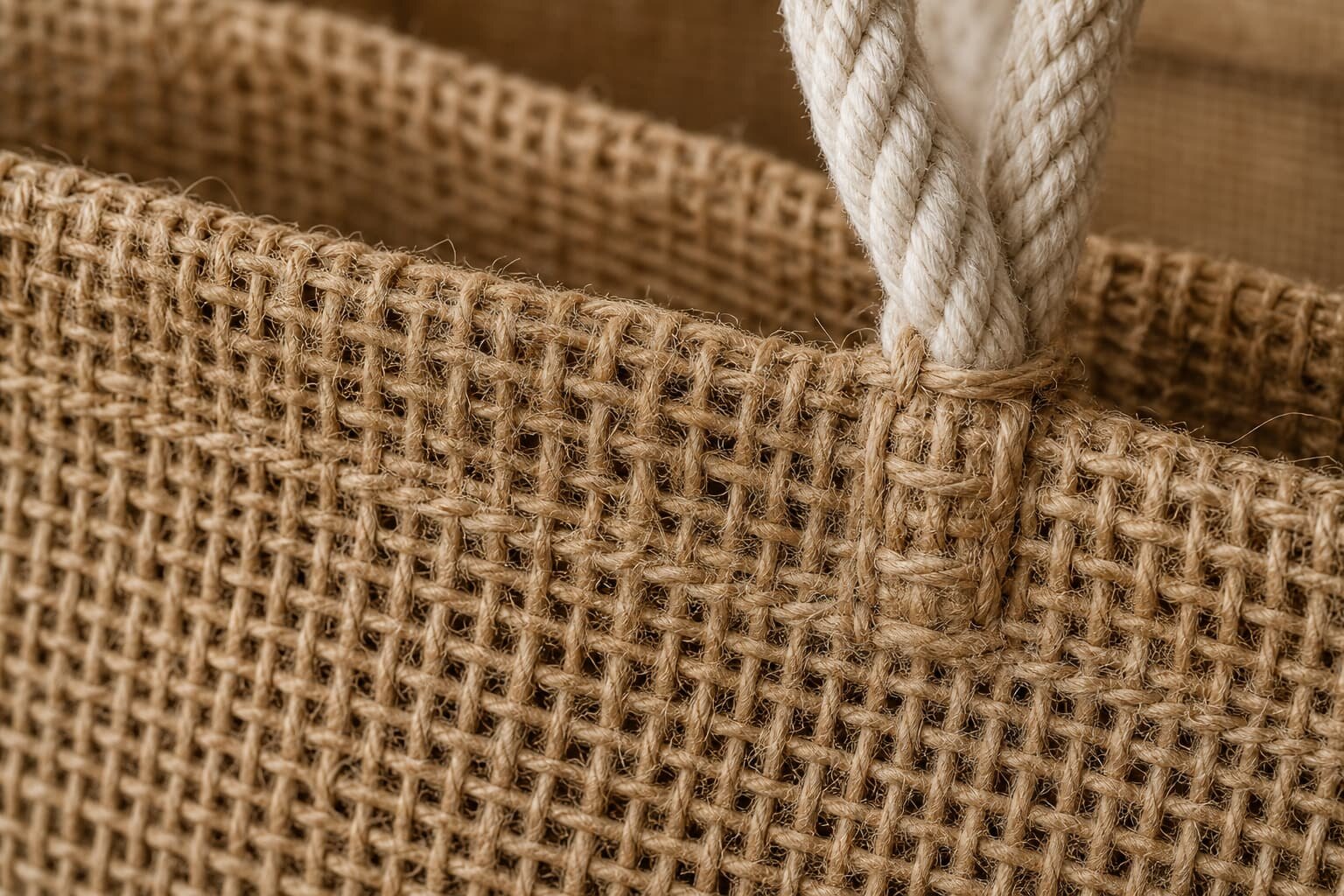
Jute burlap has a few failure points that do not show up as often in cotton or synthetic bags. Print can sink into the weave or look uneven across the panel. Loose fibers can make the edge look untidy even when the seam is technically sound. The material can also feel stiff in one batch and softer in another if the weaving, storage, or humidity conditions changed. A good supplier action closure file forces the team to check these points directly instead of assuming the next batch will match the sample by default.
Another common issue is over-design. Buyers sometimes ask for detailed art, tiny copy, multiple label types, and a complex closure on a material that is naturally coarse. The factory can often build it, but the result may not be legible or cost-efficient. If the artwork depends on fine detail, ask the supplier whether screen print, woven patch, or a larger stitched label is the safer option. The right answer is usually not the cheapest one. It is the one that survives actual production and inspection.
- Test print readability on rough weave before approving small fonts or thin lines.
- Check for loose fibers, odor, moisture marks, and uneven stiffness across the lot.
- If the art is too detailed for burlap, simplify it before the order reaches bulk stage.
Close the File With Evidence, Not Verbal Agreement
A closure file is only real when it contains proof. Keep the approved sample photo, the final spec sheet, the final artwork, the packing instruction, the carton mark, the QC rule set, and the confirmed lead-time schedule in the same record. If the supplier made a change during sample revision, the file should show both the old version and the approved final version. That way, when a production dispute comes up, the buyer can compare the shipped goods against the exact document that was closed, not against memory or chat messages.
The final close should be a deliberate step. Review every open action, confirm that the evidence is attached, and then issue a buyer sign-off that the factory can use as the production baseline. If anything remains open, keep it open and mark it clearly. Do not let a friendly email or a fast verbal answer become the reason a weak spec enters bulk. For jute burlap bags, disciplined closure is what protects margin, avoids rework, and keeps the order from drifting after approval.
- Attach the final approved sample, final artwork, packing spec, and carton mark to the same file.
- Keep old revisions for reference, but mark only one version as the production baseline.
- Close the file only after every action is evidenced, dated, and signed off by the buyer.
Specification comparison for buyers
| Spec decision | Recommended option | When it fits | Buyer risk to check |
|---|---|---|---|
| Fabric weight | 240-260 gsm for promo use; 280-320 gsm for retail or repeat use | Choose lighter weight when the bag is a giveaway or low-load carrier; choose heavier weight when the bag must hold shape and survive re-use | A lower GSM quote can look attractive but often means softer body, weaker hand feel, and more seam stress |
| Print method | 1-2 color screen print on the face panel | Best for bold logos, short copy, and larger marks on rough burlap | Fine lines, small fonts, and tonal art can fill in or break up on the weave |
| Bag structure | Single-layer body with reinforced seams, or lined body if the inside must stay clean | Single-layer suits price-sensitive promotional packs; lining fits premium retail and items that need a cleaner interior | Skipping lining can reduce cost but may expose loose fibers, show print bleed, or reduce shelf appeal |
| Closure type | Open top for simple carry, zipper top for security, drawstring for pouch-style use | Open top fits grocery or promo tote use; zipper or drawstring fits retail kits, gifts, or item protection | Extra closure parts add sewing time, hardware cost, and a higher chance of alignment issues |
| Packing format | Bulk stack with moisture control, or individual polybag plus carton for retail | Bulk stack works for wholesale and distribution; retail packing works when the bag must arrive shelf-ready | Wrong packing can trap moisture, crush shape, or create carton count errors |
Buyer checklist before sampling
- Confirm the final size with tolerance, not just a nominal dimension.
- Lock the fabric weight, weave feel, and whether the bag is lined or unlined.
- Approve the artwork file, print method, color count, and minimum text size.
- Verify handle length, handle attachment method, and any base or side reinforcement.
- Check whether the sample, pre-production sample, and bulk sample are all signed off.
- State the exact packing count per inner pack and per master carton.
- Ask for the lead time split by sampling, material booking, production, and packing.
- Record the buyer owner, supplier owner, and due date for every open action.
Factory quote questions to send
- What exact GSM, weave type, and fabric finish did you quote, and can you separate raw fabric from sewing labor?
- How many print colors are included, what screen setup is required, and what changes the MOQ?
- Is the quoted size for cut size or finished size, and what tolerance do you guarantee?
- What reinforcement is included at the handle, side seam, and base seam?
- Does the quote include woven label, side label, barcode label, or any retail hangtag?
- What is the packed count per carton, carton size, and gross weight?
- Which sample stage is included in the price, and what triggers a re-sample charge?
- What production steps sit on the critical path, and what is the earliest realistic ship-ready date?
Quality-control points to confirm
- Fabric GSM matches the approved range and does not drift below the minimum target.
- Finished size stays within the agreed tolerance on width, height, gusset, and handle length.
- Print placement is centered or positioned within the allowed offset and the logo edge is clean.
- Load-bearing seams show even stitch density and no skipped stitches, loose ends, or open points.
- Handle attachment is secure and the bartack or reinforcement patch matches the approved sample.
- The bag has no strong odor, excessive dust, wet feel, or visible moisture staining.
- Packing count per inner pack and per carton matches the shipping mark and carton label.
- The approved artwork, PO, and carton mark all match the same revision level.