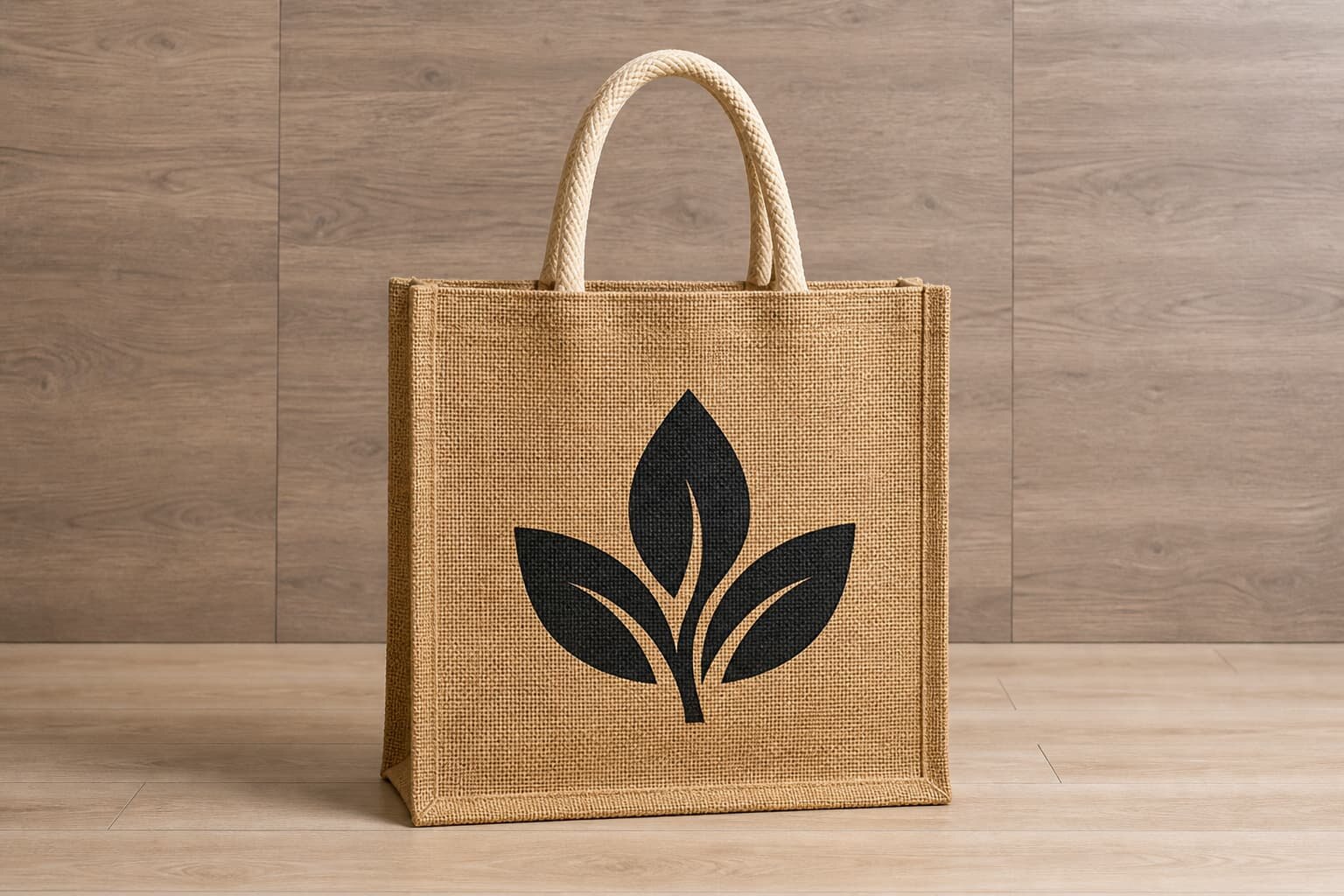
Why the Print Transfer Approval File Matters
For jute burlap bags, the print transfer approval file is not just an artwork attachment. It is the control document that connects the buyer's logo expectation with the factory's fabric, printing method, sewing sequence, packing method, and final inspection standard. If this file is weak, the factory may still make bags that match the purchase order quantity and size, but the brand mark can be soft, off-center, cracked, dusty, or visually different from the buyer's approved layout.
Jute is not a smooth cotton canvas. It has open yarns, slubs, hairiness, shade variation, and sometimes lamination on the back side. These features are part of the natural look, but they make logo transfer more sensitive. A good approval file tells the factory what is acceptable before bulk material is cut and printed. It also gives procurement teams a clear basis for comparing supplier quotes instead of choosing only by unit price.
- Use the file to freeze artwork size, color, position, process, and tolerance.
- Attach the file number to the sample tag, purchase order, and inspection checklist.
- Treat digital proof approval and physical sample approval as two separate steps.
- Do not let the factory start bulk printing from an email screenshot or low-resolution mockup.
Define the Bag Body Before Approving the Logo
Many print disputes start because the logo is approved before the jute bag construction is fixed. A 35 x 40 x 15 cm laminated jute shopping bag does not print the same as a 30 x 35 cm unlaminated burlap gift bag. The panel stiffness, surface hairiness, gusset depth, handle insertion, and sewing allowance all influence how the printed artwork sits on the finished bag.
The approval file should show the exact bag specification beside the artwork. Include finished size, cutting size if available, gusset style, handle material, handle length, fabric GSM, lining or lamination, and whether the panel is printed before sewing. This prevents a common problem: a logo that looked centered on a flat digital panel but appears too low after the bottom gusset is folded and the handles are stitched.
- Typical lightweight promotional jute: around 180-220 GSM, better for simple one-color marks.
- Common retail jute shopping bag: around 250-320 GSM, more stable for print and daily use.
- Heavier premium jute or structured bag: 350 GSM and above, check fold memory and print pressure marks.
- Laminated jute gives a cleaner body shape but can affect heat transfer temperature and surface feel.
Choose the Print Method Based on Burlap Reality
Screen printing is often the safest choice for simple jute burlap bag logos, especially one-color or two-color artwork. It can handle the uneven surface better when the ink and mesh are selected correctly. However, very fine text, gradient artwork, photo-style graphics, and small legal lines may not reproduce cleanly on coarse jute. If the artwork has detailed edges, the factory may suggest heat transfer or digital transfer, but this needs a more careful approval process.
Print transfer can give a sharper logo than direct screen printing, but it also introduces adhesion and surface compatibility risks. The transfer layer sits partly on top of the fibers. If the burlap is dusty, too hairy, too loose, or not pressed under the correct temperature and time, the edge can lift. If the press is too hot, the jute may darken or develop a flattened shine around the print. The approval file should explain why the method was chosen, not only name it.
- Use screen print for bold logos, solid text, simple icons, and economical repeat orders.
- Use transfer print when fine lines, small multi-color details, or consistent logo edge definition are required.
- Avoid very thin fonts on open-weave burlap unless the factory proves them on the actual fabric.
- Ask for a bend, scratch, and tape-pull check if the transfer print has high coverage or sharp corners.
Artwork Data That Must Be in the Approval File
A professional jute burlap bag print transfer approval file should remove interpretation. The factory should not need to guess whether the logo is 120 mm wide or scaled from a picture. Procurement teams should provide vector artwork in AI, EPS, or editable PDF format, with fonts outlined and colors named. If only a PNG or JPG is available, the buyer should expect redraw time and possible artwork correction cost.
Color control also needs realistic wording. Pantone references are useful, but natural jute changes how color is perceived. White ink may look warmer because the jute base is beige. Black usually covers well, but small reversed text can fill in. Metallic or neon colors should be tested because burlap texture breaks the clean surface effect. The approval file should include both the target color and the accepted visual limitation on natural fiber.
- Logo file name and revision number.
- Final print width and height in millimeters.
- Distance from top seam, side seam, bottom fold, or handle stitching.
- Pantone, CMYK, or buyer brand color reference, with note that jute base affects appearance.
- Minimum readable text height and line thickness confirmed by sample.
- Approval signature or written approval date for the latest revision.
Set Practical Acceptance Criteria Before Bulk Printing
Buyers should avoid vague approval comments such as 'logo must be nice' or 'print should be clear.' On jute, clarity has limits. The correct approach is to define practical acceptance criteria: logo size tolerance, placement tolerance, color tolerance, edge quality, adhesion, opacity, and allowable fiber show-through. This gives both sides a fair inspection standard.
For handmade or semi-handmade jute bags, a placement tolerance of plus or minus 5 mm is often more realistic than plus or minus 1 mm, depending on the bag size and print sequence. If the logo must align with a sewn pocket, label, or handle seam, the factory needs to know before pricing. Tighter tolerance can require printing before sewing, more fixtures, slower production, and higher rejection cost.
- Print size tolerance: commonly +/-2 mm for stable artwork, subject to method and panel size.
- Logo placement tolerance: often +/-5 mm on finished jute bags; tighter tolerance needs confirmation.
- Color tolerance: approve against physical sample, not monitor color.
- Adhesion: no edge lifting after tape pull when tested after curing, if this test is agreed.
- Rub resistance: no heavy color transfer under normal dry hand rubbing.
- Surface appearance: minor jute fiber interruption accepted unless it damages logo readability.
Sample Approval: What to Check With Your Hands, Not Only Your Eyes
A pre-production sample should be made with the same jute fabric weight, same lamination status, same handle, same sewing construction, and same print method planned for bulk. A sample printed on smoother substitute fabric is not reliable. If the order is for 300 GSM natural jute with cotton webbing handles, approving a logo on 220 GSM loose burlap gives the wrong result for print pressure, body stiffness, and visual contrast.
When the sample arrives, check it like an inspector, not like a catalog viewer. Put the bag flat and measure the logo. Stand it upright and see whether the logo still appears centered. Rub the print gently with a dry white cloth. Bend the printed area around the natural bag curve. Check the back of the panel if heat transfer pressure leaves marks. Smell the bag after it has been sealed in a polybag for a few hours, especially for laminated jute.
- Measure finished bag size, gusset, and handle drop before judging logo position.
- Check whether the print crosses thick seams, folds, or raised jute slubs.
- Look for pinholes, broken edges, patchy opacity, scorching, and shiny heat marks.
- Confirm that the approved sample carries a label with file revision, date, and supplier name.
- Keep the sample unwashed and unmodified as the bulk inspection reference.
MOQ and Cost Logic Behind Print Transfer Approval
MOQ for jute burlap bags is not only about sewing quantity. It is also affected by fabric procurement, handle material, print setup, artwork versions, and packing labels. A supplier may accept a low order quantity for a standard jute bag body, but the cost per piece can rise sharply if each small lot uses a different transfer film, screen, Pantone color, carton mark, or barcode.
For buyers comparing quotes, ask suppliers to separate the cost logic. A cheaper unit price may hide a high screen charge, sample charge, artwork correction fee, or packing upgrade. A more expensive unit price may include better GSM, stronger handle stitching, cleaner print setup, inner polybag, and export carton. The approval file helps because it tells every supplier to quote the same technical requirement.
- One bag body with one logo usually gives the cleanest MOQ and lead time.
- Multiple logos on the same bag body may still need separate screens, films, or approval samples.
- Small repeat orders are easier when the factory keeps the same artwork file and print fixture.
- Changing only print color can still require wash-up, ink matching, and new first-piece approval.
- Ask whether sample cost is refundable or only credited after bulk order; do not assume.
Packing Decisions That Protect the Approved Print
A good print can still fail in packing. Jute sheds fiber dust, absorbs moisture, and compresses under carton weight. If transfer print is packed too soon, stacked face-to-face, or shipped through a humid route without proper drying, the logo can mark the next bag, collect lint, or develop a tacky surface. This is especially important for large solid logos, light-colored transfer films, and laminated jute bags.
The approval file should include packing method when the print is sensitive. State whether bags are flat packed, folded, nested, or individually polybagged. Decide whether tissue paper or interleaving is needed between printed panels. Confirm carton size and weight because over-compression can bend handles, crease transfer film, and make the front panel look wavy when unpacked at retail.
- Allow enough curing or drying time before stacking printed bags.
- Use interleaving for high-coverage transfer prints if blocking risk is found in sampling.
- Keep printed faces away from rough rope handles or metal accessories inside the carton.
- Confirm desiccant use only when appropriate and allowed by the buyer's market requirements.
- Mark cartons by logo version if the order includes several brand artworks.
Lead Time Workflow for Fewer Approval Delays
Lead time should be broken into stages. If a supplier says production takes 25 days, ask whether that starts after deposit, after artwork confirmation, after sample approval, or after bulk fabric arrival. For jute burlap bag print transfer orders, artwork correction and sample approval can consume more time than buyers expect, especially when brand teams review color and logo position slowly.
A practical sourcing workflow starts with a technical RFQ, then artwork proof, then physical sample, then signed approval file, then bulk material booking, then first-piece print confirmation, then sewing and packing. Procurement teams should not approve mass production through scattered chat messages. One final approval file should control the factory floor.
- Day 1-3 example: factory reviews RFQ, artwork, and bag specification.
- Day 4-7 example: artwork proof, print test, or sample material preparation.
- Day 8-14 example: pre-production sample making and buyer review, depending on courier time.
- Bulk lead time example: starts only after approval sample, deposit, and material confirmation.
- Final inspection should be scheduled after packing, not before cartons are closed.
Quote Data Buyers Should Compare Line by Line
When two jute burlap bag quotes look close, the difference is often hidden in the details. One quote may use 250 GSM jute, narrow cotton handles, simple screen print, and bulk carton packing. Another may use 320 GSM laminated jute, reinforced handle stitching, heat transfer logo, individual polybags, and stronger export cartons. Without quote data tied to the approval file, procurement cannot fairly compare the suppliers.
Ask for a quote sheet that matches the technical approval file. The supplier should list bag material, GSM, handle specification, print method, number of print colors, logo size, sample charge, setup charge, MOQ, lead time, packing, carton quantity, estimated carton measurement, gross weight, and trade term. This also helps your freight forwarder estimate volume before the order is finished.
- Fabric: natural jute, laminated jute, blended jute, or burlap with lining.
- GSM: actual quoted range, not only 'thick jute' or 'premium quality'.
- Handle: cotton webbing, jute webbing, rope, padded handle, or self-fabric handle.
- Print: screen, heat transfer, digital transfer, embroidery patch, woven label, or sewn label.
- Packing: pieces per polybag, pieces per carton, carton ply, carton marks, barcode labels.
- Commercial terms: sample time, bulk lead time, payment term, Incoterm, validity, and exclusions.
Specification comparison for buyers
| Spec decision | Recommended option | When it fits | Buyer risk to check |
|---|---|---|---|
| Jute fabric weight | 250-320 GSM natural jute for shopping and gift bags | Retail giveaways, wine bags, promotional packaging, and medium-load reusable bags | Lower GSM may distort during heat transfer and show more print unevenness on coarse yarns |
| Print method | Screen print for simple logos; heat transfer only when artwork needs finer detail | One to three color branding, flat logos, slogans, or line artwork | Transfer films can sit on top of loose jute fibers and peel if pressure, temperature, or lamination is wrong |
| Artwork file | Vector AI, PDF, or EPS with outlined fonts and Pantone references | Buyer wants repeatable logo placement across sampling and bulk | Low-resolution PNG files may look acceptable on screen but print soft on open-weave burlap |
| Approval sample | Pre-production sample using actual bulk fabric, handle, lining, and print process | Orders above trial quantity or where brand color is sensitive | Lab dip or paper proof alone does not confirm adhesion, print edge, or burlap surface absorption |
| Print placement | Tolerance marked on approval file, normally +/-5 mm for handmade jute bags | Logo centered on front panel, side gusset mark, or wine bag vertical print | Ignoring bag shape tolerance can make a centered logo look off after sewing and packing |
| MOQ planning | Combine same bag body with different print panels only after confirming print setup cost | Distributor programs, retail store groups, event orders with multiple logos | Too many small logo versions increase screen charges, sample delays, and carton sorting errors |
| Packing approval | Flat pack with interleaving if transfer print is tacky or high coverage | Large logo transfer, coated jute, laminated jute, or export in humid season | Fresh transfer print can block, mark, or pick up fiber dust if packed too early |
| Lead time control | Artwork approval, sample approval, material booking, print curing, final QC listed separately | Importers managing launch dates or retailer delivery windows | A single lead time promise hides delays caused by file correction, screen remake, or print re-approval |
Buyer checklist before sampling
- Confirm the approval file includes bag size, gusset, handle type, fabric GSM, lamination status, lining, and print method.
- Provide vector artwork with outlined fonts, exact print size, Pantone or brand color reference, and approved logo position.
- Ask the factory to mark print tolerance, sewing tolerance, and expected jute shade variation directly in the approval file.
- Approve a physical sample made with actual jute quality, not only a digital mockup or paper color proof.
- Check print edge sharpness, opacity, adhesion, cracking, odor, and rubbing resistance before authorizing bulk production.
- Confirm whether bulk bags will be screen printed before sewing, after sewing, or transferred on finished bags.
- State carton packing method, inner polybag use, interleaving paper requirement, and maximum carton weight.
- Require the factory quote to separate fabric, handle, printing, sampling, mold or screen, packing, inspection, and freight terms.
- Keep one signed approval sample at the buyer side and one sealed reference sample at the factory.
- Do not approve bulk production until the latest file revision number matches the physical sample tag.
Factory quote questions to send
- What jute GSM, yarn count, fabric construction, and lamination status are included in your quote?
- Is the print made by screen printing, heat transfer, digital transfer, or another method, and why do you recommend it for this artwork?
- Will the print be applied before sewing or after the bag is assembled, and how does that affect placement tolerance?
- What artwork format do you require, and will you outline fonts, adjust trapping, or redraw low-quality artwork at extra cost?
- What is the minimum order quantity for this bag size and print design, and what changes if we split the order into several logos?
- How many days are required for artwork proof, sample making, buyer approval, bulk material purchase, printing, sewing, QC, and packing?
- What physical print tests do you run on jute, such as dry rub, tape pull, bend test, scratch test, or wash simulation if requested?
- What color tolerance do you apply for Pantone matching on natural burlap, and can you provide a production tolerance range?
- What packing method prevents transfer print blocking, fiber dust contamination, moisture absorption, or logo abrasion during export?
- Which quote items are excluded, such as sample courier, screen charge, artwork correction, inner polybag, barcode label, or third-party inspection?
Quality-control points to confirm
- Verify fabric GSM by cutting and weighing representative pieces from the bulk jute roll before printing starts.
- Compare bulk jute color and surface hairiness against the approved sample because shade and fiber dust affect logo appearance.
- Check print size, position, and alignment on the first 20-30 bulk pieces before the full print run continues.
- Run dry rub and tape adhesion checks after proper curing time, not immediately after transfer while the film is still settling.
- Inspect whether heat transfer has scorched, flattened, or glazed the jute surface around the logo edge.
- Check handle stitch reinforcement after printing because heat and pressure can affect nearby seams on finished bags.
- Confirm that printed panels are fully dry or cured before stacking, sewing, or carton packing.
- Open random cartons after packing to check logo transfer marks, fabric dust, moisture odor, and carton compression.