Why Print Rub Approval Matters on Jute Burlap Bags
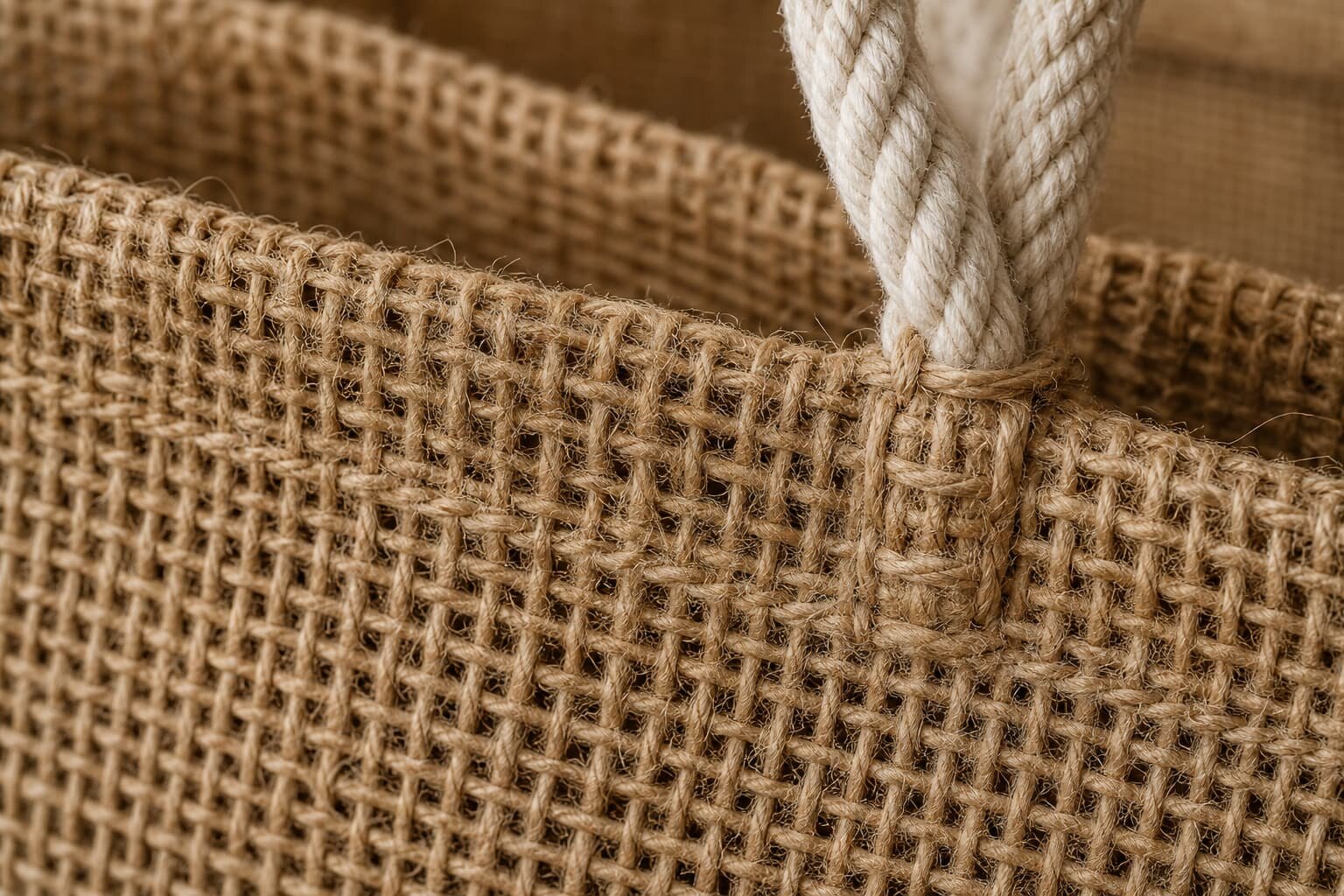
A jute burlap bag is not a smooth paper shopping bag or a tightly woven cotton tote. The surface is coarse, raised, uneven, and naturally absorbent. When a logo is printed on that surface, the ink touches high yarns first and may not fully reach low gaps in the weave. A sample can look acceptable on a desk, then show rubbing, flaking, or transfer after stacking, carton compression, or humid sea freight.
A print rub approval record gives the buyer and factory one shared decision file before bulk production. It is not only a test result. It should identify the fabric batch, ink, print method, curing condition, artwork version, packing method, and acceptance status. For procurement teams, this record is useful because it turns a subjective argument about a rubbed logo into a controlled approval point.
- Use the record when the logo is printed directly on natural jute, laminated jute, dyed burlap, jute-cotton blend, or jute wine bags.
- Do not rely only on a digital proof; rub resistance must be checked on the actual material surface.
- Keep the record with the signed pre-production sample, not separately in email threads.
- Make the approval record a production release document before bulk printing starts.
The Buying Problem: Good Sample, Weak Bulk Print
Many importers only approve print color and logo position. That is not enough for jute bags. The bigger risk is whether the printed logo survives handling during sewing, trimming, packing, transit, unpacking, and retail use. A black logo on natural jute may look sharp at sample stage, but if the ink is not cured well, it can mark the next bag in the carton. A white logo on dark dyed burlap may lose coverage on raised yarns and show a broken, dusty appearance.
The problem usually appears too late because the buyer did not ask for a rub approval record at RFQ stage. Once bulk bags are printed and packed, the factory may argue that the rough jute surface is normal. The buyer may argue that the logo is not retail acceptable. Both sides lose time. A clear approval record prevents that by setting sample checks and acceptance limits before the order is released.
- Common failure: ink transfer to the back side of the next bag after carton compression.
- Common failure: logo edges become fuzzy after damp hand rubbing.
- Common failure: fine text disappears because the weave is too open for the artwork.
- Common failure: factory changes curing time or ink batch after sample approval without updating the buyer.
Specify the Bag Construction Before Discussing the Print
Print rub performance depends on the bag construction. A 220 GSM loose burlap gift pouch does not behave like a 320 GSM laminated jute tote. Unlaminated jute absorbs more ink and can have more surface hair. Laminated jute gives better body and can reduce ink penetration from the back, but the printed face may still be uneven because the yarn surface remains textured. Dyed jute adds another variable because loose dyestuff can affect rub results.
Your RFQ should define the base bag first: finished size, gusset, handle type, lining, closure, seam construction, and expected load. For retail totes, buyers often review 260-320 GSM jute. For small promotional pouches, lighter burlap may be acceptable. For wine bags, the print area may be narrow and close to a seam, so logo position and rubbing from bottle insertion should be considered.
- Typical natural jute tote: 260-320 GSM, plain weave, cotton webbing or jute handles, optional lamination.
- Typical jute wine bag: heavier body preferred when holding glass bottles; check print rub around bottle contact points.
- Typical burlap pouch: lighter fabric and drawstring friction can rub against the print during use.
- Typical retail laminated jute shopper: better structure, but confirm whether lamination affects sewing, odor, and folding marks.
Choose a Print Method That Matches the Surface
Screen printing is usually the most practical method for simple jute burlap bag logos. It handles solid brand marks, basic text, and one to three spot colors. The factory must use ink suitable for rough natural fibers and allow enough drying or curing time before stacking. A large solid print area needs more attention than a small logo because more ink means more chance of tackiness, cracking, or transfer.
Heat transfer and digital print can work in selected constructions, but they are not automatic upgrades. Transfers may not bond well to coarse jute unless the surface and adhesive are suitable. Digital printing may struggle with open weave, fiber hair, and color consistency. Embroidered patches or woven labels can avoid ink rub problems, but they change the look and cost structure. The best method is the one the factory can prove on your actual fabric.
- For simple logos, request a screen print strike-off on the exact jute GSM.
- For fine artwork, ask the factory to mark which details are below practical print tolerance.
- For heavy ink coverage, require a longer curing confirmation and packing friction check.
- For premium branding, compare direct print against sewn woven label or leather-look patch if rub risk is unacceptable.
What a Useful Print Rub Approval Record Should Contain
A useful record is more than a pass or fail stamp. It should allow another inspector to repeat the check and understand what was approved. At minimum, it should show the buyer name or PO reference, item code, bag size, fabric GSM, fabric color, print method, ink color, artwork version, sample quantity, test date, and approval status. Photos should show the bag before rubbing, the rubbed logo area, and the white cloth or transfer surface after the test.
The record should also mention the test condition. For example, dry rub may use a clean white cotton cloth and a fixed number of back-and-forth strokes under hand pressure or a factory rub tester if available. Damp rub should use a slightly moistened cloth, not a dripping wet cloth. If the factory uses an internal method instead of a recognized laboratory method, the buyer should still require consistency and clear acceptance criteria.
- Record sample ID, fabric batch, ink batch, print operator or line, curing time, and inspector name.
- Attach close-up photos taken under steady light, not only distant bag photos.
- State the number of rub strokes and whether the rub was dry, damp, or packing simulation.
- Include buyer approval, conditional approval, or rejection comments in writing.
Set Acceptance Criteria Buyers Can Actually Enforce
Jute is a natural coarse fabric, so the acceptance rule should be realistic. A buyer should not expect the same edge sharpness as coated paper or polyester. However, the buyer can require no obvious ink transfer to a clean white cloth, no severe fading in the main logo area, no unreadable brand name, and no visible staining on adjacent bag panels after packing simulation. These criteria are practical and inspectable.
It is also helpful to classify defects by severity. Slight fiber break or texture interruption may be acceptable if it matches the approved sample. Ink smearing, wet-looking tackiness, heavy transfer, wrong color, wrong logo placement, or print peeling should be rejected. If the product is for retail shelves, the buyer should be stricter than for a one-time industrial giveaway because consumers will judge the bag before using it.
- Acceptable: minor broken texture caused by jute weave, if it matches the approved sample.
- Not acceptable: logo name becomes unreadable after dry rub.
- Not acceptable: ink transfers to another bag face during packing simulation.
- Not acceptable: bulk production uses different ink, curing time, or fabric GSM without buyer approval.
MOQ and Cost Logic Behind the Approval Process
A print rub approval record has a cost, even when the factory does not show it as a separate line. The factory must purchase or allocate fabric, prepare screens, mix ink, print strike-offs, cure samples, inspect them, and often remake samples if the artwork is too fine. For small orders, this setup time can be a large part of the unit cost. That is why very low MOQ custom jute orders often have higher unit prices or limited customization options.
Buyers should ask where the MOQ comes from. It may come from the jute roll length, screen printing setup, dyeing minimum, handle material, lining fabric, carton printing, or labor efficiency. If the order is below the factory's normal MOQ, ask how many extra panels are included for testing and replacement. A factory that quotes only the exact order quantity with no testing allowance may later resist destructive rub checks because every sample affects shipment quantity.
- Screen charge may be separate when each logo color needs its own screen.
- Ink mixing and Pantone matching may require minimum volume even for small logos.
- Pre-production sample cost may be credited after bulk order, but confirm before PO.
- Testing allowance should be included for rub tests, color checks, and buyer retained samples.
Sampling Workflow Before Bulk Printing
The safest workflow is artwork review, fabric confirmation, print strike-off, rub approval, pre-production sample, and then bulk printing. Do not skip straight from digital artwork to finished bulk bags. A print strike-off on a flat jute panel is faster and cheaper than remaking finished bags. Once the print is approved, the factory should make a complete pre-production bag to confirm placement, seams, handles, and packing direction.
Procurement teams should also separate color approval from rub approval. Pantone matching on jute is approximate because the natural brown base and uneven fiber affect the final color. Approving a logo color does not mean the print will resist rubbing. The print rub approval record should be signed only after the sample has cured for the same time planned in bulk production, not immediately after printing.
- Step 1: factory reviews artwork and flags fine lines, small text, large ink areas, and difficult colors.
- Step 2: buyer approves jute GSM, fabric shade, handle, lining, and logo size.
- Step 3: factory prints strike-off and performs dry and damp rub checks after curing.
- Step 4: buyer approves the print rub record and sealed sample before bulk printing.
Packing and Lead Time Risks That Affect Rub Results
Packing can turn a marginal print into a shipment problem. If printed bags are stacked face-to-face while the ink is still warm or not fully cured, transfer risk increases. High carton compression, long sea freight, humid warehouse intake, and rough inland transport can also rub the printed face against another surface. For dark ink, large logo coverage, or retail-ready bags, buyers should ask whether tissue, print-to-back orientation, or inner polybag separation is needed.
Lead time should include printing and curing, not only sewing. A realistic schedule has time for fabric purchase, cutting, print setup, print drying or curing, sewing, trimming, inspection, packing, and carton conditioning before shipment. If a factory compresses the schedule, the first area at risk is often curing time. A buyer who asks only for fastest shipment may receive bags that looked fine at final inspection but transfer ink after transit.
- Ask whether printed panels are cured before sewing or finished bags are printed after sewing.
- Confirm whether the quoted lead time includes pre-production sample approval days.
- For humid seasons, ask how the factory controls moisture before carton sealing.
- For tight cartons, ask for a short packing simulation before mass packout.
Quote Data Buyers Should Request From Each Supplier
To compare supplier quotes, the buyer needs more than unit price. A low quote may use lighter jute, fewer print checks, no tissue protection, no testing allowance, or a shorter curing process. A higher quote may include better fabric, thicker handles, screen setup, sample photos, carton marking, and inspection support. Without quote data, procurement teams may choose the cheapest option and later pay through claims, rework, or delayed launch.
Ask suppliers to quote in a structured way. The price should identify fabric GSM, bag size, handle material, print method, number of colors, logo size, lining, closure, packing method, carton quantity, MOQ, sample cost, screen cost, lead time, and validity period. If a print rub approval record is required, it should be named in the quote so the factory understands it is a release condition, not a nice extra.
- Fabric: GSM, natural or dyed, laminated or unlaminated, expected tolerance.
- Printing: method, ink type, number of colors, print size, screen charge, curing method.
- Packing: pieces per carton, orientation, tissue or no tissue, inner polybag, carton marks.
- Commercial terms: MOQ, sample time, bulk lead time, payment terms, quote validity, excluded charges.
Specification comparison for buyers
| Spec decision | Recommended option | When it fits | Buyer risk to check |
|---|---|---|---|
| Bag fabric | Natural jute or burlap 260-320 GSM with stable weave | Retail shopping bags, gift bags, wine bags, market totes, and promotional jute bags where rustic texture is part of the product value | Open weave can break fine logo lines and increase ink penetration variation between panels |
| Print method | Screen print with jute-suitable water-based or plastisol ink after fabric conditioning | One to three spot colors, solid logos, brand marks, short slogans, and simple retail graphics | Ink may sit unevenly on raised yarns; buyer should approve rub test on actual fabric, not cotton canvas |
| Logo artwork | Bold vector artwork with minimum practical stroke around 1.0-1.5 mm | Brand marks that can tolerate slight texture interruption from natural fiber | Tiny text, QR codes, fine halftones, and thin borders may fail visual approval even if rub resistance is acceptable |
| Rub approval record | Dry rub plus damp rub record with photo, test pressure, number of strokes, sample ID, ink batch, and approval signature | Any order where the print is visible at retail or where bags are nested, packed tight, or shipped long distance | A verbal sample approval does not protect the buyer if bulk print transfers inside cartons |
| Packing style | Flat pack with print face protected by tissue or bag-to-bag orientation control when needed | Dark ink on natural jute, large logo coverage, humid season shipments, and retail-ready packaging | Print may pass bench rub test but mark the next bag during compression and vibration in transit |
| MOQ logic | Confirm MOQ by fabric roll, print setup, and color mixing minimum, not only by finished bag quantity | Custom logo jute bags with buyer-specific size, lining, handle, or label | Low MOQ may carry higher unit cost, less stable shade matching, or limited allowance for destructive rub testing |
Buyer checklist before sampling
- State the exact jute or burlap GSM, weave style, laminated or unlaminated construction, lining, handle material, and finished bag size in the RFQ.
- Attach vector artwork and specify Pantone or approved color standard, but also accept that jute texture will make the print look different from paper or cotton.
- Request a print rub approval record before bulk cutting or bulk printing, not after finished goods are packed.
- Require dry rub and damp rub checks on the same fabric, ink, curing method, and print coverage intended for bulk production.
- Define the acceptance limit: no obvious ink transfer to a clean white cloth, no severe logo breakdown, and no staining on adjacent bag panels after packing simulation.
- Ask the factory to record sample ID, fabric batch, ink batch, print date, curing time, inspector name, and approval status.
- Review photo evidence under consistent light, including close-up images after rubbing and images of the white test cloth.
- Check whether bags are packed print-to-print, print-to-back, or separated with tissue; packing direction should match the approved rub result.
- Keep one sealed approved print sample and one signed approval record for comparison during final inspection.
- Include the print rub approval record as a release condition in the purchase order, not as an optional factory document.
Factory quote questions to send
- What jute or burlap GSM are you quoting, and is the fabric laminated, unlaminated, dyed, bleached, or natural?
- Which print method will be used for this logo: screen print, heat transfer, digital, embroidery patch, woven label, or another method?
- What ink type and curing process do you recommend for this jute surface, and how long must the print cure before packing?
- Can you perform dry rub and damp rub tests on pre-production samples and provide a written approval record with photos?
- What is the minimum practical line width for our artwork on this fabric, and which details should be enlarged before sampling?
- Does your MOQ come from fabric purchase, printing setup, sewing line efficiency, or packing material minimums?
- How many extra printed panels or finished bags are included for testing, replacement, and buyer approval samples?
- Will the bags be packed print-to-print, print-to-back, or with interleaving, and is that included in the quoted unit cost?
- What lead time applies for lab dip or print strike-off, pre-production sample, bulk fabric, printing, sewing, packing, and final inspection?
- Which quote items are excluded: setup charge, screen charge, sample courier, inner polybag, carton marking, palletizing, or third-party inspection support?
Quality-control points to confirm
- Verify incoming jute GSM, weave openness, odor, moisture condition, and panel shade before printing.
- Check that the approved artwork size, print position, ink color, and logo orientation match the signed sample.
- Perform dry rub testing after normal curing time, not immediately after the print comes off the table.
- Perform damp rub testing with controlled moisture, because over-wet cloth can create an unrealistic failure and too-dry cloth hides risk.
- Inspect both the printed face and the white cloth or adjacent fabric after rubbing for visible transfer.
- Run a packing friction check by stacking or compressing printed bags in the intended packing direction.
- Check carton humidity control and avoid packing warm printed bags into sealed cartons.
- Confirm the print rub approval record is filed with fabric batch, ink batch, date, sample number, and buyer approval.
- Use the sealed approved sample as the inspection standard during in-line and final quality checks.
- Record any deviation before shipment, especially if fabric batch, ink supplier, curing time, or packing method changes.