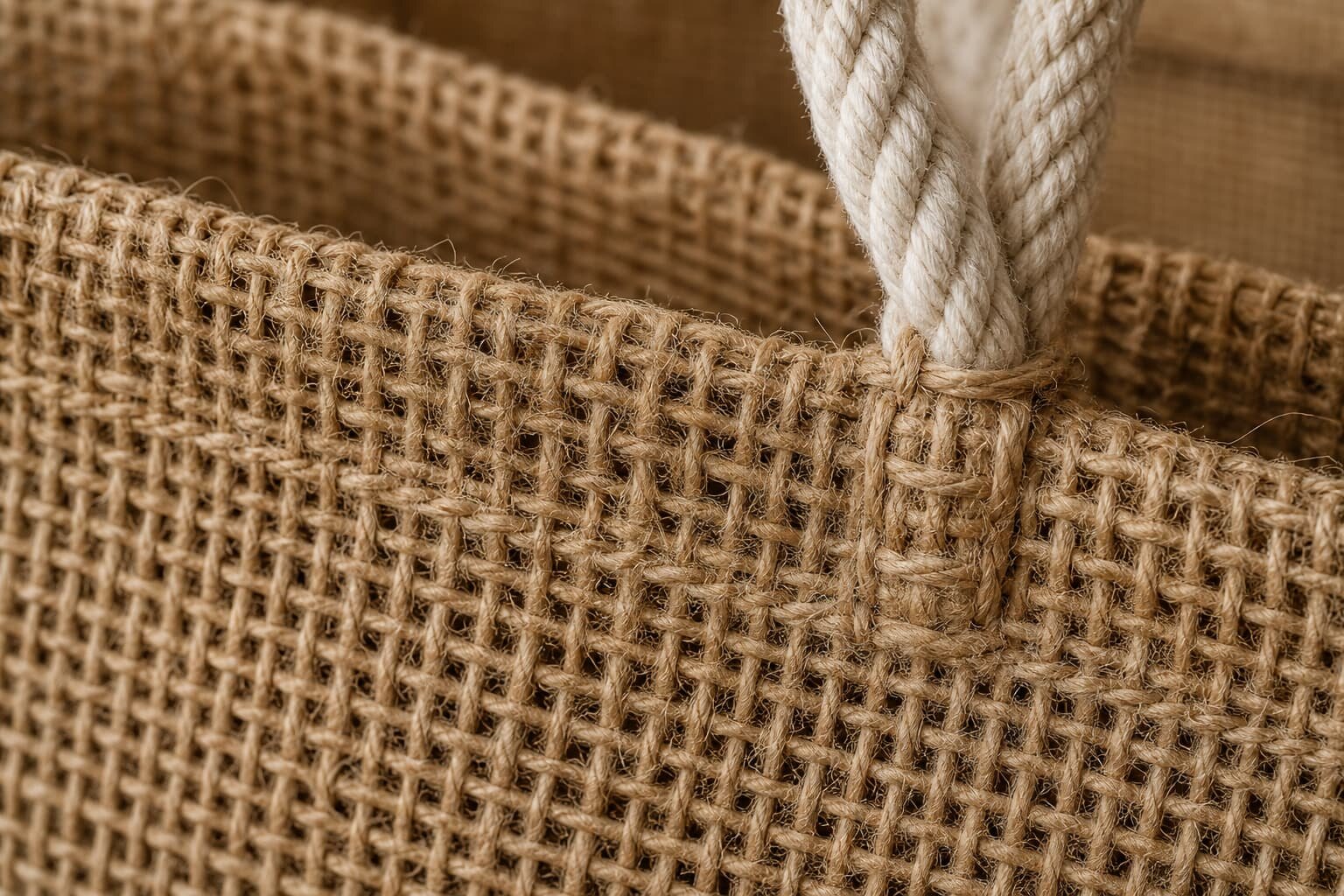
Why a Price Variance Memo Matters for Jute Burlap Bags
A jute burlap bag price variance memo is not an accounting form. For procurement teams, it is a working document that explains why one supplier quote is lower, higher, or riskier than another. Jute bags look simple, but their price changes quickly when the GSM, weave tightness, lamination, handle construction, print method, packing style, and order split are not identical. Without a memo, buyers often compare unit prices that are built on different assumptions.
The memo is most useful before nomination, not after a purchase order is issued. It helps a buyer ask the factory for missing quote data, align internal stakeholders on what is acceptable, and prevent a low bid from becoming a production dispute. A strong memo should show which variances are legitimate cost differences and which ones are warning signs that the supplier has omitted material, workmanship, packing, or quality requirements.
- Use the memo when at least two suppliers quote the same jute burlap bag program.
- Apply it when a reorder price changes and the supplier says material cost increased.
- Attach it to internal approval notes so merchandising, sourcing, and finance compare the same specification.
- Update it after sample approval because the approved sample often changes the true cost.
Start With a Controlled Bag Specification
The first reason jute burlap bag prices vary is that the RFQ does not control enough physical details. A supplier may quote a 280 GSM jute tote while another quotes 320 GSM laminated jute with tighter weave and wider cotton handles. Both may describe the product as a natural burlap tote, but the landed cost, appearance, sewing speed, carton cube, and defect risk are different.
Your memo should begin with a locked specification table. Include finished dimensions, tolerance, gusset style, fabric weight, lamination status, handle material, print method, packing, and inspection requirement. If the buyer does not yet know the ideal specification, the memo should show alternatives clearly instead of blending them into one target price. This prevents a supplier from winning on an under-specified version and later charging for upgrades that should have been in the RFQ.
- State finished size as width x height x gusset, and note whether measurements are taken flat or opened.
- Specify GSM as fabric weight, not only a visual description such as thick or premium.
- Identify lamination, backing, washing, dyeing, and odor-control expectations.
- Define handle drop, handle width, stitching pattern, and reinforcement patches.
- Include acceptable size tolerance, usually tighter for retail bags than for loose promotional pouches.
Fabric GSM, Weave, and Lamination Drive Real Cost Differences
Jute cost is heavily affected by yarn quality, fabric GSM, weave density, and finishing. A 240 GSM loose-weave burlap fabric can be suitable for low-cost gift packaging, but it will not behave like a 320 GSM laminated jute shopper. The heavier option uses more material, cuts more slowly, weighs more in cartons, and can require stronger stitching. A price variance memo should never treat all natural jute as equal.
Lamination is another frequent source of quote variance. Laminated jute can improve body shape, reduce fraying, and support cleaner printing, but it can add cost and change the product's sustainability positioning. Unlaminated jute feels more traditional and breathable but may shed more fiber, collapse more easily, and show print irregularities. The memo should record whether lamination is included, what type it is, and whether the buyer accepts the impact on folding, odor, and claims.
- Ask each factory for quoted GSM plus tolerance, such as 300 GSM plus or minus 5 percent.
- Request a fabric swatch from the quoted material, not only a photo of a similar bag.
- Compare finished bag weight because it reveals hidden fabric and handle differences.
- Check whether the supplier has included jute washing, calendaring, coating, or dust reduction.
- Do not approve a lower GSM unless sample strength, appearance, and print results still pass.
Print Method Variance Is More Than a Setup Charge
Printing on burlap is not the same as printing on smooth cotton canvas. The coarse surface absorbs ink unevenly, and small artwork details can break, fill in, or look jagged. A supplier quoting low-cost screen print for a simple one-color logo may be correct. Another supplier quoting a higher price for a transfer, patch, or woven label may also be correct if the artwork has fine lines, gradients, small text, or tight brand color requirements.
Your memo should separate print cost into method, number of colors, setup charge, ink coverage, print location, and reject risk. A large solid ink block on natural jute can require more ink and longer drying time than a small logo. Printing before sewing may improve placement on some structures, while printing after sewing may limit print area but reduce panel handling. These decisions affect both price and production stability.
- Use screen print for bold logos, large letters, and limited color count.
- Avoid tiny legal text or thin serif fonts on coarse burlap unless a label is used.
- Confirm Pantone matching tolerance because natural jute color shifts the visible ink shade.
- Ask whether screen charges are one-time, per color, per size, or per repeat order.
- Approve a printed pre-production sample before bulk cutting or sewing starts.
Handle and Sewing Details Can Hide the Biggest Quote Gap
Many price gaps come from handle construction rather than body fabric. Cotton webbing, jute webbing, rope handles, and self-fabric handles all have different raw material costs and sewing speeds. Wider handles, dyed handles, longer shoulder drops, rivets, X-box stitching, and reinforcement patches all add cost. If the RFQ only says jute tote with handles, the supplier has room to quote a cheaper construction that may fail during use.
For retail buyers, handle strength is not optional. A tote holding groceries, wine bottles, catalogs, or promotional kits must survive real loading, not only look correct in a photo. The memo should compare handle material, width, drop length, stitch pattern, thread quality, and reinforcement. If one quote is lower because it uses narrower handles or fewer stitches, that variance should be shown as a performance risk, not a purchasing saving.
- Define handle drop separately from total handle length.
- Require back-tack or X-box stitching where the handle meets the body.
- For wine bags, confirm divider, bottle weight assumptions, and bottom reinforcement.
- For drawstring jute pouches, check cord material, channel width, knot security, and fray control.
- For heavier contents, request a handle pull test target or sample load test.
MOQ Logic: Why the Lowest Unit Price May Not Be the Best Buy
MOQ for jute burlap bags is not only a factory preference. It is connected to fabric purchasing, dyeing if used, lamination runs, print setup, cutting efficiency, sewing line changeover, and packing configuration. A supplier offering a very low MOQ may be using existing stock fabric, combining your order with another run, or charging hidden setup costs elsewhere. That can be acceptable, but the buyer needs to understand the assumption.
A price variance memo should show MOQ by cost driver, not just total pieces. If your program has three bag sizes, two print designs, and two packing methods, the factory may need separate minimums for each version. A blended unit price may hide the fact that one SKU is below efficient production quantity. Buyers should ask the factory to identify which MOQ is firm, which is negotiable, and which requires a surcharge.
- Separate MOQ for natural stock fabric versus custom dyed jute.
- Separate MOQ for each printed artwork and print color count.
- Ask whether mixed sizes can share the same material lot.
- Check whether sample cost can be refunded after bulk order, if that is part of the commercial discussion.
- Compare total program cost, not only the price of the main SKU.
Packing and Freight Assumptions Change the Landed Cost
Jute bags are bulky, and packing method can change carton count, carton cube, creasing, moisture exposure, and warehouse handling. A flat-packed retail tote usually protects shape and print better than a tightly folded promotional bag, but it may increase freight volume. A folded pack may reduce cube but create permanent creases on laminated jute or damage a large print. The cheaper ex-factory quote may become expensive after freight and claims are considered.
Your memo should record packing style, pieces per carton, carton dimensions, gross weight, carton strength, carton marks, inner moisture barrier, and palletization if needed. For natural fiber products, moisture control is not a detail to leave until shipment. If bags are packed too tightly before they are fully dry, or cartons sit in humid conditions, odor and mildew risks increase. Packing variance should be treated as a quality and landed-cost issue.
- Ask for estimated carton size and gross weight before comparing freight.
- Use moisture barrier liners or desiccants when the route, season, or warehouse condition requires it.
- Avoid overweight cartons that tear during port and DC handling.
- Confirm whether retail barcodes, hangtags, belly bands, or inner polybags are included.
- Request carton drop or compression expectations for retail distribution programs.
Lead Time Variance: Check the Production Calendar, Not One Number
A supplier may quote 25 days and another may quote 40 days for the same jute burlap bag. The difference may be real capacity, material availability, print complexity, or simply different definitions of lead time. Some factories count from deposit receipt. Others count from sample approval, artwork confirmation, fabric arrival, or final packaging approval. The memo should normalize this before the buyer promises a delivery date to sales or retail partners.
Break the calendar into milestones: material booking, fabric preparation, pre-production sample, artwork approval, bulk cutting, printing, sewing, finishing, inspection, packing, and shipment booking. Jute fabric lead time can change during peak seasons or when custom dyeing and lamination are required. A shorter quote is not automatically better if it removes approval time or compresses drying, inspection, or packing steps.
- Ask when the lead time clock starts and what buyer approvals are needed.
- Confirm whether fabric is in stock or must be woven, dyed, laminated, or washed.
- Build time for print strike-off and pre-production sample review.
- Reserve final inspection time before the vessel cutoff or truck appointment.
- Record any peak-season capacity warning in the memo.
Quote Data That Belongs in the Variance Memo
A useful memo should make hidden quote differences visible. It should not only list Supplier A, Supplier B, and Supplier C with unit prices. It should show what is included, what is excluded, and which details still need confirmation. Finance needs the commercial picture, but sourcing needs the production assumptions behind the number. Both belong in the same document.
The best format is a side-by-side quote comparison with a short buyer conclusion for each variance. For example, if Supplier B is 8 percent lower but uses 260 GSM unlaminated jute instead of 300 GSM laminated jute, the memo should state that the quote is not like-for-like. If Supplier C is higher because it includes individual packing, barcode labels, and moisture barrier cartons, the memo should show that the higher price may reduce downstream work.
- Unit price by quantity break and currency.
- Incoterm, port, quote validity, and payment terms.
- Fabric GSM, lamination, handle material, print method, and packing details.
- Sample cost, screen charge, testing cost, document cost, and tooling if any.
- Carton dimensions, gross weight, pieces per carton, and estimated CBM.
- Excluded items and assumptions that could trigger later price changes.
Sample Checks Before You Accept the Quoted Construction
A jute burlap bag sample is not only for appearance approval. It confirms whether the quoted construction can actually meet the buyer's use case. Check fabric hand feel, shedding, odor, seam strength, handle attachment, print clarity, size tolerance, and packing recovery after folding. If a supplier quoted a lower price by reducing GSM or reinforcement, the sample will often reveal the trade-off.
Sample approval should create acceptance criteria for bulk production. Do not approve a beautiful hand-made sample without asking whether bulk will be produced with the same fabric lot, same print process, same handle, and same sewing method. Jute color and texture vary naturally, so the approval file should include acceptable shade range and defect limits. A memo that links sample findings to price variance gives the buyer a stronger basis for negotiation.
- Weigh the sample and compare it to the target finished bag weight.
- Measure at least three points because burlap can stretch or distort during sewing.
- Rub the printed area with dry and slightly damp cloth to check ink hold.
- Load the sample with expected product weight and inspect handle stress points.
- Fold and pack the sample as quoted, then check crease marks after 24 hours.
Specification comparison for buyers
| Spec decision | Recommended option | When it fits | Buyer risk to check |
|---|---|---|---|
| Body fabric weight | 260-320 GSM laminated or unlaminated jute depending on structure | Retail tote bags, wine bags, gift bags, and promotional burlap shoppers needing visible natural texture | Suppliers may quote lower GSM or looser weave without saying it; request GSM tolerance and finished bag weight |
| Inside treatment | Unlaminated for breathable rustic bags; laminated backing for cleaner shape and print support | Unlaminated suits food-adjacent gift packaging when odor and dust are controlled; laminated suits retail bags needing stiffness | Lamination changes feel, folding, odor, and recyclability claims; confirm whether quote includes PE, starch-based, or no backing |
| Handle construction | Cotton webbing, jute webbing, rope, or self-fabric handles with reinforced stitching | Cotton webbing is stable for promotional totes; rope handles fit wine and gift bags; self-fabric keeps a natural look | Price variance often comes from handle width, length, color dyeing, and reinforcement patch size |
| Print method | Screen print for 1-3 solid colors; heat transfer or woven label only when artwork requires it | Screen print works best for logos, slogans, and simple retail graphics on rough jute surfaces | Fine lines fill in on coarse burlap; ask for artwork line thickness, print area limit, and print tolerance |
| Packing method | Flat pack or folded pack with moisture barrier liner and export carton strength matched to weight | Flat pack protects shape for retail presentation; folded pack reduces carton volume for low-value promotions | A cheaper quote may use fewer cartons but higher crease risk, crushed corners, or higher inland handling claims |
| MOQ structure | Separate MOQ for fabric color, print color, handle type, and bag size | Useful when one program has several retail SKUs or regional logo versions | A single low MOQ can hide surcharge, shared material substitutions, or mixed production lots |
Buyer checklist before sampling
- Record quoted fabric GSM, weave density if available, lamination status, and finished bag weight per piece.
- Confirm finished size tolerance, gusset depth, handle drop, seam allowance, and whether measurements are taken flat or opened.
- List print method, ink type, number of colors, print area, artwork position tolerance, and whether print setup is included.
- Separate unit price from mold, screen, sample, lab test, inner packing, export carton, pallet, and documentation charges.
- Check MOQ by size, color, fabric, handle, print version, and packing version instead of accepting one blended MOQ.
- Ask for sample approval criteria covering odor, shedding, seam strength, handle pull, color shade, and carton drop resistance.
- Compare lead time by milestone: material booking, pre-production sample, bulk cutting, printing, sewing, packing, inspection, and vessel cutoff.
- Require quote validity and the raw material assumption when jute or freight prices are unstable.
Factory quote questions to send
- What exact jute GSM and GSM tolerance are included in this price, and can you provide a finished bag weight target?
- Is the fabric laminated, coated, washed, dyed, or treated for odor and dust control? If yes, what material and thickness are used?
- What is the minimum order quantity by bag size, fabric color, handle type, and print design?
- Which print method is quoted, what is the maximum print area, and are screen charges or artwork separation charges included?
- What handle material, width, length, and reinforcement method are included in the base price?
- What packing method is quoted: flat, half-folded, individually polybagged, bundled, master carton only, or retail-ready carton pack?
- What export carton size, carton ply, gross weight limit, and moisture protection are included?
- How many days are needed for pre-production sample approval, bulk material preparation, printing, sewing, final inspection, and shipment booking?
- Which quality defects are considered major for this product, and what AQL level or inspection standard do you recommend?
- Which costs are excluded from the unit price, including testing, certification support, fumigation if required, palletization, and document legalization?
Quality-control points to confirm
- Verify fabric GSM with a cutter or supplier test report and compare against the approved swatch.
- Check weave tightness, broken yarns, slubs, holes, and excessive fiber shedding before printing.
- Measure finished width, height, gusset, handle drop, and seam allowance on multiple samples from different cartons.
- Rub-test the print on rough burlap and inspect edge sharpness, ink coverage, registration, and cracking after folding.
- Pull-test handles and inspect reinforcement stitching, back-tack length, rivets if used, and stress points at the bag mouth.
- Check odor, moisture, mildew marks, and carton humidity before accepting goods into warehouse or retail distribution.
- Review packing quantity, folding direction, polybag need, carton strength, carton marks, and barcode placement.
- Compare final packed weight and carton cube against the quote to catch hidden freight variance.