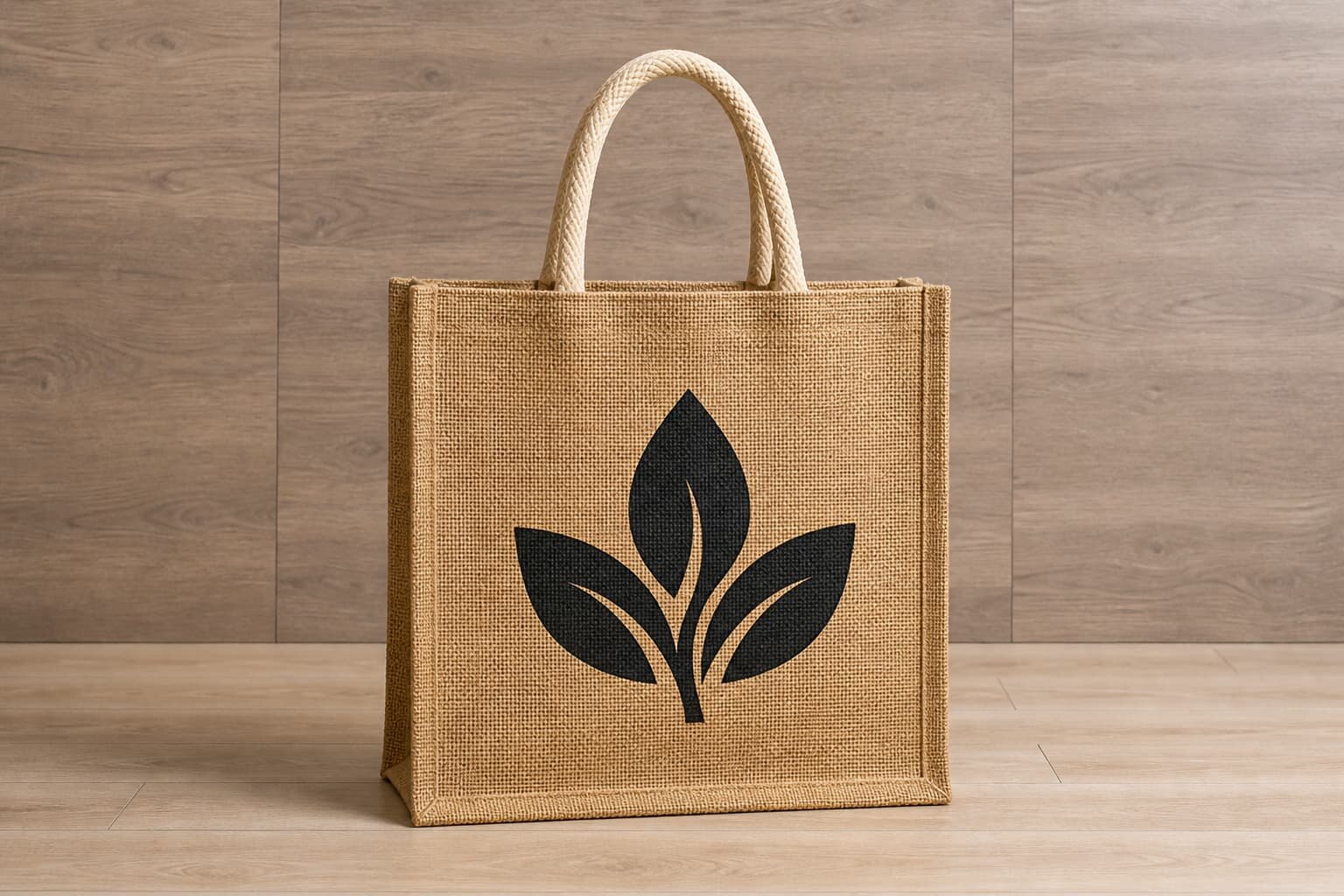
Why outer-label rub becomes a real claims issue
Jute and burlap bags are unforgiving on anything printed, stitched, or embossed near the surface. The weave is coarse, the fibers are dry, and the bag usually moves against another bag, a carton wall, or a shelf edge before it reaches the buyer. When the outer label scuffs, the problem is not only cosmetic. It can turn a bag that looked acceptable on the sewing table into a retail reject because the brand mark now looks gray, fuzzy, or worn on arrival.
Most claims come from label placement and pack-out, not from one dramatic defect. A label placed too close to a side seam may rub every time the bag is folded. A patch with raw edges can lint against the burlap. A dark print on a light label can show white abrasion after only a few handling cycles. If you are buying for retail, distribution, or a branded promotion, you need a photo packet that proves the label survives normal contact before you approve bulk.
- Common wear points: side seam, top fold, carton wall, bundle contact, and pallet compression.
- A clean sample can still fail if the label sits on the fold line or catches on an adjacent bag.
- Dark logos, raised patches, and soft coatings show rub earlier than flat, low-profile finishes.
How the damage happens from sewing line to warehouse
The rub usually starts before shipping. During trimming, thread tails and clipped fibers brush across the label. On inspection tables, bags are stacked face-to-face. In packing, a label may sit under the next bag's base corner or against a carton flap. In ocean freight or warehouse stacking, compression adds friction, and a slightly raised label edge becomes the first point of contact. Jute is also hygroscopic, so humidity can soften a coating or raise fibers that look harmless in a dry sample room.
The fastest way to diagnose the root cause is to look at the damage pattern. Edge wear on one corner usually points to placement or carton contact. Random scuffing across the full face usually points to a print or coating that is too soft. Fraying at the stitch line usually points to poor edge finishing or too much tension. If the damage only appears after folding, the bag needs a different fold line or a label moved away from the fold path.
- Edge wear usually means the label is too exposed during folding or carton contact.
- Full-face scuffing usually means the decoration method is too soft for burlap handling.
- Frayed stitch lines usually mean the border finish or thread tension needs correction.
Build the photo packet before you ask suppliers to quote
A useful outer label rub photo packet should do more than show a pretty sample. It should document the label before handling, after handling, and after pack-out. Ask the factory to shoot the bag on a neutral table with daylight or balanced white light, then repeat the same angles after a simple dry rub test. For RFQ review, the sequence matters more than the artistic quality. Buyers should be able to compare the front label, side label, and edge detail without guessing where the wear began.
At minimum, the packet should include full bag front and back, close-up of the label, close-up of the stitch line, the bag folded as packed, the bag in the carton position it will ship in, and one photo of the rubbed area with a scale or ruler. Name the files by sample stage, color, size, and date so the commercial team can tie the image to the quote. If you want a fair comparison between suppliers, every factory should follow the same shot list and the same handling sequence.
- Front and back full-bag shots under the same light.
- Macro close-up of the outer label, border stitch, and any edge finish.
- One pre-rub image and one post-rub image of the same spot.
- Folded-pack photo showing where the label sits in the shipping configuration.
- Carton-position photo showing whether the label touches a wall or another bag.
Choose the label construction around abrasion, not just brand look
On jute burlap, the best label is usually the one that sits low, lies flat, and does not shed. A woven side label or tightly stitched twill patch often survives better than a heavy ink build on the bag body because the label fibers can absorb some movement without cracking. A direct print can work if the design is simple and the ink system is matched to the rough weave, but the print has to sit on a stable area with enough coverage. Heavier body fabric, around 320-400 GSM, gives you more support than a loose 280-300 GSM weave, especially if the label is large or placed near a stress point.
The wrong construction is one that looks premium in a one-off sample and then starts to fuzz in pack-out. Raised patches, thick edge borders, and stiff plastic-like coatings are common culprits because they create a hard ridge that rubs against the burlap. If the brand needs a premium feel, ask for a low-profile construction with rounded corners, edge stitching close to the border, and a placement map that keeps the label away from fold lines and carton contact points.
- For high-rub programs, favor low-profile woven or stitched labels over thick raised patches.
- For simple logos, direct screen print can work if the ink and cure are matched to the weave.
- For premium retail bags, use rounded corners and a narrow stitch border to reduce edge lift.
- If the bag is below about 320 GSM, test any heavy label carefully for puckering or pull.
How to write the RFQ so quotes are comparable
You need a quote that separates the bag body from the decoration. Ask for fabric GSM, fiber blend, weave style, lining, label size, print colors, stitch count, and pack method. If the supplier only gives one lump sum, you cannot tell whether the cheaper quote used thinner burlap, a simpler label, or lighter packing. A clean RFQ also prevents a supplier from winning on a low sample quote and then recovering margin with a costly label change after approval.
The biggest MOQ trap is assuming the bag body MOQ and the label MOQ are the same. They are not. Screen print may be limited by screen setup, woven labels by loom or loom booking, PU emboss by die cost, and multi-color artwork by the number of passes. Ask the factory to state whether MOQ changes when the label is on the body versus sewn to the side, and whether a color change or size change resets the setup. That answer tells you more about the real commercial risk than a headline unit price.
- Request a line-by-line quote: body fabric, sewing, label, print, packing, carton, and tooling.
- Ask whether label setup is a one-time charge or included in the unit price.
- Confirm whether the MOQ changes if the label is moved, resized, or recolored.
- Compare sample charges separately from bulk pricing so the quote is not distorted by prototype work.
How to read samples and set acceptance criteria
Build your acceptance criteria from the failure mode, not from a generic 'good sample' comment. For outer label rub, use the same sample path every time: inspect the untouched sample, perform a controlled dry rub, fold the bag to ship position, then inspect again under strong neutral light. If the label loses its brand edge, transfers color to a white cloth, or shows a raised burr after normal handling, mark the sample as conditional rather than approved. The point is not to punish the factory; it is to define what can survive normal distribution.
A practical internal standard can include placement tolerance, stitch density, and rub performance. For example, you may require label placement within a few millimeters of the approved artwork location, no loose threads longer than a short trim allowance, and no visible color transfer after a staged hand-rub sequence. If your brand uses dark labels on natural jute, test both dry and slightly humid conditions, because some finishes only fail after the fibers relax. Keep the photos from every sample round so the final approval is tied to evidence, not memory.
- Check placement against the measured sample, not just the artwork file.
- Reject any label that shows transfer, cracking, or edge lift after a controlled rub.
- Inspect stitch termination points, especially where the label meets a seam or corner.
- Test the sample after folding, because many rub issues only show in shipping shape.
- Keep dated photos so the approved look is documented for repeat orders.
Packing and transport choices that make rub worse
Many outer-label problems are created after the sewing line is finished. If bags are folded so the label faces the carton wall, every vibration during transit acts like a light sanding cycle. If the packer compresses multiple bags without interleaf tissue, the label can scrape the adjacent bag. Loose bundles, oversized cartons, and rough inner boxes all increase movement. For jute and burlap, the safest pack-out usually keeps the label from touching a hard surface and reduces empty space inside the carton.
Do not freeze pack-out late in the process. Decide whether the bag ships flat, folded once, or stuffed with tissue before you approve bulk. That single decision changes label exposure, carton count, and freight density. It also affects lead time, because a supplier may need to adjust folding boards or carton sizes. As a rule, the earlier you confirm pack method, the less likely you are to discover rub in a post-production inspection.
- Use interleaf tissue or a divider if the label can touch another bag in the carton.
- Keep the label away from the carton wall when the bag is folded for shipment.
- Confirm whether the supplier packs flat, half-folded, or bundle-tied before quoting freight.
- Check that carton dimensions do not force unnecessary compression on the label area.
What a useful quote should tell you about cost and lead time
A serious quote should show where the money goes. Ask the factory to split cost into body fabric, cutting and sewing, label material, decoration method, packing materials, cartons, and any tooling or screen charges. If the decoration is on a side label, the cost may be driven more by setup and stitch time than by raw material. If the quote hides all decoration into one line, you cannot compare it against another supplier who is quoting the same bag with a stronger label and better packing.
Lead time should also be broken down. Sample development, artwork confirmation, pre-production sample, and bulk production do not happen at the same pace. A normal program may take a short period for sample work and several weeks for bulk, but the real schedule depends on whether the label needs a new die, new screens, or a different sew order. Ask the supplier to confirm what restarts the clock: artwork change, color change, or pack change. That answer protects your launch date more than a generic promised ship week.
- Ask for separate line items so you can compare suppliers on the same basis.
- Confirm whether tooling, screens, or dies are one-time charges or built into the unit rate.
- Request a sample timeline, a pre-production sample date, and a bulk completion window.
- Check whether carton or packing changes extend the lead time.
Buyer workflow: close the RFQ with evidence, not assumptions
The cleanest workflow is simple: brief, photo packet, sample, pack-out review, then PO. Start with one page that states bag size, target GSM, label method, placement, and destination market. Collect the factory photo packet against that brief, then review the sample using the same lighting and rub routine every time. Once the sample passes, ask for a production reference sample or golden sample that shows the approved label, stitch, and fold. The more you rely on written approval plus dated photos, the easier it is to resolve a later dispute.
For repeat orders, keep the same file structure from one season to the next. If the label moves even a few millimeters or the carton changes, you should treat it as a controlled revision rather than a casual reorder. This is especially important for distributors and retail buyers because the next order may come from a different factory line or a different packing crew. A good photo packet becomes a living record of what the approved outer label is supposed to look like when it reaches the customer.
- Use one brief that combines size, GSM, label method, placement, and pack-out rules.
- Approve a golden sample before bulk and keep the photo record attached to the PO.
- Treat even small placement changes as a revision for repeat orders.
- Make the packed state part of the approval, not just the flat sample.
Common mistakes that create repeat claims
Most repeat claims come from preventable shortcuts. Buyers approve a label only from a flat artwork proof and never see the rubbed sample. They allow a premium-looking but stiff patch that cracks on the fold line. They compare quotes without separating print setup from packing and assume the low bid is the same product. They also forget that a burlap bag that looks fine loose on a table can fail once it is folded, stacked, and compressed for export.
The best prevention is to treat the outer label as a functional component, not decoration. That means you specify how it is sewn, how it sits against the bag, how it is photographed, how it is packed, and how it is checked before release. If your team can describe those points clearly in the RFQ, the factory can quote them clearly, and the chance of a rub claim drops sharply.
- Do not approve from artwork alone; always review a rubbed physical sample.
- Do not let a stiff patch cross a fold line without testing it in shipping position.
- Do not compare quotes unless packing and tooling are separated out.
- Do not assume a dry sample room result will hold after carton compression and humidity exposure.
Specification comparison for buyers
| Spec decision | Recommended option | When it fits | Buyer risk to check |
|---|---|---|---|
| Sewn woven side label | Flat woven label sewn with a narrow border stitch | Durable brand mark for repeat handling and retail delivery | Edge fray, label creep, or placement too close to the fold line |
| Screen print on jute body | Single or two-color low-build screen print with proper cure | Simple logo, larger graphic, lower decoration cost target | Ink sinking into the weave, weak coverage, and dry rub-off |
| Cotton twill patch | Rounded-corner twill patch with tight satin stitch border | Premium look with better abrasion tolerance than loose prints | Patch stiffness, puckering on coarse burlap, and corner lift |
| PU or vegan leather patch | Thin soft-touch patch sewn on with short clean stitch runs | Higher perceived value and stronger surface wear resistance | Hard edge abrasion, cracking at the stitch line, and fold interference |
Buyer checklist before sampling
- Confirm final bag size, gusset, handle drop, and usable loading weight.
- Specify fabric type, GSM/oz weight, color tolerance, and shrinkage expectations.
- Send vector artwork and define logo size, print position, and Pantone references.
- Ask for sample photos plus one physical pre-production sample before bulk approval.
- Agree carton packing, barcode or hangtag needs, and shipment marks before production.
- Record inspection checkpoints for stitching, print adhesion, stains, and quantity count.
Factory quote questions to send
- What is the exact burlap or jute GSM, and does the quoted price change if we move from 280-300 GSM to 320-400 GSM?
- Is the outer label sewn, printed, embossed, or patched, and what setup or tooling cost applies to each method?
- What is the exact label size, stitch pattern, and edge finish, and can you show a photo of the approved position on the bag?
- How many sample rounds are included, and what changes restart the sample or artwork clock?
- What is the MOQ for the bag body and the MOQ for the label method, and do they differ?
- What packing method is included in the quote: flat pack, folded pack, tissue interleaf, carton divider, or bulk bundle?
- What is the standard lead time for sample approval to bulk completion, and what factors can extend it?
- Can you break out carton, inner bag, and master pack charges so we can compare two suppliers on the same basis?
Quality-control points to confirm
- Verify the outer label position against a measured approved sample, with no unexpected shift in placement.
- Inspect stitch density, thread trim, and corner finishing around the label so the edge does not fray in pack-out.
- Perform a dry rub check on the label face and edges using a white cloth before final approval.
- Fold the bag to the shipping configuration and confirm the label does not sit on a hard crease or carton contact point.
- Check print opacity and color transfer on rough burlap weave under strong neutral light.
- Review carton pack orientation so bag-to-bag contact does not scrape the outer label.
- Confirm that any coating, embossing, or patch material stays flat after handling and does not curl at the corners.
- Save dated photos of the approved sample, the production sample, and the packed carton position.