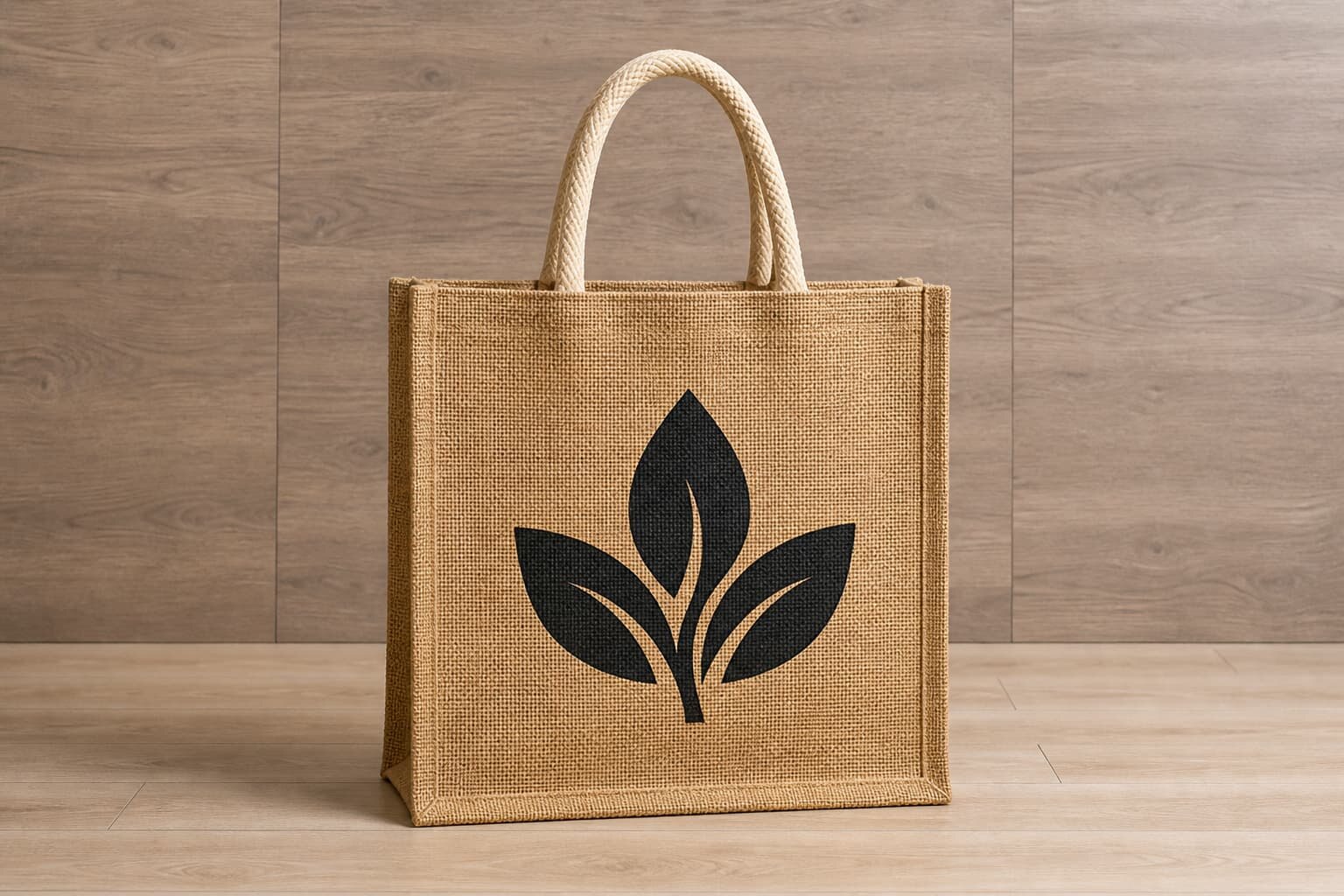
Why a Logo Ink Approval Memo Matters on Jute
Jute burlap bags do not behave like smooth cotton canvas. The surface is uneven, hairy, and absorbent. Natural yarn thickness changes across the panel, and small gaps in the weave can interrupt fine artwork. A logo that looks clean on a PDF proof can become broken, fuzzy, or too dark after screen printing on actual jute. This is why a jute burlap bag logo ink approval memo should be treated as a production control document, not a formality.
The memo gives procurement, the brand team, and the factory one shared reference before bulk cutting, printing, sewing, and packing. It should answer practical questions: which ink was approved, on which fabric, at what size, with what color tolerance, and what defects will be rejected. Without this document, buyers often receive supplier photos that look acceptable on a phone screen but fail when cartons arrive and the logo is checked under store lighting.
- Use the memo when the logo is printed directly on jute, burlap, laminated jute, or jute-cotton blend panels.
- Treat every artwork revision, ink color change, and fabric weight change as a new approval item.
- Do not rely only on the artwork proof; approve the print result on actual bag material.
- Make the memo part of the PO file so inspection teams know which sample controls production.
Define the Bag Construction Before Approving Ink
Ink approval should not start until the buyer has locked the basic bag construction. Jute GSM, lamination, lining, handle type, and gusset shape all influence how the logo prints and how it appears after sewing. A 220 GSM loose burlap shopping bag will not hold the same print edge as a 300 GSM laminated jute tote. A cotton-lined jute bag may feel more premium, but the front panel may still have natural slub marks that affect the logo.
For common retail and promotional jute bags, buyers often work around 260-320 GSM jute, depending on target price and hand feel. Lighter weights may be acceptable for short-use giveaways, but they can stretch during sewing and make logo placement less stable. Heavier jute can improve structure, yet thick seams and folded edges may create uneven pressure during printing if the logo is too close to the side or bottom.
- Record finished bag size, for example 38 x 42 cm or 30 x 35 x 15 cm, not only flat panel size.
- State jute GSM and whether the fabric is laminated, unlaminated, dyed, bleached, or natural.
- Confirm lining material if used, such as cotton, non-woven PP, or no lining.
- Identify handle material and size because cotton webbing, rope, and jute handles can change the printable front area.
- Check whether the bag is printed before sewing or after sewing; most flat logos are printed before sewing.
Choose the Print Method for the Real Artwork
Most bulk jute burlap bags use screen printing because it is stable, cost-efficient, and suitable for bold brand logos. A high-opacity ink is usually needed because the natural brown jute base will darken or mute many colors. Water-based ink can give a softer hand feel, while plastisol or thicker systems may improve opacity. The right choice depends on artwork, destination requirements, buyer testing expectations, and the factory equipment.
Heat transfer and digital printing can be useful for multicolor artwork, but they are not always the best answer for burlap texture. Transfers may sit like a film on top of the coarse surface and can crack or lift if the bag is folded heavily. Digital print quality depends strongly on surface preparation and the smoothness of the jute. For many importers, the lowest-risk approach is to simplify the logo and approve a strong screen print strike-off.
- Use screen print for one-color or two-color bold logos with solid shapes.
- Avoid tiny reversed text unless the factory proves it on actual jute.
- Ask for transfer durability checks if the supplier recommends heat transfer.
- Consider woven labels or cotton side labels when the logo has small details that will not print cleanly.
- Use embroidery carefully; jute can distort and the back side may require reinforcement.
Set a Practical Color Approval Standard
Many logo disputes come from unrealistic color expectations. A Pantone number is useful, but it is not enough for natural jute. Pantone books are printed on controlled paper, while jute has brown, beige, yellow, or grey fiber variation. The same ink can appear warmer or duller on different jute lots. The approval memo should therefore include both the Pantone target and the accepted result on actual fabric.
For brand-critical colors, ask the factory for an ink drawdown or logo strike-off on the same jute quality used for bulk production. If the order repeats every season, keep the approved swatch with the date, fabric GSM, and supplier batch note. Buyers should also define whether slight natural fabric shade variation is acceptable. Otherwise, normal jute color differences may be wrongly counted as logo color defects during inspection.
- List Pantone code, ink name if available, and whether the target is coated or uncoated reference.
- Approve under consistent light, preferably daylight or D65 lightbox if the buyer uses one.
- Write an acceptance note such as close visual match on approved jute strike-off, not exact match to paper Pantone.
- Reject obvious color drift, patchy ink coverage, and mixed ink tone within the same logo.
- Photograph the approved sample, but do not let photos replace the physical approval.
Control Artwork Size, Line Width, and Placement
Jute printing rewards simple artwork. Thick lines, open spacing, and strong contrast perform better than small legal copy, fine outlines, gradients, or detailed illustrations. Before issuing the memo, buyers should ask the factory to comment on minimum line width and smallest readable text height for the selected weave. A responsible supplier should warn when the buyer artwork is too fine for burlap instead of accepting it and hoping inspection will pass.
Placement also needs a measurable standard. The memo should not only say center front. It should define the logo size and position from the top seam, side seam, bottom seam, or handle attachment points on the finished bag. On gusseted jute bags, the visible front panel can change after sewing and folding. If the logo is too close to a seam or gusset fold, it may look off-center even when the printed flat panel was technically correct.
- Specify logo width and height in millimeters.
- Measure placement on the finished sewn bag, not only on the cut panel.
- Keep important artwork away from seam allowances, fold lines, and bottom creases.
- Avoid QR codes unless a scan test is passed on the actual printed sample.
- Include tolerance, for example logo position within plus or minus 5 mm for normal tote bags, if acceptable to the buyer.
Build the Approval Memo Around Sample Checks
A good approval memo is built from sample evidence. Start with artwork proof, then request a printed strike-off on actual jute, then approve a pre-production sample if the order value or retail risk justifies it. For low-MOQ promotional orders, the buyer may approve a print panel and production sample photo, but for retail bags, distributor programs, or brand packaging, physical approval is safer.
The sample check should include more than appearance. Rub the logo with a clean white cloth after curing. Fold the bag along normal packing lines and check whether the ink cracks or transfers. Look at small letters from normal viewing distance. Check whether jute hairs cover the ink or whether the ink has flooded into open weave gaps. If the factory cannot make the sample pass these checks, changing ink, artwork, or fabric is cheaper before bulk production than after carton inspection.
- Request one approved sample kept by the factory and one retained by the buyer or inspection company.
- Mark sample version clearly, such as logo strike-off V2 approved on actual 300 GSM laminated jute.
- Check the first 20-50 printed panels before allowing full-batch printing on large orders.
- Ask the supplier to confirm curing time before stacking and packing.
- Record any concession, such as natural jute slub visible through light ink, directly in the memo.
Understand MOQ and Cost Drivers Before Comparing Quotes
Logo ink approval affects price because it affects screen setup, labor, drying space, waste allowance, and production scheduling. A one-color logo on one bag size is usually straightforward. Multiple logo colors, multiple store names, different carton assortments, or exact color matching can change the factory MOQ logic. Buyers should compare quote sheets line by line instead of only looking at the unit price.
For jute burlap bags, the factory may quote a higher MOQ when fabric must be dyed, when the buyer requires a special GSM, or when print colors need separate screens. Small orders can still be possible, but setup cost becomes a bigger share of the unit cost. A buyer who sends complete quote data will receive more reliable pricing than a buyer who only sends a logo and asks for best price.
- Ask whether screen charges are included, charged once, or charged per artwork color.
- Confirm whether the quoted MOQ applies per bag size, per logo, per colorway, or per shipment.
- Separate bag cost, logo cost, packing cost, sample cost, and inland freight if needed.
- State expected order quantity and repeat potential, but do not rely on repeat promises to reduce first-order quality control.
- Check if dark ink, metallic ink, or large print coverage changes curing time or rejection risk.
Prevent Packing Problems After Printing
Many logo problems are created after the print is finished. If printed jute bags are stacked too soon, ink can transfer to the next bag. If cartons are packed too tightly, fold pressure can create shiny marks, cracking, or ghosting. If the shipment moves during a humid season, jute can absorb moisture and the printed area may become tacky or dusty depending on ink and curing quality.
The approval memo should therefore connect logo approval with packing instructions. Buyers should request a packing trial when the logo is large, dark, or placed near a fold. For retail bags, consider tissue, interleaf paper, or controlled folding direction if the unit price can support it. For bulk promotional bags, at minimum the factory should confirm full drying before packing and avoid print-to-print contact under pressure.
- Confirm flat pack, folded pack, or individual polybag before final quote.
- Avoid folding directly across a thick printed logo when possible.
- Check carton quantity and carton size because over-compression can mark the print.
- Use moisture control appropriate to the destination and season without making unsupported claims.
- Inspect random cartons from top, middle, and bottom stack positions for ink transfer.
Write Acceptance Criteria Inspectors Can Use
The strongest memo is written so that an inspector can apply it without asking the brand team again. It should define what passes and what fails. For example, slight jute fiber variation around the logo may pass, but unreadable brand letters should fail. Minor texture break caused by natural weave may pass, but heavy smudging, wrong logo size, wrong color, or ink transfer should fail.
Procurement should agree with the supplier on defect classification before production. If the order uses AQL inspection, logo defects should be included in the inspection checklist, not treated as subjective comments. For brand owners and distributors, it is better to reject the first production panels than to argue after all cartons are sealed. The memo helps both sides make decisions earlier.
- Major defect: wrong logo artwork, wrong color family, incorrect print method, or logo placed on the wrong side.
- Major defect: ink transfer, sticky surface, heavy smudging, or logo unreadable from normal viewing distance.
- Minor defect: small natural jute hair interruption that does not affect logo recognition, if approved in advance.
- Measure several bags per carton for logo position and size, not only the top sample.
- Attach approval photos and physical sample reference to the final inspection booking.
What to Include in the Final RFQ File
A clean RFQ file reduces back-and-forth and prevents the factory from making assumptions. For a jute burlap bag logo ink approval memo, include the bag technical sheet, artwork file, target Pantone, preferred print method if known, order quantity, packing requirement, inspection standard, and shipping deadline. The supplier can then quote the real production, not a simplified version that later changes during sampling.
Buyers should also ask the factory to return a filled quote sheet with production notes. A good supplier response will mention fabric GSM, ink method, sample lead time, bulk lead time, MOQ basis, screen charges, and any artwork risk. If the supplier only replies with a unit price and no technical comments, procurement should clarify before awarding the order. The cheapest quote is not useful if it excludes logo setup, uses lighter jute, or assumes a different packing method.
- Include editable artwork, usually AI, PDF, EPS, or high-resolution vector file.
- Send finished bag dimensions, gusset, handle length, fabric GSM, lining, and lamination requirements.
- State target order quantity, delivery market, packing method, carton mark needs, and inspection plan.
- Ask the factory to identify any artwork details that may not print cleanly on jute.
- Require the supplier to confirm the approved memo before buying bulk fabric or starting mass print.
Specification comparison for buyers
| Spec decision | Recommended option | When it fits | Buyer risk to check |
|---|---|---|---|
| Logo print method | Screen print with high-opacity water-based or plastisol ink | Most flat jute tote panels, simple logos, one to three solid colors | Ink may sink into loose jute yarns and look dull if no strike-off is approved |
| Fabric weight | 260-320 GSM laminated or lined jute for retail bags | Brand campaigns, gift packaging, wine or grocery use where the logo must stay readable | Very light 180-220 GSM burlap can distort, shed fibers, and reduce print edge clarity |
| Artwork style | Bold logo lines above 1.2 mm with limited small text | Coarse jute weave, natural color background, buyer wants economical printing | Thin serif text, QR codes, gradients, and tiny legal copy may break across yarn gaps |
| Ink color approval | Pantone target plus physical drawdown on actual jute | Brand color control, repeat orders, distributor programs | Pantone on coated paper will not match absorbent natural jute without tolerance notes |
| Logo placement | Measured from bag top seam and side seam after sewing | Bulk orders where panels may shift during cutting and stitching | Approving placement only on flat fabric can cause off-center logos after gusset forming |
| Packing method | Flat packed with tissue or interleaf for fresh prints | Large logo area, dark ink, export cartons, humid season shipments | Stacking before full curing can cause set-off, ghost marks, or ink transfer |
Buyer checklist before sampling
- Confirm the exact jute fabric weight, lamination or lining, bag size, gusset depth, handle material, and expected print area before logo approval.
- Approve the logo ink only on the same bulk jute quality, not on paper, canvas, or a different burlap sample.
- State Pantone target, acceptable color tolerance, print method, ink type, logo size, and measured placement in the memo.
- Check logo readability from normal viewing distance, especially small letters, registered marks, thin lines, and negative space.
- Rub the printed area dry and lightly damp after curing to check whether pigment powders off onto fingers or adjacent bags.
- Ask for a packing trial if the logo is large, dark, or printed close to the fold line.
- Keep one signed approval sample at the factory and one with the buyer or inspection agency.
- Link the approval memo to the purchase order, final artwork file name, sample date, and revision number.
Factory quote questions to send
- What is the exact jute GSM and construction used for the quoted bag, and is it laminated, unlaminated, cotton lined, or non-woven lined?
- Which print method are you quoting for the logo: screen print, heat transfer, digital print, woven label, leather patch, or another method?
- Can you print the logo on actual bulk jute before mass production and send a physical or high-resolution strike-off for approval?
- What ink type will be used, and how long is the curing or drying time before packing?
- What minimum line width and smallest readable text height do you recommend on this jute weave?
- How do you control logo position after sewing, especially on gusseted bags or bags with front pockets?
- What is the MOQ impact if the buyer needs multiple logo colors, multiple store versions, or several carton assortments?
- Does your quote include screen setup charges, sample print charges, inner packing, export cartons, carton marks, and inspection support?
- What lead time is required for artwork proof, logo strike-off, pre-production sample, bulk printing, sewing, and final packing?
- What rejection standard will you accept for smudging, off-position printing, ink transfer, color deviation, and unreadable logo details?
Quality-control points to confirm
- Verify fabric GSM using a cut sample from bulk jute, not only the supplier specification sheet.
- Compare the approved logo strike-off against bulk production under consistent daylight or D65 lighting.
- Measure logo size and placement from sewn bag reference points, not from the raw fabric panel.
- Check at least the first production batch before the factory prints all panels.
- Perform dry rub and light damp rub checks after the factory claims the ink has cured.
- Inspect inside cartons for ink set-off, folding pressure marks, moisture odor, and jute fiber shedding on the logo.
- Record acceptable tolerance for natural jute shade variation so normal fiber color is not confused with print defect.
- Keep rejected and accepted samples with photos so the final inspection team applies the same standard.