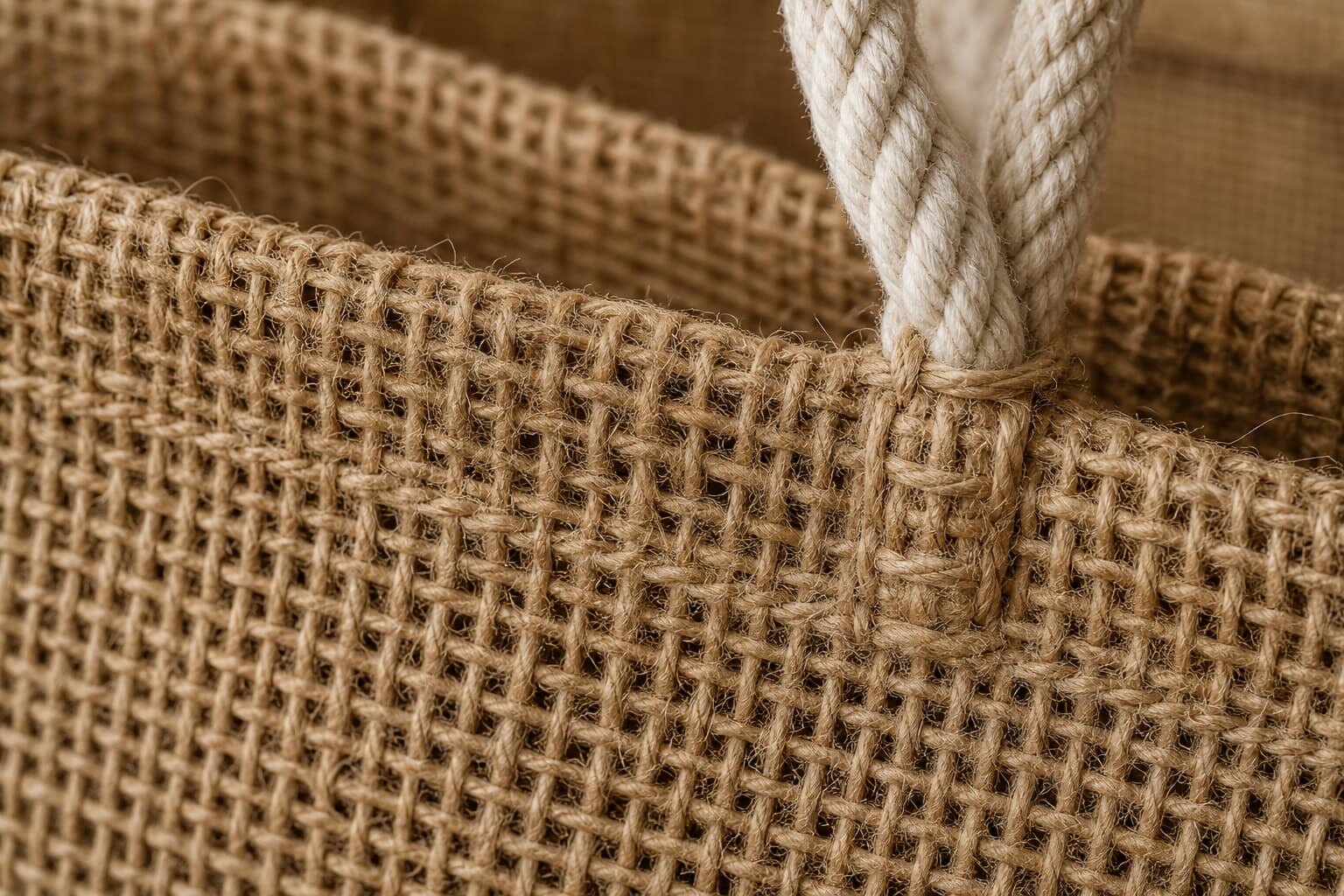
Why the inside liner bond needs its own photo packet
A jute burlap bag with an inside liner looks simple on a quote sheet, but it contains several hidden failure points. The outside may look correct in a front-panel photo while the liner is loose at the bottom, wrinkled at the side seam, or bonded with adhesive that has not fully cured. For procurement teams, the problem is that these defects are usually found after cartons arrive, when replacement is expensive and the selling season may already be fixed.
A jute burlap bag inside liner bond photo packet is not a marketing image set. It is production evidence. It should show how the liner is fixed, where the seam captures it, whether adhesive is visible, and whether the bottom corners sit cleanly. Buyers should request it at sample approval and again during bulk production, especially when the bag is for retail packaging, wine, cosmetics, food gifts, or promotional kits where the inside view matters.
- Use the photo packet to compare supplier promises against actual construction.
- Ask for inside-out photos, not only top-opening photos.
- Require batch labels or PO labels in production photos so evidence is traceable.
- Check the liner before carton sealing, because the defect is hard to prove later.
Define the liner function before choosing construction
The correct liner depends on what the bag needs to do. Some buyers need a cleaner inside appearance so small fibers from jute do not touch the product. Others need shape support, color contrast, moisture resistance, or better print presentation. If the RFQ only says inside liner, the factory may choose the cheapest non-woven insert and fix it only at the top hem, while the buyer expects a fully neat interior.
For most commercial jute bags, the liner is not a structural replacement for the outer burlap. The outer jute still carries the load together with seams and handles. The liner improves finish, containment, and sometimes moisture resistance. In your RFQ, separate these functions so factories do not overquote or underbuild the bag.
- For premium retail packaging, ask for cotton liner around 5 oz or a soft woven cotton blend.
- For cost-sensitive promotional bags, ask for 70-90 GSM non-woven liner with clean seam capture.
- For damp product risk, ask whether PP lamination or moisture barrier sheet is more suitable than cotton.
- For wine and gift bags, check whether the liner interferes with bottle fit or divider placement.
Outer jute specification affects the liner result
Jute fabric weight and weave openness directly affect how the liner appears. A coarse 13 x 13 weave in the 270-320 GSM range gives a natural burlap look but may show the liner color through the gaps. A tighter or heavier jute can hide liner contrast better, but it may cost more and make folded seams bulky. If the buyer approves only a digital photo, these differences are easy to miss.
Procurement teams should request the outer jute GSM, weave density, color tone, and finishing condition. Natural jute varies by lot, and the same cream liner can look warmer or darker behind different jute rolls. If your brand requires a consistent natural shade across repeat orders, ask the supplier to keep a signed swatch card and include it in the pre-production sample file.
- Ask for actual GSM, not only descriptions such as thick, premium, or heavy duty.
- Confirm whether the jute is natural, bleached, dyed, laminated, or washed.
- Check if the liner color changes the outside appearance through the weave.
- Set tolerance for size because thick jute and liner layers reduce easy folding accuracy.
Bonded, stitched, or loose liner: what buyers should compare
A fully bonded liner sounds tidy, but it is not always the safest option. Adhesive bonding can create hard spots, trapped odor, bubbles, and delamination if applied unevenly or packed too soon. A loose liner fixed at the top hem is cheaper, but it may pull out when the user removes products. A stitched liner with selective adhesive support often gives the best balance for reusable jute bags because the seam physically secures the liner.
When comparing quotes, do not accept one price line that says lined jute bag. Ask where the liner is attached. The difference between top-hem-only and side-seam-plus-bottom capture changes labor time, reject rate, and durability. A lower quote may be using a floating liner that looks acceptable in one top-view photo but moves during use.
- Top-hem-only liner is lower cost but can shift and wrinkle inside the bag.
- Side-seam captured liner is more stable and suitable for repeat-use totes.
- Bottom-gusset secured liner improves shape but requires better sewing control.
- Full glue bonding should include odor control, curing time, and delamination checks.
- Adhesive assist can help keep panels flat but should not replace proper stitching.
What a useful liner bond photo packet should include
A useful photo packet has standard angles and enough detail for a buyer to make a decision without guessing. It should include the full bag outside, top opening, inside bottom, side seams, top hem, handle reinforcement, and at least one close-up showing how the liner is held. If adhesive is used, photos should show clean surface condition after drying, not only the moment of assembly.
For bulk production, ask the factory to photograph samples from the production line, not only the golden sample kept in the sample room. The best practice is to label photos by PO number, production date, size, color, and inspection stage. A simple ruler or measuring tape in the photo helps confirm scale, but avoid relying only on angled photos because they hide wrinkles and bubbles.
- Front and back outside photos with logo visible.
- Top opening photo showing liner alignment and top hem finish.
- Inside bottom photo showing gusset corners and no loose liner pocket.
- Side seam close-up showing whether liner is captured in stitching.
- Handle attachment photo showing reinforcement and liner condition below the handle.
- Carton packing photo showing folding direction and pressure on the liner.
Print method and logo approval on jute with a liner
Most jute burlap bags use screen printing because it handles simple logos and solid color areas well. The challenge is the uneven fabric surface. Ink can spread into the weave, small text can break, and registration can shift if the panel is bulky from liner and seam layers. Heat transfer patches or sewn labels may be better for detailed logos, but they change cost and lead time.
Always approve the logo on actual jute with the intended liner construction behind it. A print strike-off on flat unlined jute may not behave the same as printing after cutting or near thick seam areas. If the liner is already attached before printing, it may affect panel tension. If printing is done before liner assembly, make sure heat or handling does not distort the print during sewing.
- Use screen print for bold logos, large type, and one to three colors.
- Avoid very small reversed text on coarse burlap.
- Ask for ink rub check after drying, especially for dark ink on natural jute.
- Confirm print placement from finished bag edge, not only from cut panel edge.
- For premium branding, compare woven label, cotton patch, or leather-look patch options.
MOQ and lead time logic for lined jute bags
MOQ changes when a liner is added because the factory must source two materials, manage color matching, cut additional panels, and control assembly. If the liner is stock white non-woven, the MOQ can be lower. If the liner is dyed cotton, custom printed, laminated, or matched to a brand color, the MOQ may be driven by the liner mill rather than the bag workshop.
Lead time should be split into sample time, material preparation, printing, sewing, curing if adhesive is used, inspection, and packing. Buyers often ask for a short delivery date without realizing that adhesive drying, odor release, and carton conditioning may need time. For urgent orders, simplify the liner specification instead of pushing the factory to pack before the bond is stable.
- Stock liner color usually supports lower MOQ and faster sampling.
- Custom dyed cotton liner may require higher MOQ and shade tolerance approval.
- Printed liner adds artwork, print setup, and inside registration risk.
- Adhesive bonding may require extra curing time before folding and packing.
- Peak season capacity should be confirmed before approving a complicated lined style.
Quote data that separates real suppliers from guesswork
A strong quote for a lined jute burlap bag should show more than unit price. It should identify material GSM, size, handle type, liner method, print method, packing, carton quantity, sample cost, production lead time, and assumptions. If two factories quote the same bag with a 20 percent price gap, the reason is often hidden in liner material, seam construction, or packing density.
Ask suppliers to separate major cost drivers when the order is important. You do not need their full internal cost sheet, but you do need enough information to compare like with like. If one quote includes cotton liner and reinforced stitching while another includes thin non-woven top-hem-only liner, the cheaper quote is not a saving; it is a different product.
- Outer fabric: jute GSM, weave, color, and finish.
- Liner: material, GSM, color, attachment method, and adhesive use.
- Handle: material, width, length, reinforcement stitch, and load target.
- Branding: screen count, ink color, label or patch method, and setup charge.
- Packing: pieces per polybag, pieces per carton, carton size, and gross weight.
- Timeline: sample days, bulk production days, inspection date, and ship-ready date.
Sample approval and acceptance criteria
The pre-production sample should be treated as a construction reference, not just a sales sample. Measure it, photograph it, sign it, and list what is approved. If the liner has small wrinkles in the approved sample, the factory may consider those acceptable in bulk. If you expect a smoother inside finish, state it before mass production starts.
Acceptance criteria should include both visual and functional checks. For example, light liner waviness at the bottom may be acceptable for a rustic jute bag, but exposed glue, loose liner pockets, strong odor, and open seams should not be accepted. The buyer and factory should agree on this before inspection because jute is a natural material and will never look like molded plastic or coated paper.
- Size tolerance: commonly agreed by finished dimension, not cut-panel dimension.
- Liner alignment: no severe twisting, sagging, or loose pockets at bottom corners.
- Bond strength: no peeling after gentle hand flexing and normal opening.
- Odor: no strong chemical, mildew, or damp storage smell at carton opening.
- Print: no major smearing, missing ink, or unacceptable logo deformation.
- Threads: trim loose threads inside the bag because they are visible against the liner.
Packing mistakes that damage the liner before shipment
Many lined jute bag complaints are created after sewing is complete. If bags are folded too tightly, the liner may crease permanently. If cartons are overfilled, pressure marks appear along the bottom gusset and side seams. If bags are packed before adhesive is fully dried, liners can stick together, trap odor, or shift when opened by the buyer.
Packing should match the sales channel. Retail-ready bags may need individual polybags, tissue, or controlled folding. Distributor bulk orders may accept flat packs of 25-50 pieces per carton, but carton compression still needs control. For sea shipment, moisture risk also matters because jute absorbs humidity. Ask for dry cartons, clean inner bags, and avoid loading damp goods.
- Confirm folding method with sample packing photos.
- Avoid over-compression when the liner is cotton or lightly bonded.
- Use export cartons strong enough for stacking and long transit.
- Check carton marks against PO, SKU, color, size, and quantity.
- Request final photos of open cartons before shipment release.
Specification comparison for buyers
| Spec decision | Recommended option | When it fits | Buyer risk to check |
|---|---|---|---|
| Outer jute weight | 13 x 13 weave, about 270-320 GSM natural jute | Retail gift bags, wine bags, grocery-style totes, and brand packaging where natural texture matters | Loose weave can expose liner color; ask for close photos under normal light and backlight |
| Inside liner material | Cotton 5 oz, non-woven 70-90 GSM, or laminated PP depending on use | Cotton for premium look, non-woven for cost control, PP lamination for moisture resistance | Supplier may quote liner without confirming bonding or seam capture; request inside corner photos |
| Liner bond method | Stitch-secured liner with adhesive assist only where needed | Most B2B orders needing durable shape and clean inside finish | Full glue bonding can delaminate, smell, or wrinkle if drying time is rushed |
| Print method on jute | Screen print with suitable ink viscosity and underbase only when required | Simple logos, one to three colors, solid brand marks, event bags, and retail packaging | Ink can bleed into coarse jute; require strike-off photo and rub test result |
| Handle construction | Cotton webbing or padded jute handle with reinforced box stitch | Reusable shopping bags, wine carriers, and promotional bags with load requirement | Liner may be trapped poorly at handle seam; check pull test photo after liner installation |
| Packing method | Flat pack with liner protected from crushing, 25-50 pcs per export carton | Most import and distributor shipments where carton cube and presentation both matter | Over-compressed cartons create liner creases that buyers often discover after delivery |
Buyer checklist before sampling
- Define the finished bag size, gusset, handle length, and tolerance before discussing liner options.
- State outer jute weight or approved swatch reference, not only the word burlap.
- Specify liner fabric type, GSM, color, whether it is loose, stitched, bonded, or laminated.
- Request a photo packet showing liner bond before closing bulk production approval.
- Ask for inside corner, bottom gusset, handle attachment, and seam-turning photos, not only front logo photos.
- Confirm whether adhesive is used and whether odor, drying time, and delamination checks are part of QC.
- Approve print strike-off on actual jute, not on cotton or paper.
- Require carton photos showing packing direction, quantity per carton, carton marks, and inner polybag method.
- Include acceptable defects and reject criteria for wrinkles, liner bubbles, exposed glue, loose threads, and misaligned liner.
- Ask supplier to quote sample cost, bulk MOQ, lead time, and separate tooling or screen charges.
Factory quote questions to send
- What is the exact GSM and weave density of the jute fabric you are quoting, and can you attach a close-up swatch photo?
- What liner material are you using, what is its GSM, and is it stitched, glued, laminated, or combined with another method?
- Where is the liner fixed: top hem only, side seams, bottom gusset, handle seam, or full panel bond?
- Which adhesive is used if bonding is included, and how long is the drying or curing time before packing?
- Can you provide a photo packet during sample stage and bulk production showing inside seams, bottom corners, and liner adhesion?
- What is the MOQ for this construction if the liner color is custom dyed or custom printed?
- Which print method is recommended for our logo on jute, and how many colors can be printed without registration risk?
- What load test can you perform for the handle and body seam, and what weight and hold time will be used?
- How many pieces will be packed per carton, and will liners be protected from pressure marks during compression?
- Please separate the quote for jute fabric, liner, printing, handle, packing, sample, and mold or screen charges if applicable.
Quality-control points to confirm
- Outer jute GSM and texture match the approved sample or swatch.
- Inside liner color, GSM, and handfeel match the approved pre-production sample.
- Liner bond or stitch line is continuous at side seams, bottom gusset, and top hem.
- No visible glue stains, bubbles, hard patches, mildew odor, or loose liner sections.
- Printed logo has acceptable edge sharpness on jute and passes dry rub check.
- Bag size, gusset depth, handle length, and handle placement stay within agreed tolerance.
- Handle reinforcement stitching does not tear the liner or leave trapped loose threads inside.
- Carton packing prevents crushing, heavy creasing, and moisture exposure during transit.
- Bulk production photo packet is dated, labeled by PO or lot, and taken before final carton sealing.
- Random open-carton inspection includes inside-out checks, not only front panel appearance.