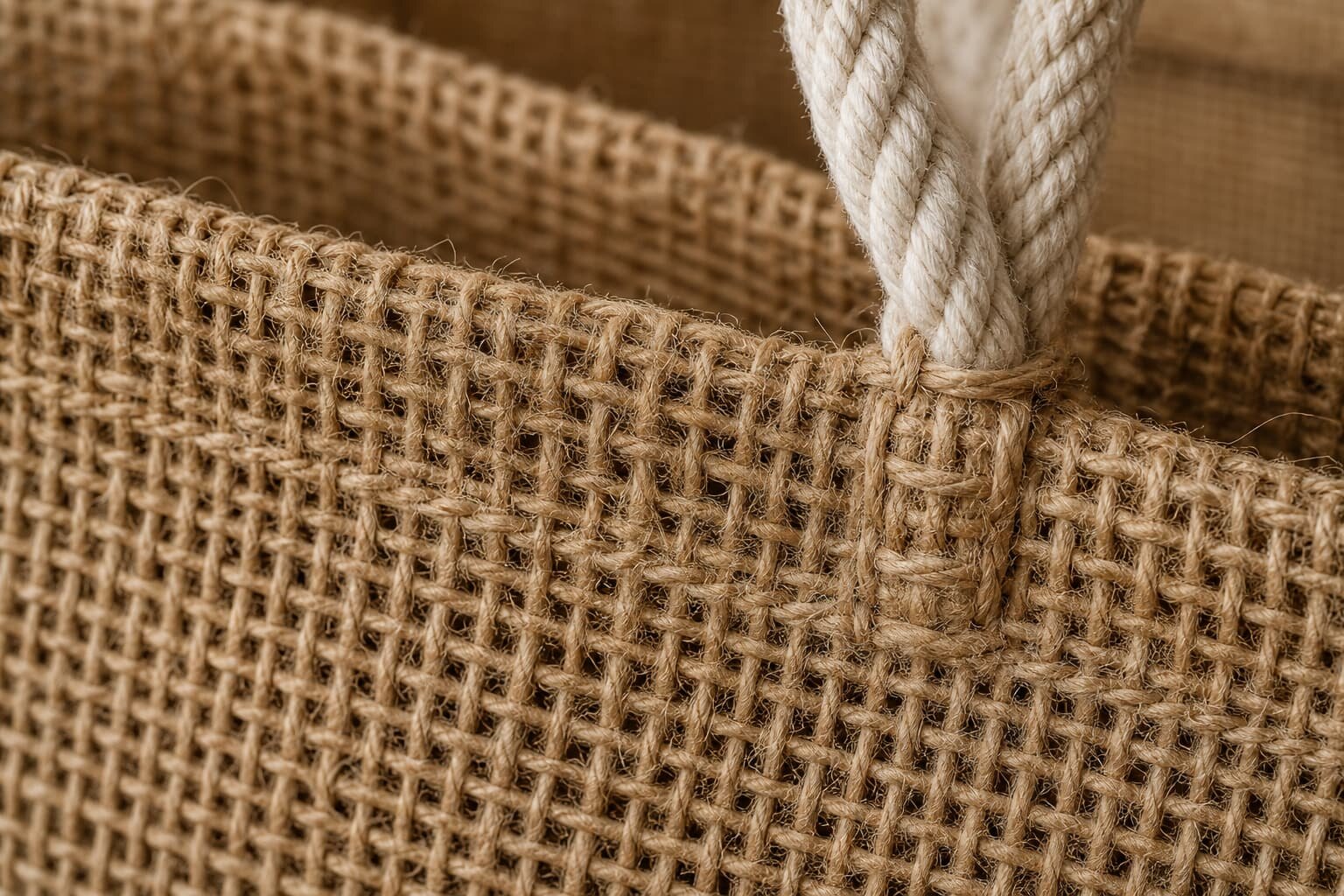
Why Handle Rivets Deserve Their Own Audit
On a jute burlap bag, a handle rivet is not just a piece of hardware. It is the point where load, fabric, stitching, and packing all meet. If the bag body is too light, the handle tape is too narrow, or the reinforcement is too small, the rivet becomes the weak point that starts a tear. That is why a handle rivet audit should be treated as its own buying exercise instead of a line item buried inside the bag spec.
Most supplier failures in this area do not start with the rivet cap itself. They start with a vague RFQ that says strong handle or metal rivet without naming the fabric GSM, patch size, handle width, or backside finish. The buyer gets a sample that looks fine on the table, then finds tearing, loose hardware, or edge damage after folding, filling, or carton pressure. If the handle zone is not defined clearly, the quote will not be comparable and the bulk result will drift.
- Treat the rivet as part of a load path, not a decorative finish.
- Audit front side, back side, and fold line together.
- Use the sample to prove the construction, not just the appearance.
Build the Handle Stack Before You Talk Hardware
The first decision is the bag body. For lighter retail or gift use, many buyers start around 250 to 300 GSM on jute burlap, but that range is not a target by itself. If the bag will be reused, filled with heavier content, or carried by the handles for a long time, the safer direction is a heavier body or a reinforcement patch that spreads the load away from the rivet hole. Once the weave is too open, hardware alone cannot save the seam.
The second decision is the handle material. Cotton webbing between 25 and 38 mm wide is common because it spreads the load better than a narrow tape, folds more cleanly, and gives the rivet a stable base. Jute self-fabric handles can work, but they need edge finishing and a better patch because the yarns can fray at the hole. A good buyer spec describes the full stack: body GSM, handle width, reinforcement layer, rivet type, and stitch pattern.
- Use a larger patch if the body fabric is lighter or the bag opening is wide.
- Do not let the rivet sit directly on loose burlap without reinforcement.
- Match handle width to the intended carry weight, not just the bag size.
What a Sample Check Should Reveal Before Bulk
A useful sample check starts with the handle pulled by hand, not just viewed flat on the table. The buyer should look for cap movement, fabric distortion, split yarns, and any sharp edge on the back side. The rivet should sit flat, the hole should look clean rather than torn, and the surrounding stitch should stay even when the handle is flexed. If the sample only passes a visual check, the weak point is still hidden.
For bulk approval, ask for a pre-production sample and compare it to the signed reference sample after the same folding and packing method that will be used in shipment. This matters because burlap changes shape under pressure, and a handle that looks fine open may press into the body when nested in cartons. A good sample file should include front and back photos, a close-up of the rivet, and a note showing where the print sits relative to the fold.
- Check the rivet after folding, not just when the bag is open.
- Inspect the back side for burrs, rust risk, or washer misalignment.
- Keep one approved physical sample for the final production reference.
How to Write a Quote That Suppliers Can Price Cleanly
A clean RFQ should allow two factories to price the same bag in the same way. That means you need more than bag size and logo artwork. The quote should state the fabric GSM, handle width, handle length, rivet finish, backing washer, reinforcement patch size, print method, number of print colors, and packing method. If any one of those items is left open, the supplier may quote a cheaper construction that does not match your sample.
MOQ logic also has to be split by component. A supplier may be able to keep the finished bag MOQ moderate if the body fabric and rivet finish are standard, but the MOQ can rise if you need a special hardware color, a custom patch material, or a unique print placement that slows the line. Ask for sample lead time and bulk lead time separately. For planning, a simple construction may move faster than a build with custom hardware or multiple print steps, so the RFQ should make those differences visible before you compare quotes.
- Ask for a quote that separates body, handle, hardware, print, and packing.
- Request MOQ by bag color, print color, and rivet finish instead of one blanket number.
- Make sample timing visible before you discuss order quantity.
Use the Comparison Table to Spot Real Cost Differences
The fastest way to compare quotes is to line up the construction choices that actually change cost and performance. A low hardware price is not automatically a better quote if the supplier removed the backing washer or reduced the patch size. Likewise, a cheaper print line can mean the logo moved into a stress zone where the ink will crack after the bag is folded and carried. The table above is useful because it forces buyers to compare structure, not just totals.
When you review quotes, look for the hidden trade-offs. A factory may save labor by using a smaller patch, fewer stitches, or a weaker rivet finish. Another may charge more because it is including a stronger attachment stack and better packing protection. Those are not equal offers. The right buying decision is the one that fits the use case and reduces claim risk, not the one that trims the most cents from the first quote sheet.
- Compare like-for-like construction before you compare totals.
- Check whether the quote includes washer, patch, and extra labor.
- Confirm the supplier did not move the print or handle zone to save cost.
Print Method Can Create Rivet Problems You Did Not Expect
On jute burlap, the print method matters because the surface is rough and the fabric flexes around the handle area. A screen print usually works well for simple logos and stronger opacity, but it needs a flat panel and enough distance from the fold line so the ink does not crack when the bag bends. Digital or transfer methods can help on short runs or more complex artwork, but the buyer still needs to know how the print behaves after the handle zone is loaded and folded.
If the logo must sit close to the handle, the factory should show the exact print position on the approved sample. That keeps the buyer from discovering after bulk that the logo was pushed into the rivet area or onto a stiff patch where it looks uneven. For many burlap programs, a woven side label or sewn label is safer than heavy ink near the stress point, especially if the bag will be packed tightly or reused often.
- Keep print clear of the main flex line around the handle.
- Ask for a folded and handled sample, not just a flat print sample.
- Choose the print method based on the stress zone, not only artwork detail.
Packing and Transit Can Damage a Good Handle Build
A strong rivet can still fail if the bag is packed badly. When a burlap tote is nested too tightly, the rivet cap can press into the body or rub against another bag. Overfilled polybags, tight carton tops, and random handle orientation are common reasons a clean sample arrives with scuffed hardware or deformed fabric. If the pack method is not fixed in the spec, the handle zone can change shape before the buyer ever sees the bulk shipment.
Good packing instructions are simple and practical. State whether the handles should face the same direction, whether the bag should be flat folded or nested, how many pieces go into each inner pack, and whether a divider sheet is needed to stop hardware from touching fabric. If cartons will travel through humid lanes, ask whether the factory needs an inner bag or a drying step so the rivet finish does not develop marks before arrival.
- Specify handle orientation in the inner pack and master carton.
- Keep the rivet off the fold pressure point during packing.
- Request carton stack or drop expectations if the route is rough.
Set Acceptance Criteria That Catch Hidden Failures
A buyer acceptance standard for a jute burlap bag should be measurable enough that the factory can inspect to it and the receiving team can verify it. Start with the basics: fabric GSM, handle width, rivet placement, reinforcement size, print position, and carton count. Then add handling criteria like no sharp burrs, no rust marks, no visible tearing around the hole, and no obvious movement in the rivet after flexing the handle. If the standard is only good appearance, it is too weak.
It also helps to define which sample controls the bulk run. The approved sample should be the reference for handle geometry, hardware finish, print placement, and pack method. If a supplier changes any of those points without written approval, the buyer should treat it as a spec deviation, not a normal variation. That is the simplest way to keep the quote, the sample, and the shipment tied together.
- Write pass or fail criteria for rivet finish, placement, and burrs.
- Tie the bulk run to one signed reference sample.
- Reject silent substitutions in hardware, patch material, or packing method.
Common Buying Mistakes That Cause Handle Rejection
The most common mistake is buying the bag by appearance alone. A nice front photo can hide a weak backside washer, a small patch, or a handle that is too narrow for the intended load. Another mistake is asking for a heavier rivet on thin burlap and assuming that makes the bag stronger. In practice, a larger hole in weak fabric can create more damage if the load path was never reinforced.
A third mistake is allowing the supplier to substitute hardware color or finish without checking the full effect. Some finishes show wear faster, some rust more easily in humid transit, and some look fine on the sample but differ slightly in bulk. If you want the handle rivet audit to save money, it has to block these small changes before they become claims, rework, or rejected stock.
- Do not approve a sample before checking the back side and packed form.
- Do not assume a heavier rivet equals a stronger bag.
- Do not accept silent substitutions in hardware finish or reinforcement size.
From Sample Approval to PO Release
A reliable workflow is simple. First, request a sample with full construction details and ask the supplier to mark the exact materials used. Second, compare the sample against a checklist that covers GSM, handle width, rivet finish, patch size, print position, and packing. Third, release the PO only after the reference sample is signed and the quote matches the approved structure line by line. That order prevents a lot of confusion later in production.
For buyers managing several suppliers or several bag programs, the best practice is to keep one master file for each handle construction. Store the quote, the sample photos, the approved revision, and the carton packing instructions together. That makes reorders easier, helps different factories quote the same way, and reduces the chance that a later production team copies the wrong handle zone. In a jute burlap program, that small discipline often matters more than chasing the lowest first quote.
- Use one master file for quote, sample, and PO revision control.
- Require the factory to identify the exact handle construction on the sample sheet.
- Keep reorder specs tied to the approved reference, not to memory.
Specification comparison for buyers
| Spec decision | Recommended option | When it fits | Buyer risk to check |
|---|---|---|---|
| Rivet construction | Double-cap metal rivet with a backing washer | Medium to heavy carry, retail use, and repeated handling | Check for burrs, loose caps, and rust after humidity exposure |
| Handle reinforcement | Canvas or dense fabric patch under the rivet zone | Any burlap bag that will carry weight or be reused | Make sure the patch size is large enough to spread load, not just cover the hole |
| Handle tape width | 25-38 mm cotton webbing | Most promotional, retail, and gift tote programs | Confirm the width matches the bag opening and does not twist at the rivet |
| Print method near handle zone | Screen print on a flat panel away from the fold line | Simple logos and larger runs on rough jute surfaces | Avoid cracking, ink build-up, and stiffness where the handle bends |
| Packing orientation | Flat fold with handles aligned and protected | Cartons that will be stacked or shipped long distance | Check that the rivet does not press into the bag body during packing |
Buyer checklist before sampling
- Confirm the fabric GSM, weave density, and bag size before discussing rivet hardware.
- Lock the handle width, handle length, and attachment method in the RFQ.
- Approve the rivet finish, cap size, and backing detail from a physical sample.
- Specify where the print sits relative to the handle fold and rivet zone.
- Ask for separate sample lead time, bulk lead time, and MOQ by color and hardware finish.
- Review packing orientation, inner pack count, and carton mark instructions.
- Request a pull test or handling test on the approved sample and pre-production sample.
- Keep one signed reference sample and one photo set tied to the PO revision.
Factory quote questions to send
- What exact jute fabric GSM and weave construction will you use for this bag?
- Is the handle attachment rivet only, rivet plus bar tack, or rivet plus reinforcement patch?
- Which rivet finish, cap size, and backing washer are included in the quote?
- What handle tape width and handle length will you cut for the approved size?
- Where will the print be placed relative to the handle fold and rivet location?
- What is the sample lead time and what is the bulk lead time for this construction?
- What is the MOQ for the bag body, print color, and hardware finish separately?
- Can you include packing count, inner pack method, and carton mark details on the quote?
Quality-control points to confirm
- Fabric GSM matches the approved sample or written spec.
- Handle width, length, and fold alignment match the approved construction.
- Rivet cap sits flat, centered, and free of burrs or sharp edges.
- Backside washer or reinforcement patch is fully seated and does not tear the burlap.
- Stitch count and bar tack length around the handle zone match the approved sample.
- Print placement stays clear of the main flex line and does not crack after folding.
- Carton pack count, bag orientation, and label marks match the packing instruction.
- Pre-production sample, inline sample, and final reference sample are all traceable to the PO.