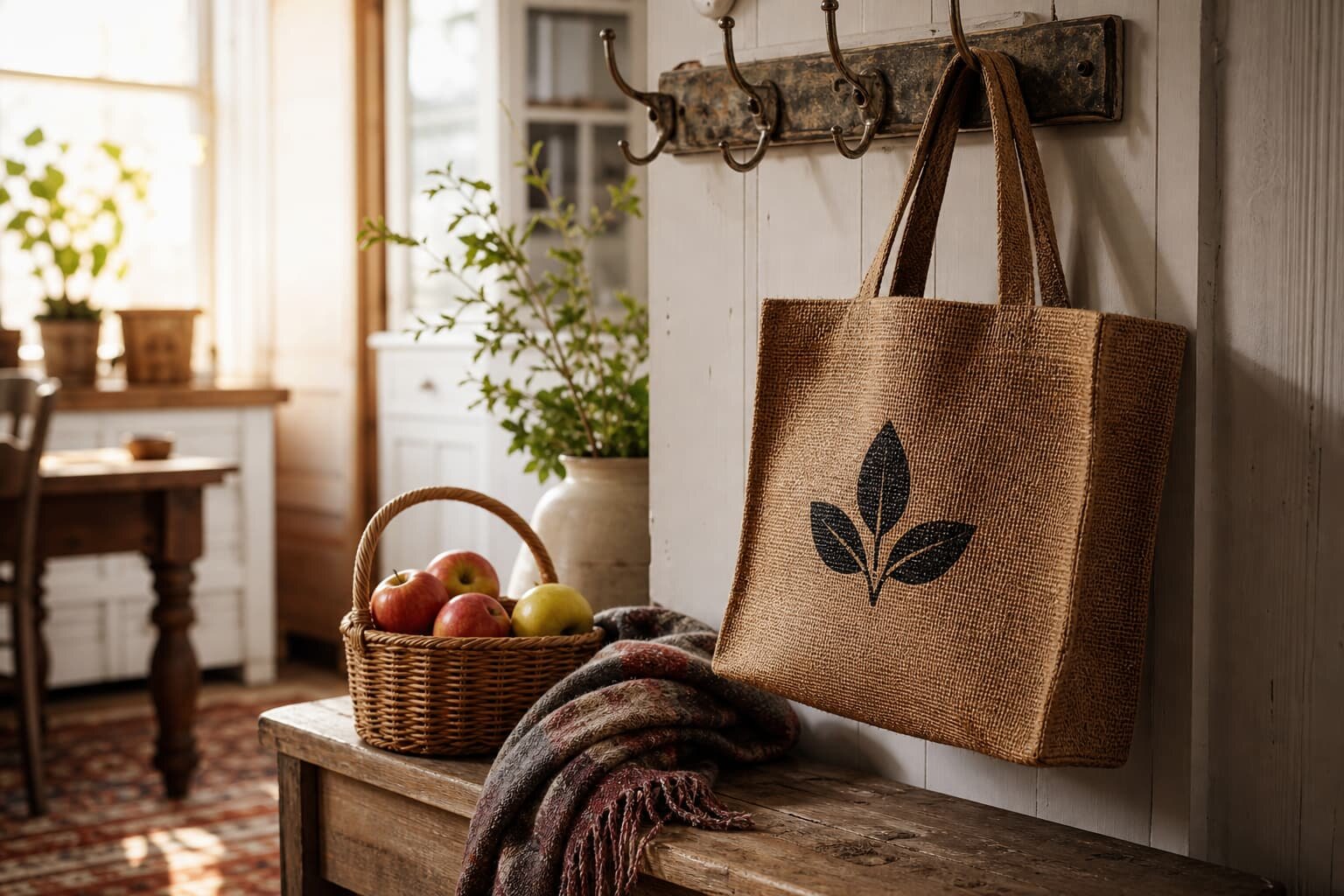
Why the knot-tie handle needs its own risk register
A jute burlap bag handle knot tie risk register is useful because the handle failure modes are predictable, repeatable, and expensive when they show up late. The knot itself is not the only risk. Buyers also have to watch the hole edge, the top hem distortion, handle symmetry, rope fuzzing, and the way the knot behaves after the bag is packed, stacked, and shipped. Jute burlap is a coarse, open fabric, so once the handle area starts to stretch or fray, the defect is easy to see and hard to hide.
If you buy these bags for retail, promotions, or repeat use, the handle zone should be treated as a separate spec, not just a detail in the drawing. Write down the exact handle type, the tie method, the reinforcement method, the test method, and the acceptance limit. That gives procurement a clean way to compare suppliers and stops one factory from quoting a simple decorative knot while another quotes a reinforced carry handle that costs more but performs better.
- Typical handle risks: knot slip, hole tear-out, uneven drop, stitch pull, and top hem puckering.
- The handle zone should have its own spec line, test line, and inspection line.
- A cheap quote is only useful if the handle construction matches the same risk level.
Start with use case, payload, and carry behavior
Before you discuss price, define how the bag will actually be used. A bag that carries a brochure and a notebook needs a different handle than a bag that carries jars, wine, or multiple retail items. If the payload is light, a simple knot-tie design may be enough. If the bag will be reused, carried by customers for longer distances, or filled with heavier products, you need stronger reinforcement and a clearer acceptance standard. The buyer should also say whether the bag is for shelf display, gifting, trade shows, or everyday retail use, because that changes how much handle bulk and knot visibility is acceptable.
The RFQ should include the bag size, gusset, target load, expected carry time, and whether the bag is unlined, laminated, or lined. That information matters because a 340 GSM bag can behave very differently from a 450 GSM bag once the handle load starts pulling on the top edge. A supplier can only quote a meaningful construction if the use case is clear. If the use case is vague, the factory may overbuild the handle, underbuild it, or quote based on its own assumption instead of your actual buying need.
- Include the intended contents weight or a realistic carry range in the RFQ.
- State if the bag is for one-time giveaway use or repeated retail use.
- Tell the factory whether the customer will hold the bag by the knot, the rope, or the top edge.
Choose the handle construction before you compare unit prices
The biggest mistake buyers make is asking for a price before they choose the handle construction. A visible knot through a punched hole is the lowest-complexity option, but it puts more pressure on the hole edge. A hidden knot inside the top hem gives a cleaner look, but it adds assembly steps and can create bulk at the fold. A knot plus reinforcement patch is usually the safer commercial choice when the bag needs to survive repeat use, because the patch spreads the load and gives the stitch line more support. If the design uses a bar tack or box stitch, make sure the factory explains where that reinforcement sits and whether it changes the outer appearance.
For natural jute bags, rope diameter matters as much as the knot style. A 5 mm rope may be enough for light contents, while a 6-7 mm rope usually feels more stable in the hand and gives the knot more body. Thicker rope can improve the look, but it also changes the fold line, the top edge thickness, and the packing footprint. Buyers should ask the factory to quote the handle in more than one construction if the order is still in development. That lets you compare cost against risk instead of comparing two quotes that are not really the same product.
- Simple visible knots are cheaper, but they expose more stress at the hole edge.
- Hidden knots look cleaner, but they often raise labor cost and packing bulk.
- Reinforcement patches and bar tacks usually lower risk on retail carry bags.
Get the fabric, GSM, and print spec right at the same time
The handle does not fail in isolation; it fails in a fabric system. For jute burlap bags, buyers commonly work in the 300-450 GSM range depending on bag size, lining, and intended load. Lower GSM can work for light promotional use, but the handle area has less body and can distort faster. Midweight fabric around 320-380 GSM is often a practical range for many retail bags, while heavier constructions may need more reinforcement and a clearer sewing spec. If the bag is laminated or lined, the handle area may feel stronger, but the added layers can change stitch behavior and make a knot sit differently inside the hem.
Print method also affects the handle zone. Screen printing is common on natural jute because it is cost-effective for simple artwork, but it should be kept away from the knot and hole area so the ink does not crack where the fabric bends most. Heat transfer or other surface-based decoration can work on certain laminated builds, but buyers should check whether the handle fold or knot bulk will disturb the print panel. If the artwork runs too close to the top edge, ask the supplier for a clear print-safe zone in the drawing. That one line can prevent a lot of late-stage rework.
- Quote the GSM, lining, and lamination status together, not as separate assumptions.
- For simple natural jute artwork, one- or two-color screen print is usually the cleanest commercial choice.
- Keep the main print panel away from the handle load path and knot area.
Approve the sample with a handle-focused test plan
A sample is only useful if it proves the handle will survive the real use case. When the factory sends a sample, check more than color and dimensions. Measure the finished handle drop on both sides, check whether the knot sits in the same position on each bag, and look closely at the hole edge or reinforcement patch. Then fill the bag with a realistic load and watch what happens to the top seam, the handle angle, and the knot after the weight settles. If the handle twists, the knot slides, or the top edge starts to pucker, the sample is telling you the production bag will likely do the same.
The buyer and factory should agree on the test method before bulk production starts. You do not need a complicated lab setup to catch the main risks, but you do need consistency. A simple static hang test, a repeated lift-and-carry check, and a visual inspection after load removal are enough to expose many handle problems. Write the acceptable outcome in plain language. For example, the knot must not slip, the hole must not elongate visibly, the stitching must stay intact, and the handle drop must remain within the agreed tolerance. If the sample fails one of those points, revise the construction before approving mass production.
- Check both loaded and unloaded handle shape, not just the empty bag appearance.
- Ask the factory to show the same construction on the final sample, not a simplified demo version.
- Record the failure mode if the sample does not pass, because that tells you what to change.
Read MOQ and quote logic without getting trapped by the unit price
MOQ for a jute burlap bag with knot-tie handles is rarely driven by one factor. It is usually a mix of fabric stock, handle prep, print setup, cutting efficiency, and packing labor. A standard-size bag in a stock fabric with a simple one-color print may have a lower MOQ than a custom size with a special rope color and reinforced knot area. If the supplier gives you only one MOQ number, ask how much of that minimum is tied to the handle construction and how much is tied to print or packaging. That detail matters when you compare factories, because one supplier may be quoting a lower entry MOQ but a less stable handle method.
Ask for quote data in a structured way: bag size, GSM, handle material, handle drop, print method, color count, carton count, sample lead time, bulk lead time, and packing method. Then ask the factory to separate the cost drivers that change with handle complexity. For example, a hidden knot, a reinforcement patch, or a wider rope can increase labor and material use even when the bag size stays the same. That is why a quote should be judged against the same construction, not against a different interpretation of the same bag description.
- Compare suppliers on the same handle method, same rope diameter, and same reinforcement detail.
- Ask where the MOQ changes: fabric, print, handle, or packing.
- Do not accept a quote until the supplier confirms the sample will match the production handle method.
Control the sewing line so the handle does not drift in production
Handle defects often appear because the line setup was loose, not because the design was impossible. The most common production issues are uneven punching, inconsistent knot placement, wrong stitch tension, and operators pulling the bag top too tightly during assembly. The factory should use a fixed jig or template for hole placement, handle spacing, and knot position. If the handle is attached after printing, the line should protect the artwork and avoid stretching the print panel while the operator ties or stitches the handle. If the factory changes the order of operations, the buyer should ask for a fresh approval sample, because the result can look similar but behave differently.
For a buyer risk register, the best control is a first-off approval followed by a mid-run check and a final carton check. That sounds basic, but it catches the process drift that often creeps in once operators speed up. Ask the supplier how they control thread tension, rope length, knot tightening, and top hem alignment. If the bag uses a rope handle, the cut ends should be trimmed consistently and the knot should be tied to the same firmness across the lot. A supplier who can explain its in-line controls clearly is usually better prepared to hold the same quality through a full order.
- Use a positioning jig for hole spacing and knot placement.
- Check the first five to ten pieces before the line runs full speed.
- Recheck handle symmetry after the first carton is packed, not only at sewing.
Pack the bag so the knot survives carton compression
Packing can undo a good handle if the knots are crushed or folded for too long. Jute burlap bags are usually folded flat, but the handle zone needs to be packed with enough space to keep the knot from setting into a distorted shape. If the bag is folded across the knot or the rope is forced into a sharp bend, the handle may look fine on unpacking but fail the customer presentation test. For retail orders, ask for a packing method that keeps the knot area either flat or lightly buffered with paper, especially if the bag has a visible external knot.
Carton count and inner pack count matter because overfilled cartons compress the handle bulk and can create a permanent bend. Buyers should also ask where the side label or CTM sample mark sits so it does not interfere with the knot zone. A clean packing spec includes the folded size, inner pack quantity, master carton quantity, carton dimensions, and whether the handle area is alternating left-right or stacked one direction. Those details reduce claims caused by deforming the handle during transit rather than during use.
- Avoid folding directly on top of a visible knot unless the approved pack method allows it.
- Keep carton fill reasonable so the knot area is not crushed by lid pressure.
- Confirm the side label placement does not force the handle into the fold line.
Turn the handle risk register into a sourcing tool, not a paperwork exercise
The easiest way to use a risk register is to give each handle issue four fields: the risk, where it happens, how it is controlled, and what evidence proves it was controlled. For example, the risk might be knot slip, the process step might be handle tying, the control might be a fixed knot method plus pull test, and the evidence might be a signed sample approval plus a batch inspection record. That makes the register useful for procurement because you can compare suppliers on their process discipline, not just on price. A factory that can define and document the handle method cleanly usually gives the buyer fewer surprises later.
Keep the register short enough that the factory will actually use it. A one-page handle risk list is often enough for jute burlap bags. Include the high-risk items only: knot slip, hole tear-out, handle asymmetry, print cracking near the top edge, and carton compression. Then use that list when you review quotes and samples. If a supplier cannot answer one of the items clearly, that is a signal to pause and ask for a revised sample or a clearer construction drawing. The goal is not more paperwork. The goal is a handle that matches the RFQ, survives production, and arrives packed the way the buyer expected.
- Score suppliers on how clearly they describe the handle method and evidence, not only on unit cost.
- Keep the risk register to the few handle defects that create the most claims.
- Use the same register at sample approval, pilot run, and final shipment review.
Specification comparison for buyers
| Spec decision | Recommended option | When it fits | Buyer risk to check |
|---|---|---|---|
| Handle material | Natural jute rope, 5-7 mm | Low to midweight bags where a natural look matters more than a soft hand feel | Check fuzzing, knot slip, and whether rope thickness changes after moisture exposure |
| Handle construction | Knot-through-hole with reinforcement patch | Simple retail or promotional bags that still need repeat use | Check hole tear-out, hole edge finish, and whether the knot sits flat after loading |
| Handle construction | Hidden knot inside the top hem | Premium-looking bags where the buyer wants a cleaner exterior | Check bulk at the top fold, uneven handle drop, and hidden knots pressing against print |
| Reinforcement method | Bar tack or box stitch on a patch | Heavier payloads or buyers that want lower claim risk | Check stitch density so it does not cut into the jute fibers or distort the panel |
| Print location | Screen print away from the handle zone | One- or two-color artwork on natural jute bags | Check cracking, strike-through, and whether the handle pull area overlaps the artwork |
| Packing method | Flat packed with knot area protected | Retail orders where the bag must arrive presentable and consistent | Check carton overfill, crease marks, and handle compression that changes the knot shape |
Buyer checklist before sampling
- State the exact bag size, gusset depth, and intended payload in the RFQ.
- Specify the jute fabric GSM, and say whether the bag is lined, laminated, or unlined.
- Define the handle material, rope or tape diameter, finished drop, and knot style.
- Call out whether the knot is visible, hidden inside the hem, or paired with a reinforcement patch.
- Fix the print method, number of colors, print area, and distance from the handle zone.
- Ask the factory to confirm the sample will match the final handle construction, not just the artwork.
- Request the MOQ by size, color, print method, and handle variant, not one blended number.
- Ask for the production lead time after sample approval and whether the handle parts are stocked or made to order.
- Require a basic load or pull-test method in the quote so suppliers compare the same standard.
- Confirm packing method, inner pack count, carton count, and how handle knots will be protected in transit.
Factory quote questions to send
- What exact handle construction are you quoting: visible knot, hidden knot, or knot plus reinforcement patch?
- What rope or tape material, diameter, and color are included in the quoted price?
- What jute fabric GSM are you using, and is the bag lined, laminated, or unlined?
- What is the finished handle drop and your tolerance for left-right symmetry?
- What reinforcement do you use around the hole or knot area, and how many stitches or bar tacks are included?
- What print method, color count, and print area are included in the quote?
- What is the MOQ by size, artwork, and handle variant?
- What is the sample lead time, and does the sample show the final handle construction or only a reference version?
- What is the mass-production lead time after sample approval, and what changes it?
- What load or pull test do you use for this bag, and what evidence can you share from the trial?
Quality-control points to confirm
- Check the handle style against the approved sample, including knot type and tail length.
- Measure handle drop on both sides and verify the bag hangs evenly when filled.
- Inspect hole size, edge finish, or reinforcement patch placement around each handle point.
- Confirm the knot sits fully tightened and does not slip when the bag is loaded.
- Test seam and patch strength with a defined pull or hang test before bulk release.
- Verify print placement keeps enough distance from the handle area to avoid cracking or distortion.
- Check top hem flatness so the knot does not create puckering or twisting.
- Trim loose threads and loose rope fibers consistently after sewing and finishing.
- Review first-off, mid-run, and final carton samples so handle defects do not repeat across the lot.
- Audit packing so knots are not crushed, folded, or pushed out of position in the carton.