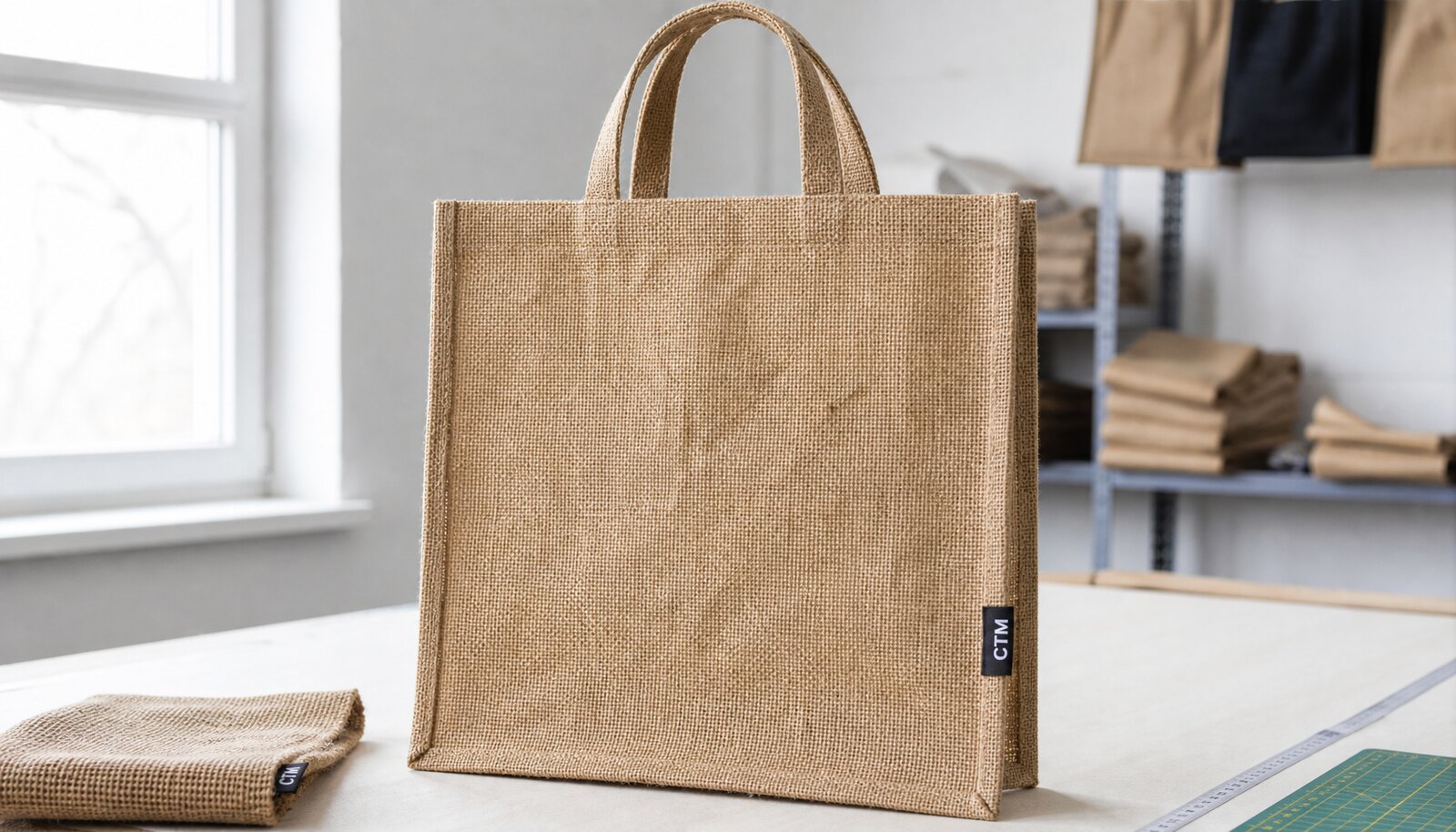
Why Fiber Shedding Needs Its Own File
Jute and burlap are natural materials, so some surface fuzz is normal. The problem is not whether the bag has fibers at all; the problem is whether the bag sheds enough loose fiber to create customer complaints, dirty packing, or a rough retail presentation. If your team treats this as a vague visual issue, you end up comparing supplier quotes that look similar on paper but behave very differently in hand, in carton, and on store shelves. A fiber shedding inspection file gives the buyer one clear way to separate acceptable natural texture from uncontrolled loose fiber.
This file matters most when the bag will be handled repeatedly, displayed unpacked, or used near light-colored goods. Procurement teams often discover the issue only after a customer opens cartons and sees dust, loose strands, or fibers transfer onto product packaging. Once that happens, the complaint is no longer about texture. It becomes a freight, packing, and brand-quality problem. The inspection file should make shedding a planned control point, not an afterthought.
- Treat shedding as a product quality topic, not just a finish preference.
- Set a clear line between normal natural fuzz and unacceptable loose fiber loss.
- Capture the issue before packing, not after the shipment reaches the warehouse.
Lock the Bag Spec Before You Compare Quotes
A shedding inspection file is only useful if the base bag specification is fixed first. For jute burlap bags, the biggest drivers are fabric weight, weave tightness, yarn thickness, and whether the bag is raw, lined, or lightly laminated. A very open 180 to 220 GSM body can be fine for a short promotional run, but it usually shows more fuzz and more loose yarn ends than a tighter 250 to 300 GSM retail build. Once you add print, lining, or a structured bottom, the factory has a very different sewing and packing challenge.
Do not let the supplier quote a generic jute bag and then sort out the finish later. You need the buyer file to state body size, body GSM, handle type, seam allowance, top edge finish, print area, and packing method before sample approval. If you skip this, you cannot tell whether a shedding issue came from the base cloth, the cutting process, the print process, or the final carton handling. A clean quote only has value if it is tied to a clean spec.
- Write down GSM, size, weave density, lining status, and edge finish on the same page.
- Do not compare a raw burlap bag against a lined or laminated version without adjustment.
- Ask the factory to mark the exact sample code that represents the production build.
Build the Inspection File Around Traceable Evidence
The inspection file should be a working folder, not a loose collection of photos. Start with the approved sample photo set, the signed spec sheet, and the quote version the factory used. Then add the pre-production sample record, the inline inspection notes, the final packing record, and any corrective action notes if the factory had to re-cut, re-sew, or re-pack. When a buyer team can open the file and see the order history in sequence, it becomes much easier to hold the supplier to the same build standard across reorders.
Use simple traceability rules. Each revision should have a date, a job code, and one named approver from the buyer side. Photos should show the front, back, seam ends, top edge, handle joints, print area, and carton sample. If you only keep one hero image of a finished bag, you cannot prove whether the base cloth changed, whether the print was over-applied, or whether loose fibers appeared after trimming. The file is strongest when it links the physical sample to the actual production run.
- Keep one version-controlled folder per PO, not one mixed folder for multiple styles.
- Label every photo with the sample stage: approved sample, pre-production, inline, or final.
- Store the buyer sign-off and factory sign-off together so no one can dispute the reference.
Use Repeatable Shedding Tests, Not Guesswork
A good shedding test does not need lab equipment, but it does need to be repeatable. The simplest method is a shake test over a dark board or black tray, followed by a white cloth rub test on the body, seam, and printed area. Add a tape-lift or glove wipe if your retail channel is sensitive to dust transfer. What matters is that the same test is used on the approved sample, the pre-production sample, and the bulk spot-check so the buyer can compare results across stages. Without that repeatability, one inspector may call the bag clean while another calls it too fuzzy.
Your acceptance criteria should be practical and visible. For example, the buyer can require no loose fiber clusters at seam ends, no visible transfer on a white cloth after a defined number of rubs, and no heavy dust release when the bag is shaken once or twice over a dark surface. The exact pass level should match the market and the use case. A retail tote sold unpacked needs a stricter standard than a value bag shipped sealed inside a polybag.
- Use the same test surface, same motion, and same inspection lighting every time.
- Test the body fabric, the seams, the handle joins, and the print zone separately.
- Record pass or fail with a short note, not just a photo of the bag.
Choose Construction Details That Reduce Fuzz
Construction choices matter as much as fabric choice. A tight screen print can help stabilize the surface, but it does not solve shedding if the weave is too open or if the cut edges are badly finished. For jute burlap bags, a folded top edge, clean seam trimming, and reinforcement at the handle attachment points usually help more than a decorative print treatment. If the bag must look cleaner at first opening, a light lining or internal binding can make a bigger difference than a slightly thicker logo print.
Print method also affects what the buyer sees during inspection. Screen printing is common because it holds up on coarse fabric and gives a predictable result for simple artwork. Woven labels, sewn patches, or stitched side labels often create a cleaner perceived finish than heavy ink coverage, especially when the brand wants a premium retail feel. Embroidery can work on some styles, but it adds cost, bulk, and needle puncture points, so it should be quoted separately and inspected after final trimming and pressing.
- Prefer clean seam finishing over decorative fixes when shedding is the main concern.
- Ask for print cure details and rub checks after the ink has fully dried.
- If the bag uses a side label, inspect the label stitch path because loose thread can look like fiber shedding.
Compare Supplier Quotes on the Same Basis
The fastest way to lose control of a jute sourcing project is to compare total prices without matching the build. A serious quote should break out the body fabric basis, cutting and sewing, print setup, print run, lining or lamination, packing, and any extra handling such as carton liners or inner wrap. If one supplier quotes a blank body and another quotes a printed, packed retail bag, the price gap is meaningless until the spec is aligned. The inspection file should carry the same build terms that appear on the quote so the team is not solving two different problems at once.
MOQ logic matters here. A standard natural-color body with one-color printing usually carries a lower minimum than a fully customized version with lining, special tape, multiple print hits, or added label work. The reason is simple: every extra process creates setup time, material waste, and a higher risk of rework. Ask the factory to separate sample charges from production charges and to state the lead time from sample approval, not just from order placement. For planning, many buyers build in a simple sample window, then allow a longer bulk window once the fabric, print screens, and packing spec are frozen.
- Compare quotes only after the same GSM, size, print, and packing basis is confirmed.
- Ask for line items so you can see where the cost changes if you add lining or a second color.
- Make the supplier state whether the lead time starts from PO date, artwork approval, or pre-production approval.
Release Only After the Buyer Checklist Passes
Do not release a bulk order on the basis of one nice sample photo. The buyer checklist should force the team to verify the approved sample, the measured size, the fiber shedding test result, the print cure, the seam reinforcement, and the packing method. If any one of those items is still open, the order file is not ready. For jute burlap bags, the most common mistake is to approve the body and forget the edges. That is where loose fibers often appear after cutting, trimming, or carton compression.
The release step should also cover the packing and warehouse risk. If the bag is shipped with no inner protection, loose fibers and dust can transfer onto the face of the bag or onto adjacent product. If the bag is shipped in bundles, the bundle count and bundle wrap should be written into the file. Good buyers do one last spot-check on the first cartons loaded for shipment, because the same bag can look clean in the sample room and dirty after rough packing if the carton setup is weak.
- Check the first carton, a middle carton, and the last carton loaded for a small spot pattern.
- Confirm that the approved sample and the production bag have the same label position and size.
- Do not close the file until the packing method is confirmed in writing.
Ask Factory Questions That Reveal Process Gaps
The right RFQ questions tell you whether the factory understands loose-fiber control or is only quoting a standard bag. Ask what GSM they are quoting, which print method they will use, how they trim seam ends, and what they do if the bag sheds more than the approved sample. If they cannot answer that clearly, they are probably pricing a generic build and hoping the buyer will accept natural variation later. A clean inspection file helps here because every answer can be attached to the order record instead of floating in email threads.
A weak supplier often hides behind total price and lead time. A stronger supplier can explain the difference between a raw burlap body and a tighter retail build, can state where the MOQ changes because of print or lining, and can tell you what happens if the first production run fails the shake test. That is the level of answer you want in the file. If the factory speaks only in broad terms, ask for a revised quote with each processing step listed separately so you can see where the risk sits.
- Ask who signs off the pre-production sample and who signs off the final packing check.
- Ask what they do with offcuts, loose threads, and rejected pieces before carton close.
- Ask for the exact inspection method they use on the same style for repeat orders.
Common Mistakes That Turn Into Customer Complaints
The biggest mistake is approving the bag by appearance alone. A jute bag can look attractive in a photo and still shed heavily when folded, stacked, or brushed against light packaging. Another common error is testing only one size when the program actually includes two or three sizes with different seam loads and edge behavior. If the bag is printed, buyers also forget to check how the surface behaves after curing. Ink can hide loose fibers on one panel and make them more visible on another, so the full bag must be tested, not just the logo area.
Packing mistakes cause a lot of avoidable complaints. If the factory skips a clean folding method or over-compresses the cartons, the bags can arrive with extra fluff, loose threads, and corner abrasion even if the sewing was acceptable. Buyers also get caught when they do not define what happens after an inspection failure. If a bag is reworked, the file should say whether it needs re-trimming, re-packing, re-inspection, or full rejection. Without that rule, the factory may make a quick fix that passes visually but still fails in the market.
- Do not approve only one size if the order contains multiple sizes or handle types.
- Do not ignore the effect of carton compression on loose fiber and edge fuzz.
- Do not leave rework rules open, because every factory will interpret them differently.
Turn the File Into a Reorder Tool
A strong inspection file is not only for the current shipment. It should become the reference point for the next reorder, so the buyer does not need to rebuild the spec from scratch. Keep the final approved bag photo set, the exact GSM and size, the print version, the packing instruction, and the final QC notes together. If the supplier changes cloth mill, print method, or edge finish on a future order, the file should make that change obvious before the PO is released. That is how buyers reduce drift across seasons and avoid slowly accepting a worse bag because the old sample is buried in email.
The best reorder files also capture what the market actually complained about. If one line of bags felt dusty, note that. If the customer wanted a cleaner top edge, note that. If one carton pack style caused abrasion, note that too. Next time, the sourcing team can ask the factory to quote the corrected build instead of re-learning the problem. For jute burlap bags, the difference between a one-time purchase and a controlled program is usually not the price alone. It is whether the buyer keeps a precise file and uses it on the next round.
- Archive the final signed sample, spec sheet, and packing standard with the PO number.
- Carry the complaint history forward so the same shedding issue does not repeat.
- Use the file as the baseline before any change to GSM, finish, print, or carton pack.
Specification comparison for buyers
| Spec decision | Recommended option | When it fits | Buyer risk to check |
|---|---|---|---|
| Body fabric GSM | 250 to 300 GSM with a tighter weave | Retail bags, distributor programs, and brands that need a cleaner handfeel | Too open a weave can shed more fiber and look uneven after printing |
| Body fabric GSM | 180 to 220 GSM raw burlap | Short-life promo bags and low-cost campaigns | Higher visibility of loose fibers, lower shape retention, and more packaging dust |
| Surface treatment | Light lamination or full lining | When the buyer wants a cleaner inside, less dust transfer, or a more controlled retail unpacking | Check odor, crack risk, weight change, and whether the treatment hides weak base fabric |
| Edge and opening finish | Folded top edge with binding or a clean turned hem | When the bag will be handled often or displayed in store | Raw openings fray faster and can create visible fuzz at the top line and seams |
Buyer checklist before sampling
- Approve one physical golden sample and one photo set before bulk production starts.
- Confirm the exact GSM, weave density, finish, and body size written on the spec sheet.
- Test loose-fiber shedding on the body, seams, handle joins, and print area.
- Check print method, color count, cure condition, and rub resistance after drying.
- Verify seam allowance, stitch density, and reinforcement at stress points.
- Lock the packing method, carton count, and any inner wrap or carton liner.
- Ask for a pre-production sample if the bulk order changes fabric, print, or trim.
- Confirm the quote basis, including whether pricing covers print setup and packing.
- Record acceptable defect levels and rework rules before the PO is released.
- Keep one signed inspection file per PO and save every revision under the same job code.
Factory quote questions to send
- What exact GSM, weave density, and finish are included in your quoted bag?
- Is the price for blank bags, printed bags, lined bags, or laminated bags?
- Which print method are you using, how many colors, and what setup charge applies?
- What stitch pattern, stitch density, and handle reinforcement are included in the unit price?
- What is the MOQ for a sample run, a trial order, and a repeat order?
- How many calendar days do you need for sample approval and for bulk production after approval?
- What is the packing method, and how many pieces go into one carton?
- Is the quoted price inclusive of inner wrap, carton liners, or desiccant if we request them?
- What inspection method will you use for loose fibers, print smudge, and seam fray?
- What are your overrun, short-ship, and rework tolerances for this order?
Quality-control points to confirm
- Approved sample matches the agreed body color, weave, handle length, and label position.
- No visible loose fiber clusters are left at seam ends, corners, or the top opening after a shake test.
- Print area is aligned, fully cured, and free from cracking, smudging, or heavy ink build-up.
- Stitching is straight and secure, with reinforcement at handle joints and load points.
- Edge binding, fold-over, or hem finish is neat and does not open into frayed yarns.
- Carton count matches the packing list, and bundles are labeled by size, color, or style.
- Bag handfeel is consistent across cartons, not only on the first few samples opened.
- No oil stain, damp odor, or dust transfer appears on a white cloth wipe check.
- Sample revisions and bulk revisions are signed off before shipment is released.
- Final cartons pass a spot-check for shake loss, rub transfer, and loose thread cleanup.