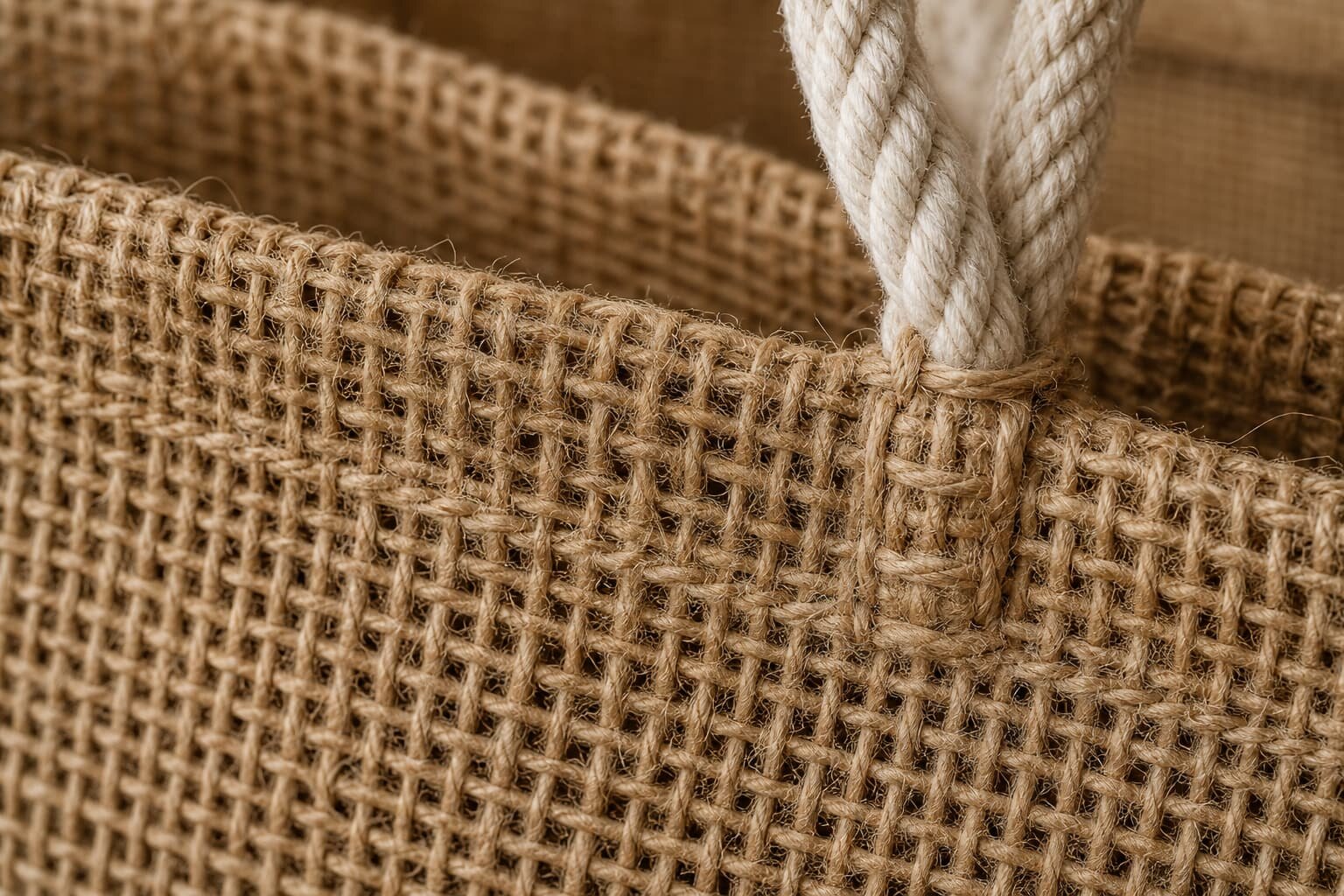
Why Fiber Shed Matters In A Jute RFQ
A jute burlap bag can look acceptable in a sales sample and still become a problem once the factory starts cutting, sewing, and packing. Fiber shed is not only a visual issue. It can leave dust on printed surfaces, contaminate garment packing, and make a retail buyer think the bag is low grade even when the structure is otherwise sound. That is why a jute fiber shed correction log is useful. It turns a vague complaint into a controlled production note that the factory can act on.
Buyers often ask the wrong first question, such as whether the bag can be made less fuzzy. The better question is where the shed starts. Does it come from the base cloth, the cut edge, the sewing needle path, the print area, or the final packing step? If the answer is not recorded in a simple log, the factory may keep trimming, brushing, or re-sewing without solving the root cause. For procurement teams, the log becomes a quality record, a quote comparison tool, and a release gate all at once.
- Define the exact symptom: dust, loose lint, edge fray, or print fuzz.
- Tie the issue to one lot, one line, and one revision, not to the whole order.
- Keep photo evidence from sample stage through bulk packing.
- Use the log to decide whether the fix belongs in fabric, sewing, print, or packing.
Start With The Right Fabric And Weave
Most shed problems begin with the base cloth. For jute burlap bags, buyers usually work in the 300 to 450 gsm range depending on size, load, and appearance target. A lighter fabric may help on cost and foldability, but it often exposes more loose fiber and weak edge stability. A tighter weave with better yarn twist usually gives a cleaner result than simply adding weight. Weight alone does not solve shed if the yarn itself is coarse, weak, or poorly finished.
When you compare quotes, do not stop at the printed bag price. Ask whether the cloth is raw, brushed, or lightly finished, and whether the factory is cutting from stock fabric or weaving to order. A raw burlap surface can look authentic, but it sheds more during handling. A lightly finished surface may cost more, yet it can reduce cleanup, improve print sharpness, and lower the number of rework loops. If your bag will sit near apparel, cosmetics, or premium gift goods, a tighter, cleaner cloth usually pays back in fewer complaints.
- Use 300-350 gsm for lighter retail and promotional use, 350-450 gsm for heavier carry or more premium presentation.
- Ask for weave count, yarn twist, and any finishing step that reduces loose fiber.
- Check whether the fabric is cut from stable stock width or from a special loom run.
- Request a small pre-test lot before approving a large color or size mix.
Turn The Shed Correction Log Into A Real Production Tool
A useful correction log is simple enough for the factory to update during production and specific enough for a buyer to audit later. At minimum, it should show the order number, fabric lot, GSM, weave note, sewing line, print method, defect type, root cause, action taken, retest result, and sign-off date. If the log only says improved or corrected, it is not useful. The value comes from knowing what changed and whether the same change can be repeated on the next lot.
The best log entries are short and factual. For example, if loose fiber appears after edge cutting, the log should state whether the blade was changed, whether the edge was trimmed again, whether the seam allowance was widened, and whether the retest reduced visible shed. Use one issue per row. Do not combine a print fuzz issue with a corner fray issue in the same entry. That hides the true cause and makes later quote comparison impossible.
- Record fabric lot, sewing line, and print revision on every correction entry.
- Use one defect per log row so root cause stays clear.
- Add a photo reference before and after the fix.
- Capture retest results on a dark cloth and white surface, not only visual comments.
Choose A Print Method That Does Not Aggravate Fuzz
Print can make a shed issue look worse if the decoration is too heavy or placed in the wrong zone. On jute burlap bags, simple screen print is often the most practical option for one- or two-color logos. It suits the texture better than fine-detail methods that expect a smooth face. Heavy ink coverage, large solid blocks, or thick overlays can stiffen the surface and leave a fuzzy halo at the edges. If the design is small and the logo is clean, direct print can work well. If the design is fine or the bag face is very irregular, a woven label or stitched patch may be safer.
Buyers should ask the factory how the print method interacts with the cloth finish. Water-based inks, pigment inks, and other common print systems behave differently on burlap. What matters commercially is not the ink name but the visible result after folding, rubbing, and packing. A print that looks good on a flat sample may still crack or trap loose fiber after the bag is stacked in a carton. The correction log should state whether the print area was cleaned before printing, whether drying was complete, and whether any rework was needed after the first rub test.
- Favor simple artwork, bold lines, and limited solid fill on textured burlap.
- Keep logos away from the most fray-prone edge unless the construction is upgraded.
- If the design is fine-detailed, compare direct print against stitched label options.
- Always test print after the fabric has been cut and cleaned, not only on raw yardage.
Use Sample Checks That Reveal The Real Shed Level
A good pre-production sample should answer one question: will the bag shed in real handling, not only in the hand of the sample maker? Buyers can test this with a plain black cloth, a clean white board, and a short fold-and-shake cycle. Rub the bag gently along the cloth, shake it twice, then inspect the board for visible fiber drop. Repeat after the bag has been folded and packed once. If the bag only sheds after compression, the issue is usually edge cleanup, stitch tension, or packing pressure rather than the base cloth alone.
Do not approve from one perfect sample only. Ask for a small set from the same sample batch so you can compare consistency. For a simple bag, five to ten pieces are enough to show whether the issue is stable or random. If the factory only sends the best piece, the buyer gets a false reading. The correction log should attach the sample date, the piece count, and the exact result for each test. That record matters later if the bulk lot shows a different level of linting.
- Test on black cloth, white board, and after a fold-and-shake cycle.
- Inspect both the bag face and the cut edge after handling.
- Compare at least a small batch of samples, not one hand-picked piece.
- Save one sealed sample as the golden reference for bulk comparison.
Compare Quotes By The Work Behind The Bag, Not Just The Unit Price
A useful quote for a jute burlap bag should show more than fabric, print, and carton. It should reveal where the factory expects to spend labor and where the shed risk sits. If one supplier quotes a lower unit price but leaves out trimming, edge cleanup, or extra inspection, the real landed cost may be higher after rework. Ask for the quote in a way that makes the hidden work visible. That is the only way to compare suppliers fairly on a shed-sensitive bag.
A practical cost breakdown is usually easier to compare than a single lump sum. Fabric often takes the largest share, followed by sewing, print, trimming, and packing. If the bag needs a cleaner finish, the correction log may show added labor in brushing, edge control, or a second inspection pass. MOQ also matters. A small trial lot usually costs more per unit because the line changeover and cleanup work do not spread across many pieces. When you understand the driver, you can decide whether to pay for a cleaner first run or accept a looser finish and tighter QC.
- Ask the factory to separate fabric, labor, print, trimming, packing, and reinspection.
- Check whether MOQ changes when you add lining, binding, or multi-color print.
- Compare the cost of one controlled sample run against the cost of later rework.
- Request the lead time for sample, bulk, and any correction rerun.
Use The Quote Data To Predict Lead Time And Risk
For jute bags, lead time is tied to more than sewing capacity. Fabric readiness, print setup, cleaning, and final packing all affect schedule. A simple natural-color bag may move faster than a printed bag with special edge cleanup. Typical sample timing is often in the 7 to 10 day range, while bulk can fall anywhere in the 25 to 40 day range depending on order size and revision count. The more times the factory has to correct fiber shed, the more you should expect the timeline to stretch.
Do not let a fast promise replace a traceable plan. Ask the factory which step is the bottleneck and what happens if the first sample fails the shed check. Some suppliers try to hold the same price while silently reducing inspection time. That is risky on burlap because loose fiber can pass through a short visual check and still create claims later. If the quote includes re-trimming, second-pass inspection, or extra packing control, that is usually more useful than an unrealistically low unit price.
- Ask for sample and bulk lead times separately.
- Make the factory name the bottleneck step that could delay release.
- Check whether the price includes re-trim, re-inspect, or re-pack if the sample fails.
- Treat a very short lead time as a risk signal unless the process is already proven.
Lock Packing And Carton Rules Before Bulk Starts
Packing can create or hide a shed problem. If the bag is over-compressed, the fabric rubs against itself and can leave loose fiber inside the carton. If the bag is packed too loosely, lint can move around and settle on the print or inside the carton flaps. For natural fiber bags, the goal is controlled protection, not over-sealing. Buyers should decide early whether each piece needs an inner bag, whether the carton needs a liner, and how much compression is acceptable for shipping.
Carton data matters because a shed complaint often shows up at destination, not at the factory. Ask for carton count, carton size, gross weight, stacking limit, and whether pallets or outer wrap will be used. The correction log should note the packing state at the point the bags passed the final check. If the bags look good before packing and dusty after packing, the problem is not the print team. It is the packing method or the carton environment.
- Set packing count per carton and do not change it without buyer approval.
- Decide whether an inner liner is needed for dust control or moisture control.
- Check carton compression so bags do not rub excessively in transit.
- Keep the packing spec tied to the same lot number as the shed log.
Release The Lot Only After The Correction Log Closes
The purpose of the correction log is not paperwork. It is release control. A lot should not move to full packing or shipment just because one sample passed on the bench. The buyer should ask for a closed loop: defect found, root cause identified, action applied, retest completed, and sign-off recorded. If any one of those steps is missing, the problem can return in the next carton. On jute burlap bags, that is especially important because the same fiber issue can reappear after a small change in humidity, cutting speed, or print load.
A good release rule is easy to defend in front of sales, logistics, and the end customer. For example, the first batch can be approved only after the corrected sample matches the golden sample and the factory shows consistent results across a small in-process pull. The buyer does not need a perfect bag. The buyer needs a repeatable bag. Once the correction log proves repeatability, the risk of surprise dust complaints drops sharply.
- Do not release bulk until the corrected sample matches the approved reference.
- Require a small in-process pull from the same line before final packing.
- Sign off only after the correction log shows one clear root cause and one closed action.
- Keep the final release note attached to the order file for the next reorder.
What Buyers Usually Miss When They Focus Only On Appearance
Many buyers judge jute bags by color and print only. That misses the actual commercial risk. A bag can look clean on the front table and still shed when lifted, folded, or shipped in volume. If the quote does not show fabric spec, seam control, and packing method, you may compare suppliers on the wrong basis. The result is a cheap-looking product at a not-so-cheap total cost. The shed correction log is a practical way to stop that mistake because it forces every factory to describe the same defect in the same language.
The other common mistake is letting the factory solve the problem informally. A verbal promise to clean the fabric more carefully does not help when the next PO uses a different loom batch or a different team. Keep the correction steps written down, tied to the lot, and checked again before release. That discipline is what separates a one-time fix from a reusable sourcing standard. For importers and retail buyers, that is the real value of the log: it turns a recurring fiber issue into a predictable buying rule.
- Do not compare quotes without the same fabric and packing basis.
- Do not approve a visual sample without a shed test.
- Do not treat an informal factory promise as a corrected process.
- Do keep the correction log with the PO file for the next reorder.
Specification comparison for buyers
| Spec decision | Recommended option | When it fits | Buyer risk to check |
|---|---|---|---|
| Fabric weight | 300-350 gsm burlap | Retail carry bags, gift bags, and promo packs with moderate load | Too light will shed and distort; ask for actual GSM tolerance, not just an estimate |
| Weave and yarn finish | Tighter weave with low loose-fiber count | When the bag sits near apparel, cosmetics, or premium packaging | Open weave and weak twist increase lint transfer and edge fray |
| Print method | 1-2 color screen print with controlled ink coverage | Simple logos, bulk promotions, and repeat orders | Heavy solid areas can crack or show fuzz after handling; check print siting away from high-fray seams |
| Edge finish | Folded hem or bound edge | When the top edge is handled often or packed tight | Raw cut edges may keep shedding after sewing unless trimming and cleaning are controlled |
| Handle construction | Cotton webbing or double self-fabric handles | When load weight matters or the bag is customer-facing | Single-layer handles can twist, fuzz, and expose weak seam allowance |
| Packing format | Flat pack with dust control and carton liners if needed | When bags ship long distance or through humid lanes | Over-sealing natural fiber can trap moisture; under-packing can spread lint into cartons |
Buyer checklist before sampling
- Confirm target GSM, weave count, yarn twist, and whether the bag is raw, brushed, or lightly finished.
- State the exact shed problem you want controlled: loose lint, seam dust, edge fray, or print-area fuzz.
- Approve one pre-production sample that includes the final print method, seam allowance, and edge finish.
- Ask the factory to run a simple shed test on dark cloth, white board, and after a fold-and-shake cycle.
- Request lot traceability for fabric, sewing line, printing line, and packing date.
- Set carton count, polybag use, and any moisture or dust protection before bulk approval.
- Require photo proof of first-output quality before the line switches to full production.
- Hold a small top-up sample from bulk for comparison against the sealed golden sample.
- Write down the correction loop: defect found, root cause, action taken, retest date, and sign-off owner.
- Verify that the quote includes wastage, overage allowance, and rework cost if shedding is corrected late.
Factory quote questions to send
- What exact fabric spec are you quoting: GSM, weave count, yarn thickness, and whether the fabric is raw or brushed?
- Which step is most likely to create shed in your process: cutting, brushing, sewing, printing, or packing?
- What corrective action do you include if the first sample shows visible fiber drop on a dark cloth test?
- What is your MOQ if we keep the structure simple versus adding lining, binding, or multi-color print?
- How many pre-production samples can you supply, and how will you label them by lot or revision?
- What is your typical lead time for sample, bulk, and rework if a correction is needed after approval?
- What packing method do you recommend for this bag size and GSM, and do you charge separately for dust control inserts or inner cartons?
- Which quote line items are optional, and which are required to avoid hidden cost later, such as extra trimming, brushing cleanup, or reinspection?
Quality-control points to confirm
- Confirm the bag against the agreed GSM and weave count before cutting.
- Inspect cut edges for loose fiber, weak trim, and uneven edge sealing.
- Check stitch density, seam allowance, and corner reinforcement on both sides of the bag.
- Run a simple shed test by rubbing the fabric on a dark cloth and shaking the sample over a clean white surface.
- Review print areas for fiber lift, ink cracking, and fuzz trapped at ink edges.
- Check handle attachment points for pull resistance and visible seam distortion.
- Verify carton count, bag orientation, and whether inner protection is consistent across all cartons.
- Keep one approved golden sample and one bulk comparison sample from the first shipment lot.