Why Shade Variance Needs Its Own Buying Sheet
A jute burlap bag batch shade variance sheet is a simple control document that records the acceptable color range of natural jute fabric before cutting, printing, stitching, and packing. It is not a design mood board and it is not the same as a normal color approval for dyed fabric. For procurement teams buying jute totes, wine bags, grocery bags, gift pouches, or retail packaging, this sheet prevents one of the most common natural-fiber disputes: the approved sample looks clean and golden, but the bulk shipment arrives grey, brown, yellow, or mixed carton by carton.
Natural jute has more visible raw material variation than cotton canvas. The fiber source, retting, spinning, yarn count, weaving tension, storage humidity, and lamination process can all affect the final shade. If your RFQ only says natural jute, the supplier may quote using available stock fabric. That may be commercially reasonable, but it gives you little control when the retail buyer rejects bags that look inconsistent on the shelf. The variance sheet creates a shared reference so the buyer, merchandiser, factory, printer, and inspector are judging the same acceptable range.
- Use the sheet before bulk cutting, not as a complaint document after delivery.
- Attach physical swatches where possible, because photos alone change with lighting and screen settings.
- Record the shade range by batch or roll, not just by finished bag sample.
- Connect the shade sheet to print approval, carton packing, and final inspection criteria.
What Causes Jute and Burlap Shade Differences
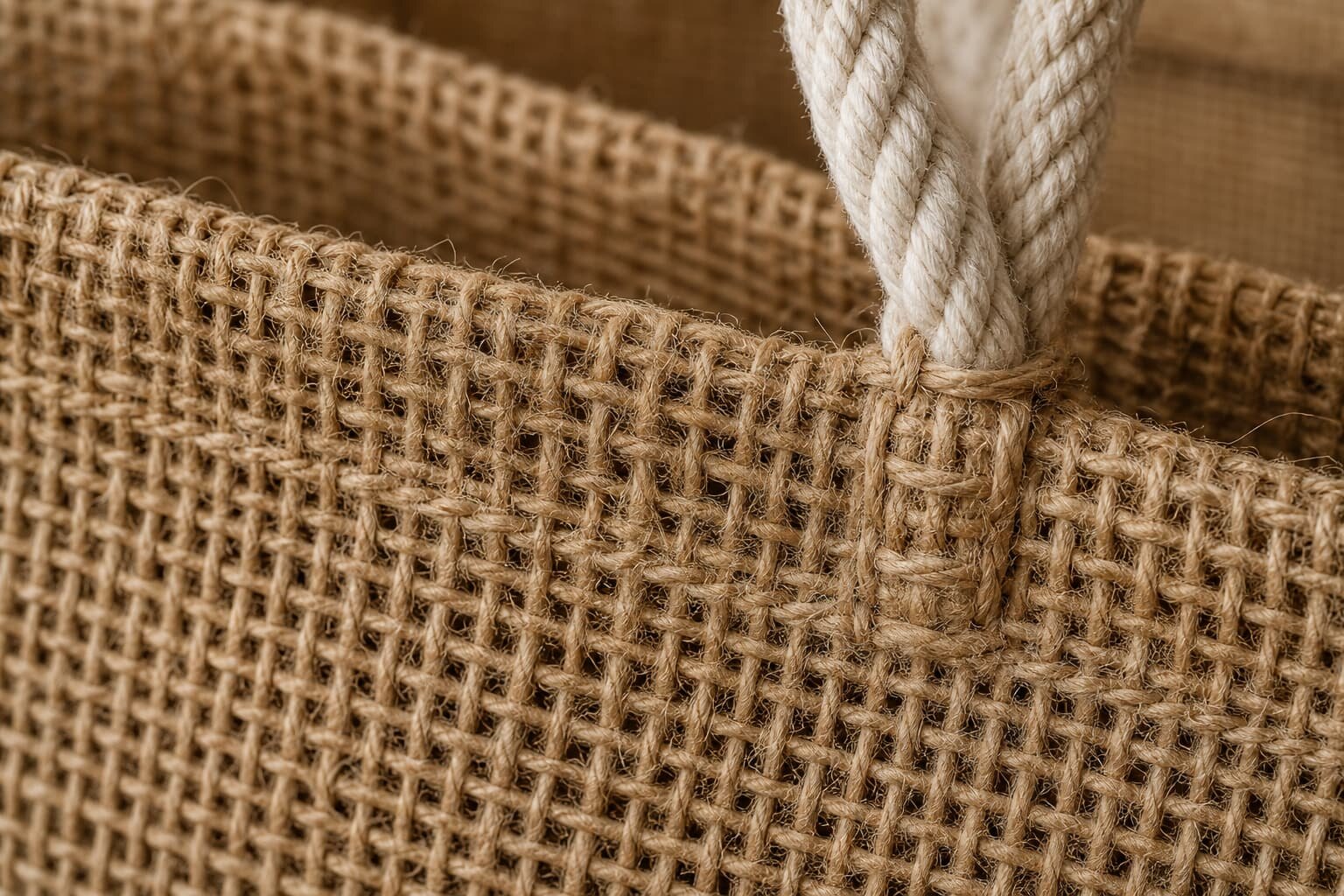
Jute is a bast fiber, so the color comes from the plant fiber and processing history unless the fabric is bleached or dyed. Even in the same nominal fabric weight, one roll may have a warmer tan tone while another has a cooler grey cast. A looser weave can also make the same yarn look lighter because more air gap is visible. A tighter or laminated fabric can look darker because the surface reflects light differently. This is why buyers should avoid approving shade only from one small sales swatch.
Burlap used for bags is often selected for a rustic texture, but rustic does not mean uncontrolled. A good factory can sort rolls, group similar shades, and warn the buyer when current stock is outside the approved band. What they cannot do is make natural jute behave like a lab-dyed polyester fabric without added cost, extra sourcing time, or a different material specification. The buyer has to decide whether the commercial goal is natural variation, consistent retail display, or tight brand color presentation.
- Raw fiber origin can affect yellow, brown, or grey undertones.
- Fabric GSM and weave density influence how dark or transparent the panel appears.
- PP lamination or coating can make jute look deeper and smoother.
- Warehouse humidity can temporarily affect handle, odor, and perceived shade.
- Mixed fabric rolls become more visible when bags are displayed side by side.
Set a Realistic Fabric Specification First
Shade control starts with the material line in the RFQ. A vague request such as standard jute bag, natural color, with logo print will produce quotes that are difficult to compare. One factory may quote 240 GSM loose burlap, another may quote 300 GSM laminated jute, and a third may quote a blend or substitute fabric. Their prices may look close, but the visual result, strength, print sharpness, and shade range will not be the same.
For most reusable jute shopping bags, buyers commonly review fabric around 270-320 GSM, or equivalent ounce weight depending on the supplier market. Lighter burlap may be suitable for gift packaging or short-use promotional bags. Heavier jute gives a more structured panel but may require stronger needles, better edge binding, and more careful folding during packing. If you plan to print a logo across the front panel, a tighter and more stable weave normally supports better ink coverage than a very open burlap.
- State target GSM or ounce weight and tolerance, for example 300 GSM with agreed production tolerance.
- Specify unlaminated, inner laminated, or coated fabric because each changes shade appearance.
- Ask for weave density or at least close-up fabric photos if the logo has fine lines.
- Confirm whether handles and binding use matching jute, cotton webbing, PP webbing, or rope.
- Require current-stock swatches if your order lead time depends on available fabric.
How to Build the Batch Shade Variance Sheet
The sheet should be short enough that the factory can actually use it on the cutting table, but detailed enough for a third-party inspector to verify. The best format is a one-page record with attached swatches and photos. It should identify buyer, PO, item code, bag size, fabric specification, print version, roll numbers, shade group, approval status, and any packing instruction linked to shade. If you use digital workflow, keep the scan in the order file but still ask for physical swatch retention at the factory.
Do not rely on words like acceptable, slightly dark, or natural difference without a reference. If a lab color standard is not practical, use an approved master swatch plus lighter and darker limit swatches. For larger orders, ask the supplier to group rolls into A, B, and C shade lots. Group A may be closest to the approved sample, B may be slightly warmer, and C may be used only with buyer approval or for less visible components such as gussets, depending on your product.
- Header: buyer name, PO number, item SKU, sample approval date, and factory contact.
- Fabric data: GSM, width, roll length, lamination, weave type, and fabric supplier if available.
- Shade data: roll number, shade group, visual note, swatch attached, approved or held.
- Production action: use for full bag, use for gusset only, segregate, replace, or reapprove.
- Packing action: pack by shade group, mark carton, avoid mixing in same bundle, or allocate by destination.
Print Approval Must Follow Shade Approval
Jute shade variance becomes a bigger issue when the bag carries a logo. Screen printing is widely used because it can place a solid ink layer onto a rough surface, but the open weave still breaks small details. Heat transfer can work for some coated or laminated constructions, but it may not suit every natural burlap surface. Embroidery adds texture but can distort lighter burlap and may not be cost-effective for large front graphics. The right choice depends on artwork size, line thickness, ink color, and expected retail viewing distance.
If the brand logo is black, dark green, navy, or another strong color, moderate jute shade variation may be acceptable. If the logo is white, beige, pale yellow, metallic, or pastel, the same fabric variation can change perceived logo contrast dramatically. Procurement should ask for a print strike-off on both ends of the approved fabric shade range. This is more useful than approving a beautiful logo on one hand-picked panel that will not represent bulk cutting.
- For screen print, confirm mesh, ink type, curing method, and whether underbase is needed.
- For fine text, ask for minimum readable letter height on the actual jute surface.
- For light ink on dark jute, approve opacity after drying, not while ink is wet.
- For laminated jute, check adhesion and cracking after folding the printed panel.
- For multi-color logos, check registration tolerance because coarse weave can exaggerate misalignment.
MOQ and Cost Logic Behind Tight Shade Control
A tighter shade requirement can change MOQ because it affects fabric sourcing and cutting yield. If the factory can use mixed current stock, MOQ and lead time may be lower. If you require all bags from one shade group, the factory may need to reserve a full fabric lot, reject rolls outside range, or buy additional material. That cost may be visible as a higher unit price, longer lead time, or a fabric surcharge. It is better to discuss this at quotation stage than argue after mass production.
Buyers should separate true brand requirements from preferences. A retail launch displayed in the same store fixture may need strong shade grouping. A promotional giveaway distributed across different events may tolerate wider natural variation. A wine bag with a small logo may need less control than a large flat tote with a full front print. When the factory understands the selling channel, it can quote the correct control level instead of adding unnecessary cost or underestimating the inspection burden.
- Lower control cost: approve natural shade range and allow mixed rolls within cartons.
- Medium control cost: approve shade groups and pack cartons by group with carton marks.
- Higher control cost: reserve one fabric lot, approve roll-by-roll, and restrict visible panel mixing.
- Highest control cost: custom dyed or bleached jute with lab control, longer development, and higher MOQ.
- Quote comparison point: ask each supplier whether shade sorting labor and rejected fabric allowance are included.
Sample Checks Before You Release Bulk Cutting
A pre-production sample for jute burlap bags should not only confirm size and logo placement. It should confirm how the approved fabric behaves when cut, stitched, printed, folded, and packed. Ask the factory to make the sample from current production fabric, not old showroom stock, if your delivery depends on immediate bulk material. If fabric is not yet purchased, the sample should be clearly marked as reference only and followed by a fabric roll intake approval before cutting.
During sample review, inspect the bag in the same way your customer will see it. Stand several bags upright, place them side by side, and view from one to two meters away under neutral light. Then check details close up: handle attachment, seam allowance, binding coverage, loose yarns, print fill, and panel shade. A small shade difference on a loose swatch can become more obvious when a full front panel is printed and displayed next to another bag.
- Measure bag width, height, gusset, handle drop, and seam allowance against the signed spec.
- Check GSM by supplier report or sample cutting if the order value justifies it.
- Compare front and back panels for shade match if both sides are customer-facing.
- Rub the printed area lightly after curing to check ink set on rough yarns.
- Fold the bag as packed and reopen it to check crease marks, print cracking, and shape recovery.
- Photograph approved sample with shade swatches and keep it in the order file.
Packing Controls That Prevent Shelf-Level Complaints
Packing can either protect shade control or destroy it. If the cutting team sorted shade groups but the packing team mixes them randomly, the buyer may still receive cartons with visible variation. For retail programs, carton-level consistency matters because stores may open one carton and display all bags together. For distributor orders, shade group marking helps the warehouse allocate similar cartons to the same customer or region.
Jute bags also need practical packing decisions because the material can crease, shed fiber, and absorb odor or moisture if stored poorly. Avoid over-compression when a structured look is important. Use carton liners or inner polybags when the shipping route is humid, but confirm whether the buyer accepts plastic packaging. Add carton marks that show PO, SKU, quantity, shade group, and production batch. This traceability is useful if only one shade group receives a complaint.
- Pack by shade group when side-by-side display consistency is required.
- Use consistent folding direction so front print panels do not crease differently.
- Confirm pieces per inner bundle and carton to avoid over-compression.
- Mark carton with shade group, fabric lot, production date, and destination if split shipment applies.
- Keep representative packed carton photos before shipment release.
- Store finished cartons away from damp walls, direct sunlight, and strong-smell materials.
Lead Time and Approval Workflow for Buyers
Shade variance control adds small but important checkpoints to the normal order timeline. A typical workflow includes quotation, artwork review, material swatch approval, pre-production sample, fabric roll intake, shade variance sheet signoff, print trial, bulk cutting, inline inspection, final inspection, and shipment release. Not every small order needs a long process, but skipping the fabric roll intake step is risky when shade consistency matters.
The buyer should ask the factory to show where approval time is built into the lead time. If the supplier quotes a very short production schedule, confirm whether that assumes immediate fabric availability and buyer approval within one day. Delayed shade approval can hold cutting. Late artwork changes can require a new print trial. Split shipments can complicate shade grouping if the first shipment uses the best-matching rolls and the second shipment uses remaining fabric.
- RFQ stage: define fabric GSM, shade tolerance approach, print method, packing, and inspection level.
- Sampling stage: approve current fabric swatches and print strike-off on real jute.
- Pre-cutting stage: sign the batch shade variance sheet with roll swatches attached.
- Production stage: check panel matching, print contrast, stitching, and shade grouping inline.
- Final stage: inspect carton marks, packed shade grouping, quantity, and representative finished bags.
- Reorder stage: compare new fabric to the last approved shade band, not only to a faded old bag.
Acceptance Criteria for a Commercially Fair Inspection
The inspection standard should reflect how the product will be sold. Natural shade movement within the approved band is usually not a defect. A strong shade jump between front and back panels of the same bag may be a defect if both panels are visible. A single darker bag in a carton may be acceptable for a giveaway but not for a premium retail pack. Define this before inspection so the factory and buyer do not debate subjective appearance at the loading date.
A practical approach is to classify shade issues as critical, major, or minor based on visibility and use. Critical issues are rare for shade alone unless the wrong material or wrong dyed color is used. Major issues include bags outside the approved shade band, mixed panels on the same bag, or cartons containing clearly different shade groups when the PO required separation. Minor issues include natural yarn flecks, small slubs, or slight tone differences within the signed range.
- Accept: natural jute flecks, small yarn slubs, and tone movement within approved limit swatches.
- Minor: slight carton-to-carton shade difference when goods are not displayed together and still inside range.
- Major: visible front/back panel mismatch on the same bag when panels should match.
- Major: shade group mixed in cartons after pack-by-shade instruction was agreed.
- Major: printed logo loses required contrast on darker approved fabric without prior buyer approval.
- Reject or hold: fabric outside the signed shade band, wrong GSM, wrong lamination, or unapproved substitute material.
Specification comparison for buyers
| Spec decision | Recommended option | When it fits | Buyer risk to check |
|---|---|---|---|
| Natural jute shade control | Approve a master shade band, not one exact color | Most promotional, grocery, wine, and retail jute bags using undyed fabric | One production lot may look darker or yellower than the sales sample if no batch sheet is signed |
| Fabric weight | 13 oz to 15 oz jute or 270-320 GSM equivalent range | Structured retail totes, gift bags, and bags with printed front panels | Lower GSM can increase transparency and make shade variation more visible under store lighting |
| Lamination choice | Unlaminated for natural handfeel; inner PP lamination for shape and moisture resistance | Unlaminated for eco-style packaging; laminated for heavier retail use | Lamination can deepen the visual shade and create mismatch against unlaminated approval swatches |
| Print method | Screen print with adjusted ink deposit for open weave | One to three solid logo colors on jute panels | Thin lines, small text, and light inks may break across coarse yarns and look inconsistent between shade batches |
| Panel cutting plan | Cut front and back panels from the same fabric roll where possible | Orders requiring consistent visible faces or side-by-side retail display | Mixed rolls within one carton can create checkerboard shade differences at shelf level |
| Shade inspection lighting | D65 light box or consistent daylight review plus warehouse light check | Brand buyers comparing multiple supplier samples | Judging only under warm office light can hide yellow or grey undertones that appear later in retail |
| Packing sequence | Carton by shade batch, with batch code on carton mark | Split shipments, regional distribution, or multi-store rollouts | Mixing approved and borderline shade lots can cause customer complaints even if each bag passes individually |
Buyer checklist before sampling
- Ask the factory to state jute fabric GSM or ounce weight, weave density, lamination status, and whether yarn is natural, bleached, dyed, or blended.
- Request a batch shade variance sheet before bulk cutting, not after bags are stitched and packed.
- Approve a master fabric swatch plus upper and lower shade limits for natural jute color instead of one single target shade.
- Confirm whether front, back, gusset, handle, and binding parts will be cut from the same fabric batch or mixed from available rolls.
- Check one printed sample on the lightest acceptable fabric and one on the darkest acceptable fabric if logo visibility matters.
- Require carton labels or inner batch tags that show fabric lot, cutting date, and shade group for traceability.
- Define acceptance criteria for major shade jumps within the same carton, within one store allocation, and across split shipments.
- Keep approved shade sheets, fabric swatches, print drawdowns, and packed carton photos in the final purchase file.
Factory quote questions to send
- What jute or burlap fabric weight are you quoting, in GSM or ounces, and what tolerance do you apply in bulk?
- Is the fabric natural, bleached, dyed, laminated, or coated, and can you provide fabric swatches from current available stock?
- How many fabric rolls or dye lots do you expect to use for this order quantity and bag size?
- Can you prepare a jute burlap bag batch shade variance sheet before cutting and attach physical swatches from each roll?
- Will front and back panels be cut from the same roll, or will panels be mixed during cutting to improve material yield?
- Which print method are you quoting, and have you tested the logo on both lighter and darker jute shade samples?
- What MOQ changes if we require one consistent shade group, carton-level shade separation, or roll-by-roll approval?
- How will you mark cartons, polybags, or inner bundles so our warehouse can identify shade batch and production date?
- What is the approval timeline for pre-production sample, fabric roll intake, printing trial, bulk cutting, and final inspection?
- If a fabric batch falls outside the approved shade band, what replacement, segregation, or reapproval process do you offer?
Quality-control points to confirm
- Compare bulk fabric rolls against the signed master shade band before cutting, using consistent light and distance.
- Record fabric lot number, roll number, GSM, roll width, lamination status, and visual shade group on the variance sheet.
- Inspect cut panels before stitching to prevent light and dark panels being sewn into the same visible bag face.
- Check printed logo contrast on the darkest and lightest approved shade groups before approving full print run.
- Separate cartons by shade group when shade difference is visible side by side, especially for retail floor display.
- Photograph representative bags from each shade group with carton marks and include them in the shipment QC report.