Why sample approval decides the real order quality
For jute bags, the approved sample is more than a visual reference. It becomes the practical contract between buyer and factory for fabric grade, handfeel, stitching, print result, handle strength, packing, and finish. A quote may say natural jute tote bag with logo, but the sample shows what that sentence actually means in production.
Many order problems start because the buyer approves a nice sample without confirming whether it was made from bulk material, sample-room stock, or a substitute handle. When mass production begins, the factory follows the purchase order, cost target, and available material. If the approved sample and quote are not aligned, the buyer may receive bags that are technically within the factory's interpretation but not suitable for retail or brand use.
- Use the sample to confirm specifications, not just appearance.
- Ask whether each component is bulk-available before approval.
- Keep one sealed sample with the factory and one with the buyer or inspection team.
- Record approval comments in writing instead of relying on chat photos.
Lock the sample stage before judging the bag
A first counter sample is often handmade to confirm size, structure, and artwork direction. It is useful, but it may not use the final jute lot, final screen, final lamination, or production sewing line. A pre-production sample should be closer to the real order because it uses confirmed bulk materials and the agreed construction method.
Procurement teams should state which sample stage is being approved. If you approve a counter sample as the production standard, ask the supplier to confirm in writing that every material and process matches bulk production. If not, require a pre-production sample before cutting bulk fabric, especially for retail packaging, promotional campaigns with strict brand control, or bags carrying heavy products.
- Counter sample: checks size, shape, logo position, and general construction.
- Print strike-off: checks logo color, ink coverage, edge sharpness, and print adhesion on actual jute.
- Pre-production sample: checks final fabric, handle, sewing, logo, labels, and packing before bulk cutting.
- Sealed approval sample: used by factory QC and third-party inspectors as the reference for shipment.
Check jute fabric weight, weave, color, and smell
Jute is not as uniform as cotton canvas or polyester. The same quoted fabric weight can look different because of weave tightness, yarn thickness, slub, natural color variation, and lamination. A buyer should not approve only by touching the bag for a few seconds. Measure and compare the fabric against the intended use: light giveaway, retail shopping, wine packaging, grocery, or gift set.
Factories may quote jute in ounces, GSM, or simple words such as light, medium, and heavy. For buyer control, request both the ounce category and approximate GSM. Common promotional and retail jute bags often sit around 13 oz to 15 oz, roughly in the 320-420 GSM range depending on the weave and finishing. Heavy-duty structures may go higher, while very light grades can reduce cost but may collapse, wrinkle badly, or fail load expectations.
- Compare fabric color under neutral light because natural jute can look yellow, grey, or brown depending on batch.
- Check whether the weave is tight enough for the selected logo method.
- Smell the inside and outside of the bag, especially if laminated or recently printed.
- Ask whether bulk fabric shade variation is allowed and how it will be controlled.
- Reject samples with excessive loose fiber shedding if the bag will touch apparel, food gift packaging, or clean retail counters.
Confirm size, gusset, shape, and carrying balance
Finished jute bag size should be measured as a sewn product, not estimated from cutting panels. Jute can stretch, skew, and shrink slightly during lamination, folding, and sewing. A small difference in gusset or handle drop may change how the bag sits on a shelf, how it fits a retail box, or how many units fit in a shipping carton.
A good sample approval process includes a real loading check. Put the buyer's actual product, bottle, catalog, grocery weight, or gift box inside the sample. Then check if the bag stands, leans, twists, or pulls the handles into an uncomfortable angle. Many failures are not visible when the bag is empty on a table.
- Measure width across the top and bottom because skewed cutting can create a trapezoid shape.
- Measure height from top edge to bottom seam without pulling the fabric.
- Measure gusset depth at both sides and bottom if the bag has a boxed base.
- Measure handle drop from top edge to highest inside curve of the handle.
- Define size tolerance in the PO, for example plus or minus 5 mm or another agreed production tolerance.
Review logo printing as a production process, not artwork only
Jute texture affects logo quality. Coarse yarns break fine lines, absorb ink unevenly, and make small text less readable. A clean vector logo on a PDF proof does not guarantee a clean logo on the bag. This is why a real print strike-off or pre-production sample is important before approving bulk production.
Screen printing is usually the practical choice for solid brand logos, simple artwork, and one to three colors. Heat transfer can give a smoother graphic but needs adhesion checks because jute texture and lamination can create lifting or cracking. Woven labels, cotton labels, or small patches are useful when the buyer wants a premium branded detail without forcing fine artwork directly onto rough jute.
- Confirm Pantone target, but accept that natural jute background changes perceived color.
- Check minimum text height and line thickness before approving small slogans or web addresses.
- Review logo position from top edge, side seam, and bottom gusset after the bag is assembled.
- Do dry rub and damp rub checks on printed areas before approval.
- Ask if dark ink needs an extra pass to avoid a faded look on coarse fabric.
Inspect stitching, seams, and handle strength
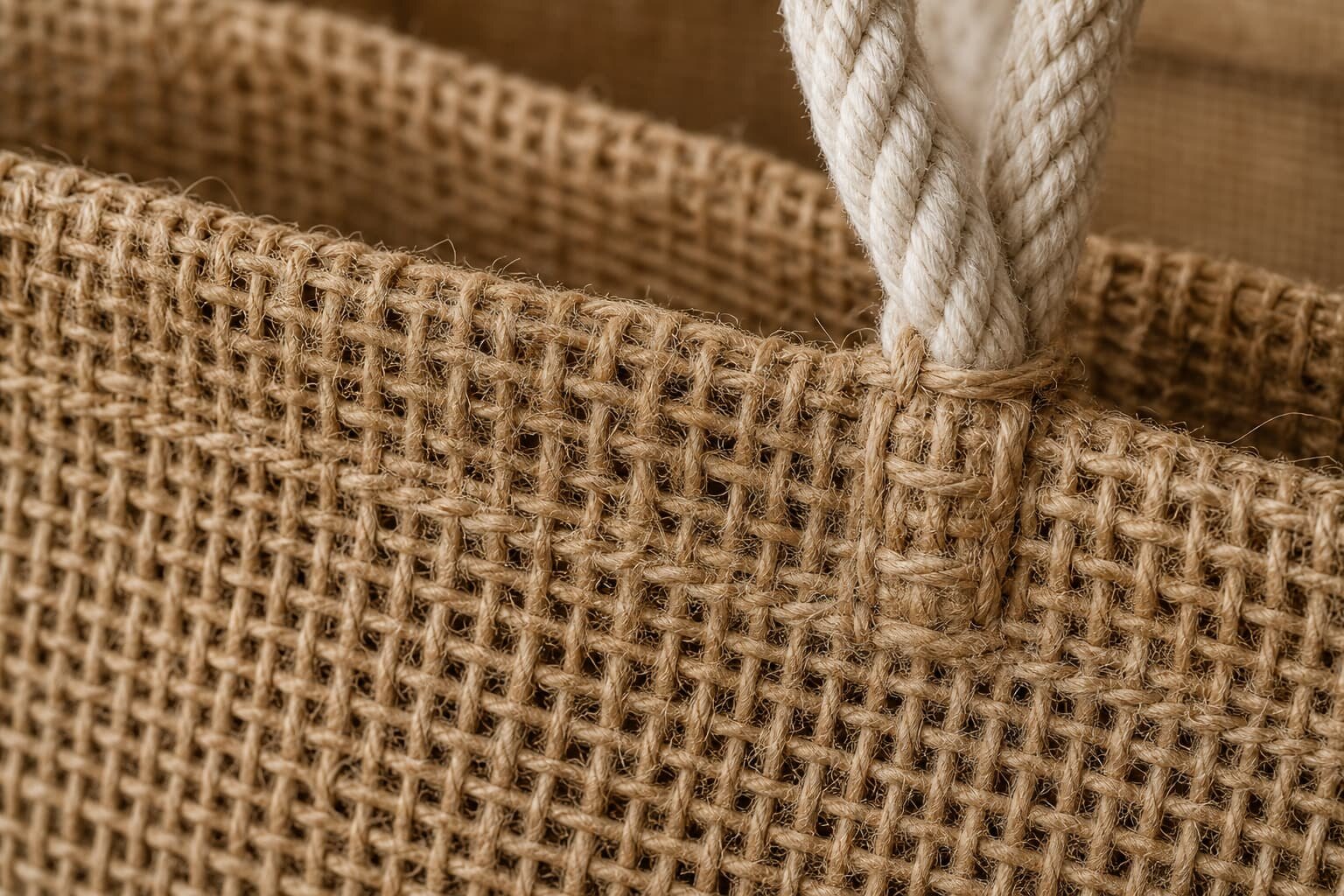
The most expensive complaint on a jute bag is often not the logo. It is handle failure after the bag is filled. Buyers should inspect where the handle meets the bag: stitch box, cross stitch, bar tack, back-tack, thread thickness, seam allowance, and whether reinforcement is hidden inside the top hem. A sample that looks neat from the front may still be weak at the load point.
Different handles change both cost and function. Cotton webbing is comfortable and gives better color control. Jute tape matches the rustic appearance but can feel rougher. Rope handles work for wine bags or gift bags but need strong eyelets, knots, or sewn tabs. If the quote simply says long handle, it is not enough for sourcing control.
- Specify handle material, width, length, color, and attachment method.
- Check stitch density and reject skipped stitches at handle stress points.
- Pull each handle manually and inspect whether the fabric distorts or thread loosens.
- Use a loaded hanging test if the bag will carry bottles, books, food jars, or retail merchandise.
- Confirm whether the top hem includes reinforcement or only folded jute.
Make MOQ and cost logic visible before approval
MOQ for jute bags is not only a sales rule. It comes from material purchase, cutting efficiency, logo setup, sewing line arrangement, label preparation, and packing. A buyer can often reduce cost and MOQ pressure by keeping the same bag size and handle across several artwork versions. The opposite is also true: small changes in handle color, lining, lamination, or logo method can create separate material minimums.
Before approving the sample, compare the sample details against the quote line by line. If the sample includes thicker fabric, a better handle, extra reinforcement, or individual packing that was not quoted, the bulk price may increase. If the factory made a beautiful sample only to win the project, the buyer must confirm whether that exact execution is included in the commercial offer.
- Ask whether MOQ is per size, per artwork, per print color, or per total order.
- Separate sample cost, screen charge, label charge, and bulk unit price in the quote.
- Confirm whether quoted price includes lamination, inner label, hangtag, barcode, and export carton.
- Request carton dimensions and gross weight for landed cost calculation.
- Check if split delivery, mixed cartons, or retailer-specific packing will change the price.
Approve packing before it becomes a shipment problem
Jute bags can be damaged by moisture, odor transfer, print rubbing, over-compression, and rough carton handling. Packing should be approved with the sample, not decided after production. This is especially important when the bag has a large printed logo, dark ink, laminated interior, retail tags, or a shape that must stand neatly when unpacked.
Flat packing is common because it saves space, but it can create crease marks if cartons are too tight or if printed faces rub against each other. Paper interleaving, inner polybags, desiccants, and correct carton strength may be needed depending on destination climate and shipping route. Buyers should not ask only for the lowest packing cost; they should ask what packing protects the product through ocean freight, warehouse storage, and final distribution.
- Confirm units per inner pack and master carton.
- Check whether printed panels need paper interleaving or face-to-face protection.
- Approve carton mark layout, PO number, item number, destination, and quantity per carton.
- Ask for carton size and gross weight before booking freight estimates.
- For humid routes, discuss moisture protection and avoid packing damp goods into sealed cartons.
Set sample acceptance criteria for bulk QC
A sample approval checklist should become the inspection standard. If the buyer only writes approved, the inspector has limited guidance. Better approval notes define what is acceptable, what is not acceptable, and what tolerance applies. This protects both sides because jute is a natural material with some variation, but variation cannot be used to excuse poor workmanship.
For example, natural color variation may be acceptable within a reasonable shade range, but heavy oil marks, mildew smell, broken handles, incorrect logo color, or missing labels should not be accepted. The sample should be photographed, labeled, signed if possible, and stored in a clean bag or carton so the reference does not become dirty or distorted before inspection.
- Mark approved sample version and approval date on a tag or sample card.
- List critical defects such as wrong size, wrong logo, broken handle, mildew, and severe print transfer.
- List major defects such as loose stitching, visible stains, poor logo registration, and carton mislabeling.
- List minor defects such as small loose fibers or slight natural shade variation if commercially acceptable.
- Share the same standard with factory QC, merchandiser, importer, and third-party inspector.
Use the approved sample to clean up the final PO
The final purchase order should not be a short repeat of the quote. It should reflect what the buyer approved after sample review. Include finished size, material weight, lamination, handle, logo method, artwork version, label, packing, carton quantity, inspection standard, and shipment timing. If there are changes after sample approval, issue a revised approval instead of leaving instructions scattered across email threads.
Lead time should be counted from the right trigger point. For most custom jute bags, the factory cannot responsibly start full production until artwork, sample comments, deposit or payment terms, packing details, and material confirmation are complete. If the buyer changes logo size or packing after approval, the production schedule may move. A clear PO reduces disputes when the delivery date becomes tight.
- Attach artwork files and sample approval photos to the PO package.
- State whether bulk production must match the sealed sample exactly or follow written revisions.
- Confirm sample approval date as the start point for production lead time if agreed.
- Include pre-shipment inspection requirements and booking document needs.
- Ask the factory to confirm all details in one proforma invoice or order confirmation before production.
Specification comparison for buyers
| Spec decision | Recommended option | When it fits | Buyer risk to check |
|---|---|---|---|
| Jute fabric weight | 13 oz to 15 oz natural jute, usually about 320-420 GSM depending on weave | Retail shopping bags, wine gift bags, promotional totes, reusable trade show bags | Very light jute may collapse, show print-through, or fail handle pull tests; confirm actual GSM by cutting weight, not only supplier wording |
| Lamination | Inside clear PP lamination or unlaminated natural finish | Laminated for structure and moisture resistance; unlaminated for a softer natural handfeel | Lamination can wrinkle at side seams and change print adhesion; approve both inside appearance and odor level |
| Handle material | Cotton webbing, jute tape, rope, or padded cotton handle | Cotton webbing gives smoother carry comfort; jute tape keeps a rustic look; rope suits wine or gift packaging | Handle color, width, and attachment strength often differ from quotation if not locked before sample approval |
| Logo method | Screen print for solid logos; heat transfer only after adhesion test; woven label for premium detail | Screen print works for most 1-3 color brand marks on flat jute panels | Jute texture breaks fine lines; small text, gradients, and tight registration need a real print sample, not only artwork proof |
| Seam construction | Reinforced top hem, boxed bottom, back-tack at handle points | Reusable retail bags and loaded gift bags where strength matters | A neat-looking sample can still have weak handle anchoring if stitch density, thread, and reinforcement are not specified |
| Packing method | Flat pack with paper interleaving for printed panels, export carton with moisture protection | Printed promotional bags and retail cartons needing clean presentation | Fresh ink, humidity, or tight carton compression can cause logo transfer, odor, deformation, or mildew risk |
| Approval sample type | Pre-production sample made with bulk fabric, bulk handle, bulk ink, and final packing | Orders where brand color, retail presentation, or strength is commercially important | A handmade counter sample may not represent mass production; buyer should approve the sample stage clearly |
| MOQ logic | Consolidate same size, fabric, and handle to reduce MOQ pressure; separate MOQ for print colors or custom dyeing | Multi-SKU programs, distributor assortments, brand campaigns | Mixing many sizes, handle colors, or artwork versions can create hidden setup, cutting, and packing costs |
Buyer checklist before sampling
- Confirm the approved sample is identified by sample date, version number, size, fabric weight, lamination, handle type, logo method, and packing method.
- Measure finished width, height, gusset, handle length, handle width, and bottom panel against the tolerance agreed in the purchase order.
- Check actual jute GSM or ounce weight, weave density, color tone, smell, slub level, and whether the fabric matches the quoted grade.
- Review lamination quality if used: no obvious bubbles, peeling, sharp cracking at folds, excessive gloss mismatch, or strong solvent odor.
- Compare logo position, size, print color, ink coverage, edge sharpness, and registration against the approved artwork file and print proof.
- Rub the printed area with a dry white cloth and a slightly damp cloth to check for smearing, flaking, or color transfer.
- Inspect handle material, color, length, comfort, stitch pattern, back-tack position, and reinforcement at the load-bearing points.
- Check seam allowance, stitch density, top hem, corner shape, boxed bottom alignment, loose threads, skipped stitches, and exposed raw edges.
- Place typical product weight inside the sample to review shape, balance, handle comfort, and whether the bag twists or leans.
- Confirm care label, country of origin label, hangtag, barcode sticker, polybag, carton mark, master carton size, and units per carton.
Factory quote questions to send
- Is the sample made from the exact bulk jute fabric weight and weave, or from available sample-room fabric?
- What is the quoted fabric specification in oz and approximate GSM, and what tolerance should the buyer allow in bulk?
- Is the bag laminated or unlaminated, and if laminated, what is the lamination thickness and inside finish?
- Which logo method is included in the unit price: screen print, heat transfer, embroidery, woven label, or leather patch?
- How many print colors, print positions, and artwork versions are included before extra screen or setup charges apply?
- What finished size tolerance do you apply for width, height, gusset, handle length, and logo placement?
- What handle material, width, length, color, and stitch reinforcement are included in the quotation?
- What is the MOQ for the quoted size, and does MOQ change if we split artwork, handle color, or packing style?
- What sample types are provided: counter sample, artwork proof, print strike-off, pre-production sample, and sealed approval sample?
- What is the sample lead time, bulk lead time after approval, and latest date for artwork and packing confirmation?
Quality-control points to confirm
- Finished size should be checked on a flat table without stretching the jute fabric; measure several points because jute can skew during cutting.
- Fabric weight should be verified by sample cutting or supplier mill record, not only by visual comparison to a showroom sample.
- Logo approval should include real print on jute because the coarse weave changes line sharpness, ink coverage, and color perception.
- Handle pull strength should be checked at the stitched attachment area, especially for grocery, bottle, book, and retail merchandise uses.
- Stitching should be inspected for skipped stitches, broken thread, loose ends, uneven top hem, and weak back-tack at stress points.
- Laminated bags should be checked for peeling, whitening at folds, bubbling, odor, and cracking around the gusset and top seam.
- Packing should protect printed faces from rubbing and moisture; carton compression can permanently crease jute bags if the pack is too tight.
- Bulk inspection should compare production pieces against the sealed approval sample, not only against the original artwork or quotation.