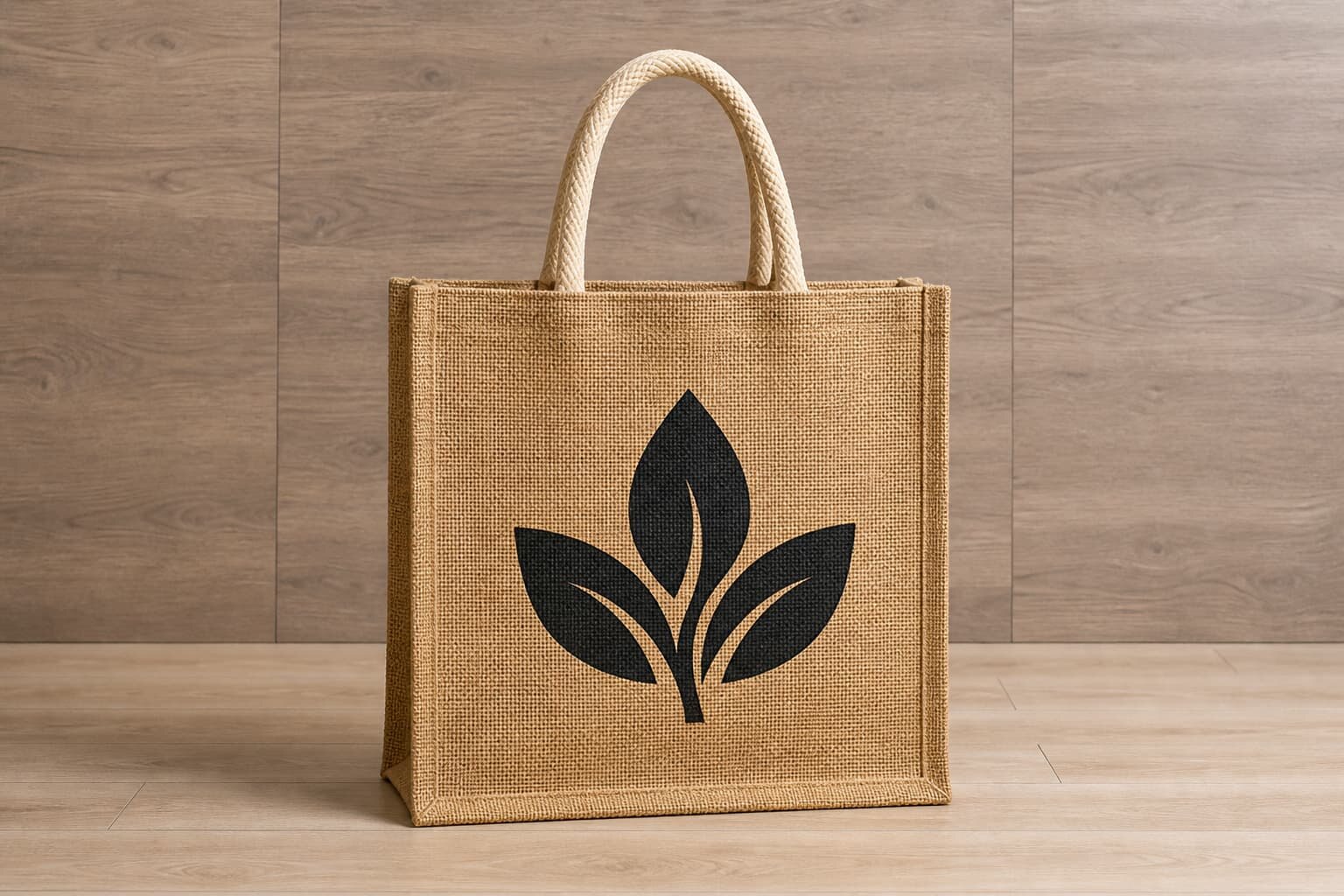
Why MOQ Planning Matters for Jute Bags
Jute bag MOQ is not only a number printed on a supplier website. For a factory, MOQ is controlled by fabric sourcing, cutting efficiency, logo setup, handle material, packing labor, and whether your order can be combined with other production. For a buyer, MOQ planning decides whether the landed unit cost is realistic or whether a small customized order becomes expensive, slow, and difficult to control.
This guide is for procurement teams, brand owners, importers, distributors, and retail buyers sourcing under the Jute & Burlap Bags category. The goal is to help you write an RFQ that lets suppliers quote the same construction, not three different versions of a jute tote under the same item name. A clear MOQ plan also prevents late surprises such as separate minimums for dyed handles, woven labels, laminated fabric, or export cartons.
- Do not ask only, "What is your MOQ?" Ask what drives that MOQ.
- Separate total order quantity from quantity per SKU, per logo, and per color.
- Treat sample approval as part of MOQ planning, not as a step after price negotiation.
- Compare MOQ together with fabric weight, packing CBM, and lead time.
Start With SKU Logic Before Asking for Price
Many MOQ problems come from poor SKU planning. A buyer may say they need 3,000 jute bags, but the real request is 500 pieces each across six store logos, two handle colors, and three sizes. From the buyer side, that feels like one project. From the factory side, it may be eighteen small production lots with separate screens, cutting layouts, and packing marks.
Before you request a quote, build a simple SKU map. List each finished size, fabric color, handle color, logo artwork, print color, packing requirement, and destination. Then decide which features truly need variation. If the construction is the same and only the logo changes, some factories may allow a more flexible MOQ. If the size, fabric color, and handle are also different, each version may need to meet the minimum independently.
- Use one common jute fabric if you need multiple logos.
- Use one common handle material if you need multiple bag sizes.
- Avoid custom dyed jute for a test order unless the launch quantity supports it.
- Group artwork versions by print color to reduce screen setup and color-matching time.
- Ask for a quote table by SKU, not one blended unit price with hidden assumptions.
Understand the Fabric MOQ Behind the Bag MOQ
Jute fabric is not as predictable as standard cotton canvas. Natural jute varies by yarn thickness, weave openness, color tone, hairiness, and smell. A supplier quoting a low MOQ may be using stock jute fabric available in the warehouse. That can be suitable for many retail totes, but the buyer must confirm the actual weight and weave, because the same "jute bag" description can cover a light promotional bag or a heavy gift bag.
For standard shopping totes, buyers often review fabric around 270-320 GSM, depending on weave and lamination. For premium gift bags, wine bags, or stronger retail programs, a denser fabric around 320-380 GSM may be more suitable. The higher the fabric weight and the more custom the finish, the more likely the factory needs a dedicated material lot. That is where MOQ increases.
- Ask for GSM range, not only "natural jute" in the quote.
- Request the fabric composition and finish: raw jute, laminated jute, dyed jute, or jute-cotton blend.
- Check whether the quoted MOQ uses stock fabric or requires fresh fabric procurement.
- Confirm whether fabric shade variation is acceptable within one shipment.
- Keep an approved swatch with the signed pre-production sample.
Match MOQ to Logo Method, Not Only Bag Size
Logo decoration often changes MOQ more than the bag body. Direct screen printing is usually the most practical option for jute totes at low to mid quantities, especially for one-color or two-color artwork. The print should normally be applied on flat panels before sewing for better alignment and pressure control. If the logo is printed after the bag is sewn, the gusset and handle position may limit print area and consistency.
Jute is coarse, so artwork needs to be adjusted. Small text, thin lines, QR codes, and tight registration are risky on open-weave jute. If the brand requires sharp detail, consider a cotton patch, woven side label, transfer on a cotton pocket, or a sewn label. These options can look more premium, but they add separate setup requirements and sometimes their own MOQ. The buyer should make this decision before comparing supplier prices.
- Use screen print for bold logos, simple icons, and large text.
- Use a cotton patch when small details or better color accuracy are required.
- Use woven labels for subtle branding or side seam identification.
- Avoid very small reversed-out text directly on natural jute.
- Approve a strike-off on actual jute fabric, not only a digital artwork proof.
Build Quantity Tiers That Suppliers Can Quote Properly
A useful jute bag RFQ should request tiered pricing. Ask for the unit price at the factory MOQ, at a mid-level quantity, and at your expected reorder quantity. This shows where the cost drops and whether the first order is only expensive because of setup, cutting loss, and packing labor. It also helps you decide whether to consolidate distributor demand into one production run.
Do not assume the lowest MOQ is the best commercial choice. A 500-piece customized order may carry higher unit cost, higher freight per bag, and less production priority. A 3,000-piece order may use material more efficiently and reduce setup cost per unit. However, over-ordering is also risky if the bag is for a seasonal campaign or untested retail program. The best MOQ is the quantity where inventory risk and factory efficiency meet.
- Request price tiers such as MOQ, 1,000 pcs, 3,000 pcs, and 5,000 pcs where relevant.
- Ask whether screen charges are one-time or repeated for every reorder.
- Calculate landed cost per bag, not only FOB or EXW unit price.
- Include warehouse storage and slow-moving inventory risk in your decision.
- Ask if reorder MOQ can be lower after the first approved production.
Plan Samples Before Bulk Commitment
For jute bags, sampling should confirm fabric handfeel, smell, logo result, shape, handle comfort, and packing behavior. A digital proof cannot show whether the jute is too loose, whether the print bleeds, or whether the bag collapses when standing. If the order has a new construction or a new logo method, require a pre-production sample before bulk cutting.
Buyers should separate prototype sample, print strike-off, and pre-production sample. A prototype checks construction. A strike-off checks the logo on actual material. A pre-production sample confirms all approved materials and details before mass production. If you skip these steps to save time, the factory may proceed based on its standard interpretation, which may not match your retail requirement.
- Check finished size and gusset with a ruler, not only by eye.
- Load the bag with a realistic product weight for handle and seam review.
- Rub the print area lightly to check curing and surface adhesion.
- Smell the sample after it has been sealed in a bag overnight.
- Photograph the approved sample and mark it with date, version, and signature.
Control Lead Time by Removing Unnecessary Customization
Lead time for jute bags depends on material availability, logo setup, sample approval speed, sewing capacity, drying or curing time for print, inspection, and packing. A natural jute tote with stock cotton handles and one-color screen print can usually move faster than a dyed jute bag with custom handle color, lining, zipper, and woven label. The factory quote should break down the timing instead of giving one vague production estimate.
MOQ and lead time are linked. Small custom orders are not always faster, because the factory may need to wait for material, combine fabric cutting, or fit the order between larger runs. Larger orders require more sewing time and carton space, but they may receive better production planning if the buyer approves samples early and provides complete artwork files.
- Ask for timing for artwork proof, sample, bulk material, production, inspection, and packing.
- Send vector artwork with Pantone references at the RFQ stage.
- Avoid last-minute changes to handle length, logo size, or carton marks after sample approval.
- Confirm whether production starts after deposit, sample approval, or final artwork confirmation.
- Build extra time for moisture control and re-packing if shipping during humid seasons.
Packing and Carton Data Affect MOQ Decisions
Jute bags are bulky compared with thin nonwoven bags. The MOQ may look acceptable at unit price level but become less attractive after checking carton quantity, carton dimensions, gross weight, and CBM. A laminated jute bag with thick cotton handles may take much more space than a flat cotton tote. If the buyer ignores packing data, the final landed cost can be higher than expected.
Ask the supplier to quote packing method clearly. Flat packing is common, but some structured bags need careful folding to protect the gusset and logo area. Individual polybags may be required for retail or ecommerce, but they add labor, material cost, and packing volume. For distributors, master carton markings and SKU separation are important because mixed cartons can slow warehouse receiving.
- Request carton quantity per style and per size.
- Ask for carton dimensions, gross weight, net weight, and estimated CBM.
- Confirm whether bags are flat packed, folded, individually packed, or bundled.
- Avoid over-compressed cartons for laminated jute or large printed panels.
- Provide carton mark format before production packing begins.
Compare Supplier Quotes Without Being Misled
Two jute bag quotes can look similar but cover different products. One supplier may quote 280 GSM stock jute with simple screen print and flat packing. Another may quote 340 GSM laminated jute with stronger handles and individual polybags. If you compare only unit price, the cheaper quote may not be cheaper after you adjust for weight, print quality, carton CBM, and rejection risk.
Create a quote comparison sheet with the same fields for every supplier. Include fabric GSM, finished size, handle type, print method, number of print colors, setup charges, sample fees, packing, carton data, MOQ by SKU, lead time, Incoterms, payment terms, and validity date. A professional supplier should be able to answer these points clearly. If a supplier cannot confirm material or packing details, treat the quotation as preliminary.
- Compare MOQ per SKU, not only total MOQ.
- Compare fabric weight and lamination status line by line.
- Separate unit price from setup, sample, packing, and freight-related costs.
- Check whether the quote is EXW, FOB, CIF, DDP, or another Incoterm.
- Ask for quote validity because jute and freight costs can move.
Set Acceptance Criteria Before Production
Jute is a natural material, so buyers should allow reasonable variation while still controlling unacceptable defects. Color tone, yarn thickness, and hairiness may vary slightly. However, mildew, strong odor, oil stains, broken seams, poor logo placement, weak handles, and severe size deviation should not be accepted as normal natural variation.
Put acceptance criteria in the purchase order or technical sheet. This protects both sides. The factory understands what to control, and the buyer has a basis for inspection. If your brand has strict retail requirements, specify AQL level, defect classification, and any retailer packaging rules before production starts. Do not wait until goods are finished to introduce a new inspection standard.
- Set size tolerance, often around plus or minus 1 cm depending on construction.
- Define logo placement tolerance, such as plus or minus 0.5 cm or 1 cm where practical.
- Classify mildew, strong odor, major stains, and broken handle stitching as critical or major defects.
- Require print color approval under consistent lighting.
- Keep a sealed approved sample for final inspection comparison.
Specification comparison for buyers
| Spec decision | Recommended option | When it fits | Buyer risk to check |
|---|---|---|---|
| Fabric weight for standard retail tote | 13 x 13 or 14 x 15 jute, approx. 270-320 GSM depending on weave | Grocery, gifting, retail packaging, event merchandise where the bag must stand upright but not feel too heavy | Supplier may quote a lighter open weave to meet price; request GSM range, weave photos, and physical sample weight |
| Fabric weight for premium gift or bottle bag | Dense jute or laminated jute, approx. 320-380 GSM | Wine bags, cosmetics sets, corporate gift packs, or export packing where shape retention matters | Higher weight can raise MOQ because fabric lot, lamination, and cutting loss are harder to combine with other orders |
| Logo method at low to mid MOQ | One or two color screen print on flat panel before sewing | Most brand logos, retail campaigns, seasonal artwork, and distributor programs | Fine lines may fill on coarse jute; approve printed strike-off on actual jute, not paper |
| Logo method for premium look | Cotton patch, woven label, or heat transfer on cotton pocket rather than direct print on coarse jute | Brands needing small text, QR code, Pantone accuracy, or soft lifestyle positioning | Patch or label has its own MOQ and lead time; include size, edge finish, stitching color, and placement tolerance |
| Handle choice for MOQ control | Natural cotton webbing in common width such as 2.5 cm or 3 cm | Reusable shopping bags, event totes, and catalog SKUs that need stable pricing | Custom dyed handles usually increase MOQ; check color fastness, handle length, and reinforcement stitching |
| Packing method for distributor stock | Flat pack in master carton, usually 25-100 pcs per carton depending on bag size and handle bulk | Wholesale replenishment, Amazon prep before local relabeling, or retail DC delivery | Over-compressed packing can crease laminated jute and distort printed panels; request carton size and gross weight |
| MOQ split across colors or sizes | Keep one base fabric and one handle type, split only logo artwork where possible | Brand families, regional distributors, or campaign versions sharing the same construction | Factories may count each size/color as separate MOQ if cutting patterns, fabric dye lots, or handle colors change |
Buyer checklist before sampling
- Confirm the bag type first: shopping tote, bottle bag, gift bag, drawstring jute pouch, laminated jute bag, or cotton-jute combination bag.
- State target order quantity by SKU, not only total order quantity, because MOQ is normally applied to each fabric, size, color, and logo setup.
- Specify finished size with width, height, gusset, handle length, and acceptable tolerance such as plus or minus 1 cm.
- Request fabric weight in GSM or ounce equivalent, plus whether the jute is natural, dyed, laminated, or blended with cotton canvas.
- Define logo method, artwork size, Pantone references, print position, and whether the print is before sewing or after sewing.
- Ask whether sample cost, mold/screen charge, label setup, and freight are included or quoted separately.
- Check if the MOQ changes when you add inside lining, zipper closure, cotton pocket, lamination, custom handle color, or individual polybag.
- Confirm packing method, carton quantity, carton dimensions, estimated gross weight, and whether cartons can meet your warehouse or retail compliance rules.
- Require pre-production sample approval before bulk cutting if the order includes new size, new logo, new fabric color, or new handle construction.
- Build a reserve quantity for testing, showroom samples, sales reps, and retailer replacements instead of ordering exactly the launch quantity.
Factory quote questions to send
- What is your MOQ per jute bag style, per size, per fabric color, and per logo artwork?
- Can my total order quantity be split across two logos or two sizes, or will each split need to meet MOQ separately?
- What fabric weight and weave are included in the quote, and can you send a physical swatch or close-up photo of the actual jute lot?
- Is the price based on natural jute, dyed jute, laminated jute, or cotton-jute combination fabric?
- Which logo method do you recommend for my artwork on this fabric, and what line thickness or text size is not suitable?
- Are screen charges, label setup charges, sample charges, and pre-production sample freight included in the quoted unit price?
- How many days do you need for artwork proof, material sourcing, pre-production sample, bulk production, inspection, and packing?
- What is the carton packing quantity, carton size, gross weight, and estimated CBM for the quoted MOQ?
- What are your normal tolerances for finished size, fabric GSM, logo position, and print color on jute?
- Can you provide tiered prices at MOQ, 2x MOQ, and full container or consolidated shipment quantity?
Quality-control points to confirm
- Check actual fabric weight against approved sample and quote, because a small GSM reduction can change bag feel and load capacity.
- Inspect jute odor, moisture, mildew marks, broken yarns, oil stains, and uneven weave before cutting and again before packing.
- Verify finished dimensions, gusset depth, handle length, and handle placement against the approved technical sheet.
- Test handle strength using a realistic load test based on the intended product weight, not only visual stitching review.
- Review logo clarity on actual jute texture, including small letters, edge bleeding, registration, and color difference under daylight.
- Check seam allowance, stitch density, bartack or cross-stitch reinforcement, loose threads, and skipped stitches at handle joints.
- Confirm lining, lamination, zipper, snap, or drawstring operation if the style includes more than a plain open tote.
- Inspect packing orientation and carton compression to avoid permanent creases, crushed gussets, or print transfer.
- Compare bulk goods with the signed pre-production sample before shipment approval.
- Record defect categories in the inspection report so the factory can sort or repair before final carton sealing.