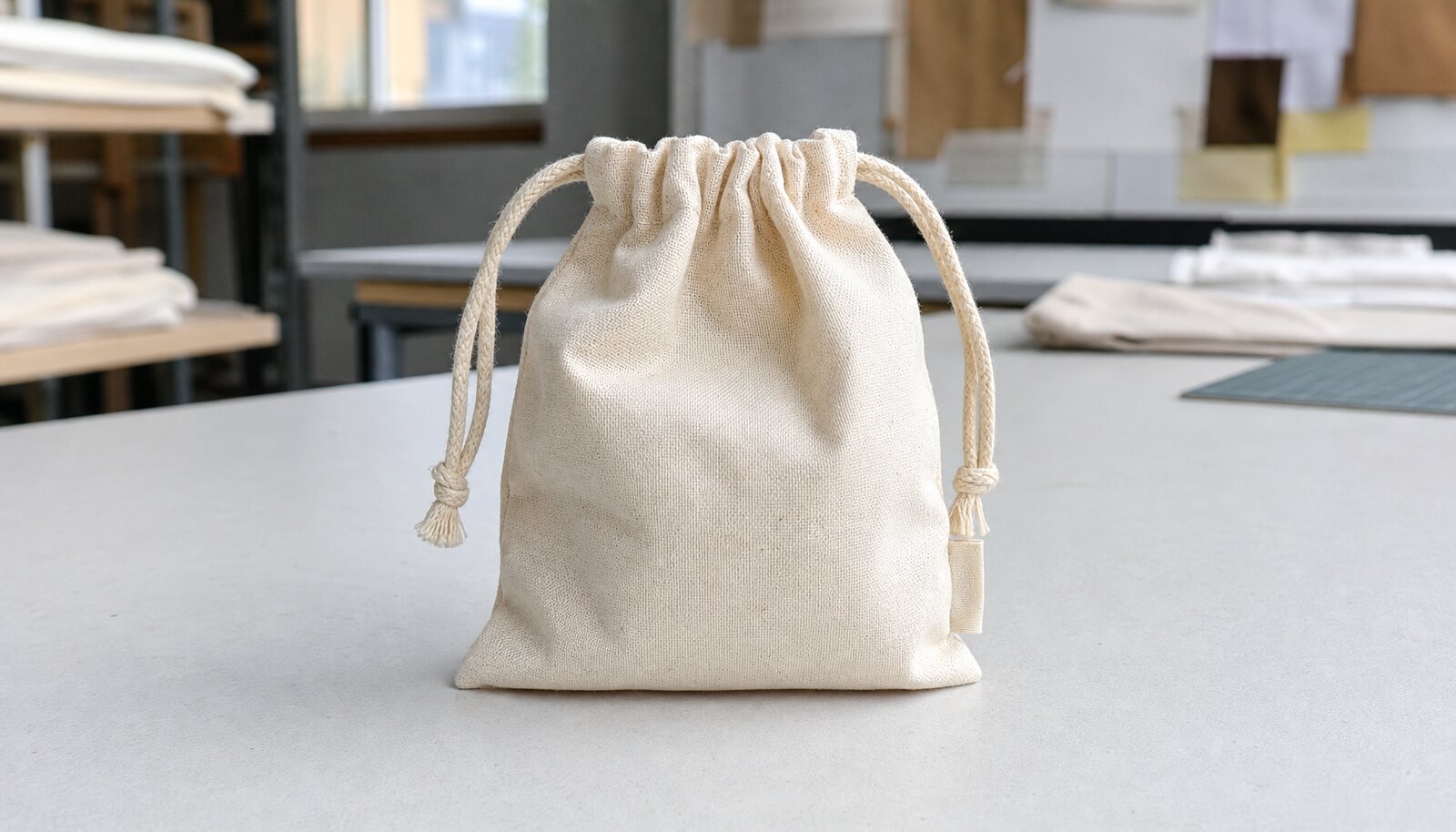
What This Pouch Has To Do At An Event
A jewelry drawstring pouch for events is not the same thing as a general gift bag. It has to protect small, fragile items, look polished in front of a customer, and move quickly through packing and handout. In practice, that means the pouch must be easy to fill, easy to open, and consistent enough that one weak piece does not make the whole shipment look cheap.
For procurement teams, the real buying problem is usually not the bag itself. It is the gap between the visual sample and the bulk order: fabric that feels thinner, a logo that lands too close to the seam, or a cord that jams after a few openings. If the pouches will be used at a trade show, bridal event, store opening, or VIP mailing, define the use case first and the decoration second.
- If the jewelry is sharp-edged or metal-heavy, prioritize a softer fabric or lining over decorative appearance.
- If the pouch will be handled by event staff all day, choose a closure that opens smoothly and does not knot easily.
- If the pouch is part of a branded set, the pouch must match the tone of the box, card, and insert, not just the logo color.
Fabric, GSM, And Size Choices That Actually Matter
For jewelry events, the useful fabric choices are narrower than buyers often assume. Natural cotton in the 120-140 gsm range works for budget-friendly handouts and lightweight jewelry. Cotton at 140-180 gsm gives a better drape, less transparency, and a cleaner print surface. Brushed cotton or microfiber at 150-220 gsm gives a softer hand feel and reduces surface scratching. Velvet, usually in the 250-320 gsm range depending on construction, is the premium choice when presentation matters more than cost.
The size should be driven by the item, not by what looks comfortable on paper. Small earrings or a single pendant often fit well in 7x9 cm or 8x10 cm pouches. Necklaces, bracelets, and mixed sets usually need 10x12 cm or 10x15 cm. A pouch that is too large lets the jewelry move around and look undersized; one that is too tight slows packing and creates shape distortion at the top hem.
- 7x9 cm to 8x10 cm: suitable for studs, charms, and small pendants.
- 10x12 cm to 10x15 cm: better for necklaces, bracelet sets, or multiple small items.
- 120-140 gsm cotton: budget events with simple branding.
- 140-180 gsm cotton or 150-220 gsm microfiber: better presentation and lower scratch risk.
- 250-320 gsm velvet: premium gifting and higher perceived value.
Branding Methods That Survive Real Handling
The best branding method depends on fabric, artwork complexity, and how much handling the pouch will see. Screen print is usually the most efficient option for one or two solid colors on cotton, especially when the logo area is flat enough. Embroidery works on thicker fabrics, but small text can distort and tiny details can disappear. Woven labels and sewn side labels are often the most dependable choice for small pouches because they keep the branding visible without forcing ink into a cramped surface.
The weak point is usually not the print itself. It is the placement. A logo that looks centered in a flat sample can shift onto a seam or fold when the pouch is filled. For that reason, the RFQ should state the exact print position, approved artwork size, and acceptable deviation. If the event pouch is small, simplify the artwork before production. A clean one-color version often delivers better results than a detailed mark squeezed into a tight space.
- Screen print: best for simple logos, flat cotton panels, and controlled cost.
- Woven label or side label: best for small pouches where the front panel is too tight for detailed artwork.
- Embroidery: best on thicker fabrics, but avoid tiny lettering.
- Heat transfer: useful for short runs, but test for cracking, stiffness, and rub resistance.
- Do not approve a logo size only from a digital mockup; approve it on the actual pouch dimensions.
How Supplier Route Changes The Quote You Receive
A low unit price means little if the supplier route is wrong for the order. Direct factory sourcing is the best option when you need custom size, custom logo placement, and repeated replenishment. Trading companies help when the order spans multiple products or the buying team needs one point of contact, but they usually add margin and can blur accountability if something goes wrong. Stock-and-print routes are fast, but they reduce control over fabric, color, and sizing.
Ask each supplier whether they own the sewing line, printing line, or only the sales channel. That answer reveals how much of the program they can actually control. For jewelry drawstring pouches for events, control matters more than almost any other factor because the product is small and any defect is visible immediately. A supplier that can show similar pouch work, clear production photos, and defined QC steps is usually safer than one that only offers a low quote and a quick promise.
- Direct factory: best for repeat orders and custom specs.
- Trading company: useful when you need communication support or multiple product lines.
- Stock plus decoration: fastest for urgent events, but least flexible.
- In-house print and sewing: better coordination and fewer handoff delays.
- Always ask who carries responsibility for failed print, size drift, or late rework.
MOQ Logic And Landed-Cost Comparison
MOQ is usually driven by five things: fabric availability, dyeing, logo method, cord color, and packing format. A natural cotton pouch in stock fabric can often be produced at a lower MOQ than a dyed velvet pouch with a custom woven label. If a supplier says any quantity is possible, expect either a stock product, a higher unit price, or both. That is not necessarily bad, but it must be visible in the quote so the team understands the tradeoff.
To compare quotes, insist on a line-item structure. A meaningful quote should separate the body fabric, cord, logo method, label, packing, sample charge, tooling or setup fee, carton pack count, and incoterm. If one quote includes individual polybags and another quotes bulk-packed goods, the numbers are not comparable. Landed cost for an event order should also include freight, import duty if relevant, local delivery, and any repacking or kitting labor that the event team will need on arrival.
- Request unit price, sample charge, setup fee, and packing cost separately.
- Clarify whether the quoted MOQ is per size, per color, per logo, or per packing variant.
- Treat low unit price with weak packing as a red flag if the event is date-sensitive.
- For repeated replenishment, standardize on one body fabric and one logo method to reduce future MOQs.
QC Thresholds For A Small Pouch
Quality control on a small pouch is unforgiving because defects are easy to see and easy to feel. A crooked top hem, a loose cord exit, or a logo that sits too close to the seam will show immediately on a table display. Set measurable acceptance criteria before production starts. For small pouches, a size tolerance around +/-3 mm is realistic on compact dimensions, while slightly larger sizes can allow about +/-5 mm if the construction is stable.
The functional test should reflect event use. Open and close the pouch multiple times, then inspect the tunnel, stitch line, and cord movement. The logo should survive a simple rub test without cracking or heavy transfer. If the fabric is velvet or brushed, inspect pile direction and shade variation under the same light. Do not accept odor, stains, broken stitches, or rough cord ends that could scratch jewelry or annoy the end user.
- Measure a sample from each carton or each shade lot if the order is large.
- Run an opening and closing test on random pieces before shipment release.
- Reject any carton with obvious mix-ups in size, color, or logo position.
- If the pouch includes a lining, confirm the lining does not twist or peek out at the opening.
- Use a simple rub test on the logo and a pull test on the cord tunnel.
Sampling And Approval Without Surprises
The first sample should prove structure, not just appearance. Measure the finished pouch size, inspect the seam allowance, confirm the cord length, and see whether the pouch fills and closes the way your event team expects. For custom colors or premium fabrics, a pre-production sample or approved reference sample is more useful than a generic sales sample. It becomes the control point for bulk production and reduces arguments later about what was actually approved.
Color approval should be based on the real fabric, not a screen image or a loose promise. If the supplier needs to change the cord, label, or thread because stock is unavailable, that change should be documented and approved before bulk starts. Most production mistakes on event pouches are not dramatic. They are small substitutions that seemed harmless at the time and then showed up as inconsistent bulk goods. That is why the approval record should include size, color, logo placement, packing method, and any acceptable alternates.
- Approve the sample under the same lighting that the event product will be viewed in when possible.
- Record exact dimensions and not just a verbal 'looks good' approval.
- Treat any unapproved material substitution as a new sample requirement.
- Keep one signed sample or gold seal piece as the production reference.
Packing, Kitting, And Lead Time Risk
Packing decisions change the economics more than many buyers expect. Bulk-packed pouches are cheaper and faster, but individual polybags or event-set packing can be necessary if the bags will be handed directly to end customers or inserted into gift kits. If the jewelry is packed separately, make sure the factory knows whether it is shipping empty pouches only or preparing full sets. That detail affects labor, count accuracy, carton size, and final lead time.
Lead time is not a single number. It is the sum of fabric prep, sewing, logo application, finishing, packing, inspection, and transit. A repeat order with stable artwork and stock fabric can move much faster than a custom run, but only if the supplier is not waiting on approval from another department. When the event date is fixed, leave extra room for sample revisions and packing adjustments. If the timeline is tight, choose a standard fabric and the simplest reliable branding method rather than pushing a complex setup through a short schedule.
- Bulk pack: lower cost, faster production, best for internal event fulfillment.
- Individual polybag: cleaner presentation and better dust control, but more labor.
- Inner bundle packing: useful for count control and distribution by event team.
- Build lead time around approval, production, inspection, and freight, not just sewing days.
A Clean RFQ Spec For Jewelry Event Pouches
The best RFQ for jewelry drawstring pouches for events is short, specific, and hard to misunderstand. Put the technical details in one block and the commercial details in another. Buyers often split the spec across email threads, spreadsheets, and art files, then lose one critical detail when the quote comes back. A supplier can only price accurately if the pouch size, fabric, decoration, and pack-out are written in one place.
A practical RFQ reads like a production note, not a marketing brief. State the intended use, the target fabric weight, the finished size, the logo method, the cord type, the packing format, and the required sample standard. If you have a fallback option, name it clearly. For example, a buyer may accept 140-160 gsm cotton if 150 gsm is unavailable, or a woven side label if fine print becomes unreadable at the pouch size. That kind of fallback keeps the program moving without opening the door to uncontrolled substitutions.
- Product: jewelry drawstring pouch for event use.
- Fabric: natural cotton, 140-180 gsm, or approved alternate with written sign-off.
- Finished size: define width and height with tolerance.
- Branding: one-color screen print or woven side label with exact placement.
- Cord: cotton cord with defined diameter and secure tunnel finish.
- Packing: bulk, polybag, or event-set format with carton count.
- QC: no stains, no loose threads, readable logo, and smooth cord action.
- Commercials: separate sample charge, setup fee, unit price, and lead time.
Specification comparison for buyers
| Spec decision | Recommended option | When it fits | Buyer risk to check |
|---|---|---|---|
| Direct factory source | Custom size, fabric, and logo from one sewing line | Repeat event programs, 1,000+ pcs per style, and buyers who need tight cost control | Confirm they own or control sewing and printing, not just sales coordination |
| Trading company route | One point of contact for bag + accessory + packaging coordination | Smaller procurement teams and mixed-category shipments | Margin layers can hide the real factory, change control, and rework responsibility |
| Stock pouch with local print | Blank pouch inventory decorated after purchase | Under 500 pcs or when the event date is fixed and flexibility is limited | Fabric choice, sizing, and logo placement are usually constrained |
| Factory with in-house printing | Logo production handled on the same site as sewing | When artwork must match across multiple replenishment runs | Minimum print quantities and setup fees can make small runs expensive |
| Velvet specialist factory | Premium hand feel and richer shelf presentation | VIP gifts, bridal events, and jewelry sets with higher perceived value | Watch lint, shade variation, and pile crush from poor packing |
| Cotton pouch factory with woven label | Simple recyclable pouch with stitched branding | Event kits, retail inserts, and brand programs that need a clean, understated look | Label size must not crowd the cord tunnel or cause seam distortion |
| Organza or satin converter | Lightweight, visible, decorative pouch | Low-cost favors and simple presentation where protection is secondary | Jewelry can snag, shift, or show through the fabric too easily |
| Regional distributor or importer | Local stock held close to the buyer | Urgent replenishment, compliance-heavy markets, or small order convenience | Landed cost often rises after margin, warehousing, and domestic freight |
Buyer checklist before sampling
- Define what the pouch must hold: one ring, one necklace, mixed jewelry, or a full event set.
- Lock the finished size with tolerance before any artwork is approved.
- Choose the base fabric and target GSM so the pouch feels right in hand and does not snag jewelry.
- Specify the logo method, print position, and maximum artwork size for the actual pouch dimensions.
- State the drawcord material, diameter, and whether cord ends need knots, heat sealing, or metal tips.
- Decide whether the order ships bulk-packed, polybagged, or pre-set into event kits.
- Separate sample cost, tooling or print setup, bulk unit price, and packing cost in the RFQ.
- Ask for the bulk lead time after sample approval, not just the sample ship date.
- Require carton count, bundle count, and outer carton mark details in the quote.
- Document acceptable substitutions in writing so fabric or cord changes do not slip into bulk production.
Factory quote questions to send
- What exact fabric will you use, and what is the GSM or weight of the pouch body?
- Is the fabric stock, dyed-to-order, or custom woven, and what MOQ applies to each option?
- What is the finished size, and what tolerance will you hold on width and height?
- What logo method is included in the price, and what is the maximum safe print area?
- How many colors are included in the quoted price, and what setup fee applies beyond that?
- What drawcord material and diameter are included, and are cord ends knotted, heat-sealed, or capped?
- What packing format is quoted: bulk, individual polybag, inner bundle, or event-set packing?
- What are the sample charge, sample lead time, bulk lead time, and the earliest ship date after approval?
- What is the carton pack count, carton size, and gross weight for freight planning?
- What changes require written approval before production starts?
Quality-control points to confirm
- Finished size should hold to about +/-3 mm on small pouches up to 10 cm and +/-5 mm on larger sizes.
- Main seams should be straight, with no skipped stitches, open seams, or visible needle damage.
- Cord exits should be even, reinforced, and free of tearing after repeated opening and closing.
- Logo placement should stay within the approved position window and not drift onto folds or seams.
- Print should pass a simple rub test without cracking, peeling, or heavy color transfer.
- No visible stains, oil marks, loose threads over 3 mm, odor, or fabric holes should be accepted.
- If the pouch is lined or double-layered, the lining should lie flat and not twist at the opening.
- Carton counts, bundle counts, and outer labels should match the PO and packing list exactly.