Start With the Gift Use Case
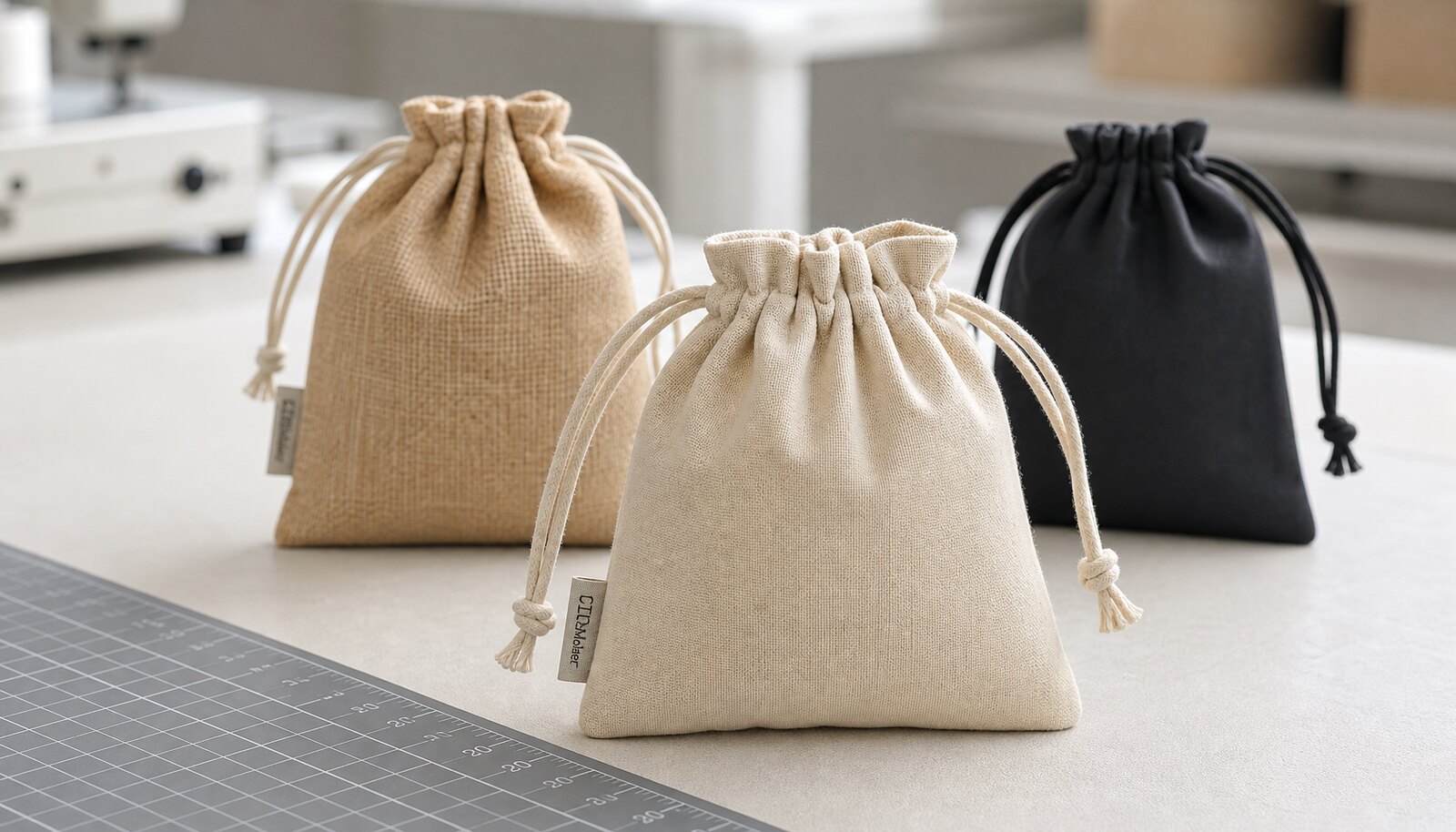
Jewelry drawstring pouches for corporate gifts are not just tiny bags. They are brand touchpoints that need to protect a ring, pendant, bracelet, or earring set while still looking clean in a handover, a mailer, or an event gift box. The first sourcing mistake is to treat every pouch as the same size and level of finish. A pouch for a single ring needs a different opening, depth, and closure feel than a pouch holding a matching jewelry set with a card insert.
Before you send an RFQ, define how the pouch will actually be used. If it is a presentation pouch that will be opened once and then stored, the feel and logo placement matter more than abrasion resistance. If it is meant for ongoing jewelry storage, the closure, lining, and seam finish become more important. That one decision changes the fabric weight, the decoration method, and the packing format.
- Single item gift: ring, stud earrings, or pendant
- Set gift: coordinated jewelry plus care card or insert
- Presentation only: smooth look and strong brand visibility
- Reusable storage: better seam finish and more durable fabric
Pick the Fabric and Hand Feel
For most corporate gift programs, cotton remains the safest base material because buyers can specify a clear gsm target and compare quotes more reliably. A 120-140 gsm cotton pouch is usually the entry point for simple gifts, while 160 gsm and above gives a fuller handfeel and better opacity. If the brand wants a more structured look, cotton canvas can work well, but it also changes the bulk, the print surface, and the sewing time. A thin fabric may save money, but it often collapses in the hand and looks weak next to a premium jewelry item.
Satin, microfiber, and velvet each solve a different problem. Satin delivers a polished gift look, but it can be slippery, show marks, and make a printed logo look less crisp. Microfiber feels soft and can work for delicate items, yet it needs careful lint control. Velvet sends the strongest premium signal, but it is heavier in the carton, easier to crush, and less forgiving when a logo is too large. For corporate gifts, the fabric should support the jewelry, not compete with it.
- 120-140 gsm cotton: practical baseline for volume orders
- 160-200 gsm cotton or canvas: better opacity and shape retention
- Satin or microfiber: use when presentation matters more than rugged reuse
- Velvet: use for premium programs where the pouch is part of the gift value
Choose Decoration That Survives Handling
A pouch logo needs to be legible at a small size and stable after handling. Screen print is usually the best cost-to-result option when the artwork is simple and the fabric is flat enough to take ink cleanly. One or two colors is realistic for most corporate programs. If the artwork is detailed, a woven label or sewn side label often gives a better result than forcing a small printed logo onto a tiny pouch face. This matters because jewelry pouches are handled closely, and a crooked or smeared mark is obvious immediately.
Embroidery can look strong, but it is not always the right answer for small pouches. On light fabrics it can pucker the cloth, and on very small pouch faces it can distort the proportions of the logo. A good rule is simple: if the logo needs to stay subtle, use a woven label or side label; if the logo needs immediate visibility, use print and keep the artwork clean. Avoid oversized decoration that blocks the product opening or makes the pouch feel stiff in the hand.
- Screen print: best for flat, simple logos and cost control
- Woven label: best for subtle premium branding and repeat use
- Embroidery: use only when the pouch size can support it cleanly
- Placement should not interfere with drawstring movement or closure
Set the Size, Closure, and Interior Detail
The right pouch size depends on what jewelry item is going in and whether there is a card, insert, or cleaning cloth inside the package. Small items like rings and studs often fit well in compact formats, but a multi-item gift set needs extra depth so the pouch closes without bulging at the seam. The pouch should open wide enough for packing on the line and close without the cord twisting the top edge. That sounds basic, but many reorders fail because the first sample was sized for the sample room, not the actual packing team.
Closure details matter more than they look on the drawing. A smooth cotton cord is usually safer than a sharp-tipped synthetic cord for jewelry packaging, and the exit points should not snag the fabric. If the buyer wants a premium finish, a soft lining or clean inner seam can reduce lint transfer and make the pouch feel better when opened. If the program is cost-sensitive, a single-layer body with a neat hem can still work, but the RFQ needs to state that the pouch is for light jewelry use, not long-term abrasive storage.
- Use the smallest size that still allows easy packing and full closure
- Keep enough depth for jewelry plus any card, tissue, or care insert
- Specify cord material and end finish so the pouch does not snag
- Ask for a sewn sample with the actual packed item inside, not an empty pouch only
Read Supplier Quotes the Right Way
A unit price alone does not tell you whether two quotes are comparable. One supplier may include cotton pouch sewing only, while another includes individual polybagging, a woven label, carton marks, and a printed insert card. When the base spec is small, those hidden differences can change the real landed cost more than the raw unit price suggests. The quote should name the pouch size, fabric weight, decoration method, packing count, and whether the price includes setup for printing or labels.
Ask the factory to separate one-time and recurring costs. Sample fees, screen setup, embroidery digitizing, and label weaving are often charged differently from the bulk unit price. If you plan a reorder, find out whether the setup can be reused or whether it will be billed again. For corporate gifts, a quote is only useful if it tells you what is fixed, what is variable, and what changes when you alter the artwork, the fabric color, or the packing method.
- Confirm whether the unit price includes printing, labels, and packing
- Separate sample charges from mass-production costs
- Ask for the quote validity period so you know how long the price is locked
- Make the supplier quote the same size and same packing count as the final order
Use MOQ Logic Instead of Guessing the Minimum
MOQ is usually driven by material efficiency, not by an arbitrary factory preference. Stock cotton fabric and a simple one-color print can often support a lower minimum than custom-dyed satin with a woven label and individual bagging. If you change the logo method, the MOQ may change again because the factory must book different production steps. That is why buyers should not ask only for the minimum order quantity in general terms. They should ask for the minimum by size, by color, and by decoration method.
A clean way to think about MOQ is to separate the pouch into layers of complexity. Base fabric choice is one layer. Color matching is another. Logo setup is another. Packing is another. The more layers you customize, the less flexible the minimum becomes. If your program needs only a small quantity for a corporate event, it may be smarter to reduce complexity and keep the pouch to stock fabric, one logo color, and standard packing rather than pushing for a fully custom spec that forces the order into a larger batch.
- Lower MOQ usually comes from stock fabric and simple print
- Custom color, lining, or embroidery usually increases the minimum
- Ask for MOQ by design, by color, and by pack format
- Do not compare a low MOQ quote with a quote that includes more finishing work
Approve Samples With Measured Criteria
The pre-production sample should be treated as the control sample for the whole order. Measure the flat width, height, opening size, and cord length. Then compare the logo placement against the approved artwork, not against memory. Jewelry pouches are small enough that a few millimeters of drift can make the logo look off-center or cramped. If the pouch is lined or uses a denser fabric, check whether the dimensions change after sewing. A sample that looks fine on paper can still be hard to pack if the opening is too tight or the cord channel is too short.
Your sample approval should separate appearance defects from function defects. A slight color variation may be acceptable if the brand has already signed off on the swatch, but a pouch that snags, sheds lint, or leaves jewelry exposed when closed is not acceptable. Keep one golden sample sealed for production comparison and one working sample for packing and QC reference. If the factory later argues that the bulk is consistent, the signed sample becomes the evidence that matters.
- Measure size, cord length, and opening width on the actual sewn sample
- Check logo placement from the front and back under normal indoor light
- Test full closure with the real jewelry item or a representative dummy load
- Retain one sealed reference sample and one open working sample
Control Packing, Set Assembly, and Presentation
Corporate gift pouches are often packed into a larger box, mailer, or gift set, so the pouch spec cannot be separated from the final presentation. Decide whether the pouch ships flat, pre-opened, or already filled with the jewelry item. Flat packing saves space and freight cost, but it may need an extra handling step at the assembly site. Pre-opened packing is easier for line packing, yet it creates more carton volume and can wrinkle soft fabrics. The right answer depends on where the final set is assembled.
Individual polybags are not automatically the best choice. For premium presentation, a clean folded pouch with tissue protection may look better than a plastic wrap that adds static and makes the textile look cheap. At the same time, some routes need polybags to keep pouches clean during transit or to separate different SKU colors. The RFQ should state the exact packing method, the inner count, the carton count, and any outer label text so the factory can quote the real labor involved.
- Flat pack for space efficiency and lower freight volume
- Pre-opened pack for faster final gift assembly
- Use polybags only if they support cleanliness or counting accuracy
- State carton marks, inner counts, and any gift set grouping in the RFQ
Plan Lead Time and Landed Cost Early
Lead time for jewelry drawstring pouches is usually controlled by the slowest step, not by the sewing speed. Fabric booking, color approval, print setup, sample sign-off, sewing, finishing, packing, and freight booking all sit on the critical path. A repeat order in stock cotton with an unchanged logo can move much faster than a new program with custom color and a woven label. Buyers who work backward from the event date avoid the common mistake of approving the pouch too late and then paying for expensive last-mile shipping.
Landed cost should include more than the unit price. Add printing setup, sample charges if they are not credited, inner packing, carton work, and the transport mode you actually need to meet the date. A low quote that needs air freight, urgent rework, or re-packing can end up worse than a cleaner quote from a factory that understood the brief from the start. For a corporate gift project, the cheapest option on paper is not the best option unless it also survives the schedule and the presentation standard.
- Work backward from the event date and protect time for sample approval
- Separate production cost from freight and packing labor
- Treat urgent shipping as a contingency, not the default plan
- Keep the approved spec unchanged once bulk production starts
Specification comparison for buyers
| Spec decision | Recommended option | When it fits | Buyer risk to check |
|---|---|---|---|
| Stock cotton pouch from a direct factory | 120-140 gsm cotton, single layer, one-color print | Simple corporate gifts, repeat programs, low decoration complexity | Logo bleed, thin handfeel, and inconsistent size if the factory is mixing stock fabric lots |
| Custom-dyed cotton pouch from a direct factory | 160 gsm cotton or cotton canvas with a matched shade | Brand colors matter more than lowest price | Color approval delay, fabric shrinkage, and higher MOQ because the mill must run a custom lot |
| Satin or microfiber pouch from a gift-set assembler | Soft finish with neat hem and light lining | Jewelry presentation is more important than rugged reuse | Slippery cord action, snag risk, and logo distortion on shiny surfaces |
| Velvet pouch from a premium textile supplier | Dense pile fabric with clean seam finish and optional lining | Premium launches, VIP gifts, high perceived value packaging | Bulkier carton load, lint transfer, and logo methods that crush the pile |
| Screen print on the pouch body | 1-2 color print with controlled placement | Flat artwork, larger logo, and tight unit cost targets | Ink cracking, misregistration, and poor results on textured or dark fabrics |
| Woven side label or sewn brand label | Small woven label on the seam or lower body | Premium but subtle branding, reuse after the gift is opened | Label size can look cheap if too small, and seam placement must not interfere with closure |
| Direct factory for a simple pouch program | One factory handles cutting, sewing, print, and packing | Straightforward spec, one destination, stable reorder plan | Good only if the factory truly controls all steps, not subcontractors without clear accountability |
| Trading company or gift-set assembler | One source manages pouch plus jewelry box, ribbon, and outer set | Multi-item corporate gift sets with mixed components | Unit quote can hide markup layers, and you need proof each component spec matches the RFQ |
Buyer checklist before sampling
- Final pouch size in flat and usable opening dimensions, not just a marketing size
- Fabric target in gsm, weave or pile type, and whether the pouch is single layer or lined
- Logo method, color count, exact placement, and artwork file format
- Cord material, cord length, and whether the closure needs a stopper or knot finish
- Packing method per piece, inner pack count, carton count, and carton marking text
- Approved sample reference with measured dimensions and photo record
- Quality standard for stitch, print, odor, and count accuracy
- Event date or ship window so the factory can work backward from approval
Factory quote questions to send
- What exact fabric, gsm, and finishing are included in your unit price?
- Is the quote based on one size, one logo method, and one packing method only?
- What is the MOQ by color and by design, and does changing the logo method change the MOQ?
- Are sampling, print screens, embroidery setup, or label setup charged separately?
- What tolerances do you use for size, print placement, and stitch appearance?
- How are pouches packed inside the carton, and is individual polybagging included or excluded?
- What is your normal production sequence from sample approval to bulk packing?
- How many spare pieces or overrun pieces do you allow, and how do you handle shortages?
Quality-control points to confirm
- Measure flat width, height, and opening consistency against the approved sample
- Inspect seam straightness, stitch density, and thread trimming at the cord channel and bottom corners
- Test cord pull for smooth movement, even tension, and no fraying at the exit points
- Check logo placement, color consistency, and print sharpness under normal retail lighting
- Reject visible stains, strong odor, loose lint, puckering, skipped stitches, and broken cords
- Verify that each pouch closes fully and does not leave a gap large enough for jewelry to slip out
- Confirm carton count, inner pack count, and SKU marking before shipment
- Keep one sealed golden sample and one open working sample for production comparison