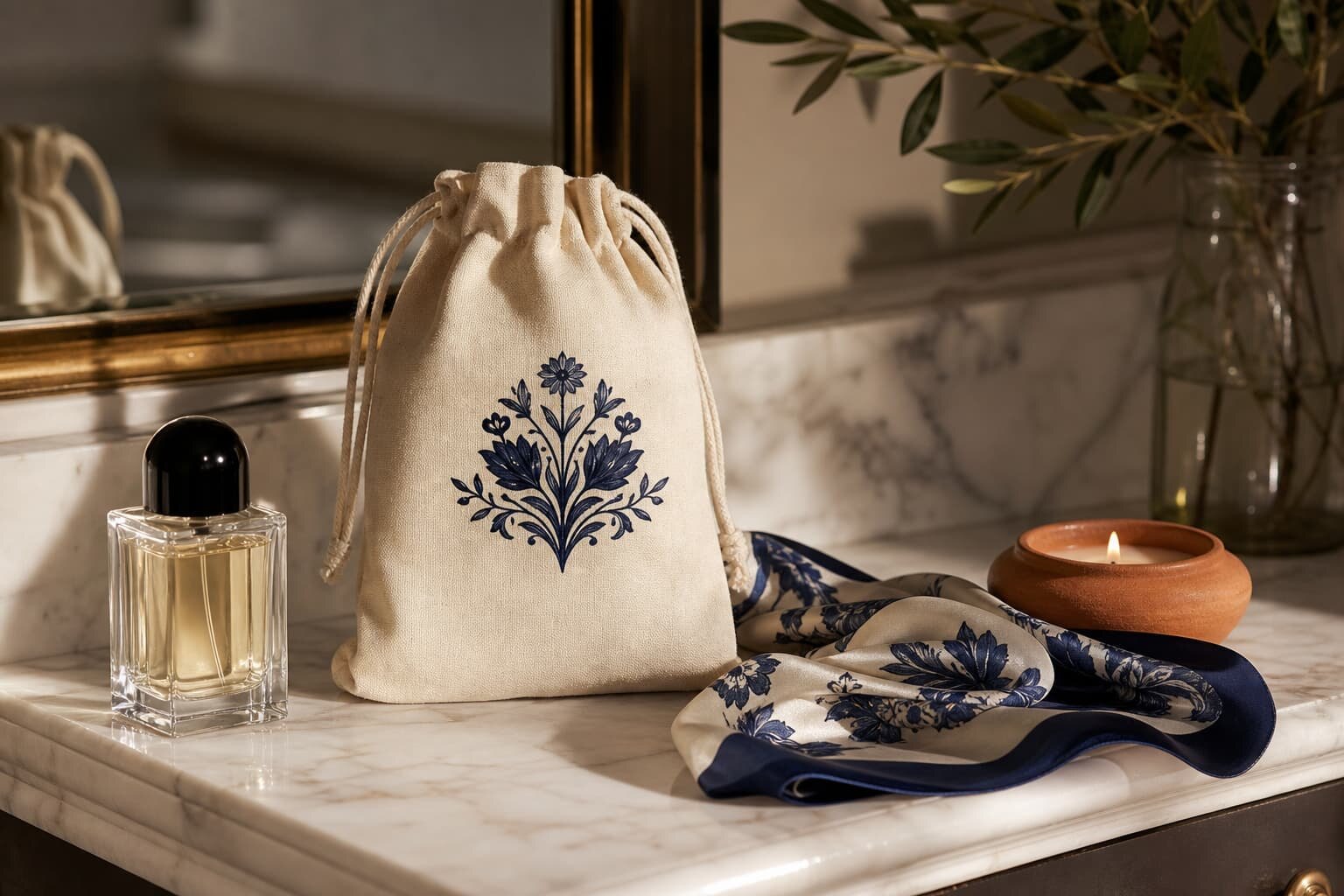
1) Start with the jewelry, not the fabric swatch
The right fabric for a jewelry drawstring pouch depends less on the pouch itself and more on what the pouch must protect. A pouch for lightweight earrings can be soft and thin if the goal is presentation. A pouch for chains, bracelets, or boxed sets needs more body so the bag keeps its shape, closes cleanly, and does not snag delicate metal finishes. If you start with the wrong assumption, the quote will look cheap on paper and expensive in use.
Before you ask suppliers for prices, define the jewelry size, surface sensitivity, and storage method. Will the pouch sit inside a retail carton, move through e-commerce fulfillment, or replace a gift box altogether? A buyer who answers that first can eliminate half the wrong material options. In RFQs, always describe the product role, not just the bag size.
- Light earrings and charms can use lighter cotton or satin.
- Chains, bracelets, and multi-item sets usually need thicker fabric or lining.
- Retail presentation and transit protection are not the same spec.
- If the jewelry has plating or stones, reduce scratch risk before chasing lower cost.
2) Choose the fabric family by brand position and use case
Cotton muslin is still the most common jewelry drawstring pouch fabric because it is easy to sew, easy to print, and easy to source in repeatable color lots. It suits natural, handmade, and value-driven brands, especially when the pouch is part of the unboxing rather than the product protection system. Brushed cotton gives a slightly fuller hand feel, while linen blends add a more artisanal texture. These are practical options when your buyer wants a natural look without moving into luxury pricing.
Velvet and microfiber suede solve a different problem: they create a more premium presentation and hide small irregularities in the pouch shape. They are better for gift jewelry, bridal pieces, and seasonal promotions where the customer sees the pouch as part of the product story. Satin or polyester blends can work when the job is mostly visual and cost sensitive, but they should be evaluated carefully for feel, cord grip, and static. The fabric choice should match the brand shelf, not just the factory's standard stock.
- Muslin is usually the baseline for cost and versatility.
- Velvet and suede-style fabrics raise perceived value but need tighter QC.
- Linen blends look natural but can feel rough against polished jewelry.
- Satin looks premium in photos but may not be the best daily-use option.
3) Compare options by GSM, texture, and protection level
For small pouches, GSM matters more than many buyers expect because a difference of 20 to 30 GSM changes how the pouch hangs, closes, and protects the item. A 90 GSM cotton may be acceptable for lightweight earrings, but if the same pouch must hold a small bracelet or a gift card insert, the fabric may feel flimsy after sewing. On the other hand, going too heavy can make the pouch bulky, inflate freight, and reduce the soft drape customers expect from a drawstring bag.
The best way to compare supplier quotes is to anchor them to the same construction target. Ask each factory to confirm fabric weight, weave, surface finish, and whether the material is pre-shrunk, brushed, or coated. If one supplier offers a lower price but uses a lighter weave, the comparison is not real. A clean quote should let you compare like for like, including how the fabric behaves after cutting, hemming, and cord insertion.
- 90-120 GSM is common for light presentation pouches.
- 120-150 GSM usually gives better body for retail or gift use.
- 180 GSM and above may be appropriate for velvet, suede, or structured styles.
- Ask whether the fabric shrinks after cutting, dyeing, or washing.
4) Decoration method should follow the fabric, not the other way around
The best logo method depends on the fabric surface and the size of the mark. Screen printing works well on cotton and some blends when the logo is simple and the color area is not too fine. Woven labels look clean on premium pouches and avoid ink feel, but they add sewing steps and can affect MOQ. Embroidery feels premium on thicker fabrics, yet it can distort thin material and may be too heavy for small pouch faces. Embossing is more niche and usually needs a surface that can hold detail without cracking or flattening.
For jewelry pouches, decoration must remain legible at small size. Buyers often approve a logo that looks good on a large mockup but disappears on a 70 mm pouch face. Ask the supplier to show the logo at actual size, on actual fabric, before bulk production. If the brand uses metallic or fine-line artwork, make sure the factory explains the minimum stroke width and the color registration tolerance. A decoration method that looks cheap may actually be the wrong method for the fabric.
- Use screen print for simple, flat graphics on cotton or blends.
- Use woven labels when the brand wants a clean, repeatable identity.
- Use embroidery only when the fabric has enough weight to support it.
- Avoid fine detail on textured surfaces unless the sample proves readability.
5) Build details matter more than buyers expect
A jewelry pouch is a simple item, but the small construction choices decide whether it feels premium or generic. The drawstring cord should pull evenly through the channel without fraying the opening. The top hem needs enough width to prevent puckering, and the seam allowance must be stable enough that the mouth does not twist after repeated use. If the pouch is meant to hold sharp clasps or hard jewelry boxes, consider a softer internal finish or a lining so the contents do not catch on the fabric grain.
Closure choice also changes the commercial result. Cotton cord, polyester cord, and satin ribbon all create a different look and different functional risk. Ribbon can look elegant but may slip more easily. Round cord is durable but can feel more casual. Waxed or coated cords may improve closure consistency, but they must not stain the fabric or leave residue. If the pouch is for repeated customer use, ask the factory to test the open-close cycle and the knot security instead of assuming the cord will be fine.
- Check cord thickness and knot holding power.
- Confirm top hem width and stitch density.
- Ask whether the channel is single-layer or reinforced.
- If the jewelry is sharp, consider a softer internal finish or lining.
6) Read the quote like a production engineer
A useful quote for jewelry drawstring pouches should not stop at unit price. It should show fabric name, GSM, bag size, logo method, packing quantity, sample cost, lead time, and any setup or plate charges. If the quotation only says cotton pouch with print, you do not yet have enough data to compare suppliers. Many disputes start because buyers compare final numbers without noticing that one factory included a woven label and another quoted a plain bag.
Request quote data in a structure you can audit: fabric specification, cut size, finished size, string material, print colors, packing method, carton size, and expected production time. Ask whether the MOQ changes if you switch from stock natural cotton to custom dyed velvet or from one-color print to woven label. The goal is not to make the supplier over-explain; it is to make sure every line item is visible before the purchase order is approved.
- Ask for a separate sample charge and bulk charge.
- Check if dyeing or printing changes the MOQ.
- Confirm whether the quote includes carton packing or only loose bag packing.
- Look for hidden upgrades such as lining, heat cutting, or label sewing.
7) Use samples to prove the fabric choice before bulk order
A sample for a jewelry pouch should be treated as a functional approval tool, not a courtesy item. You need to inspect the actual hand feel, opacity, seam behavior, logo clarity, and how the pouch looks when filled with the real jewelry. A flat empty sample can hide problems that appear once a necklace or bracelet is inserted. If the pouch collapses, twists, or shows the item through the weave, the fabric choice is wrong even if the photo looked good.
When approving the sample, test the pouch under the same conditions as use: open and close it several times, place the intended jewelry inside, and check whether the cord and fabric scratch the surface. Keep notes on acceptable variation, because small hand-sewn pouches can vary slightly from piece to piece. If you reorder later, that sample becomes the reference for the next quote, not just a one-time approval.
- Approve the sample with the actual jewelry item inside.
- Check logo placement at real size, not enlarged artwork.
- Compare the sample against the supplier's quoted GSM and finish.
- Keep one sealed reference sample for future reorders.
8) Packing and lead time can change the fabric choice
Packing is part of the fabric decision because different materials wrinkle, crush, or trap lint in different ways. Velvet and brushed fabrics often need cleaner packing and more careful carton filling than plain cotton. If the pouches ship to retail distribution centers, the supplier should state how many pieces go into a polybag, how they are stacked, and whether carton liners or desiccants are used. A pouch that arrives neat in sample form can still become messy if it is over-compressed in bulk packing.
Lead time also changes by fabric family. Stock cotton with a simple print may move faster than custom dyed velvet with woven labels and special packing. Do not let a supplier quote the same delivery window for every option without explaining the bottleneck. Ask what happens at each stage: fabric sourcing, cutting, printing, sewing, inspection, and packing. That detail helps you forecast if the order can hit a product launch, seasonal promotion, or retail reset.
- Confirm polybag count, carton count, and carton dimensions.
- Ask whether pouches are packed flat, nested, or tied in sets.
- Check if fabric needs extra lint control before sealing cartons.
- Plan lead time by process step, not by single promised date.
9) Common sourcing mistakes that create avoidable claims
The most common mistake is choosing fabric by appearance only. A material that looks elegant online may be too slippery, too thin, or too rough for jewelry contact. Another frequent issue is mixing up decorative packaging with protective packaging. If the buyer wants a pouch to prevent scratches in transit, the construction must be tighter and the inner face smoother than a purely display-focused bag. These issues usually show up after the goods reach the warehouse, which is the most expensive time to discover them.
A second mistake is accepting supplier substitutions without written approval. One factory may quietly swap a lower GSM base fabric, a different cord, or a looser weave to meet the target cost. To prevent that, lock the fabric spec, the logo method, the color standard, and the packing method in the purchase documents. If the supplier needs to substitute, require a revised sample or a written deviation note before production continues.
- Do not approve fabric from photos alone.
- Do not let the factory change the cord or logo method without notice.
- Do not treat sample quality as proof of bulk quality unless the spec is locked.
- Do not skip a transit or rub test if the pouch will touch plated jewelry.
10) A practical RFQ workflow for better supplier quotes
The cleanest way to source jewelry drawstring pouches is to send one RFQ that removes guessing. Start with the pouch size, intended jewelry type, target fabric family, expected GSM, logo method, quantity, packing format, and target delivery window. Add one reference image and one functional requirement, such as no visible transparency or no scratch risk on plated parts. That gives suppliers enough detail to price the same job and keeps the quotation debate focused on material and process, not assumptions.
If you want a better quote comparison, ask each factory to answer the same set of technical questions in the same order. Then compare by fabric, construction, decoration, packaging, and lead time. The cheapest quote is not always the best value if it hides lower GSM, looser stitching, or a slower sample cycle. For jewelry pouches, the right fabric choice is the one that protects the product, matches the brand, and can be repeated at scale without surprises.
- Send one RFQ with size, jewelry type, fabric target, logo method, and packing.
- Ask suppliers to quote the same spec in the same units.
- Compare sample lead time and bulk lead time separately.
- Use the approved sample as the contract reference for reorders.
Specification comparison for buyers
| Spec decision | Recommended option | When it fits | Buyer risk to check |
|---|---|---|---|
| Natural cotton muslin, 90-120 GSM | Soft, breathable, low-cost pouch fabric | Fashion jewelry, gift sets, promotional packs, everyday retail packing | Can look thin if GSM is too low; check shrinkage, transparency, and seam strength |
| Brushed cotton, 120-150 GSM | Cleaner hand feel with better body | Mid-market jewelry brands that want a more premium cotton look without moving to velvet | Brushing can raise lint risk; confirm pilling and color consistency after wash or rub tests |
| Velvet or velour, 180-250 GSM plus lining | Soft, upscale presentation fabric | Gift jewelry, limited editions, holiday assortments, and bridal lines | Pile marks easily; confirm shade consistency, logo legibility, and anti-fiber-shedding performance |
| Microfiber suede, 160-220 GSM | Smooth touch with stable print surface | Brands that want a modern premium pouch and clean logo reproduction | Some suppliers use too much coating; verify hand feel, odor, and whether the fabric flakes or peels |
| Linen blend or canvas, 180-240 GSM | Structured natural look | Lifestyle, artisan, or eco-positioned packaging where a firmer pouch is acceptable | Rough texture can scratch delicate pieces; check inside finish and whether jewelry snags on weave |
| Polyester satin or polyester blend, 80-120 GSM | Glossy presentation with low material cost | High-quantity promotional packs or decorative packaging where appearance matters more than texture | Slippery surface may reduce knot holding; confirm cord security and whether the bag feels too synthetic for brand position |
Buyer checklist before sampling
- Define the jewelry type first: rings, earrings, necklaces, watches, or mixed sets need different fabric thickness and surface feel.
- Confirm target fabric GSM, weave, and finish before asking for prices so every supplier quotes the same build.
- State whether the pouch is for primary retail packaging, in-box protection, or gift presentation because the fabric spec changes the quote.
- Decide if the pouch needs print, woven label, embroidery, embossing, or no decoration at all before sampling.
- Ask for fabric shade standards on natural and dyed materials, especially if reorders must match earlier shipments.
- Request photo or physical sample approval on cord, stitch density, seam allowance, and closure performance, not just the bag body.
- Check whether the pouch needs an inner lining, anti-scratch finish, or reinforced top edge for heavier jewelry pieces.
- Confirm carton count, polybag packing, and moisture protection so the pouches arrive clean and flat.
- Compare supplier MOQ by fabric color, logo method, and bag size, not just by total order quantity.
- Put shrinkage, color rub resistance, and pull strength into the approval standard if the pouch will ship through retail or e-commerce.
Factory quote questions to send
- What exact fabric name, GSM, weave, and finish are included in your quote?
- Is the price based on dyed fabric, printed fabric, or stock fabric, and what changes if we need a custom color?
- Which logo method is included in the quotation, and what is the setup charge if we change from screen print to woven label or embroidery?
- What is the minimum order quantity by size and color, and does the MOQ change with different fabric choices?
- What sample lead time do you need for fabric swatches, pre-production samples, and final approval samples?
- What bulk lead time should we plan for, and what parts of the order usually add time, such as dyeing, printing, or lining?
- How are the pouches packed per carton, and what carton dimensions and gross weight should we expect?
- What inspection points do you check before shipment, and can you share a simple checklist for seam, cord, and logo acceptance?
- If the fabric is delayed or unavailable, what approved substitute options do you propose before changing the look or feel of the pouch?
Quality-control points to confirm
- Measure finished pouch size after sewing, not just cut size, because small jewelry pouches often lose a surprising amount of usable space at the seam.
- Check fabric GSM against the approved sample or spec sheet so a lighter substitute does not slip into bulk production.
- Inspect seam straightness, top hem width, and stitch count around the drawstring channel for even closure and durability.
- Test drawcord tension to make sure the pouch closes smoothly without jamming, slipping, or twisting the mouth out of shape.
- Review logo placement, print density, and edge sharpness under good light so small logos do not blur or disappear on textured fabric.
- Perform a light rub test on printed or dyed surfaces to catch smudging, color transfer, or pile damage before packing.
- Open and close several sample pouches with the intended jewelry item inside to check scratch risk, snagging, and capacity.
- Inspect for odor, lint, loose threads, and dust before packing because jewelry packaging is usually judged by clean presentation.
- Confirm carton count and packing compression so pouches do not arrive wrinkled, flattened, or marked by excessive pressure.
- Keep one signed golden sample or sealed reference bag for future reorders, especially when the pouch is part of a long-running SKU.