What Hotel Retail Actually Needs
Hotel retail buyers do not need the cheapest jute tote on the market. They need a bag that looks intentional on the shelf, survives repeated guest handling, and still feels right when it is sitting next to candles, snacks, sunscreen, or small souvenir sets. In a lobby shop, spa boutique, resort convenience counter, or concierge retail corner, the tote is part of the merchandising display. The bag has to carry the brand well before it ever carries a product. That means the first sourcing question is not price. It is whether the bag has enough visual structure and material quality to earn shelf space and retail trust.
The most common mistake is treating all jute as interchangeable. A bag can look acceptable in a sample photo and still fail in a hotel shop if the weave is too open, the handles twist, or the body collapses after a few touches. For hotel retail, you are balancing three things at once: presentation, durability, and unit economics. A lower-cost bag can work if the artwork is simple and the assortment is light. A higher-end retail program usually needs better structure, cleaner stitching, and a more controlled fabric weight so the bag does not look like a promotional give-away.
- Treat the tote as a retail fixture, not just a carry bag.
- Prioritize shelf shape, handle feel, and print clarity before comparing unit price.
- Match the build to the retail price point the guest will accept.
Set the Fabric Weight Before You Quote
Fabric weight is the anchor for every other decision. Jute suppliers may speak in GSM, oz, or visual grades, but the number that matters is the actual measured weight of the production fabric that will be cut and sewn. Ask for the GSM of the exact body fabric, not a catalog estimate and not a generic comparison to another style. If one factory gives you a number based on a different weave or a coated sample, the quote comparison becomes unreliable immediately. The right approach is to standardize the fabric spec first, then compare options on the same basis.
For hotel retail, many tote programs land somewhere in the midrange rather than at the lightest or heaviest end. Smaller souvenir totes can work with a lighter structure if the contents are soft and the bag does not need to stand up on the shelf. Larger retail carry bags, or bags that need to hold boxed goods and stay upright, usually need more body. GSM alone does not tell the full story, because weave density, finishing, and lining all change the final hand feel. Use the sample to confirm drape, stiffness, and whether the bag still looks clean after being folded and reopened several times.
- Keep one GSM target across all suppliers so you are comparing real equivalents.
- Set a tolerance band before sampling, such as +/- 5% on fabric weight.
- If suppliers quote oz instead of GSM, require a conversion based on the exact production fabric.
- Do not approve the bag from a photo alone; the weave and stiffness need a physical sample.
Choose Structure That Matches the Shelf
Once the fabric weight is set, the next decision is structure. Size, gusset depth, lining, lamination, and handle build all change how the bag behaves in retail. A flat tote can look neat and premium, but if the gusset is too narrow it will not hold boxed goods or bottle-shaped merchandise without bulging. A deeper gusset helps the bag function like a real retail carrier, but it also changes the silhouette and can raise the material cost. If the bag is meant to sit folded in a stack at the point of sale, it should still unfold cleanly and keep a clear front panel for branding.
Handle construction is where a lot of retail problems show up later. Short handles may feel durable but sit awkwardly over the shoulder, while longer handles can twist if the stitch pattern is weak or the attachment point is not reinforced. If the bag will be carried from a hotel shop back to a room, or later reused off-property, the handle needs to feel comfortable enough that the guest does not leave it behind. Lining and lamination are worth the extra cost when the interior is visible, when the retail ticket is higher, or when the buyer needs better dust control and cleaner edges.
- Use a gusset if the bag must carry boxes, bottles, or uneven souvenir sets.
- Choose lining when the interior is part of the perceived value or the bag must feel cleaner inside.
- Specify handle length, handle width, and reinforcement stitching on the RFQ.
- If the bag must stand upright on shelf, ask the factory how the bottom and side seams are stabilized.
Match Print Method to Jute
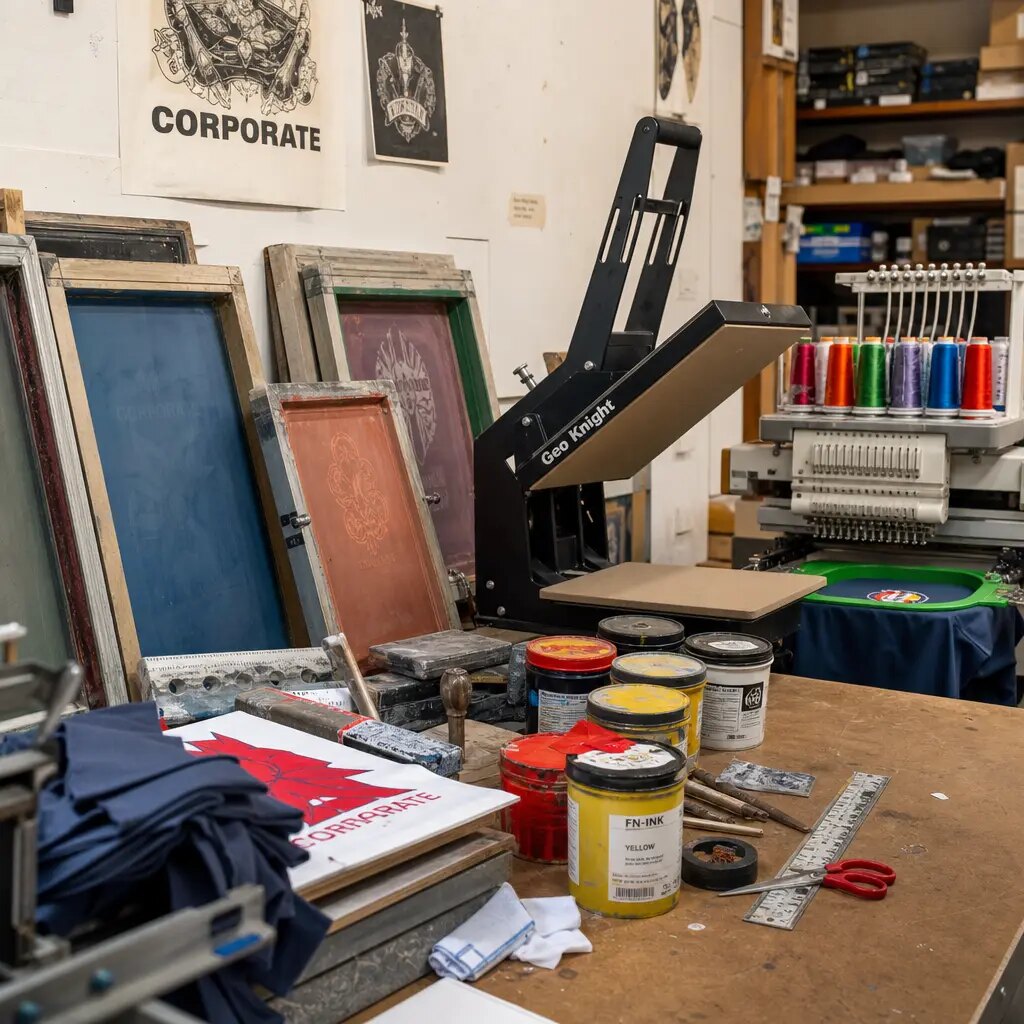
Jute has texture, and that texture is both the reason the bag looks authentic and the reason some decoration methods fail. A simple one-color or two-color screen print is usually the safest route for hotel retail because it sits reasonably well on coarse weave, is easy to quote, and holds up if the ink is cured correctly. If the logo is complicated, move the fine detail somewhere else. A woven side label, sewn label, or hangtag can carry the small text and legal information that jute surface printing may not reproduce cleanly. That keeps the main bag legible and avoids forcing tiny design elements into a rough substrate.
Heat transfer and digital transfer can be useful for certain artworks, but the supplier needs to show that the process has been tested on the actual jute surface and not on a smoother substitute. Ask what ink system they use, what curing process they follow, and whether the sample passed a rub check. A print that looks sharp before handling but flakes after a few passes through receiving, merchandising, and guest use is not a minor flaw. It is a production failure that creates rework, claims, or markdown risk. For hotel retail, low-risk decoration usually beats decorative complexity.
- Keep artwork bold, with strong contrast and enough clear space around the logo.
- Move small legal text, fine lines, or QR codes to a label instead of the jute body.
- Ask for a rub test on the approved sample before bulk printing starts.
- If the brand wants multiple colors, compare the added cost against the risk of muddy registration.
Build the MOQ and Price Logic
MOQ on jute totes is not just a factory rule. It is usually the point where fabric cutting, sewing efficiency, print setup, and packing labor start to make sense together. A blank tote can often be produced at a lower threshold than a printed tote because the supplier avoids screen setup, ink matching, and extra inspection steps. Add multiple colors, special labels, or retail packing, and the minimum volume rises because each extra operation adds labor and risk. If you are launching a hotel retail line, the smartest way to control MOQ is to simplify the first order without making the bag look cheap.
Treat the factory quote as a bill of materials, not a single number. Ask the supplier to separate the fabric cost, cutting and sewing, print setup, labels, packing, carton work, and sample charges. That is how you see whether the apparently low quote is actually expensive once the hidden items are added back in. It also helps you compare suppliers fairly when one includes a label or inner pack and another does not. For procurement teams, the goal is not to find the lowest sticker price. It is to understand the breakpoints where a higher volume reduces unit cost and where a new spec adds more cost than it adds retail value.
- Ask for the MOQ per color, per print design, and per SKU.
- Request price breaks at higher volumes so you can see where setup costs fall away.
- Require a line-item quote for fabric, sewing, printing, labels, packing, and carton charges.
- If you expect repeat orders, ask whether the same material lot can be reserved for reorders.
Approve Samples With Measurable Criteria
The sample is the production reference, not a courtesy item. Approve it only after you have checked the dimensions, weight, stitch quality, handle placement, print alignment, and odor. If the factory sends a pre-production sample, keep the approved version on file and mark what is locked and what remains open. That matters because jute often has natural variation, and a vague approval note leaves room for disagreement later if a production lot looks slightly different from the marketing sample. A clean approval process saves time in bulk inspection and makes supplier accountability much easier.
Write sample approval like a buyer, not like a shopper. Natural fiber variation is normal, but loose threads, uneven seam tension, visible stains, or weak handle attachment should not be treated as acceptable variation. If the bag is lined, inspect the inside corners and seam turns, because that is where poor trimming and rushed sewing usually appear first. If the print is critical to retail presentation, compare the sample under the same lighting you expect in the store or warehouse. You want the sample to define the exact build standard, not leave the factory guessing what 'close enough' means.
- Measure at least three samples before you sign off on the final reference.
- Record the actual sample weight and compare it with the target GSM.
- Keep a photo set of front, back, inside, handle, and label details.
- Use one approved golden sample for final inspection comparison.
Pack for Retail, Not Just for Cartons
Retail-ready packing matters because hotel shops sell on presentation and speed. A tote that arrives dusty, crushed, or loosely folded forces extra labor at receiving and makes the product look unfinished before it ever reaches the shelf. If the bags are meant to be displayed folded, ask the factory to use the same fold direction for every piece and protect the surface from fiber shedding. If the retail team will place the bags on a shelf or in a basket, the inner pack should open neatly and not leave wrinkles that make the product look secondhand. Small packing decisions change how fast the store can receive and merchandize the order.
The carton specification should match your receiving process. If the warehouse scans barcodes on arrival, the outer carton and inner pack need a clean code structure. If the order includes multiple colors or sizes, the packing list has to be clear enough that a receiver can sort stock without opening every carton. For hotel groups and distributors, a packing error can be more expensive than a sewing defect because it creates labor in a warehouse instead of a visible issue in the product. Good packing is part of the product spec, not an afterthought.
- State whether you need polybag, tissue, insert card, or no inner pack.
- Confirm carton count, gross weight, and carton dimensions before production.
- Ask for barcode placement on the bag, the inner pack, or both if your warehouse needs it.
- If the hotel chain uses SKU scanning, request a sample scan from the supplier before bulk shipment.
Protect Lead Time From Common Delays
Lead time in jute bag production is usually lost in three places: artwork approval, sample revision, and packing changes. A simple bag can move faster than a laminated or heavily decorated bag, but the real schedule risk is decision churn. If the team keeps changing handle length, label style, or fold method after sampling starts, the factory may be ready while the buyer side is still revising the spec. Seasonal hotel retail orders are especially vulnerable to this because the launch date is tied to a promotion, a resort opening, or a quarter-end buying plan. The spec needs to be locked early enough that production can actually start on time.
The best way to protect schedule is to sequence approvals in the right order. First confirm the body fabric and size. Then lock the print and label. Then finalize the packing method. If the supplier is doing cutting, sewing, printing, and packing in different locations, ask for the handoff points so you can see where time is lost. For buyers, a stable second-choice detail is usually better than missing a launch because one minor visual detail kept changing. A realistic schedule is worth more than an ideal spec that never ships.
- Ask for separate sample and bulk timelines so delays do not get hidden inside one number.
- Confirm whether printing, sewing, and packing happen in one facility or across multiple sites.
- Build buffer time if the order is tied to a hotel opening, holiday display, or seasonal launch.
- Do not approve bulk production until the final artwork and packing method are both frozen.
Compare Supplier Routes on Landed Cost
When you compare suppliers, do not stop at unit price. For wholesale jute tote bags for hotel retail, the landed cost includes freight, packing, inspection, duty, and the cost of rework if the bags arrive with weak print or poor stitching. A lower factory quote can still become the most expensive option if the packing is weak, the cartons are oversized, or the buyer has to sort mixed SKUs after arrival. That is why a true sourcing comparison needs all the quote data on the same sheet: fabric weight, print method, packing format, carton spec, and any setup charge that changes the real invoice value.
Different supplier routes fit different risk levels. A direct factory is usually the cleanest path for repeat programs and consistent color control. A trading company can be useful when you need mixed product categories or lower coordination effort, but the documentation has to be tighter because margin layers can hide details. A local decorator can help if you need fast replenishment or domestic labeling after import. For a test launch, a stock body with a custom label may protect cash better than a fully custom build. The right route is the one that matches your order size, schedule, and tolerance for change.
- Compare quotes only after matching GSM, size, print method, packing, and carton spec.
- Include freight, inspection, duty, and expected waste in your landed-cost sheet.
- Favor the supplier route that can repeat the same spec on reorder without redesign work.
- If the quote is not itemized, ask for a revised quote before you compare it with other suppliers.
Specification comparison for buyers
| Spec decision | Recommended option | When it fits | Buyer risk to check |
|---|---|---|---|
| Direct factory, unlined bag, one-color screen print | Best default for repeat hotel retail orders when the logo is simple and the bag price point must stay controlled | Gift shops, resort boutiques, and souvenir lines that need a natural look without a premium interior finish | Make sure the ink cures fully and the weave is dense enough that the logo does not break apart over the texture |
| Direct factory, lined or laminated body | Use when the bag must feel premium, stand upright, or protect the interior from dust and fiber shedding | Higher-ticket retail, boxed gifts, and program orders where presentation matters more than bare material cost | Confirm stiffness, odor, and whether lamination changes print adhesion or folding behavior |
| Trading company bundling bag, label, and packing | Useful when you need one coordinator for multiple components or mixed product categories | Distributors and buyers managing several SKUs, sizes, or packaging formats from one PO | Hidden charges can appear in setup, packing, and margin layers if the quote is not itemized |
| Local decorator importing blank bags and printing domestically | Good for fast replenishment after import or when you need local artwork changes | Small test launches, seasonal assortments, and programs that need short rework cycles | Double handling raises landed cost and can create print mismatch between the blank body and local decoration |
| Stock body with custom woven side label | Practical for lower MOQ and quicker launch when the bag body does not need full custom tooling | Trial orders, resort shops testing a new graphic, or buyers balancing brand impact with cash flow | The bag can look generic if the label is too small or the body fabric is not aligned with the brand palette |
| Fully OEM custom size, handle, lining, and retail hangtag | Best when the tote is part of the brand program and reorder consistency matters | Established hotel retail lines, private-label gift shops, and distributors planning repeat volumes | Sampling takes longer, and every custom element adds a new point for approval delay or cost creep |
| Split sourcing: body from one mill, decoration and packing from another | Can control cost when each supplier is strong in one task | Buyers with an in-house QC team and clear ownership of the production schedule | Color mismatch, transit damage, and coordination failures are common if the cut-sew and print teams are not aligned |
| Direct factory with barcode-ready retail carton packing | Strong choice for chains and warehouse receiving teams that need cartons to scan cleanly | Hotel groups, distributors, and retailers with formal inbound processes | If carton labels and inner pack counts are not fixed early, the warehouse may receive mixed SKUs that are hard to sort |
Buyer checklist before sampling
- Confirm the exact GSM target on the production fabric, not only in the catalog.
- Lock finished size, gusset depth, handle length, and reinforcement stitch before sampling.
- State whether the bag is unlined, lined, or laminated and whether the inside will be visible in retail display.
- Approve print method, ink type, color reference, and rub-test expectation.
- Specify retail packing, barcode placement, carton count, and master carton markings.
- Request a pre-production sample made with the final fabric, final trim, and final packing method.
- Ask for an itemized quote that separates fabric, sewing, printing, labels, packing, and sample charges.
- Confirm MOQ per SKU, per color, and per artwork version.
- Ask for the sample and bulk lead time separately, plus the re-order lead time if material is kept in stock.
- Keep one approved golden sample and one photo set for production reference.
Factory quote questions to send
- What is the exact GSM of the jute fabric, and how did you measure it on the actual production material?
- Is this quote for a blank bag, a printed bag, or a bag with labels, and how many print colors are included?
- What is the MOQ per size, per color, and per artwork version?
- Which charges are included in the unit price, and which are extra, such as screens, plates, labels, or packing labor?
- Can you quote the same bag with and without lining so we can compare cost and shelf presentation?
- What packaging format is included: polybag, tissue, insert card, barcode sticker, or retail-ready carton pack?
- What are the sample lead time and bulk lead time after sample approval and deposit?
- What tolerances do you use for finished size, stitch quality, print alignment, and fabric weight?
- Can you produce the bulk order with the same fabric lot, print method, and packing method as the approved sample?
Quality-control points to confirm
- Fabric weight matches the approved sample within the agreed tolerance, usually +/- 5% unless the order is a low-cost promotional build.
- Finished size, gusset depth, and handle length stay within the agreed dimensional tolerance on random cartons.
- No loose threads, open seams, needle holes, oil stains, or visible repair marks on retail-facing panels.
- Handle stitching is consistent, with reinforced stress points that do not gap when the bag is loaded by hand.
- Print alignment, color, and coverage match the approved strike-off, with no smudging, cracking, or rub-off after handling.
- Lining or lamination sits flat without bubbling, puckering, edge lift, or exposed adhesive.
- Natural jute variation is acceptable, but odor, mildew, or moisture damage is not acceptable for retail display stock.
- Inner pack count, barcode, and carton label match the purchase order and the approved packing list.
- Cartons are strong enough for transit, with no crushed corners or weak tape joints.
- The approved golden sample is available for final inspection comparison before shipment