Start With the Use Case
A tote order fails when the buyer starts with price and treats the bag as generic. For wholesale canvas grocery totes for farmers market vendors, the right question is whether the bag can carry produce, jars, bottles, and handouts repeatedly without failing at the seams or becoming uncomfortable to hold. The use case determines everything else: size, fabric weight, reinforcement, print area, and pack-out.
A tote for a vendor who hands out bags at a weekly market does not need the same presentation as a tote sold at retail. A resale bag may need cleaner finishing, tighter carton packing, better barcode placement, and more complete compliance paperwork. If the supplier does not know which channel the bag serves, the quote will reflect the wrong priorities.
Write the use case in plain terms before you ask for numbers. One sentence about load, one sentence about channel, and one sentence about timing is enough to stop most spec drift. That is the fastest way to turn a vague request into a bag the factory can actually build.
- State the carry load: produce, canned goods, glass bottles, or mixed groceries.
- State the sales path: giveaway, resale, subscription insert, or private-label distribution.
- State the expected reuse cycle, even if the number is approximate.
- State the delivery window if the order has to land before a market season or retail reset.
Translate the Tote Into a Build Spec
Canvas sourcing becomes messy when the buyer uses words like large, heavy-duty, or market size. Those terms mean different things to different suppliers. A cleaner request fixes the finished dimensions, gusset depth, handle length, handle drop, and target fabric weight so every bidder is pricing the same object.
A practical market-tote starting point is often around 15 to 16 inches wide, 14 to 16 inches high, and 4 to 6 inches deep, but that is only a reference. If the tote needs to hold bulk produce or heavier grocery items, the dimensions should follow the contents instead of the supplier's default pattern. The same logic applies to handles: a short shoulder drop may look neat but still be inconvenient at checkout or on the walk home.
Ask the supplier to quote against your exact spec, not their standard size. Then lock tolerances in writing. Common working tolerances are tighter for retail programs and looser for promo runs, but the factory should confirm what it can hold before cutting fabric.
- Fix finished length, height, gusset depth, handle length, and handle drop before pricing.
- Ask whether dimensions are measured flat, sewn, or after finishing.
- Specify boxed corners, flat bottom, or open tote construction.
- Request tolerances in writing, not as a verbal assurance.
- Tie the tote dimensions to the grocery items it must carry, not to a generic style name.
Choose Fabric and Reinforcement for Real Carry Weight
Fabric weight is where buyers often overbuild or underbuild. A lighter canvas can look fine in a sample photo and still fail once it carries glass, dense produce, or repeated market loads. For most grocery use, 12 oz canvas is a balanced starting point. Ten ounce can work for light-duty or price-sensitive programs, while 14 oz gives more structure and abrasion resistance but adds cost and bulk.
Do not rely on ounce numbers alone. Ask whether the fabric is measured before or after washing, dyeing, or finishing. Two suppliers can both say 12 oz and still deliver different hand feel, weave density, and print behavior. If the bag is meant to be reused often, the handle attachment, top seam, and bottom seam matter as much as the base cloth.
Reinforcement should be part of the spec, not an optional upgrade hidden in a later quote. Bar-tacks, boxed stitching, or a reinforced top seam are not cosmetic details when the tote is expected to carry groceries more than once. If the supplier proposes a lighter build, ask them to show what changes in reinforcement keep the performance acceptable.
- Use 10 oz only when the tote is light-duty or price-sensitive.
- Use 12 oz as the default starting point for grocery and market carry.
- Move to 14 oz when the bag needs more body, abrasion resistance, or a premium feel.
- Ask how the weight is measured: before or after finishing.
- Request a swatch so you can judge weave density, drape, and printability.
- Ask for a reinforcement sketch that shows handle anchors, seam finish, and any bar-tack pattern.
Decoration Should Follow the Artwork
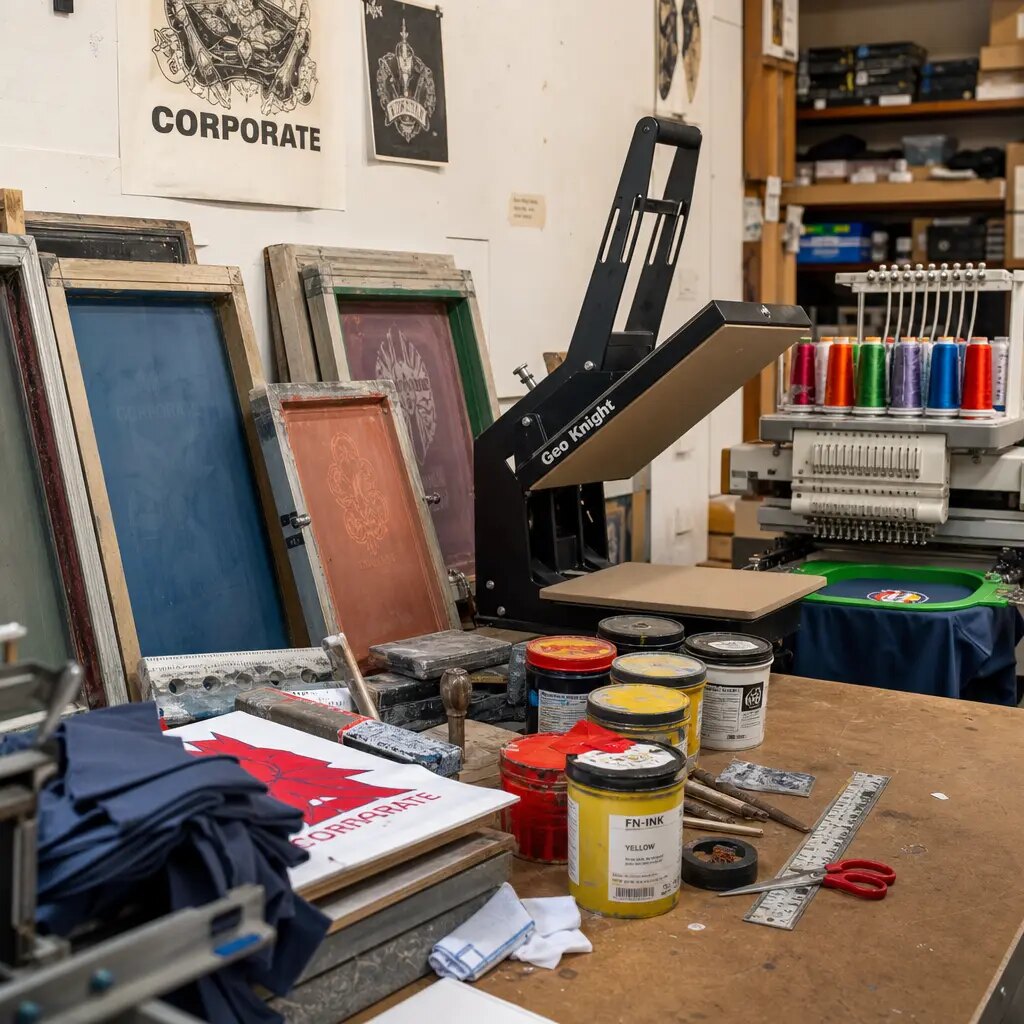
Decoration method changes cost, lead time, and reject risk. A one-color screen print on natural canvas is efficient for many bulk runs and usually gives a durable result when the art is prepared correctly. Once the design includes fine type, multiple colors, gradients, metallic ink, or tight registration, the risk goes up and the quote should change with it.
Use the artwork to choose the method, not the other way around. Screen print is a strong fit for bold logos and repeat programs. Woven labels, sewn patches, or side labels make more sense when the brand wants a cleaner retail presentation or when the art is too fine for direct printing. Embroidery can work on canvas, but it is usually a specialty choice rather than the default for a grocery tote because it changes stiffness and cost.
If the design matters commercially, ask for a strike-off or sample print. Confirm print area, number of colors, ink type, cure method, and whether the price includes one side or both sides. If the supplier proposes a smaller logo, different placement, or a reduced print method, require a revised proof and a revised quote.
- Provide vector artwork so the supplier can separate colors correctly.
- State the maximum print width and height in writing.
- Confirm whether the quoted price includes front only or front and back.
- Request a strike-off when the artwork has fine detail or multiple colors.
- Ask for the minimum line weight and text size the print method can support.
- If the tote is retail-facing, compare a direct print against a woven label or patch before deciding.
Compliance Needs to Match the Destination Market
Compliance guidance is only useful when it is specific to the market the bag will enter. For the United States, a tote may need accurate fiber content labeling under the FTC Textile Fiber Products Identification Act if you are making a textile claim, and care instructions if you provide them under the FTC Care Labeling Rule. If the bag is not a children's product, CPSIA usually does not apply, but that changes if you sell it for children 12 and under. If the program ships into California, ask about Prop 65 exposure if inks, dyes, coatings, or accessories could trigger a warning obligation.
For the EU and UK, ask for documentation that aligns with REACH requirements, including restricted substances and azo dye limits where relevant. Textile composition labeling must also be correct if the product is sold as a textile item. If the tote has metal hardware, ask about nickel release and any relevant heavy-metal limits. If the bag has been washed, dyed, printed, or coated, the compliance review should include the actual finished article, not only the base fabric.
Do not claim recycled or organic content without traceable evidence. If you need a recycled-content claim, ask for chain-of-custody documentation such as RCS or GRS where applicable. If you need certified organic cotton, ask for GOTS documentation. For performance or safety, ask for lab results that match the specific market and the exact finished bag, not a generic factory report from another order.
- US: check fiber labeling, care labeling, and Prop 65 exposure if relevant.
- EU and UK: ask for REACH-related support, textile composition accuracy, and restricted-substance evidence.
- If the tote is a children's product, verify CPSIA requirements separately.
- For printed or dyed bags, ask about azo dyes, formaldehyde, and colorfastness.
- If you need recycled or organic claims, ask for RCS, GRS, or GOTS documentation where appropriate.
- If there is metal hardware, ask about nickel release and heavy-metal limits.
Compare Suppliers on Evidence, Not Promises
Most tote quotes are not directly comparable because each supplier is pricing a different hidden version of the bag. One quote includes heavier fabric but weaker handle reinforcement. Another includes print setup but excludes packing. A third looks cheap because it leaves out sample charges, test fees, or labeling work that will appear later. The only reliable method is to send one controlled spec sheet and require every bidder to quote the same construction, decoration, and pack format.
The table below helps separate supplier types, but the real decision comes from evidence. A direct factory can be the best fit for repeat programs if it can show sample-to-bulk control. A trading company can be useful for mixed orders, but the buyer should know who owns the factory relationship and QC decisions. A compliance-focused exporter may cost more, but the extra paperwork can save time if your retail channel asks for documentation.
Ask for the same commercial terms from each supplier: incoterm, quote validity, payment schedule, packing details, and exclusions. A low unit price without the rest of the commercial picture is not a useful quote. It is just a fragment.
- Send one spec sheet and require every supplier to quote against that version.
- Compare the same incoterm, payment terms, and packing style across all quotes.
- Ask who owns the QC decision if the supplier is not the actual factory.
- Treat missing evidence as a risk, not as a small omission.
- Ask what changes when quantity increases so you understand the pricing logic.
Use Samples as Control Documents
A tote sample is not just something to approve by eye. It is the control document that tells the factory what to repeat in bulk. For a canvas grocery tote, the sample should verify size, handle drop, reinforcement, print placement, and fold behavior. If the design will repeat, keep the sample code, artwork revision, and spec version together so no one has to guess which version was approved.
If the order includes multiple colors, ask whether the supplier needs a strike-off for the print and a separate color reference for the fabric. The sample should show the actual construction that will be used in bulk, not a prettier version built by a different team. That is especially important when the sample room and the production line are separate.
When the sample arrives, measure it, photograph it, and mark any deviations in writing. If the supplier changes anything later, you want a clean reference point for the deviation discussion. That is what makes the sample a control tool instead of a souvenir.
- Approve one sealed reference sample and attach it to the purchase order.
- Measure finished size, handle length, and gusset depth against the spec.
- Check print opacity, edge sharpness, and placement under normal light.
- Confirm fold direction and carton count before bulk production.
- Keep photos of the sample from multiple angles with the order record.
- If the supplier revises anything after approval, require a written deviation note.
Set a QC Plan the Factory Can Actually Follow
Quality control should focus on the parts of the tote that fail in use. For market bags, that means handle reinforcement, seam integrity, print durability, and dimension stability. Cosmetic flaws matter, but a bag that looks acceptable and fails under load is a worse commercial outcome than a bag with a small finishing mark that still performs. The buyer should define acceptable tolerances before inspection starts so the factory and inspector are working from the same rulebook.
A practical final-inspection plan usually uses a lot-based sampling method such as ANSI/ASQ Z1.4 or ISO 2859-1. A common starting point is Critical 0, Major 2.5, and Minor 4.0, though retail buyers may choose tighter rules. The key is to classify defects before the first carton is opened. Wrong size beyond tolerance, missing handles, open seams at load points, or unreadable labels should sit in the critical or major bucket, not get argued about on the dock.
Use specific checks for the bag type. Pull from the first, middle, and last cartons so you see whether the line drifted. Measure the load behavior at the agreed carry weight. Verify that the carton count is exact and that the fold style does not create warehouse work on arrival. QC is not extra paperwork; it is the cheapest place to catch a problem.
- Use ANSI/ASQ Z1.4 or ISO 2859-1 and lock the sample size before inspection.
- Set defect thresholds in advance: critical 0, major commonly 2.5, minor commonly 4.0.
- Treat wrong size, open seams, missing handles, and unreadable labels as serious defects.
- Inspect first, middle, and last cartons to catch line drift.
- Check load behavior at the agreed carry weight, not only by visual inspection.
- Keep signed inspection photos with the purchase order.
Packing and Freight Are Part of Product Quality
Packing decisions affect freight, receiving labor, and retail readiness. A flat-fold tote in master cartons is usually efficient, but only if the fold style is consistent. If the bags are meant for resale, you may also need polybags, barcode labels, hang tags, or SKU separation. Those requirements should be priced and approved before production starts, not added after the first cartons are packed.
Carton dimensions deserve real attention because a tote that looks cheap at the factory can become expensive in transit if the carton wastes cube. Ask for carton count, gross weight, carton size, moisture protection, and carton marks. If your warehouse scans inbound inventory, barcode placement should be fixed and readable. If the receiving team has a handling limit, state it in the packing instruction so the factory does not build cartons that are awkward to move.
The cleanest packing spec reads like an operations note. It tells the supplier how the product needs to arrive and leaves less room for interpretation. That reduces rework at the warehouse and avoids the common problem of a good tote arriving in a bad pack.
- State whether the bags ship flat, folded, bundled, or polybagged.
- Confirm whether barcode labels, warning labels, or inner labels are required.
- Ask for carton dimensions early so you can estimate freight cube.
- Specify moisture protection if the route or storage conditions justify it.
- Set a carton weight limit if the warehouse handles inbound cartons manually.
- Lock carton marks before bulk packing begins.
Lead Time, Reorders, and PO Control
Lead time on a canvas tote is not just sewing time. It includes fabric sourcing, trim sourcing, artwork approval, sample approval, printing, inspection, and packing. If you need stock natural canvas and a simple one-color logo, the schedule can be manageable. If you add custom dyeing, multiple print colors, a special finish, or retail-compliant packaging, the timeline expands quickly.
The best way to manage schedule risk is to separate critical-path items from optional details. Fix the size, fabric, decoration, and packing first. Then approve the sample. Only after that should the bulk order move. For repeat programs, keep a master spec pack with the approved sample, art file, packing instruction, and document list so the reorder does not restart from zero.
Put the control points into the purchase order. State the approved sample ID, artwork revision, inspection standard, packing method, and who pays if the bulk order deviates from the approved sample. A good PO reduces ambiguity. That matters more on a tote order than on many buyers expect because small changes in fabric, handle build, or fold style can turn into real commercial work downstream.
- Assume stock natural canvas is easier to source than custom-dyed material.
- Treat late artwork changes as schedule risk, not as a minor edit.
- Build extra buffer for spring market season and retail reset windows.
- Keep a master spec pack so reorders do not restart the approval cycle.
- Ask the supplier which step is most sensitive to delay.
- Record the approved sample ID, artwork revision, and packing instruction in the PO.
Specification comparison for buyers
| Supplier option | What to verify | Commercial advantage | Buyer risk to control |
|---|---|---|---|
| Direct sewing factory | fabric swatch, approved sample, seam close-ups, logo test photos, packing pilot, and final inspection evidence | Better sample-to-bulk control and faster production feedback | May be weaker on export paperwork or branded packing unless checked early |
| Trading company | Factory name, production photos, trim-source proof, and who owns QC decisions | Can coordinate small mixed orders and extra services | Markup can hide real factory capability and slow defect decisions |
| Specialized bag workshop | bag size, gusset, handle drop, seam allowance, stitch density, reinforcement patch, and loading expectation | More practical for detailed construction, trims, and repeat programs | Capacity may be limited during peak seasons |
| Low-price general supplier | 8-12 oz cotton canvas, 120-220 gsm cotton, recycled cotton, or blended fabric selected by use case and target price | Useful for simple promotional runs with loose specs | Material downgrades, weak packing, and vague inspection scope can erase savings |
| Retail-ready supplier | fold method, inner bundle, carton count, carton mark, moisture protection, SKU separation, and warehouse receiving needs | Can handle labels, SKU separation, carton marks, and receiving rules | Higher unit cost must be compared against reduced warehouse work |
| Compliance-focused supplier | Fabric records, labeling review, test plan, and production traceability | Safer for retail programs and repeat brand orders | Documentation claims need evidence, not only sales language |
| Local sample room plus bulk factory | Signed sample, bulk factory handoff, first-piece photos, and deviation owner | Good for complex branding before large production | Sample room quality may not match bulk line unless handoff is controlled |
Buyer checklist before sampling
- Define the channel first: farmers market vendor use, retail resale, giveaway, subscription box insert, or private-label distribution.
- Describe the actual carry load in plain terms, such as produce, bottles, canned goods, or mixed groceries.
- Lock finished size, gusset depth, handle length, handle drop, and target fabric weight before asking for price.
- Choose the fabric path up front: natural cotton canvas, bleached, dyed, washed, recycled-content, or blended, and note any color reference.
- Send vector artwork, placement dimensions, Pantone references, and the exact number of print colors.
- State whether the tote needs reinforcement at the handles, side seams, bottom seam, or all three.
- Ask for a sealed reference sample or pre-production sample before bulk cutting starts.
- Request supplier identity details: legal entity name, production address, and the actual factory making the order.
- Confirm packing rules: inner bundles, carton count, carton marks, barcode placement, and whether polybags or labels are required.
- Separate unit price from sample fees, setup fees, packaging, testing, inland freight, and rush charges.
Factory quote questions to send
- What finished size, fabric weight, and canvas construction are you quoting against?
- Is the fabric weight measured before or after washing, dyeing, or finishing?
- What fiber content are you quoting: 100 percent cotton, recycled cotton, or a blend?
- What handle reinforcement, seam allowance, and bottom reinforcement are included in the price?
- How many print colors are included, and what is the setup fee per color?
- What sample types do you offer before bulk production, and what is the sample lead time?
- What is your MOQ by color, by artwork version, and by packing style?
- Which compliance documents can you provide for my destination market, including fiber declarations and test reports if required?
- How do you pack the bags per carton, and what are the carton size, unit count, and gross weight?
- What costs are excluded from the unit price, and which incoterm, payment terms, and quote validity apply?
Quality-control points to confirm
- Use a lot-based sampling plan such as ANSI/ASQ Z1.4 or ISO 2859-1, and lock the sample size before inspection starts.
- Set the defect rules in advance: critical defects at 0 acceptable, major defects commonly at AQL 2.5, and minor defects commonly at AQL 4.0 unless your buyer standard is stricter.
- Measure finished width, height, gusset depth, and handle length against the approved spec; common working tolerance is about +/-0.25 in for tighter programs and +/-0.5 in for standard bulk if the buyer agrees.
- Check handle attachments, bar-tacks, and top seams with a load-focused pull or hold test at the agreed carry weight, not just visual inspection.
- Inspect stitch quality for open seams, skipped stitches, loose ends at stress points, and needle damage around handle anchors.
- Verify print position, sharpness, opacity, and cure quality against the approved strike-off or sealed sample; simple logos should stay within the agreed placement tolerance.
- Review fabric shade, weave consistency, odor, and surface defects across random cartons, not only on one top carton sample.
- Confirm carton count, fold method, inner bundle count, barcode readability, and carton marks before shipment release.
- Pull samples from the first, middle, and last cartons so the check covers line drift as well as opening output.
- Keep photos of the approved sample, first-piece output, defect findings, and final carton condition with the purchase order record.