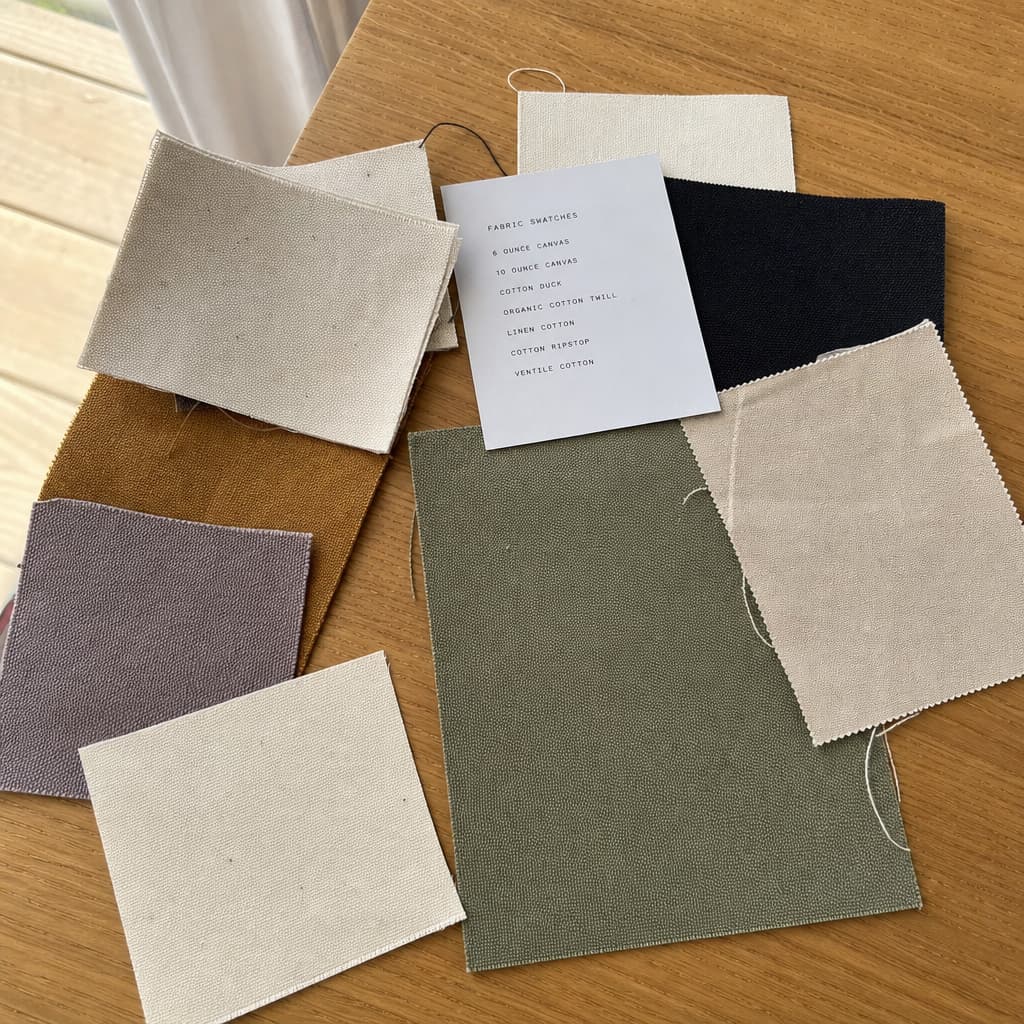
Material choice is a sourcing decision
Material selection should be specified as a production decision, not a loose preference. For a bulk custom bag order, the buyer needs to connect the choice to quantity, fabric weight, logo size, packing, end use, and the price position of the finished bag. The fabric controls price, perceived value, print result, shipping weight, durability, and the truthfulness of sustainability claims. If the RFQ only says what looks attractive, suppliers may quote different materials or processes and the cheapest offer will not describe the same product.
The practical risk is choosing a material that looks good in photos but fails when printed, folded, packed, or loaded by the customer. The safest approval process is to ask for evidence before mass production: a use-case brief, target fabric weight, swatch approval, finished sample, and written tolerance. Keep that evidence with the signed sample, because it gives the inspector and the factory a shared standard when production pressure increases.
- Define load, reuse frequency, retail value, and packing method.
- Ask for recommendations with cost and lead-time tradeoffs.
- Do not choose fabric only from catalog photos.
Understand GSM, ounce weight, and hand feel
Fabric weight should be specified as a production decision, not a loose preference. For a bulk custom bag order, the buyer needs to connect the choice to quantity, fabric weight, logo size, packing, end use, and the price position of the finished bag. GSM and ounce weight are control points, but weave density, yarn quality, finishing, and washing change the hand feel. If the RFQ only says what looks attractive, suppliers may quote different materials or processes and the cheapest offer will not describe the same product.
The practical risk is two suppliers quoting the same word such as canvas while delivering different weight, stiffness, and durability. The safest approval process is to ask for evidence before mass production: a labeled swatch, finished sample, weight tolerance, and fabric lot record. Keep that evidence with the signed sample, because it gives the inspector and the factory a shared standard when production pressure increases.
- Use numeric GSM or ounce ranges.
- Keep a swatch from the approved lot.
- Check whether washing changes final dimensions.
Use light cotton only for realistic applications
Light cotton should be specified as a production decision, not a loose preference. For a bulk custom bag order, the buyer needs to connect the choice to quantity, fabric weight, logo size, packing, end use, and the price position of the finished bag. It works for low-load promotions, dust bags, and simple event giveaways when the buyer understands the limits. If the RFQ only says what looks attractive, suppliers may quote different materials or processes and the cheapest offer will not describe the same product.
The practical risk is customers treating a thin promotional bag like a heavy retail tote and blaming the supplier for weak performance. The safest approval process is to ask for evidence before mass production: load test, handle stitching check, print opacity review, and packing test. Keep that evidence with the signed sample, because it gives the inspector and the factory a shared standard when production pressure increases.
- Avoid oversized dark ink on very thin cotton.
- Add bartacks for handles if the bag carries weight.
- Explain the intended use in the RFQ.
Canvas is the practical middle ground
Cotton canvas should be specified as a production decision, not a loose preference. For a bulk custom bag order, the buyer needs to connect the choice to quantity, fabric weight, logo size, packing, end use, and the price position of the finished bag. Medium canvas balances printability, durability, and cost for many retail totes, bookstore bags, and reusable shopping bags. If the RFQ only says what looks attractive, suppliers may quote different materials or processes and the cheapest offer will not describe the same product.
The practical risk is suppliers quoting a lighter canvas to win price because the RFQ only says canvas tote. The safest approval process is to ask for evidence before mass production: specified ounce weight, weave, color, shrinkage notes, and a signed sample. Keep that evidence with the signed sample, because it gives the inspector and the factory a shared standard when production pressure increases.
- Use 8-10 oz for many retail uses.
- Move heavier only when the customer needs premium structure.
- Inspect handle attachment and bottom stress points.
Organic cotton requires document control
Organic cotton should be specified as a production decision, not a loose preference. For a bulk custom bag order, the buyer needs to connect the choice to quantity, fabric weight, logo size, packing, end use, and the price position of the finished bag. It can support sustainability positioning when the buyer understands what is certified and what is only material sourcing. If the RFQ only says what looks attractive, suppliers may quote different materials or processes and the cheapest offer will not describe the same product.
The practical risk is printing claims that the documentation does not support or assuming fabric certification covers the finished product. The safest approval process is to ask for evidence before mass production: scope certificate review, transaction certificate availability, chain-of-custody notes, and labeling approval. Keep that evidence with the signed sample, because it gives the inspector and the factory a shared standard when production pressure increases.
- Ask whether GOTS or OCS applies to the order.
- Confirm certificate validity before sampling.
- Avoid unsupported certification logos.
Jute, recycled cotton, and blends need extra testing
Natural and recycled materials should be specified as a production decision, not a loose preference. For a bulk custom bag order, the buyer needs to connect the choice to quantity, fabric weight, logo size, packing, end use, and the price position of the finished bag. They can create the right eco look, but fiber variation, odor, shedding, and print texture must be accepted before bulk. If the RFQ only says what looks attractive, suppliers may quote different materials or processes and the cheapest offer will not describe the same product.
The practical risk is treating natural variation as a defect after the order has already been produced. The safest approval process is to ask for evidence before mass production: swatch approval across lots, logo test, odor check, and carton inspection. Keep that evidence with the signed sample, because it gives the inspector and the factory a shared standard when production pressure increases.
- Use larger logos on rough jute.
- Check recycled fabric shade variation.
- State whether fabric is laminated, blended, dyed, or natural.
Print method follows material choice
Decoration compatibility should be specified as a production decision, not a loose preference. For a bulk custom bag order, the buyer needs to connect the choice to quantity, fabric weight, logo size, packing, end use, and the price position of the finished bag. Screen printing, heat transfer, embroidery, woven labels, and patches behave differently on smooth canvas, coarse jute, coated polyester, or light cotton. If the RFQ only says what looks attractive, suppliers may quote different materials or processes and the cheapest offer will not describe the same product.
The practical risk is approving a fabric that cannot hold the desired logo method cleanly. The safest approval process is to ask for evidence before mass production: logo sample on the actual material, color, coating, and finished construction. Keep that evidence with the signed sample, because it gives the inspector and the factory a shared standard when production pressure increases.
- Test decoration on the bulk fabric.
- Check heat sensitivity before transfer printing.
- Use labels or patches when fine print will not hold.
Construction can matter more than fabric weight
Bag construction should be specified as a production decision, not a loose preference. For a bulk custom bag order, the buyer needs to connect the choice to quantity, fabric weight, logo size, packing, end use, and the price position of the finished bag. Handle width, handle drop, bartacks, seam allowance, thread tension, gusset shape, and lining affect durability as much as material. If the RFQ only says what looks attractive, suppliers may quote different materials or processes and the cheapest offer will not describe the same product.
The practical risk is a heavy fabric bag failing because sewing and stress points were weak. The safest approval process is to ask for evidence before mass production: load test, seam inspection, handle pull check, and inside finishing review. Keep that evidence with the signed sample, because it gives the inspector and the factory a shared standard when production pressure increases.
- Specify handle dimensions and seam type.
- Ask for load-test method.
- Inspect loose threads and symmetry.
MOQ and lead time change with fabric availability
Availability should be specified as a production decision, not a loose preference. For a bulk custom bag order, the buyer needs to connect the choice to quantity, fabric weight, logo size, packing, end use, and the price position of the finished bag. Stock cotton may move quickly, while custom-dyed, organic, recycled, or unusual fabric can add MOQ and sampling time. If the RFQ only says what looks attractive, suppliers may quote different materials or processes and the cheapest offer will not describe the same product.
The practical risk is launch delays caused by fabric that must be woven, dyed, certified, or sourced from a different mill. The safest approval process is to ask for evidence before mass production: stock confirmation, lab dip timing, fabric reservation, and lead-time route map. Keep that evidence with the signed sample, because it gives the inspector and the factory a shared standard when production pressure increases.
- Confirm whether fabric is stock or made to order.
- Ask how material changes MOQ and lead time.
- Build buffer for dyeing and certificate paperwork.
Inspection compares bulk goods to the approved standard
Material QC should be specified as a production decision, not a loose preference. For a bulk custom bag order, the buyer needs to connect the choice to quantity, fabric weight, logo size, packing, end use, and the price position of the finished bag. The approved swatch and golden sample should guide cutting, sewing, printing, packing, and final inspection. If the RFQ only says what looks attractive, suppliers may quote different materials or processes and the cheapest offer will not describe the same product.
The practical risk is subjective disputes about shade, hand feel, defects, odor, and fabric weight. The safest approval process is to ask for evidence before mass production: inspection checklist, defect definitions, carton sampling, and photo records. Keep that evidence with the signed sample, because it gives the inspector and the factory a shared standard when production pressure increases.
- Check multiple cartons.
- Define major and minor defects.
- Keep the approved swatch with the inspector.
Specification comparison for buyers
| Material | Best fit | Common spec range | Risk to verify |
|---|---|---|---|
| Light cotton | Budget events and simple giveaways | 110-160 gsm | Can feel thin; handle reinforcement matters |
| Medium canvas | Retail totes and brand merchandise | 8-10 oz / 270-340 gsm | Check shrinkage, color lot, and print surface |
| Heavy canvas | Premium reusable bags | 12-16 oz / 400-540 gsm | Higher sewing and freight cost |
| Organic cotton | Sustainability-led programs | 6-12 oz common | Claims need document control |
| Recycled cotton blend | Eco-positioned promotions | Varies by blend | Shade, lint, and fiber variation |
| Jute or jute-cotton | Natural retail and grocery bags | Laminated or unlaminated | Odor, shedding, and rough print surface |
| Polyester canvas | Outdoor or water-resistant uses | Denier/gsm by fabric | Heat sensitivity and coating compatibility |
| Nonwoven PP | Low-cost short-term promotions | 70-120 gsm | Not premium; bonding and seam strength need inspection |
Buyer checklist before sampling
- Define the use case before choosing fabric: giveaway, retail sale, grocery reuse, gift packaging, or daily carry.
- Specify material type, GSM or ounce weight, weave, color, handle material, seams, and packing method.
- Ask for fabric swatches and a finished sample because hand feel cannot be judged from photos.
- Check whether sustainability claims require GOTS, OCS, recycled-content, FSC, or other documents.
- Confirm shrinkage, colorfastness, odor, lint, and print compatibility before mass production.
- Compare landed cost: material price, sewing labor, print method, packing volume, carton weight, and freight.
Factory quote questions to send
- What material and GSM or ounce weight do you recommend for this use case and target price?
- Is the quoted fabric in stock, greige, dyed to order, organic, recycled, or custom woven?
- What tolerance do you hold for GSM, finished size, handle drop, and color variation?
- Which logo methods work best on this material, and what risks have you seen in bulk production?
- Can you provide swatches, a pre-production sample, and documents for any sustainability claim?
- How does the material choice change MOQ, lead time, carton size, and freight cost?
Quality-control points to confirm
- Verify GSM or ounce weight against the approved swatch and purchase order tolerance.
- Check hand feel, weave density, odor, stains, slubs, and shade variation under daylight.
- Measure finished size, gusset, handle width, and handle drop after sewing.
- Inspect seams, bartacks, thread tension, and inside trimming on load-bearing points.
- Test print adhesion or embroidery distortion on the actual material and color.
- Confirm carton packing does not crush, crease, mildew, or transfer color onto bags.