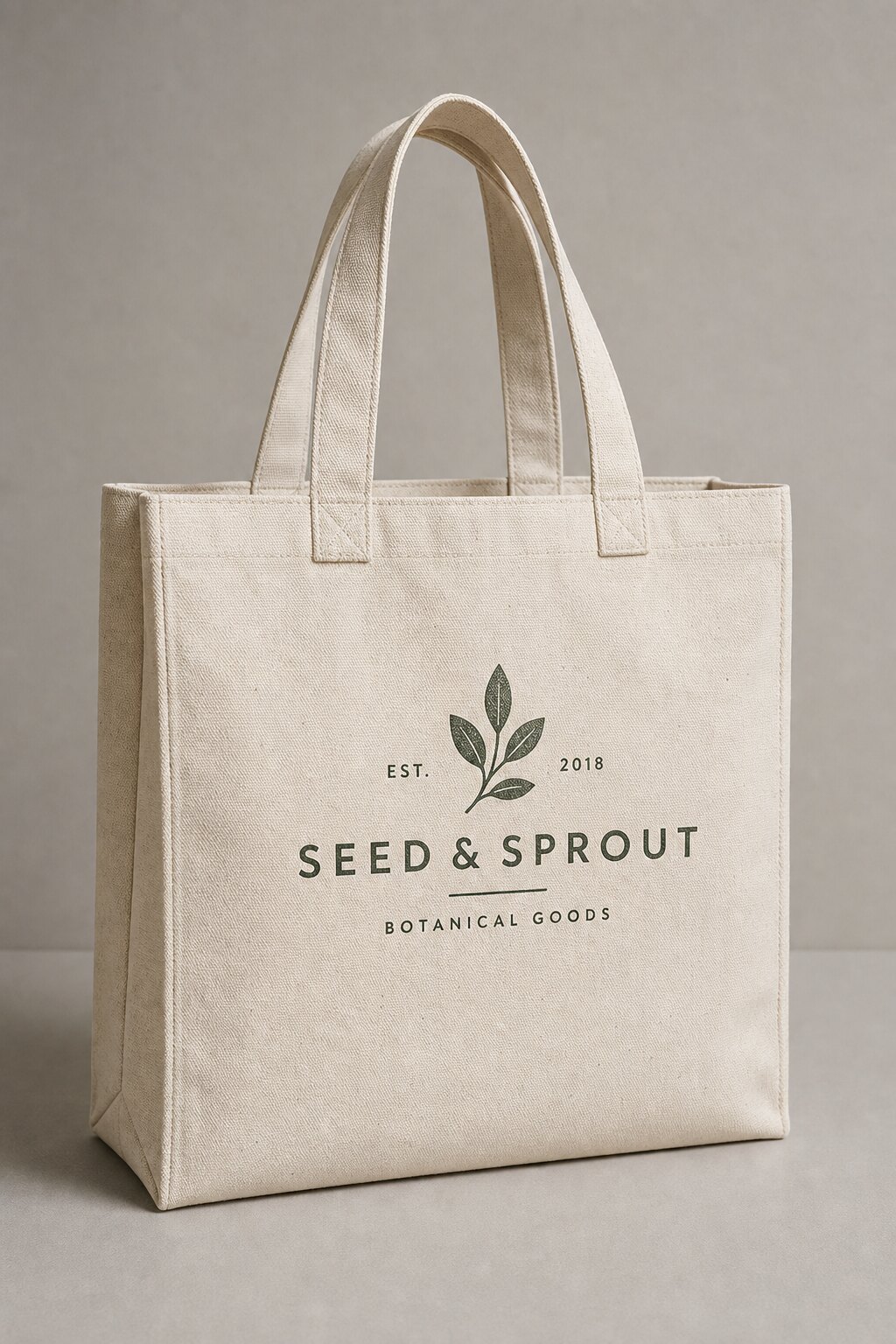
What retail buyers need from a canvas tote supplier
Retail brands do not just need tote bags that look good in a sample photo. They need a supplier that can hold the same fabric weight, color, print position, seam strength, and packing method across repeat orders.
For retail use, the buying problem is usually consistency. A tote that passes the first sample but shifts in handle length, print alignment, or stitching on the second order will create returns, rework, and store-level complaints.
- Match the tote to the sales channel: shelf display, ecommerce shipping, seasonal promo, or gift-with-purchase.
- Confirm whether the supplier can control fabric, decoration, sewing, and packaging in-house or through stable subcontractors.
- Ask for a repeat-order policy so the same spec can be reproduced after the first production run.
Compare suppliers on the spec that actually affects retail quality
A low unit price can hide weak canvas, thin thread, poor print registration, or loose tolerances on handles and seam allowance. The right supplier should be able to quote the exact build, not just a generic tote category.
- Canvas weight: check the GSM or oz/yd2, not just the word 'heavy duty'.
- Handle construction: compare webbing width, handle drop, stitching pattern, and reinforcement at stress points.
- Decoration method: verify whether the logo will be screen printed, embroidered, heat transferred, woven, or embossed on compatible materials.
- Packaging spec: confirm folding method, barcode placement, inner pack quantity, and carton count for retail receiving.
Use a simple buyer checklist before you approve the factory
This checklist helps procurement teams compare canvas tote bag suppliers on the items that matter most for retail programs.
- Can the supplier provide fabric swatches, print strike-offs, and pre-production samples before mass production?
- Are fabric weight tolerance, stitching allowance, and print color targets written into the order confirmation?
- Does the factory test seam strength, colorfastness, and logo durability before shipment?
- Can the supplier support retail labeling needs such as hang tags, care labels, barcode stickers, and country-of-origin marking?
- Is the lead time realistic for peak season, with buffer for sample approval and carton-level inspection?
Comparison table: what to verify on different retail tote builds
| Tote build | Best use | What to check | Common risk | | --- | --- | --- | --- | | Lightweight canvas tote | entry-price retail, events, gift shops | fabric GSM, handle stitching, print coverage | bag feels too soft or print shows through | | Heavy canvas tote | premium retail, bookstore, lifestyle brand | seam strength, handle reinforcement, shape retention | cost rises if spec is not controlled | | Laminated or coated canvas tote | higher moisture resistance, premium merchandising | coating uniformity, print adhesion, fold marks | cracking or peeling after use | | Gusseted canvas tote | shopping and carry volume | side/bottom gusset measurement, carton packing efficiency | distorted shape if cutting is inconsistent |
What to ask about sampling, QC, and repeat orders
Retail buyers should treat sampling as a production rehearsal, not a courtesy step. The sample should confirm fabric shade, logo placement, sewing accuracy, and the exact folding or packing method.
Ask the supplier how they control lot-to-lot variation in canvas, inks, thread, and accessories. A supplier with strong QC can explain where defects are checked, who signs off, and what happens if a batch misses tolerance.
- Request a pre-production sample that matches the final material and decoration method.
- Confirm whether the factory keeps approved shade bands, artwork files, and pattern markers for reorder consistency.
- Ask for defect limits by category: print defect, stitch defect, measurement defect, and packing defect.
- If the tote is for retail sale, confirm carton labeling and outer pack counts before approval.
When price should not be the deciding factor
If two suppliers are close on price, choose the one that can document specs, provide stable lead times, and reproduce the same tote on the next order. For retail brands, that usually saves more money than a small unit-cost difference.
A supplier that understands retail programs should be able to discuss margin, shelf presentation, packing density, and reorder planning without making the buyer explain every detail.
- Pay more when the bag will be displayed as a branded retail item, not a throwaway giveaway.
- Prioritize factories that can support consistent reorders across seasons and colorways.
- Use freight, carton efficiency, and defect risk when comparing the full landed cost.