Why Print Proofing Matters for Hotel Retail Backpacks
Custom cotton drawstring backpacks for hotel retail are usually bought for a narrow commercial purpose: they must look good on a gift shop shelf, carry a resort or destination identity, and survive normal guest use. The print is the most visible part of the product, but it is also where many purchase orders fail. A logo approved on a flat PDF can shift visually once the top channel is cinched. A cream cotton base can make a brand color look warmer than expected. A low-cost transfer can look acceptable in a sample photo but feel too stiff on a retail bag.
The proofing process should therefore cover more than artwork spelling and logo size. Procurement teams need to verify the fabric, the ink system, the drawcord, the stitch construction, and the packing fold at the same time. A correct proof is a manufacturing control document, not a decorative mockup. It reduces disputes between the brand owner, distributor, hotel buyer, and factory because everyone approves the same physical standard before bulk cutting and printing.
- Treat the signed sample as the production standard for fabric shade, print size, print hand feel, cord color, and packing fold.
- Do not approve bulk production from a rendered image when the order includes a new cotton color, new artwork, or new print method.
- Use filled-bag photos and cinched-top photos because hotel retail backpacks are not displayed only as flat panels.
Set the Cotton Fabric Specification Before Artwork Proofing
Print approval starts with fabric selection. Cotton drawstring backpacks can be made from light plain cotton around 140-180 GSM, common retail cotton canvas around 220-270 GSM, or heavier canvas above 300 GSM. For hotel retail, 6 oz to 8 oz cotton canvas is often the practical center point. It gives better shelf presence than a thin promotional bag while still folding neatly into a polybag or retail belly band.
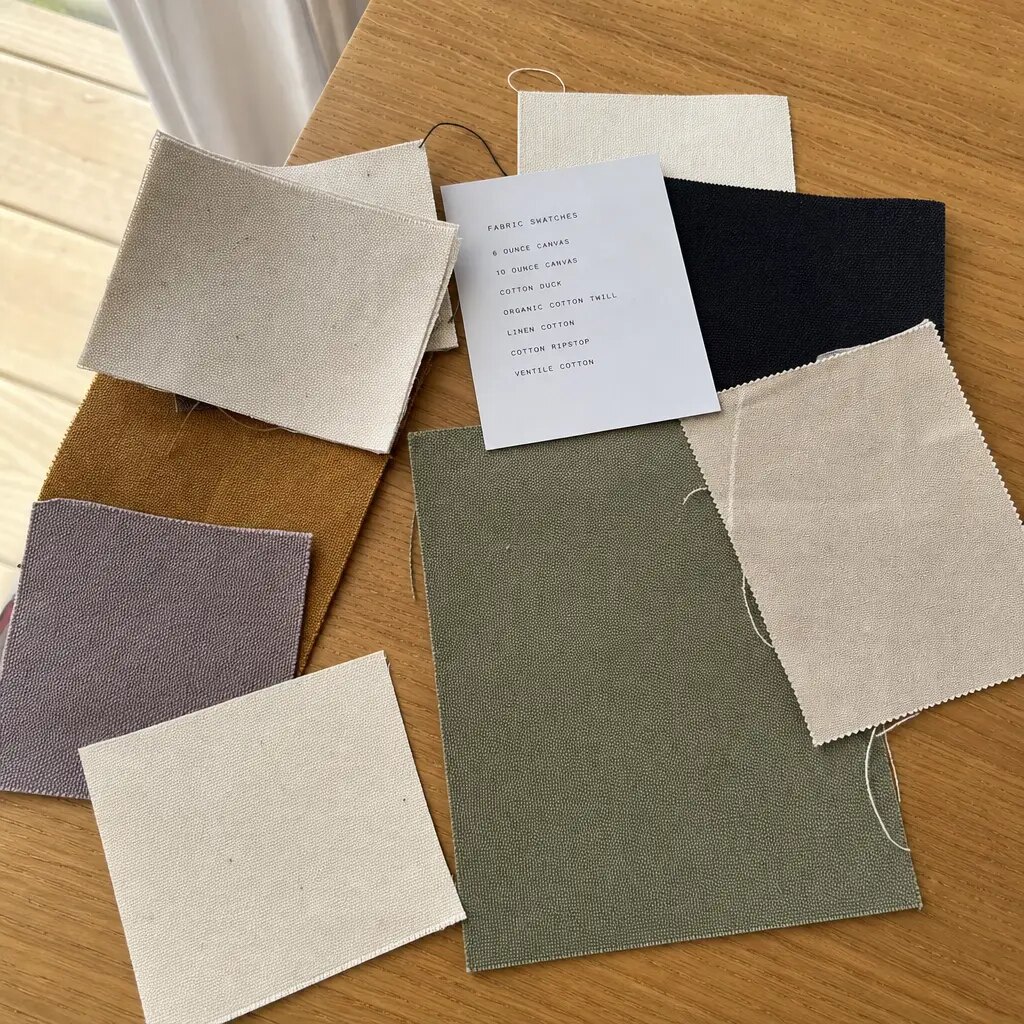
The same ink will not look identical on natural cotton, bleached cotton, dyed cotton, and recycled cotton blend. Natural cotton has slubs and a warm base shade that can soften sharp brand colors. Dyed cotton may need more opaque ink or an underbase when printing light artwork. If the buyer changes fabric after approving the print strike-off, the proof is no longer reliable. The RFQ should lock fabric weight, color, weave, and finishing before the factory calculates print cost.
- Light cotton, 140-180 GSM: lower cost and easy folding, but weaker retail feel and higher transparency.
- Retail canvas, 220-270 GSM: suitable for most hotel gift shop, spa, resort, and welcome bag programs.
- Heavy canvas, 300 GSM and above: stronger hand feel, but higher unit cost, bulkier cartons, and slower draw closure.
- Natural cotton shade should be approved from a real swatch because lot variation can affect logo contrast.
Choose the Print Method Around the Artwork, Not the Other Way Around
Screen print is usually the best value for custom cotton drawstring backpacks when the artwork has solid colors, clear shapes, and medium to large quantities. Water-based screen print gives a softer hand feel and fits natural cotton aesthetics, while plastisol or more opaque systems may be needed for bright colors on darker dyed cotton. Each color normally adds screen setup and production handling, so the quote must state the number of print colors included.
Heat transfer can work for multi-color hotel retail artwork, small property splits, or short runs where screen setup becomes inefficient. The tradeoff is hand feel, edge appearance, and long-term flexibility on a soft cotton base. DTG may suit very small runs or full-color images, but it is less predictable for bulk hotel retail unless the buyer accepts a slower process and tighter fabric limitations. Embroidery gives premium texture but changes the backpack weight, panel behavior, and cost structure; it also needs stitch-count confirmation instead of only print-size confirmation.
- Use screen print for solid hotel logos, destination names, simple icons, and repeat orders.
- Use heat transfer when many colors or property variations make separate screens uneconomical.
- Use embroidery only when the buyer wants a premium textured mark and accepts higher cost and stitch limits.
- Require a strike-off on the final fabric because ink opacity and edge sharpness change by cotton color and GSM.
Define the Usable Print Area on a Cinched Backpack
A drawstring backpack is not a flat tote bag. The top section folds into a channel, the cord gathers the opening, and the side seams pull inward when the bag is worn. If artwork is placed too close to the top, it may wrinkle under the drawcord channel. If the logo is too wide, the side edges may disappear visually when the backpack is filled. Hotel retail artwork often includes property names, destination illustrations, or co-branding, so placement discipline matters.
A practical proof should show the print position in relation to the drawcord channel, side seams, and bottom seam. For many cotton drawstring backpacks, keeping the main print at least 35 mm below the channel stitching and at least 25 mm from side seams helps reduce distortion. The exact allowance depends on bag size and construction. Buyers should request a flat photo, a cinched photo, and a lightly filled photo before approving production.
- State artwork size in millimeters, not only as a percentage of the front panel.
- Specify placement from the top channel stitch line and from the vertical center line.
- Avoid small text near the cord channel where fabric gathers during closure.
- Approve the visual balance on a filled sample if the backpack will be displayed with tissue, towels, or retail inserts.
Build a Proofing Workflow That Prevents Rework
The safest route is fabric swatch approval, then print strike-off, then full pre-production sample, then bulk approval. This may look slower than approving a digital mockup, but it prevents expensive corrections after fabric cutting. A strike-off confirms ink shade, print hand, edge sharpness, and opacity on the actual cotton. The pre-production sample confirms the finished backpack after sewing, cord threading, labeling, and packing.
For hotel groups and distributors, one additional step is useful: approve the master artwork standard before property-level variations are released. If ten resorts use the same backpack but different destination names, the buyer can approve the base layout, fabric, cord, and print method once, then proof each property name for spelling, alignment, and color. This keeps the program controlled without treating every variation as a completely new product.
- Stage 1: approve cotton fabric weight, shade, shrinkage expectation, and drawcord choice.
- Stage 2: approve print strike-off with Pantone target, artwork size, and print method noted.
- Stage 3: approve pre-production sample with final sewing, label, cord, and packing.
- Stage 4: release bulk production only after signed sample photos and written approval are archived.
Know the Cost Drivers Hidden Inside the Proof
Two suppliers can quote the same cotton drawstring backpack very differently because they include different assumptions. One quote may include 6 oz cotton, one-color screen print, cotton cord, no label, and bulk carton packing. Another may include 8 oz canvas, two-color print, woven side label, individual polybag, barcode sticker, and retail carton marks. The cheaper quote is not necessarily wrong, but it may not match the buyer's retail requirement.
Print proofing is a good time to expose these cost drivers. Screen setup fees, low-MOQ transfer production, custom dyed fabric, special cord colors, woven labels, individual packing, hangtags, and barcode handling can all change the final landed cost. Procurement teams should compare quotes in a matrix using the same specification and Incoterm. If the factory cannot clearly state what is included, the quote is not ready for purchasing approval.
- Fabric weight: higher GSM increases fabric consumption, carton weight, and sometimes sewing time.
- Print colors: each screen color can add setup cost and registration risk.
- Artwork coverage: large solid print areas require more ink and may create a heavier hand feel.
- Packing: retail polybags, belly bands, barcode stickers, and carton sorting add labor and materials.
- Order split: multiple hotel names or bag colors can reduce production efficiency even when total quantity is high.
MOQ Logic for Hotel Properties and Retail Distributors
MOQ should be discussed by production variable, not only by total order quantity. A factory may accept 3,000 pieces in total, but that does not automatically mean it can produce six fabric colors, ten property logos, and three packing styles at the same unit price. Cotton fabric purchasing, dyeing, print setup, label weaving, cutting efficiency, and packing segregation all create separate MOQ logic.
For hotel retail, the best structure is often a shared base specification with controlled artwork splits. For example, the buyer may use one natural 8 oz cotton backpack, one cord color, one label position, and several one-color property prints. This keeps material purchasing efficient while allowing retail variation. If every property needs a custom dyed cotton shade and multi-color artwork, the buyer should expect higher MOQ, more proofing rounds, and longer lead time.
- Group properties under one fabric color where possible to improve cutting and purchasing efficiency.
- Keep print colors consistent across artwork versions to reduce screen and approval complexity.
- Separate MOQ for woven labels if each hotel property needs a unique label.
- Use carton sorting instructions early if distributors need property-specific shipment allocation.
Sample Checks That Buyers Should Not Skip
A pre-production sample should be inspected like a small production lot. Measure finished size, fabric thickness, cord length, cord pull, seam quality, logo placement, print color, and packing result. The buyer should also open and close the backpack several times. A good sample can still fail in use if the drawcord is too thin, the channel is tight, or knots slip through the side opening.
Hotel retail buyers should also consider how guests will use the bag after purchase. Many will carry towels, slippers, snacks, small purchases, or event materials. That means bottom seams and corner stress points matter. If the backpack is intended as a premium retail item, the print hand feel and fabric slub tolerance should be stricter than for a free amenity bag. The sample approval sheet should record what is acceptable so later inspection is not based on memory.
- Measure at least three points: width, height, and print position from the center line.
- Rub the print with a dry white cloth and fold the printed panel to observe cracking or ink lift.
- Pull both cords evenly to confirm the top closes without twisting or blocked channels.
- Check inside seams for loose threads, skipped stitches, and exposed raw edges if the spec requires clean finishing.
- Review the packed sample because folding across a thick print can create marks before retail display.
Packing and Labeling Can Change the Approval Standard
Packing is part of the retail product, not an afterthought. A cotton drawstring backpack sold in a hotel shop may need a hangtag, belly band, barcode sticker, individual polybag, care label, or property-specific carton mark. Each item affects factory workflow and inspection. A backpack that looks good loose on a table may look uneven after being folded tightly around a thick cord or large print area.
Buyers should approve one packed sample in the same folding method planned for bulk. If the bag needs to sit upright in a retail bin, the fold should show the logo correctly. If it ships to multiple hotels through a distributor, carton marks and barcode data should be locked before production packing starts. Late packing instructions can hold finished goods in the factory and create repacking charges.
- Confirm whether individual polybags are required or whether bulk packing is acceptable for the hotel retailer.
- Place barcode stickers on a flat area that does not cover the main logo, legal text, or product feature.
- Define carton quantity and carton weight targets so freight quotes are not based on guesses.
- Use moisture protection for natural cotton goods when shipping during humid seasons or long ocean transit.
- Approve carton marks for property name, SKU, color, quantity, and destination warehouse.
Lead Time Risks After Print Proof Approval
Lead time does not start cleanly until the factory has final artwork, approved sample, confirmed packing data, and deposit or payment arrangement according to the order terms. Many hotel retail projects lose time because barcode files, label artwork, or property allocation lists arrive after the backpack sample is approved. The sewing line may be ready, but packing cannot be finished without these details.
Typical lead time planning should separate material preparation, sample proofing, bulk cutting, printing, sewing, packing, inspection, and export handover. If custom dyed cotton, woven labels, special cords, or multi-property sorting are involved, the schedule should include buffer. Buyers comparing suppliers should ask which part of the schedule is fixed and which depends on third-party materials. A supplier with a slightly higher unit price but clearer production calendar may reduce launch risk.
- Reserve time for strike-off approval before the full sample, especially for new fabric colors or multi-color artwork.
- Do not book retail launch dates based only on sewing time; include packing, inspection, and freight handover.
- Provide barcode, hangtag, and carton mark files before bulk packing begins.
- If the order is split by hotel property, approve the allocation list before carton labeling.
- Keep one approved sample at the buyer side and one at the factory side for inspection reference.
Specification comparison for buyers
| Spec decision | Recommended option | When it fits | Buyer risk to check |
|---|---|---|---|
| Fabric weight for hotel retail shelf bags | 6 oz to 8 oz cotton canvas for most souvenir, spa, amenity, and gift shop programs | Good balance of retail hand feel, foldability, print clarity, and carton efficiency | Below 5 oz may feel promotional; above 10 oz can raise freight cost and make draw closure bulky |
| Print method for hotel logo and destination artwork | Screen print for solid logos, heat transfer for multi-color small runs, DTG only for low-MOQ photo graphics | Screen print gives stable cost on bulk orders and strong opacity on natural or dyed cotton | Artwork with fine gradients, small serif text, or large ink coverage needs a strike-off before sales approval |
| Logo placement on drawstring backpack front panel | Keep main print at least 35 mm below drawcord channel and 25 mm from side seams | Prevents artwork distortion when the bag is cinched and avoids print loss into seam allowance | Artwork approved flat may look off-center when the top is pulled closed; require filled-bag photos |
| Drawcord material and color | Cotton cord or polyester cord matched to artwork, with tested pull strength and knot security | Cotton cord suits natural hotel retail look; polyester cord fits brighter dyed bags and heavier use | Unspecified cord diameter can change closure feel, MOQ, and final appearance between suppliers |
| Side label or woven brand tab | Small woven side label for retail identity; printed care label inside for compliance data | Useful when the front logo is destination artwork and the brand owner still needs identity | Woven labels add sampling time and MOQ; confirm label position before bulk sewing |
| Sample approval route | Pre-production sample using final fabric, final print method, final drawcord, and final packing fold | Best for hotel chains, resort retail, airport shops, and distributor programs with repeat orders | A digital mockup alone cannot approve ink shade, fabric shrinkage, handle pull, or carton packing result |
| MOQ and color split logic | Set MOQ by fabric color, print setup, and packing style rather than only by total quantity | Works when buyers need several hotel properties or destination names under one program | A supplier may quote one low MOQ but charge separate setup fees for each print colorway or property logo |
| Packing for hotel retail presentation | Flat folded in individual polybag or belly band, with barcode sticker and carton marks as needed | Suitable for retail shelves, welcome gift packs, spa shops, and distributor warehouse intake | Late barcode files or unclear carton marks can delay packing even after sewing is finished |
Buyer checklist before sampling
- Define final backpack size in centimeters, including tolerance, top channel height, and usable print area.
- Specify cotton fabric weight by GSM or ounce, such as 170-180 GSM for light 5 oz cotton or 220-270 GSM for common 6-8 oz retail canvas.
- State whether the fabric is natural, bleached, dyed, organic cotton, recycled cotton blend, or custom Pantone dyed cotton.
- Send vector artwork with Pantone references, print size, placement distance from seams, and whether the print must remain visible when cinched.
- Select print method before sampling: screen print, water-based screen print, plastisol screen print, heat transfer, DTG, embroidery, or woven label.
- Approve a physical strike-off on the actual fabric color before approving the full pre-production sample.
- Check drawcord material, diameter, color, knot finish, and pull strength instead of accepting a generic cord description.
- Confirm seam construction, channel stitching, bottom reinforcement, and whether inside overlock thread color should match.
- Review packing style, folding method, barcode placement, polybag warning text, carton quantity, carton size, and master carton marks.
- Compare quotes using the same Incoterm, MOQ split, sample fee, mold or screen fee, packing cost, and lead time basis.
Factory quote questions to send
- What cotton fabric weight, weave, shrinkage expectation, and available stock colors are included in this quote?
- Is the quoted print method screen print, water-based screen print, heat transfer, DTG, embroidery, or another process?
- How many print colors, screens, transfers, or embroidery stitches are included, and what is the setup charge per artwork?
- What is the MOQ by bag color, print design, destination name, and packing style if the program is split across hotel properties?
- Can you provide a print strike-off on final fabric before making the pre-production sample, and how many working days does it take?
- What are the standard size tolerances, print placement tolerances, color tolerance, and acceptable defect limits for bulk inspection?
- Does the unit price include woven labels, care labels, hangtags, barcode stickers, individual polybags, and export cartons?
- What is the estimated production lead time after sample approval, and which materials or labels could extend the schedule?
- What carton dimensions, gross weight, net weight, and units per carton should we use for freight quotation?
- Which documents can be supplied with shipment, such as commercial invoice, packing list, carton list, and inspection report?
Quality-control points to confirm
- Fabric GSM should be verified from bulk roll cutting records or random swatch weight checks, not only from the supplier quotation.
- Print color should be checked against approved Pantone or signed strike-off under consistent lighting before bulk packing.
- Main logo placement should stay within agreed tolerance, commonly plus or minus 5 mm for simple cotton drawstring backpacks.
- Print adhesion should pass basic rub testing and should not crack heavily after normal folding for retail packing.
- Drawcord channel must pull smoothly without skipped stitches, blocked corners, or cord twisting inside the top fold.
- Bottom seams and stress points should be checked with light pull testing because hotel retail buyers often use the bag as a day bag.
- Finished dimensions should be measured flat before and after normal cinching to confirm usable capacity.
- Packing inspection should verify barcode accuracy, retail fold consistency, carton marks, carton quantity, and moisture protection.