Start with the hotel retail use case
A cotton drawstring backpack for hotel retail is not the same as a basic promotional cinch bag. It may be sold in a resort boutique, included as a spa purchase add-on, stocked for cruise retail, or placed in guest rooms as a branded amenity. The product still carries the property name after the guest leaves, so fabric feel, print position, cord comfort, stitching, and packing all affect brand perception.
Begin the RFQ with the sales context. A gift-shop bag hanging on a hook needs the logo visible when the top is gathered. A folded spa-retail item may need a quieter mark that does not crack across the fold. A room amenity can use subtler branding, but it still has to arrive clean and consistent because staff place it before guests handle it.
For common finished sizes such as 34 x 42 cm and 36 x 45 cm, center-front branding is the safest starting point. Place the top of the artwork about 90-120 mm below the finished top edge so the print stays clear of the drawstring tunnel. A logo width of 120-180 mm works for many hotel names, spa marks, resort crests, and destination graphics. Larger artwork can work, but it must be checked on a real sample when flat, cinched, folded, hanging, and lightly loaded.
- Define whether the item is paid retail, amenity, event merchandise, loyalty gift, cruise retail, or distributor stock.
- Quote finished size after sewing, not cutting-panel size before seams and top-channel folding.
- Keep the main logo away from the drawstring tunnel, side seams, bottom tabs, and hard fold lines.
- For multi-property programs, use one placement grid and swap only approved property artwork.
Make fabric quotes comparable
The word cotton does not define the bag. Suppliers may quote thin 120-150 GSM cotton, 180-220 GSM plain weave, 6 oz canvas, 8 oz canvas, 10 oz canvas, recycled cotton blends, or cotton-poly blends. These options can look similar in photos but differ in structure, sewing performance, print stability, carton weight, and retail feel.
For many hotel retail programs, 8 oz cotton canvas is a practical middle tier: stronger than lightweight cotton but still foldable for shelf packing. A 10 oz canvas gives a more premium hand feel, but it increases cost, freight weight, and sewing bulk at the top channel and bottom tabs. A 180-220 GSM plain cotton bag can suit lower-cost amenities or entry retail, but it usually has less body than canvas.
Color also affects MOQ and approval risk. Natural unbleached cotton supports a relaxed, low-plastic look, but slubs and shade variation may be visible. Bleached white gives strong logo contrast and a clean retail appearance, yet it shows handling marks quickly. Dyed, pigment-dyed, or enzyme-washed fabrics can better match resort styling, but buyers should approve shade, hand feel, shrinkage, and colorfastness on the final process, not on a generic swatch.
Write the weight tolerance into the order. A common commercial target is +/- 5% when sample and bulk are measured the same way. Also ask whether the quoted weight is greige, finished, or catalog average. Keep a sealed approved sample and fabric swatch for reorders.
- 180-220 GSM cotton: lower-cost option for amenities or light retail.
- 8 oz canvas: balanced choice for many hotel gift-shop and resort programs.
- 10 oz canvas: more premium feel with higher cost, freight weight, and sewing bulk.
- Dyed or washed fabric: stronger styling potential with higher MOQ and approval requirements.
- Natural cotton: appealing texture, but shade variation and cotton slubs must be accepted within limits.
Choose print method after artwork review
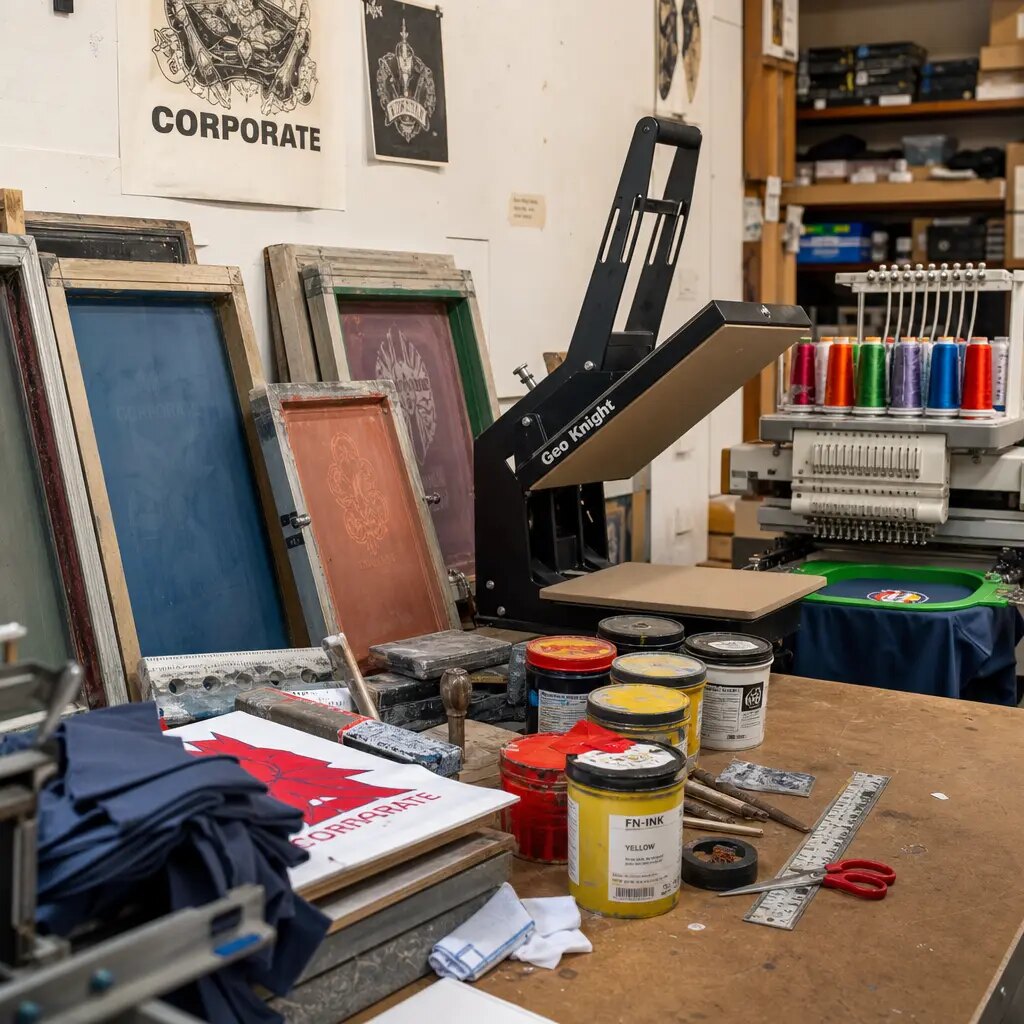
Most hotel logos, resort names, spa icons, and simple destination marks work well with screen printing, especially when artwork uses one to three solid colors. Screen printing is efficient at wholesale quantities and prints directly onto cotton. It still needs review for fine lines, small serif text, crest detail, ink opacity, and registration between colors.
Heat transfer is useful for gradients, photos, small runs, and complex full-color graphics. It can also look glossier than cotton and may show a film edge. Test transfers for edge lifting, cracking, adhesive marks, trapped lint, and crease resistance after packing. Digital print can support complex artwork, but color expectation, pretreatment, dry rub, and fabric texture must be checked on the selected cotton.
Do not approve bulk production from a digital mockup alone. Mockups make every mark look flat, centered, and saturated. A print strike-off on final fabric shows real ink color, opacity, edge sharpness, registration, and hand feel before panels are cut and sewn. It is the most efficient point to correct print risk.
- Use screen print for solid hotel logos and simple line art.
- Use heat transfer for photos, gradients, or complex color only after edge-lift and crease testing.
- Use embroidery for small accents, not large soft-panel graphics that may pucker.
- Provide vector artwork, Pantone references, final width, and brand clear-space rules.
- Separate screen charges, strike-offs, setup, and artwork adjustment in the quote.
Build a logo placement grid QC can measure
Drawstring backpacks move during use. The top gathers, the front panel curves around contents, and the bottom corners pull under cord tension. A logo that looks centered on a flat mockup may distort when the bag is cinched or worn. A hotel retail logo placement guide should therefore use dimensions and safe zones, not only visual approval.
A clear instruction might read: “Front center screen print, artwork width 150 mm, top of artwork 110 mm below finished top edge, horizontally centered, placement tolerance +/- 7 mm, artwork size tolerance +/- 3 mm.” This gives production a fixture target and gives inspection a measurable standard.
For 34 x 42 cm and 36 x 45 cm finished bags, keep artwork at least 50 mm from side seams where possible. Keep the top of the logo at least 80-100 mm below the top edge; 90-120 mm is safer for many retail displays. Avoid small text within 20-30 mm of the bottom edge because it can curve when loaded or pulled by the cords.
Soft cotton needs realistic tolerances. Fabric can move during cutting, printing, sewing, pressing, and packing. Zero-tolerance logo placement usually creates avoidable inspection disputes. Placement tolerance of +/- 5 mm to +/- 10 mm is more practical, depending on artwork size and factory fixture control.
- Reference placement from the finished top edge and horizontal center line.
- State logo width, top offset, side clearance, placement tolerance, and print-size tolerance.
- Add side label, hangtag, barcode, belly band, and price sticker positions to the same drawing.
- Review the sample flat, cinched, folded, hanging, and lightly loaded.
- Keep the approved placement drawing with the sealed sample.
Control construction details guests notice
A drawstring backpack looks simple, but quality risk sits in small construction details. The top channel must be clean enough for smooth cord movement. Side seams need controlled seam allowance and consistent stitch density. Bottom corner tabs must capture the cord securely without twisting, exposing raw edges, or opening at the seam.
Drawcord choice affects both function and positioning. Cotton rope supports a natural resort or spa story. Flat cotton cord packs neatly and can feel softer on the shoulder. Polyester cord may slide easily and reduce cost, but it can feel less aligned with a cotton retail product. The RFQ should state material, diameter or width, color, length, knot style, and end finish.
Corner reinforcement should be described in production terms: self-fabric triangular tabs, reinforced seam capture, bar tack, box stitch, or equivalent. Ask what the quote includes and whether a pull check is part of QC. After repeated firm pulls on both cords, inspect for seam opening, skipped stitches, cord slippage, raw-edge exposure, and tab distortion.
- Specify cord material, diameter or width, length, color, and knot or finish method.
- Confirm top channel width and cord movement on the pre-production sample.
- Define bottom tab construction and check for twisting, raw edges, and cord slippage.
- Check stitch density, seam allowance, skipped stitches, puckering, and loose thread trimming.
- If fabric is washed after sewing, recheck shrinkage, seam twisting, label readability, and hand feel.
Clarify MOQ by component
MOQ is usually driven by components and setup, not only by the finished bag. A natural cotton body with one-color screen print has a simpler MOQ structure than custom-dyed canvas with custom cords, woven labels, hangtags, barcode stickers, and retail packing. If a buyer asks only for “the MOQ,” the true constraint may appear too late.
Ask whether MOQ applies per order, body color, logo design, print color count, label, packing format, SKU, or shipment destination. A hotel group may want 3,000 pieces across six properties and assume it meets MOQ. The factory may treat it as six separate 500-piece print setups if every property has a different logo.
The simplest way to reduce MOQ pressure is to standardize the base product: one fabric weight, one body color, one cord, one reinforcement method, one label location, one packing method, and one carton plan. Then vary only the approved front logo when needed. Request tiered pricing at MOQ, efficient production quantity, and expected reorder quantity.
- Ask for MOQ by body color, logo design, print color count, label, packing material, and SKU.
- Separate setup charges from unit price for accurate small-run comparison.
- Standardize the base bag for multi-property programs.
- Confirm overage and underage tolerance for custom production quantities.
- Ask whether mixed-property packing or destination sorting changes cost.
Use sampling as a production gate
Sampling should prove how the bag will be made, not just how it might look. A blank construction sample confirms finished size, fabric hand feel, cord movement, and reinforcement. A print strike-off confirms ink color, opacity, edge sharpness, registration, and hand feel on final fabric. A full pre-production sample should combine fabric, print, cord, labels, folding, unit packing, and carton marking approach.
Review the sample like a guest and a retail associate. Hang it on the intended hook. Fold it as the store will display it. Cinch it fully, open it again, and place a light guest-use load inside. Check the logo from normal viewing distance. If the fold crosses the print, look for hard creases, scuffing, or transfer marks. If the hangtag or barcode covers the logo, move it before bulk packing starts.
Record approvals in writing. Note the sample date, fabric reference, measured fabric weight, finished dimensions, logo width, logo offset, Pantone or strike-off reference, cord length, label placement, packing method, and accepted tolerances. Photos should show the bag flat, cinched, folded, packed, and labeled.
- Approve a blank construction sample when evaluating fabric, size, and cord.
- Approve a print strike-off before bulk printing.
- Approve a full pre-production sample before bulk cutting, sewing, or packing.
- Measure logo placement and finished size on the sample and record them in the PO.
- Keep approval photos and one sealed sample for production and inspection.
Write inspection thresholds into the PO
Cotton goods have natural variation, but retail acceptance cannot rely on personal judgment. The purchase order should define tolerances and defect categories before production begins. Front-panel defects matter most because the item is displayed under store lighting and handled by paying guests.
Useful tolerances include fabric weight, finished size, logo position, print size, and carton count. Finished size is often controlled to +/- 1 cm for soft cotton drawstring backpacks. Fabric weight may be set at +/- 5% when the measurement method is agreed. Logo placement often falls within +/- 5 mm to +/- 10 mm, while print size may use a separate tolerance such as +/- 3 mm.
Classify defects before inspection. Major defects may include wrong logo, wrong fabric, wrong body color, missing label, severe front-panel stain, open seam, unusable drawcord, broken bottom tab, wrong packing, or incorrect barcode. Minor defects may include small loose threads, light removable dust, slight slub, or logo variation within tolerance.
Functional checks should not be skipped. Inspectors should pull both cords, cinch and open the channel, check tab stitching, flex the printed panel, perform a dry rub check with a white cloth, and inspect seams for skipped stitches. Packing inspection should confirm approved fold, label position, barcode scannability, unit count, carton marks, carton strength, and destination allocation.
- Set measurable tolerances for fabric, size, logo placement, print size, and carton quantity.
- Treat wrong logo, wrong color, open seam, failed cord, and missing label as major defects.
- Treat small loose threads, light dust, and acceptable natural slubs as minor defects.
- Inspect cord slide, channel opening, bottom tabs, seam strength, print flex, and dry rub.
- Confirm barcode, hangtag, unit packing, carton marks, and destination sorting.
Decide packing before final approval
Packing affects logo presentation, freight, receiving, and sustainability messaging. Loose bulk packing reduces unit material and cost, but it can create inconsistent folds, print abrasion, count disputes, and extra handling at the hotel warehouse. Individual polybags protect each unit and simplify counting, but they may conflict with a low-plastic retail story. Paper belly bands, glassine-style bags, kraft sleeves, recycled polybags, and hangtags can all work when sampled and specified.
Choose the packing method before final sample approval because it can change crease lines and logo visibility. If the bag is folded with the logo facing out, the print must tolerate folding and transit abrasion. If the logo is folded inside, the package should still identify the SKU through a barcode, property code, item name, color, or size label. A belly band should not cover essential logo elements unless that is the intended display.
Hotel receiving teams need accurate carton data. Ask for pieces per inner carton, pieces per master carton, carton dimensions, net weight, gross weight, carton material, and carton marking layout. For multi-property programs, confirm whether cartons can be packed and marked by destination, property, retail location, or SKU.
- Use loose bulk packing only when shelf-ready presentation is not required.
- Use recycled polybag, glassine-style bag, kraft sleeve, or belly band when cleanliness and counting matter.
- Confirm the approved fold does not create hard creases across the logo or barcode.
- Require carton marks with PO, SKU, color, quantity, destination, carton number, and gross weight.
- Get carton dimensions and gross weight early for freight and hotel receiving plans.
Protect launch timing with approval gates
Lead time depends on fabric availability, dyeing, printing, label production, sample approval speed, packing material preparation, factory capacity, inspection, and freight. A natural cotton bag with one-color screen print is simpler than custom-dyed canvas with custom cord color, woven labels, hangtags, and retail packing. The production clock should start only after artwork, fabric, color, construction, packing, and payment or deposit terms are approved.
Hotel programs often have fixed dates: resort openings, seasonal launches, conferences, cruise departures, spa promotions, and distributor delivery windows. Common delays include late Pantone changes, unclear logo size, missing vector artwork, barcode files supplied after packing starts, label compliance updates, unapproved carton marks, and slow sample feedback.
Use gates: artwork review, fabric confirmation, print strike-off, full pre-production sample, packing sample, bulk release, in-line check, final inspection, and freight handover. Schedule inspection while rework or repacking is still possible. If cartons must be delivered by property, confirm allocation and packing-list format before final packing begins.
- Do not start bulk cutting until fabric, size, placement, cord, and packing are approved.
- Allow extra time for dyed fabric, custom cords, woven labels, hangtags, barcodes, and retail packaging.
- Use approval gates for artwork, strike-off, pre-production sample, packing, and final inspection.
- Book inspection before freight handover so failed goods can still be corrected.
- Confirm carton data early for freight quotes, routing, distributor booking, and hotel receiving.
Specification comparison for buyers
| Sourcing option | Typical specification | Best fit | Tradeoff to check |
|---|---|---|---|
| Budget amenity tier | 180-220 GSM plain cotton, natural or white body, one-color screen print, standard cotton or polyester cord, loose bulk packing | Room amenities, event merchandise, short-term promotions, cost-sensitive distributor programs | Lower structure and lighter hand feel; confirm fabric weight, print opacity, seam strength, and whether the item still suits paid retail |
| Core hotel retail tier | 8 oz cotton canvas, center-front screen print, cotton rope or flat cotton cord, reinforced bottom tabs, hangtag or barcode label, controlled fold | Gift shops, resort boutiques, spa retail, cruise retail, welcome shop merchandise | Usually the best balance, but quotes vary by cord, label, packing, and reinforcement details; lock the full spec before comparing price |
| Premium resort tier | 10 oz cotton canvas or heavier dyed canvas, refined print or small embroidery, custom cord color, woven label, retail-ready packing | Higher-priced resort retail, destination merchandise, branded spa collections, multi-property boutique programs | Higher cost, heavier cartons, thicker sewing points, possible higher MOQ for dyed fabric, custom cords, labels, and packing |
| Complex artwork tier | Canvas or plain cotton matched to artwork, heat transfer or digital print for gradients/photos, strike-off required, protective packing | Full-color destination graphics, illustrated property artwork, limited seasonal designs | Transfer gloss, film outline, edge lift, cracking, dry rub, and packing creases must be tested on final fabric |
| Multi-property standardized tier | One shared bag body, one fabric, one cord, one packing format, property-specific front logo only | Hotel groups, distributors, cruise lines, resort collections with multiple locations | Reduces MOQ pressure and simplifies QC, but brand teams must agree on one placement grid and common base color |
| Material | 6-10 oz cotton canvas, 210D polyester, rPET, or blended cotton with shrinkage and colorfastness expectations set before sampling | Before price comparison | Different cloth weights, backing, or certification claims make quotes hard to compare |
| Construction | cord diameter, eyelet or reinforced channel, bottom corner reinforcement, seam allowance, bar-tack position, and load target | Before sampling | Weak stress points create returns and failed inspections |
| Decoration | screen print, transfer, embroidery, woven label, or drawstring tag tested against folding and abrasion | Before artwork approval | The wrong method can crack, bleed, pucker, or fail on the chosen fabric |
Buyer checklist before sampling
- Define the channel: paid retail, room amenity, spa merchandise, event item, cruise retail, loyalty gift, distributor stock, or multi-property rollout.
- Specify finished bag size after sewing; common retail sizes are 34 x 42 cm and 36 x 45 cm with a stated tolerance.
- State fabric construction and weight, such as 180-220 GSM cotton, 8 oz cotton canvas, or 10 oz cotton canvas, including weight tolerance.
- Confirm body color process: natural unbleached, bleached white, dyed, pigment dyed, enzyme washed, or custom matched.
- Provide vector artwork, Pantone references, final logo width, clear-space rules, and any small text or fine-line concerns.
- Mark logo position by measurement from the finished top edge and horizontal center line; include placement and print-size tolerances.
- Define all branding items: main print, side label, care label, fiber content label, country-of-origin label, hangtag, barcode, price sticker, and property code.
- Specify drawcord material, diameter or width, length, color, knot style, and whether the cord supports the intended retail positioning.
- Confirm bottom reinforcement, including tab fabric, seam capture, bar tack or box stitch, and any pull-check requirement.
- Approve a print strike-off on final fabric and a full pre-production sample before releasing bulk production.
Factory quote questions to send
- What exact fabric construction and weight are included in the quote, and is the weight measured before or after finishing?
- What is the finished bag size after sewing, what measurement points do you use, and what size tolerance will be written into the order?
- Is the quoted price based on natural, bleached, dyed, washed, or custom color fabric, and what MOQ applies to each body color?
- What logo size and safe print area do you recommend for this finished size, and what placement tolerance can your fixture maintain?
- Which print method is included, and are screen charges, films, Pantone matching, strike-offs, curing, setup, and artwork adjustment included or separate?
- Can you review the artwork for small type, fine lines, registration risk, ink opacity, fabric texture, and transfer-film concerns before final quote approval?
- What MOQ applies by bag body, body color, print design, print color count, woven label, hangtag, barcode label, packing format, and shipment destination?
- What drawcord material, diameter or width, cord length, knot style, and color are included, and can you provide a cord swatch before sampling?
- How are bottom corner tabs reinforced, what stitch type and stitch density are used, and what functional pull check can be performed?
- What unit packing, inner carton, master carton, carton dimensions, gross weight, carton marks, and destination sorting are included in the quote?
Quality-control points to confirm
- Fabric weight tolerance should be agreed before production, commonly +/- 5%, using the same GSM or oz measurement method for sample and bulk.
- Finished size tolerance should be stated, commonly +/- 1 cm for soft cotton drawstring backpacks unless tighter control is confirmed.
- Logo position tolerance should be controlled, often +/- 5 mm to +/- 10 mm depending on artwork size, fixture control, and fabric movement.
- Print size tolerance should be separate from placement tolerance; +/- 3 mm is a practical target for many screen-printed front logos.
- Print color should be checked against the approved Pantone reference or physical strike-off under consistent lighting, not only by phone photos.
- Screen print should show even coverage, clean edges, acceptable registration, and no heavy cracking after folding and light flexing.
- Dry rub should be checked with a white cloth after curing; visible transfer should be judged against the buyer-approved defect standard.
- Heat transfer prints should be checked for edge lifting, excessive gloss, film outline, adhesive marks, trapped lint, and packing crease lines.
- Drawcords should slide smoothly through the top channel without tearing fabric, catching loose threads, twisting excessively, or cinching unevenly.
- Bottom corner tabs should withstand normal pull stress without seam opening, skipped stitches, raw-edge exposure, cord slippage, or tab distortion.