Start With the Hotel Job
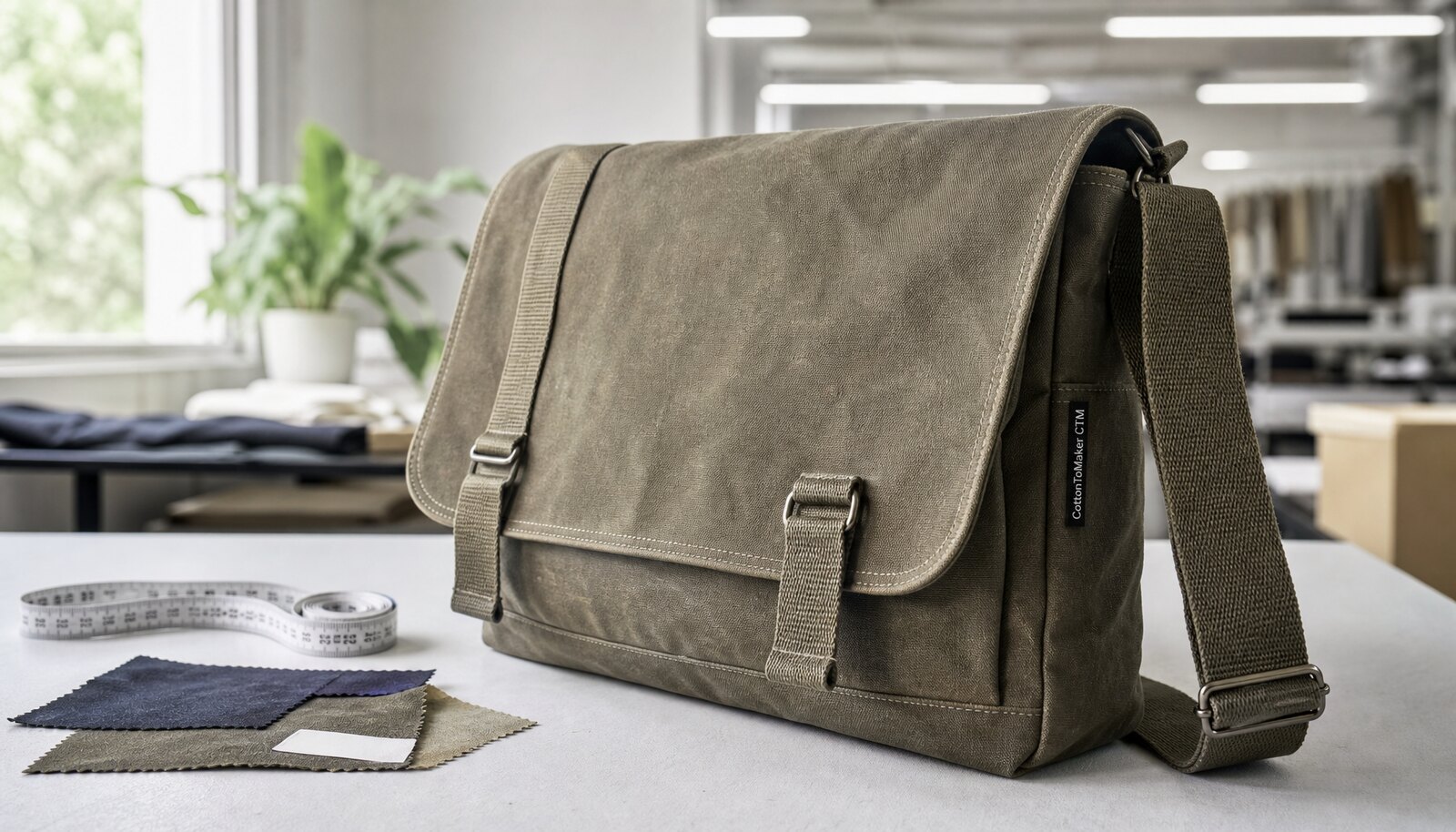
The first mistake in sourcing heavy duty messenger bags for hotels is treating them like generic promotional bags. Hotel buyers usually need a bag that works in service conditions: a concierge carrying guest documents, a runner moving amenity packs, or housekeeping transporting small supplies between floors. That means the bag has to look clean at the front desk, carry weight without sagging, and survive constant opening, closing, and dragging across counters and carts. If you do not define the job, every supplier will quote a different idea of heavy duty, and the numbers will not compare.
For RFQ purposes, write down the actual load and the actual user. A bag for room-delivery inserts and brochures can stay lighter than one that carries tablets, key folders, and small guest orders. Hotels also care about presentation more than many corporate buyers. A stiff canvas bag with a neat logo can look intentional; a bag with excess pockets, weak webbing, or a shiny finish usually looks cheap. If the bag is meant for staff, guest-facing use, or both, say that up front because it changes the spec, the print method, and the acceptable price.
- Define the end user before you ask for a quote.
- State the real carry load, not just the bag size.
- Separate front-of-house presentation from back-of-house durability requirements.
Set the Fabric and Structure
For most hotel programs, the starting point is canvas in the 12 oz to 14 oz range, which roughly maps to 400 gsm to 470 gsm depending on weave and finish. Twelve-ounce canvas is usually enough for papers, tablets, and daily runner use if the construction is reinforced. Fourteen-ounce canvas gives a more structured body and better resistance to edge wear, but it increases cost and can push lead time if the mill lot is not already available. If the supplier offers only a vague description like heavy canvas, stop and ask for the actual GSM, yarn count, and whether the cloth is raw, washed, or pre-shrunk.
Structure matters almost as much as fabric weight. A messenger bag that will hold shape in a hotel setting usually needs lining, a base reinforcement, and bartacks at every stress point. If you want the bag to feel premium and stay upright on a counter, ask for a bottom board or a hidden stiffener. If you want softness and a lower price, you can drop some reinforcement, but then you need to accept more sag and a shorter service life. The right answer depends on whether the bag is an everyday tool or a guest-facing branded item that needs to stay presentable for a long time.
- Use 12 oz / about 400 gsm for moderate load and tighter budgets.
- Use 14 oz / about 470 gsm when the bag needs more body and longer wear life.
- Specify lining and bottom reinforcement if the bag must stay upright.
Build the Strap, Closure, and Pocket Layout
Hotel buyers often under-spec the strap and over-spec the pocket count. That is backwards. The strap and the closures carry the abuse, so they need to be written into the spec with real measurements. A shoulder strap around 38 mm wide is a practical starting point for comfort and load spread. If the strap is narrower, it tends to cut into the shoulder when staff carry a full bag. Webbing should be dense enough not to curl or twist, and the attachment points should have bartacks or box-x reinforcement, not just a single line of stitching. Metal adjusters can improve the feel, but they also add cost and should be consistent across the order.
On the closure side, a zipper top is usually the safer choice for hotel operations because it keeps documents, tablets, and small items from falling out during movement. A flap can look softer and more retail-friendly, but it does less to protect contents if the bag is tossed into a service cart. The internal layout should stay simple: one main compartment, one front pocket for quick access, and optional divider pockets only if the hotel has a clear use case. Extra pockets are not free, and they slow sewing, increase defect risk, and often go unused after the first month.
- Use strap width as a comfort and load spec, not a cosmetic detail.
- Prefer zipper closure for secure hotel transport.
- Keep pocket logic simple unless the hotel has a proven workflow.
Choose a Branding Method That Survives Use
For canvas messenger bags, the most practical branding routes are screen print, woven labels, and small embroidery. Screen print is the usual starting point when the hotel wants a clear logo, a low print cost, and consistent repeat production. It works best with one or two colors and a flat placement area. Woven labels are good when the brand wants a cleaner, more durable mark on the side seam, flap, or strap end. Small embroidery can look premium, but it is not the cheapest route and it can distort on thick canvas if the logo is too detailed. For hotel procurement, the right method is usually the one that holds up after handling, not the one that looks best on a flat art sheet.
Placement matters as much as method. A logo on a high-flex zone will crack, curl, or distort faster than one placed on a stable panel. Ask the factory for the exact print area in centimeters and make them show it on the sample, not just in a mockup. If the logo has fine text, gradients, or multiple colors, simplify it before production. Buyers often lose time trying to preserve too much artwork on a low-margin bag. A strong hotel bag usually carries a restrained logo and leaves the fabric and construction to do the rest of the work.
- Use screen print for simple logos and repeat orders.
- Use a woven label when you want a durable, understated brand mark.
- Keep artwork flat, simple, and away from fold lines.
Compare Supplier Routes Before Price Shopping
If you only compare unit price, you will miss the real sourcing difference. A direct cut-and-sew factory is usually the best route when you want control over fabric weight, reinforcement, lining, and logo placement. A hotel merchandise integrator can be useful if the bag is only one line item in a larger project, but the actual bag may still be made by a third party. A trading company can help if you need mixed categories or a smaller initial order, but you need to understand whether they are controlling the factory or simply relaying your spec. For hotel buyers, the right route depends on how much control you need versus how much coordination you can tolerate.
The comparison table should help you avoid false equivalence. A generic promo-bag seller may quote low because the bag is lighter, the canvas is thinner, and the sewing standard is lower. A direct factory may quote higher at first, but the quote often becomes more predictable once the spec is locked. In hotel sourcing, the cheapest quote can become expensive if the bag fails in service, gets rejected at sample stage, or arrives with uneven branding. The goal is not the lowest number. The goal is the lowest defensible landed cost for a bag that passes inspection and stays presentable in use.
- Use direct factory sourcing when spec control matters.
- Use a trading company only if they add real coordination value.
- Reject quotes that hide the actual fabric, trim, or sewing assumptions.
Read the Quote Like a Production Buyer
A usable quote is not just a unit price. It should break out the exact canvas weight, lining, webbing, zipper, label, print method, packing format, sample fee, and any tooling or setup charge. If a supplier says the bag is made from heavy canvas but does not give GSM, the quote is incomplete. If the print method is not stated, you cannot compare durability or cost. For hotel buyers, a clean quote is the easiest way to separate real factories from middle layers that are guessing at the cost structure.
The easiest way to compare quotes is to send one standardized brief and force every supplier to quote the same assumptions. That brief should include finished size, target load, logo artwork, print colors, strap width, closure type, pocket count, packing method, carton count, and destination port or trade term. If you want a meaningful comparison, ask the factory to note what is excluded. A quote that omits packaging, inspection, or sample revision work can look cheaper on paper while costing more later. That is especially common with custom canvas products where one small change in trim can move the whole price.
- Demand a line-item quote, not a single lump sum.
- Standardize the RFQ so suppliers cannot quote different assumptions.
- Separate sample cost, tooling cost, and bulk price.
Approve Samples With Real Load Tests
For a hotel messenger bag, the sample stage is where you catch most problems cheaply. Start with a pre-production sample that uses the final fabric weight, final print method, and final trim color. Do not approve a demo sample made from substitute materials if the bag will be used in a real hotel program. Once the sample arrives, measure it, inspect the stitching, test the zipper, and load it with the actual contents you expect staff to carry. A bag that looks right on a table can fail once the strap is loaded and the fabric starts to pull.
Set simple acceptance criteria before you approve the golden sample. If the logo shifts, the strap twists, or the bottom panel caves in under normal load, the sample is not ready. Check color against the approved swatch, especially if the hotel brand is sensitive to shade. For print, look at edges and corners where ink can break. For embroidery, inspect the reverse side and the fabric distortion. Keep one sealed approved sample in your records so both sides can use the same reference during bulk production and later reorders.
- Test the bag under the real carry weight before bulk approval.
- Keep one sealed golden sample tied to the final spec.
- Reject substitute materials if the sample is supposed to represent production.
Pack for Housekeeping, Concierge, or Guest Delivery
Packing is often ignored until the first shipment lands. Hotels usually need bag programs broken into clean pack units, sometimes by floor, by department, or by property. That means the factory needs to know whether the bags should arrive in individual polybags, with barcode stickers, with size tags, or with carton marks for each hotel site. If the buyer only says pack normally, the factory will choose a standard industrial pack that may not suit hotel receiving teams. Clear packing instructions reduce manual sorting and prevent errors when a distributor or procurement team is handling multiple properties.
If the bags will be stored for a while before deployment, ask for moisture protection and carton strength that can handle sea freight or warehouse staging. Canvas can pick up odor and edge marks if the packaging is poor. For hotel distribution, clean packing is not about cosmetics. It is about avoiding damaged corners, dirty labels, and mismatched counts when the bags are transferred from the warehouse to the property. Ask for carton dimensions, carton weight, and the number of bags per carton so you can plan storage and freight density correctly.
- Specify packing by destination, not by factory habit.
- Use barcode or size labels if the bags will be distributed across multiple sites.
- Confirm carton count and moisture protection before shipment.
Plan Lead Time, MOQ, and Change Control
A realistic hotel bag timeline is usually driven by fabric availability, print setup, and sample approval more than by sewing time alone. If the factory can use stock canvas, the process is faster and the MOQ can stay lower. If you need custom-dyed fabric, special hardware, or multi-color branding, the order will slow down because every added variable needs to be sourced and approved. This is why MOQ logic should be tied to the number of variables, not just to the bag itself. One color of stock canvas with one print color is the simplest and safest path for a first order.
Change control is where many hotel projects get delayed. A logo adjustment, strap color change, or lining swap after sample approval can reset materials and shift the schedule. If the hotel brand is still debating details, hold the order until the critical decisions are fixed. Otherwise the supplier will either pause production or quote again. For importers and distributors, the practical move is to lock the final spec in writing, get the approved sample signed off, and then use that as the only production reference. That keeps the order moving and gives you a defensible position if the supplier tries to ship something different.
- Use stock materials when you need a lower MOQ and faster turnaround.
- Treat every post-approval change as a schedule and cost risk.
- Lock the final spec in writing before bulk starts.
Decide on Landed Cost, Not Unit Price Alone
The final sourcing decision should be based on landed cost and failure risk, not just factory price. A slightly higher-priced direct factory can still be the better buy if the bag arrives on spec, the packing matches the hotel program, and the reorder path is simple. A lower-priced quote may look attractive if you only compare the bag itself, but once you add rework, extra samples, repacking, and delayed delivery, the real cost can be higher. This is especially true for hotel messenger bags where appearance, durability, and batch consistency matter more than they do in purely promotional merchandise.
If you need to compare supplier options, use the same checklist across all bids: fabric GSM, lining, trim, logo method, packing, lead time, MOQ, and trade term. Then ask what could change the price after the quote. That one question often reveals whether the supplier really controls production or is just passing through estimates. For hotel buyers, a good sourcing outcome is not only a bag that looks right. It is a product that can be reordered, inspected, packed, and delivered without surprises.
- Compare total landed cost, not just factory unit price.
- Include rework, packing changes, and reordering risk in your decision.
- Favor the supplier who can repeat the spec without drift.
Specification comparison for buyers
| Spec decision | Recommended option | When it fits | Buyer risk to check |
|---|---|---|---|
| Supplier route | Direct cut-and-sew canvas factory | Best when you need custom size, lining, strap, and logo control | Confirm the factory owns sewing, cutting, and final QC instead of only passing the order to a subcontractor |
| Supplier route | Hotel merchandise or uniform integrator | Useful when the bag is one item inside a wider hotel program | Check who actually makes the bag and whether your spec can be held through sub-sourcing |
| Fabric weight | 12 oz canvas, about 400 gsm | Good for papers, tablets, amenity delivery, and moderate daily use | Ask whether the fabric is prewashed and how much shrinkage to expect after cutting and sewing |
| Fabric weight | 14 oz canvas, about 470 gsm with reinforcement | Better for heavier carry, a more structured look, and longer wear life | Watch for higher cost and longer lead time if the canvas is custom dyed or stiffened |
| Branding method | 1-color screen print or woven side label | Cleanest option for hotel branding with repeat orders | Confirm rub resistance, placement tolerance, and whether the artwork will crack on folded areas |
| Branding method | Small embroidery only | Works for premium-looking, low-color marks on thicker canvas | Check backing, puckering, and logo distortion on heavy fabric |
| MOQ strategy | One stock canvas color, one print color, one strap color | Lowest-risk route for a first hotel order or trial program | Ask whether MOQ changes if you change hardware color, lining color, or packaging format |
| Packing route | Individual polybag, size sticker, and master carton mark | Fits warehouse intake and hotel distribution teams | Confirm carton count, carton strength, and whether moisture protection is needed for sea freight |
Buyer checklist before sampling
- Define the user: front desk, concierge, housekeeping runner, guest delivery, or amenity transport.
- Lock finished size, target load, and whether the bag must hold A4 files, a tablet, or a small laptop.
- Choose the fabric weight in gsm and state whether you want raw canvas, washed canvas, or lined construction.
- Specify closure type, pocket count, strap width, and any reinforcement at the bottom or stress points.
- Provide logo artwork in vector format and state the print method, logo size, and one or two approved colors.
- Set packing requirements for hotel distribution: polybag, insert, barcode, carton count, and carton mark format.
- State your target MOQ, color strategy, and whether you need a reorder-friendly stock spec.
- Ask each supplier to quote the same assumptions so the comparison is apples to apples.
- Request a pre-production sample and a sealed golden sample before bulk approval.
- Build in a time buffer for fabric sourcing, print setup, and sample revisions.
Factory quote questions to send
- Are you quoting direct production from your own cutting and sewing line, or is any part subcontracted?
- What is the exact canvas weight, weave, and finish included in the quote, and can you show a swatch or photo?
- What is included in the unit price: lining, strap webbing, zipper, labels, bartacks, and packing?
- What is the MOQ by color, print color, and hardware color?
- What sample do you provide first, what is the sample fee, and how long does the sample take?
- What are the lead times for sample approval, bulk production, and carton-ready packing?
- Which inspection points do you cover before shipment, and can you share QC photos or a report?
- What trade term is quoted, and what changes would trigger a price change or new lead time?
Quality-control points to confirm
- Measure finished dimensions against the approved sample, with a tight tolerance on width, height, and gusset depth.
- Check stitch consistency, especially at strap joins, zipper ends, pocket corners, and the bottom panel.
- Pull test the strap and handle attachment points for loose stitches, broken bartacks, or seam slippage.
- Open and close the zipper repeatedly to confirm smooth travel, proper end stops, and aligned teeth.
- Inspect print quality for sharp edges, correct placement, and rub resistance on fold lines and high-contact zones.
- Verify that lining, pockets, and internal dividers match the approved layout and do not reduce usable capacity.
- Confirm carton count, inner packing, barcode labels, and master carton marks before the goods leave the factory.
- Check fabric shade consistency across the lot and reject any visible mix of lots that would look uneven in hotel use.