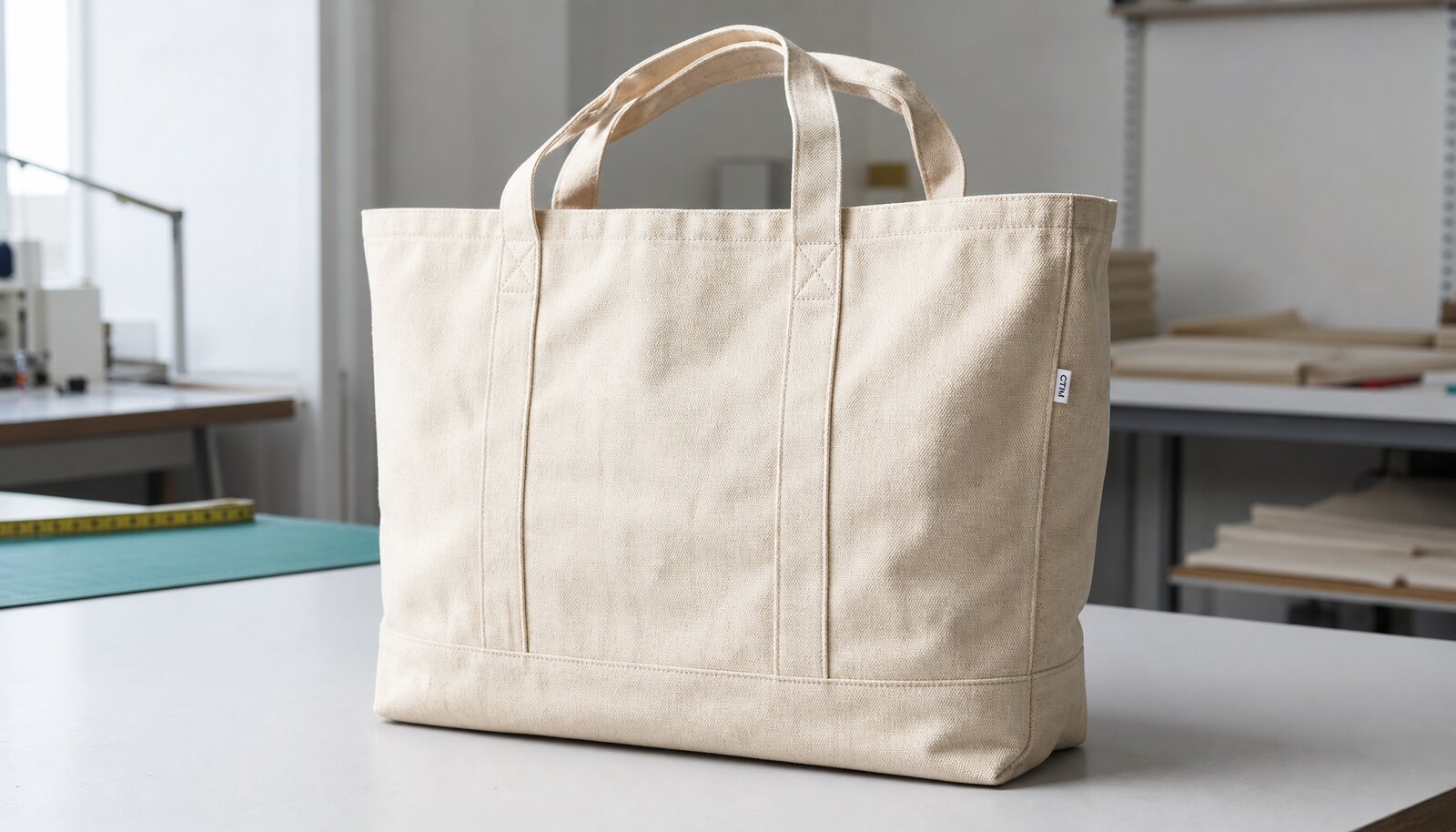
Why ecommerce buyers need a heavier canvas spec
For ecommerce, a canvas tote is not just a shopping bag. It has to survive packing, parcel handling, returns, and repeated customer use without looking cheap on arrival. That is why heavy duty canvas tote bags for ecommerce usually start at 12oz and often move into 14oz or 16oz canvas when the bag must hold books, groceries, beauty kits, or bundled merchandise. A thin tote can save a few cents at source, but it often costs more later through complaints, print distortion, or a bag that collapses in the unboxing video.
The right spec depends on how the bag will be sold and shipped. If the tote is a standalone retail item, structure and appearance matter more. If it is included in a subscription box or used as a promotional gift, cost and packing cube matter more. The buyer’s job is to match fabric weight, construction, and print method to the real use case, not to chase the cheapest quote on paper.
- 12oz canvas: suitable for lighter ecommerce kits and simple brand merch.
- 14oz canvas: a common balance of stiffness, print quality, and unit cost.
- 16oz canvas: better for premium retail bags, heavier carry loads, or structured designs.
- GSM conversions vary by weave and finishing, so ask for both oz and GSM when comparing suppliers.
Choosing fabric weight, weave, and finishing without overbuying
Most buyers focus on the headline fabric weight and stop there. That is a mistake. A 12oz canvas from one mill can feel stronger than a poorly woven 14oz canvas because yarn density, weave tightness, and finishing all matter. For ecommerce, the best balance is usually a plain weave canvas with enough body to hold shape, but not so stiff that folding marks become permanent during fulfillment. If the bag will be printed, a smoother face finish generally improves artwork sharpness and reduces ink bleed on fine lines.
Ask the factory to state whether the fabric weight is before or after finishing. Some suppliers quote raw fabric weight and then deliver a lighter or softer bag after washing, bleaching, or calendaring. For procurement teams comparing supplier quotes, this is one of the easiest places for hidden variation to enter. A practical RFQ should name the target weight, the acceptable tolerance, the color of the cloth, and whether shrinkage has been accounted for in the finished size.
- Request actual fabric swatches from the same roll or lot proposed for bulk.
- Confirm whether the canvas is natural, bleached, dyed, or garment-washed.
- If the bag must stand upright, specify a firmer finish and a reinforced base.
- If folding is important for warehouse efficiency, avoid overly stiff coatings.
How the build details affect load performance
Handle failure is the most expensive quality issue on canvas totes because it turns a usable product into a return or a replacement shipment. For heavy duty canvas tote bags for ecommerce, handle width, stitch density, and reinforcement style matter more than cosmetic extras. Self-fabric handles are common and economical, but they need proper fold width and double rows or box-X reinforcement at the join. Cotton webbing can feel cleaner and more premium, but it changes the quote and can affect color matching across runs.
Bottom construction is the second structural decision. A flat tote works for light kits, but a gusseted bottom gives the bag a larger usable volume and better product presentation. If the ecommerce assortment includes boxed goods or multi-item bundles, a gusset is usually worth the extra sewing time. For heavier contents, reinforce the lower corners and make sure the sewing path does not crowd the seam allowance so tightly that the fabric puckers.
- Handle drop should match actual carrying use, not only the drawing.
- Cross-stitch or box-X reinforcement is better than decorative stitching alone.
- A gusset increases volume but also increases sewing complexity and carton cube.
- Confirm whether the bag is meant to carry 3 kg, 5 kg, or a higher target load.
Print method selection for ecommerce artwork and reorder plans
The print method should follow the artwork and reorder pattern. Simple one- or two-color logos usually belong on screen print because the setup is efficient and the print is durable when cured correctly. For full-color artwork, gradient graphics, or a small test batch, heat transfer or DTF can make more sense, especially when the buyer wants to avoid high screen charges across multiple SKUs. Embroidery gives a more premium feel, but on thick canvas it adds cost and can distort lighter-weight bags if the stitch density is too high.
When comparing quotes, do not let one supplier win by quoting a low bag price and a separate print setup that is not obvious. Ask how many colors are included, whether one or two print locations are covered, and whether the factory expects artwork rework charges. Print alignment is especially important for ecommerce because the bag may be photographed, reviewed, and compared online next to brand-standard images. A small misplacement can become visible at scale.
- Screen print: best for simple logos, high repeat volume, and lower unit cost.
- DTF or transfer: better for multicolor designs and smaller trial runs.
- Embroidery: suitable for premium brands, but test the needle impact on fabric density.
- Request curing or adhesion proof if the bag will be folded, packed, or washed.
Reading supplier quotes the way a merchandiser would
A quote for heavy duty canvas tote bags for ecommerce should be read as a production plan, not just a price list. The lowest price often hides a lighter fabric, a simpler handle, a different print method, or stripped-down packing. Compare each quote line by line against the same spec sheet: fabric weight, dimensions, handle construction, print colors, carton count, and delivery terms. If one supplier includes polybag and barcode labeling while another excludes it, the numbers are not comparable.
Quote structure also reveals supplier maturity. A serious factory usually separates material cost, printing, sewing, packing, and carton details clearly enough that a buyer can see where the money goes. If the factory cannot explain why a 14oz bag is cheaper than another 12oz quote, something in the spec has changed. Procurement teams should insist on matching assumptions before negotiating on price.
- Compare the same Incoterms: EXW, FOB, or DDP changes the apparent unit price.
- Check whether the price includes artwork setup, sampling, and packaging inserts.
- Look for hidden extras such as metal eyelets, woven labels, or custom hangtags.
- Ask for a quote validity period because canvas and freight costs can move.
Supplier options and sourcing routes compared
The best sourcing route depends on order stability and internal control. Direct factory sourcing is usually the best route for repeat ecommerce programs because it gives the buyer better visibility into fabric source, sewing process, and QC. A trading company or sourcing agent can be useful when the buyer is consolidating several SKUs, but it adds a layer that can blur cost structure and make factory accountability harder to enforce.
Importers should also decide whether to source standard stock canvas bodies and then customize them, or to request full custom production from fabric onward. Standard stock can reduce lead time and MOQ, but it limits color, size, and structure options. Fully custom production costs more to start, but it usually gives better control over brand presentation and repeatability.
Buyer-ready comparison of sourcing routes
Use the route that matches your volume, not the route that sounds easiest in the first email. The difference becomes obvious when you need a second order, a color change, or a claim against a defective shipment. The table below compares the common sourcing options buyers use for this product category.
If your product plan includes retail channels, warehouse fulfillment, and seasonal reorders, the route that gives you the clearest control over fabric, print, and packing usually wins over a slightly lower first-order price.
- Write decisions in measurable language, not only descriptive wording.
- Ask for sample photos plus one physical approval sample for important orders.
- Keep quotation, sample approval, and inspection notes tied to the same spec version.
Production milestones that protect the first order
The first sample should not be treated as a formality. For ecommerce bags, sample approval has to lock the dimensions, fabric hand feel, handle strength, print placement, and folding behavior. A pre-production sample made from the actual bulk materials is the right checkpoint because it reveals how the bag will behave when sewn at scale. If a factory only sends a digital mockup or a sample from substitute fabric, the approval is too weak to rely on.
Before mass production, buyers should compare the sample against a measurement sheet and a short visual standard. Measure body width, height, gusset, handle length, and handle drop after the bag is pressed. Inspect stitch quality at load points and print registration at edges. This step prevents a lot of expensive sorting later.
- Approve size tolerance in writing before cutting bulk fabric.
- Use the same artwork file and Pantone reference that will be used in production.
- If the tote is folded for packing, approve the fold method on the sample.
- Do not sign off on a sample that has unapproved substitutions in fabric or trim.
Packing and carton decisions that change landed cost
Packing has a direct impact on freight and warehouse labor. A bag packed too loosely can arrive wrinkled and dusty; a bag packed too heavily can increase carton cube and shipment cost. For ecommerce, the most practical approach is usually bulk packing with a simple protective polybag only when the product or route requires it. If the bags are going straight to a fulfillment center, barcode labels and carton marks need to be correct at the factory so the receiving team does not rework every carton.
Carton size should be based on both product protection and weight limits. A heavy duty tote may be robust, but overstuffing cartons can still crush seams and crease printed areas. Export cartons should be matched to stackability and pallet pattern, especially when the goods are moving by ocean freight. Buyers who ignore this often discover that a cheap bag became an expensive freight cube.
- Specify pieces per carton and maximum carton gross weight.
- Request carton dimensions before production begins.
- Use carton marks that match the shipping documents and warehouse labels.
- If the bag is retail-ready, define hangtag, barcode, and fold orientation early.
Lead time risk, MOQ logic, and when a higher unit price is actually safer
Lead time for custom canvas totes is usually driven by fabric availability, print setup, and sewing queue capacity. A realistic schedule includes sample approval, fabric procurement, cutting, printing, sewing, inspection, and packing. Buyers often focus only on sewing days, but the slower part is often waiting for the right fabric shade or the correct print screen setup. If your launch date is fixed, the best quote is sometimes the one that names every time block clearly rather than the one that offers the lowest nominal unit price.
MOQ should be linked to artwork complexity and color count. A single-color logo on a standard body can support a lower MOQ, while a multicolor print on dyed fabric usually needs a larger run to keep the unit price sensible. For test launches, some buyers choose a higher-priced smaller run because it lowers inventory risk. That is a valid commercial choice if the bag is part of a wider ecommerce assortment and the buyer needs a fast market read.
- Typical custom MOQs are often 500 to 3,000 pcs depending on fabric and print.
- More colors, more sizes, and more packing variants all raise setup cost.
- Fabric dye lots should be controlled if repeat orders must match color.
- Build a buffer into the schedule for sample revision and pre-shipment inspection.
Specification comparison for buyers
| Spec decision | Recommended option | When it fits | Buyer risk to check |
|---|---|---|---|
| Fabric weight | 12oz to 16oz canvas, usually 400 to 540 GSM | Ecommerce orders that need structure, better print results, and lower return risk from flimsy bags | Too-light fabric can sag under parcels; too-heavy fabric raises freight and may increase sewing defects if the factory is not set up for thick seams |
| Handle construction | Self-fabric handles with cross-stitch or box-X reinforcement | Brands shipping books, grocery items, or promotional kits | Unreinforced handles are the most common failure point; confirm stitch count and thread size, not just handle length |
| Print method | Screen print for simple logos; heat transfer or DTF for multicolor short runs; embroidery only for premium use | Simple brand marks, seasonal launches, or art-heavy graphics | Some prints crack after folding if ink cure is poor; request wash/rub guidance and print placement tolerance |
| Supplier route | Direct factory sourcing for repeat volume; trading company or agent only when the buyer needs mixed SKUs or complex coordination | Brands with stable forecasts and clear specs | Middle layers can hide real MOQ, fabric source, and lead time; make sure quote is factory-based and not blended with non-comparable services |
| MOQ logic | 500 to 3,000 pcs per color/design for custom production, lower only if using in-stock fabric and standard sizes | New ecommerce launches, test campaigns, or phased buy plans | Low MOQ often means higher unit cost, limited color control, or higher print setup charges; compare total landed cost, not headline unit price |
| Closure and structure | Open top for general ecommerce; zipper or snap only if product protection is needed | Subscription kits, retail-ready gifting, or higher AOV bundles | Extra closures add sewing time and hardware defects; confirm whether closure changes carton count and folding method |
| Packing method | Bulk packed with inner polybag only if needed; or one piece per recycled polybag with barcode label | Warehouse fulfillment, FBA-style prep, or retail distribution | Overpacking drives carton cube and freight cost; underpacking can cause dust marks and creasing that affect unboxing |
| Carton spec | 5-layer export carton with clear carton markings and quantity per carton matched to weight limits | Ocean freight and long transit routes | Weak cartons crush at the bottom; confirm drop-test expectation, carton weight limit, and pallet pattern before mass production |
| Sampling route | Pre-production sample with actual fabric, print, stitching, and packing; top sample if size consistency matters | Any first order or redesign | Do not approve from digital artwork alone; approve the physical sample against a measurement sheet and stitch standard |
Buyer checklist before sampling
- Define target GSM, finished size, handle drop, and maximum bag weight the customer will carry.
- Choose the print method based on logo complexity, color count, and expected reorders.
- Lock the packing style before quote comparison so carton counts and freight cube are comparable.
- Request a pre-production sample made from the actual bulk fabric, not a substitute cloth.
- Set measurable QC limits for size tolerance, stitching, print alignment, and odor.
- Compare quotes on the same Incoterms, same packaging, and same total accessories included.
Factory quote questions to send
- What is the exact fabric weight in oz and GSM, and is it finished or raw fabric weight?
- Is the handle made from self-fabric, webbing, or cotton tape, and what reinforcement stitch is used?
- How many print colors are included in the quote, and what is the setup charge per color or location?
- What is the MOQ per color and per artwork version, and can the factory mix colors in one run?
- What packing method is included, and how many pieces per carton and per polybag?
- What is the production lead time after sample approval, and what part of that time is fabric procurement versus sewing?
- What QC standard does the factory use for size tolerance, stitch defects, and print defects?
- Does the quote include carton markings, barcode labels, and export packing list support?
Quality-control points to confirm
- Fabric weight must match the approved target within an agreed tolerance; request fabric swatch and bulk roll confirmation before cutting.
- Bag dimensions should be measured after pressing, including body width, gusset depth, and handle drop.
- Handle reinforcement must be even on both sides, with no skipped stitches, loose thread tails, or pulled seams.
- Print placement should sit within the approved tolerance window; check front-to-center alignment and edge clearance.
- Seam strength at the bottom corners and handle join areas should be inspected on multiple samples from each carton.
- Odor, oil marks, and visible weaving defects should be rejected before packing, not sorted later in the warehouse.
- Cartons should be taped, marked, and counted to match the packing list; verify gross weight and carton compression resistance for export.