1. Audit the supplier for the tote you are actually buying
A heavy canvas tote is not just a thicker version of a basic cotton shopping bag. The fabric is stiffer, the seam bulk is higher, the printing behaves differently, and the packed carton weight can affect freight and warehouse handling. A supplier that performs well on 5 oz promotional cotton bags may still struggle with 14 oz or 16 oz retail totes if the sewing line, cutting control, and print curing are not suitable for thicker canvas.
For procurement teams, the audit should focus on whether the factory can repeat the approved sample at bulk scale. That means checking material sourcing, pattern control, sewing reinforcement, print handling, packing method, and quote transparency. The purpose is not to collect a long list of documents; it is to identify the points that will change landed cost, retail appearance, and defect rate.
- Ask to see actual heavy canvas tote production samples from the last 6-12 months.
- Check whether the factory cuts and sews in-house or subcontracts sewing to another workshop.
- Confirm whether printing is in-house, nearby subcontracted, or arranged through a third-party print shop.
- Review whether the supplier understands retail packing, barcode labeling, and carton mark control.
- Do not approve a supplier only because they can quote quickly; heavy canvas errors are expensive to remake and slow to ship.
2. Start with fabric weight, not just bag size
Retail buyers often write RFQs with dimensions and logo artwork but leave fabric as “heavy canvas” or “thick cotton.” That wording invites inconsistent quotes. One supplier may quote 10 oz canvas, another may quote 16 oz canvas, and a third may use a loose weave fabric that sounds heavy on paper but feels soft and thin in hand. For a fair comparison, ask for both ounce weight and GSM, and confirm whether the measurement is for greige fabric, finished fabric, dyed fabric, or washed fabric.
As a practical guide, 10 oz canvas may be suitable for moderate retail giveaway totes, 12 oz is a common commercial starting point for stronger retail bags, 14 oz gives a sturdier hand-feel, and 16 oz or above moves toward premium or heavy-duty merchandise. GSM ranges vary by weave and finishing, but many 12 oz to 16 oz cotton canvas fabrics sit roughly around 340 to 540 GSM. The exact number matters less than matching the hand-feel, durability, and sewing performance you approved.
- Include acceptable fabric range in the RFQ, such as “14 oz cotton canvas, approximately 450 GSM, natural color, unwashed finish.”
- Ask for fabric composition, especially if recycled cotton, polyester blend, or organic cotton is being discussed.
- Request a swatch card with actual fabric weight written on the back, not only a catalog photo.
- Check shade and fleck level for natural canvas; some retail brands prefer a clean look, while others accept visible cotton seed flecks.
- If the bag is dyed, ask whether shrinkage, colorfastness, and shade lot variation are controlled.
3. Match construction to the retail load and shelf appearance
Heavy canvas totes are often purchased for bookstores, fashion retail, grocery gift sets, event merchandise, corporate stores, and lifestyle brands. The load expectation can range from a folded shirt to several bottles, books, or packaged goods. The construction must be chosen for the real use, not only the target unit price. A flat tote with simple turned seams may be enough for light retail items, but a boxed-bottom tote with gussets, reinforced handles, and stronger seam finishing is better for heavier or more premium use.
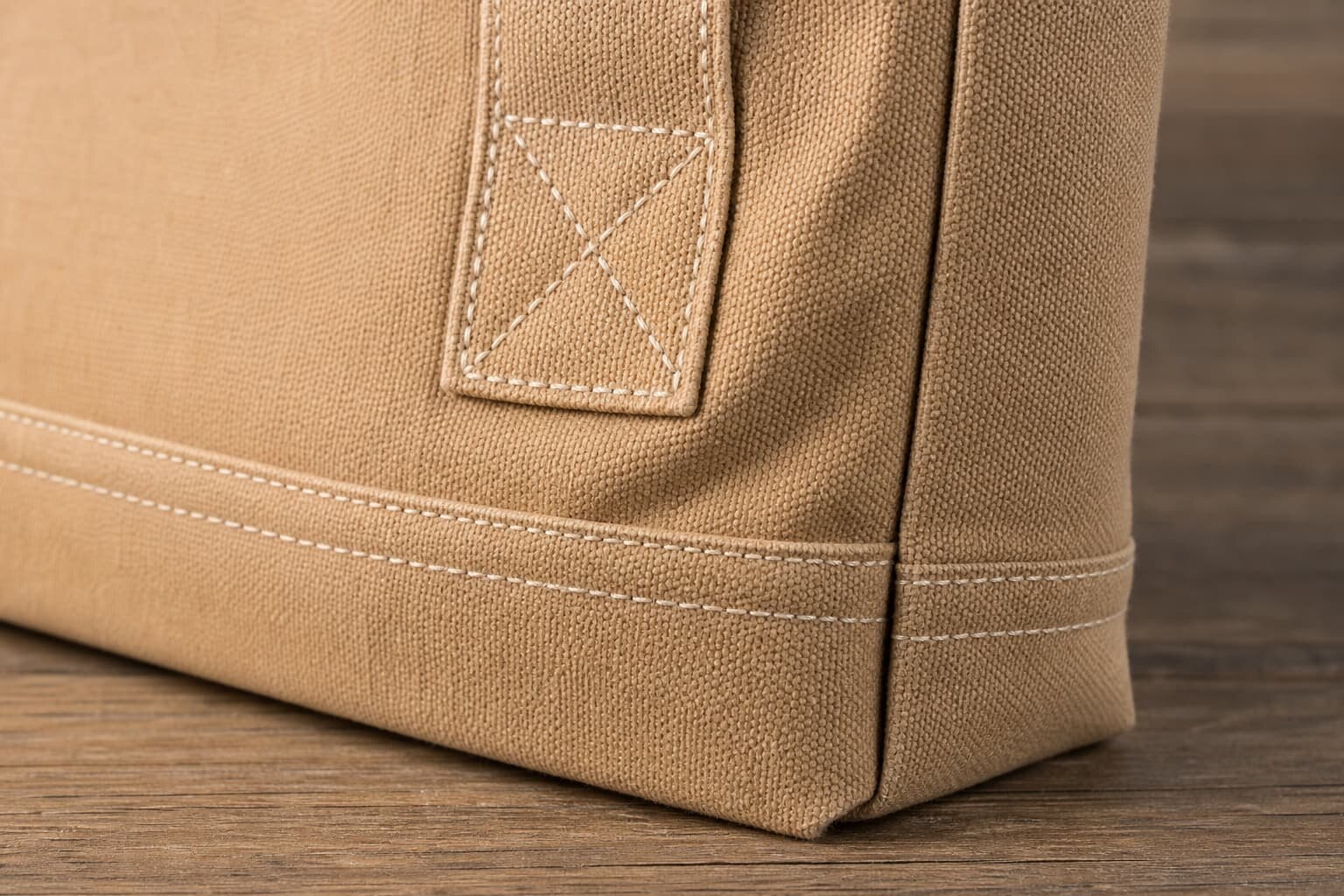
During audit, look at how the factory handles seam bulk. Thick canvas corners can become uneven if the cutting is inaccurate or the machine tension is not adjusted. Handle attachment is another frequent failure point. A neat cross stitch may look acceptable, but for heavier loads the stitch density, thread strength, seam allowance, and reinforcement position are what keep the handle from tearing out.
- Define target carrying load as an internal test reference, for example 5 kg, 8 kg, or 10 kg depending on use.
- Specify handle dimensions, including width, finished length, and handle drop.
- For gusseted totes, confirm bottom depth and whether the bag must stand when lightly filled.
- Request photos of inside seams; outside appearance alone does not show seam strength.
- Check whether seams are overlocked, bound, folded, or raw inside, because this affects both durability and retail perception.
4. Treat printing as a production process, not only artwork placement
Printing on heavy canvas is different from printing on smooth nonwoven material or thin cotton. Natural canvas has texture, absorbency, and uneven fiber color, so a perfectly flat Pantone match is not always realistic. Solid logos usually work well with screen printing, while large ink blocks may feel heavy if the wrong ink is used. Fine lines can break on coarse fabric. Gradients, photo effects, and very small text may need heat transfer, digital print, or artwork adjustment.
A reliable supplier should explain the print method instead of accepting any file without comment. In the quote, you should see the number of print colors, print size, print position, one-side or two-side printing, setup charges if applicable, and sample print requirements. If the tote will be folded tightly in packing, print curing and anti-sticking control are important. Poorly cured ink can transfer to other bags, crack at folds, or smell strong when cartons are opened.
- Provide vector artwork and Pantone references, but also ask for supplier comments on line thickness and ink coverage.
- Define print placement tolerance, such as plus or minus 5 mm or 10 mm depending on design sensitivity.
- Ask whether the print will be done before sewing or on finished bags; both methods have size and placement limits.
- For large solid artwork, request a hand-feel comment and a printed strike-off before bulk approval.
- Check whether natural canvas color will affect white, pastel, or light ink visibility.
5. Use MOQ logic to separate serious quotes from weak quotes
MOQ for heavy canvas totes is rarely only about bag quantity. The real MOQ drivers are fabric availability, fabric color, dye lot, print setup, cutting efficiency, and packing style. If you ask for 500 pieces in four colors with three artwork versions and individual barcode labels, the operational workload may be higher than a 3,000-piece single-color order. A supplier may accept the small order, but the unit price, sample time, and production risk will reflect that complexity.
During supplier audit, ask the factory to explain its MOQ structure. A practical supplier can tell you which parts are flexible and which parts are not. For example, natural canvas from stock may support lower MOQ, while custom dyed 16 oz canvas may require fabric mill minimums. Screen printing one color on one side may be easy to batch, while multiple print colors or region-specific labels need tighter segregation.
- Ask for MOQ by bag size, fabric color, print version, and packing version.
- Request price breaks at realistic quantities, such as 500, 1,000, 3,000, 5,000, and 10,000 pieces if relevant.
- Separate optional add-ons in the quote: hangtag, barcode sticker, individual polybag, inner carton, woven label, and custom carton mark.
- Check if the supplier can combine similar versions in one production run without mixing cartons.
- Avoid pushing MOQ too low if your retail launch depends on consistent color and print quality.
6. Sample approval should include fabric, construction, print, and packing
A sample is useful only if it represents the production method. Many buyers approve a beautiful sample made by a sample room, then receive bulk goods made with different fabric, different handle reinforcement, or a different print process. For heavy canvas totes, you should clearly label each sample stage: reference sample, salesman sample, fabric swatch, print strike-off, pre-production sample, and shipment sample.
The pre-production sample is the most important approval piece. It should use the confirmed fabric weight, actual dimensions, final handle length, final artwork, correct print method, and intended packing direction if packing may crease the bag. If retail presentation matters, request one sample packed exactly as bulk production will be packed. This helps you judge folding marks, print contact, carton compression, and barcode placement before mass packing begins.
- Measure the sample yourself and record actual width, height, gusset, handle drop, and handle width.
- Check the bag weight per piece, because this helps detect fabric substitution later.
- Photograph approved seam details, handle reinforcement, print position, and inside finishing.
- Keep one signed approval sample with the buyer and require the factory to keep one matching sample.
- Do not release bulk production based only on a digital photo if the order is retail-critical.
7. Audit packing before it becomes a freight problem
Heavy canvas totes can look durable, but poor packing can still create creases, dirty edges, distorted handles, and print transfer. The packing plan should match how the goods will move through your supply chain. A distributor selling cartons to resellers may prefer simple bulk flat packing. A retailer receiving store-ready goods may need individual polybags, hangtags, barcode labels, or inner packs. An ecommerce kitting program may need cleaner unit presentation and stricter label control.
Packing also affects landed cost. Heavy canvas creates higher carton weight than lightweight cotton bags, and thick folded bags increase CBM. If the supplier only quotes unit price but not carton data, your freight estimate may be wrong. Ask for carton dimensions, pieces per carton, gross weight, net weight, and CBM before order confirmation. If cartons become too heavy, warehouse teams may reject them or require repacking.
- Define flat pack, half-fold, tri-fold, or roll pack based on retail presentation and freight efficiency.
- Ask whether desiccants are recommended for humid season shipments or long ocean transit.
- Set maximum carton weight according to your warehouse requirement.
- Confirm barcode position and scan direction if individual retail labels are required.
- Require a packing photo or short packing video during the first bulk carton run.
8. Lead time review: where delays actually happen
A supplier may say production takes 25-35 days, but that number often excludes sample approval, fabric procurement, print strike-off, buyer comments, inspection booking, and export documentation. For heavy canvas totes, delays commonly happen at fabric sourcing, custom dyeing, print correction, and packing material preparation. Retail buyers should request a timeline with steps, not a single lead time sentence.
A better schedule separates sample time, material lead time, cutting, sewing, printing, finishing, packing, inspection, and shipping handover. If the order has multiple artwork versions or retail labels, add time for version control. If the supplier is using an outside print house, ask how production slots are booked and whether print capacity can handle your deadline. The audit question is not “Can you ship fast?” but “Which step controls the shipping date?”
- Ask when fabric will be reserved after deposit or purchase order release.
- Confirm whether bulk fabric can be ordered before final print approval if schedule is tight.
- Request the latest date for buyer approval to keep the planned shipping window.
- Ask how many days are needed for final inspection and rework if defects are found.
- Build in extra time for peak season, custom dyed fabric, multiple SKUs, or new packaging components.
9. Quote data that should be visible before you compare suppliers
Comparing heavy canvas tote quotes by unit price alone is risky. One quote may include 14 oz canvas, reinforced handles, screen print, and export cartons. Another may include 10 oz canvas, basic stitching, no print setup, and bulk packing with unknown carton weight. The cheaper quote may not be cheaper after artwork correction, packing upgrades, higher defect risk, or freight adjustments.
A useful quote should let your team compare specification, cost drivers, and logistics impact. Ask suppliers to show fabric weight, bag dimensions, construction, print method, quantity, MOQ, sample cost if any, packing, carton data, lead time, payment terms, incoterm, and validity period. For internal approval, separate required specifications from optional upgrades so your brand team can decide where the money should go.
- Require unit price with clear incoterm, such as EXW, FOB, FCA, CIF, or DDP if applicable.
- Ask whether price includes print setup, sampling, labels, hangtags, and export cartons.
- Request CBM per 1,000 pieces to estimate freight cost impact between 12 oz, 14 oz, and 16 oz options.
- Confirm currency, quote validity, payment terms, and production start condition.
- Ask the supplier to list assumptions, because hidden assumptions create later disputes.
10. Defect prevention and acceptance criteria for retail shipments
Retail buyers should define defects before production, not after cartons arrive. Heavy canvas totes can have defects in fabric, sewing, printing, odor, cleanliness, measurement, and packing. Some issues are cosmetic and may be acceptable within a limit; others are critical because they affect safety, sellability, or brand reputation. A clear acceptance standard helps the supplier inspect correctly and helps your third-party inspector make consistent decisions.
For many retail orders, an AQL inspection approach can be used, but the exact sampling plan and defect classification should match your company policy. Even if you do not use formal AQL language, provide acceptance criteria. For example, handle detachment under normal load should be critical, open seams should be major, and small internal loose threads may be minor. The factory should know which problems require rework and which problems cause shipment hold.
- Classify print misplacement, heavy ink stains, open seams, broken stitches, and wrong labels as major defects.
- Classify mold, sharp contamination, mixed artwork, and severe odor as critical issues requiring shipment hold.
- Set measurement tolerance before production, commonly tighter for retail display bags than for promotional giveaways.
- Require load testing on random samples if the tote is marketed as heavy-duty or used for books, bottles, or groceries.
- Keep approved samples and inspection photos together for future reorders, so quality does not drift.
Specification comparison for buyers
| Spec decision | Recommended option | When it fits | Buyer risk to check |
|---|---|---|---|
| Fabric weight | 12 oz to 16 oz canvas, approximately 340-540 GSM depending on weave | Retail totes, gift-with-purchase bags, bookstore bags, lifestyle merchandise | Supplier may quote by ounce without GSM or use loose weave fabric that feels thin despite stated weight |
| Construction | Boxed bottom with reinforced stress points and internal seam binding if budget allows | Totes expected to stand better, carry heavier products, or look more premium on shelf | Bottom depth, seam allowance, and reinforcement may be omitted from quote unless specified |
| Handle type | Self-fabric canvas handles, cross-stitched or bar-tacked at attachment points | Retail buyers needing durability and consistent material appearance | Handle length, width, and reinforcement pattern can vary between sample and bulk |
| Printing method | Screen print for solid logos; heat transfer for gradients; embroidery or woven label for premium detail | Brand logos, retail graphics, campaign artwork, and private label identity | Ink hand-feel, color tolerance, curing, and print cracking after folding or wash tests |
| MOQ planning | MOQ based on fabric dyeing, print color count, size, and packing style, not only bag quantity | Programs with several colors, regional artwork versions, or mixed carton requirements | Low MOQ quotes may hide higher unit cost, fabric substitution, or longer production batching |
| Packing | Flat pack in export cartons with moisture control; individual polybag only if retail handling needs it | Warehouse receiving, retail backroom storage, ecommerce kits, distributor resale | Over-compression can crease heavy canvas; individual packing affects labor, plastic use, and carton count |
Buyer checklist before sampling
- Confirm canvas weight in both oz and GSM, and request a physical swatch from the same production fabric lot if possible.
- Define bag size with tolerance: width, height, gusset, handle width, handle length, and seam allowance.
- Ask whether the quoted fabric is natural, bleached, dyed, washed, recycled blend, organic cotton, or conventional cotton.
- Check if the supplier can show real production samples of similar heavy canvas totes, not only light cotton shopping bags.
- Review stitching method at handle joints, side seams, bottom seams, and gusset corners.
- Specify print method, artwork size, Pantone reference, placement tolerance, ink type, and curing requirement.
- Request a pre-production sample after final artwork and fabric approval, not only a generic salesman sample.
- Confirm MOQ logic by size, color, print version, packing style, and shipping mark requirements.
- Require carton dimensions, gross weight, net weight, pieces per carton, and packing diagram before order release.
- Ask for inline and final inspection photos covering fabric, stitching, print, measurements, packing, and carton marks.
Factory quote questions to send
- What exact canvas weight are you quoting in oz and GSM, and is the weight before or after washing or finishing?
- Is the fabric from current stock, custom woven, custom dyed, or subject to mill MOQ?
- Can you quote the same tote in 12 oz, 14 oz, and 16 oz canvas so we can compare cost and packed weight?
- What is the recommended seam construction for our target load and retail use?
- Are handle reinforcements included in the quote, and will they be cross-stitched, bar-tacked, or both?
- Which print method do you recommend for our artwork, and what are the limits for fine lines, gradients, and large ink coverage?
- What print color tolerance do you follow, and can you match Pantone references on natural canvas?
- How many days are needed for salesman sample, pre-production sample, bulk production, inspection, and export packing?
- What is your MOQ by fabric color, bag size, and artwork version?
- What packing method is included in the unit price, and what is the additional cost for individual polybags, hangtags, barcode labels, or inner cartons?
Quality-control points to confirm
- Fabric GSM and hand-feel match approved sample and swatch.
- Canvas weave is even, without heavy slubs, stains, holes, oil marks, or shade bands outside agreed tolerance.
- Bag measurements are within approved tolerance for width, height, gusset, and handle drop.
- Handles are aligned and attached with consistent reinforcement stitching.
- Side seams, bottom seams, and gusset corners are secure with no skipped stitches or loose threads.
- Print placement, size, color, opacity, and curing match the approved pre-production sample.
- Logo edges are clean with no bleeding, misregistration, cracking, or heavy ink buildup.
- The bag can carry the agreed test weight without handle tearing, seam opening, or fabric distortion.
- Packing matches the approved carton plan, with correct quantity, labels, barcodes, and shipping marks.
- Cartons are clean, dry, export-worthy, and not over-compressed for heavy canvas goods.