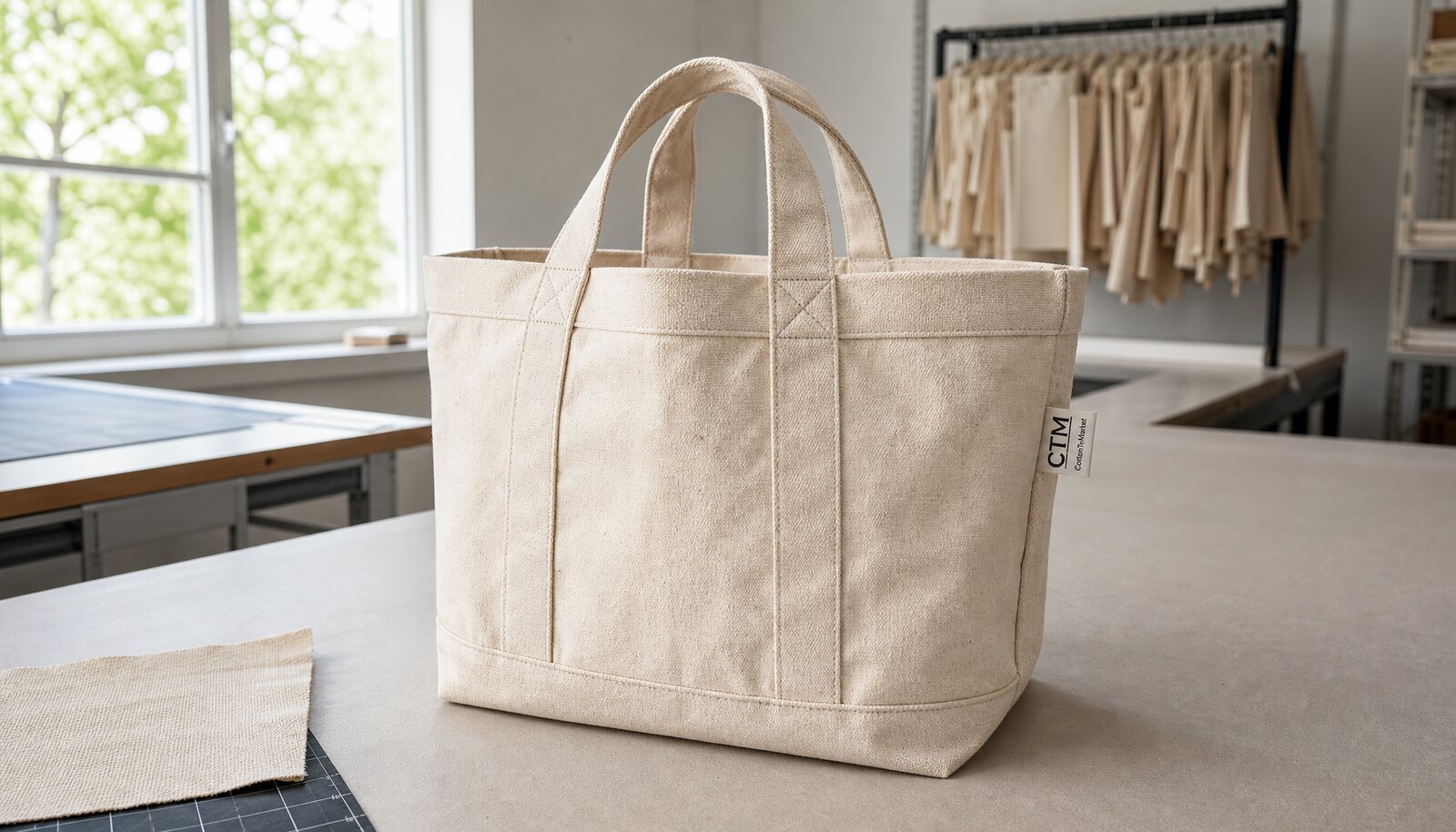
1. What procurement teams should audit first
A heavy canvas tote audit is not really about the bag itself. It is about whether the supplier can make the same bag repeatedly, document the build clearly, and absorb normal production variation without turning it into a dispute. For procurement teams, the first audit question is simple: can this factory quote the bag in a way that another factory could reproduce it from the same specification sheet?
If the answer is unclear, the risk shows up later as dimension drift, print shifts, weak handles, or packing complaints. That is why the audit should start with spec discipline, not with a price comparison. A lower quote is meaningless if the supplier is quoting a lighter canvas, a simpler stitch path, or a different packing method than the others.
- Audit the exact bag build, not just the marketing description.
- Separate product spec, print spec, and packing spec before comparing prices.
- Treat vague answers on GSM, stitch construction, or lead time as a risk signal.
2. Lock the tote spec before you request quotes
Heavy canvas tote sourcing goes off the rails when buyers ask for quotes before the product is defined. The factory then fills in the blanks with its own assumptions, and every supplier may assume something different. A procurement-ready RFQ should lock the finished size, canvas weight, handle length, logo method, and packaging format before the first price is requested.
For heavy canvas, the common spec range is usually around 12 to 16 oz canvas, or roughly 407 to 542 GSM depending on how the supplier measures and finishes the cloth. That range is wide enough to matter. A 12 oz tote may be fine for giveaways and light retail, while a 16 oz tote is better when the bag needs structure, load stability, and a premium feel.
- Define finished size in inches and centimeters, then state tolerance.
- State fabric weight in oz and GSM, and ask how the supplier measures it.
- Confirm whether the canvas is natural, dyed, washed, or pre-shrunk.
- Define whether the bag needs a gusset, bottom board, zipper, or lining.
3. Fabric, GSM, and construction choices that change cost
Canvas weight affects more than hand-feel. It changes sewing speed, needle wear, carton count, freight weight, print behavior, and how well the tote stands up in retail display. If the supplier quotes a lower fabric weight than you expect, the bag may still look acceptable in photos but fail the use case once it is loaded or stocked on shelf. This is why the audit has to connect fabric weight with the bag's actual end use.
Construction matters just as much as the cloth. A tote with self-fabric handles, a wider top hem, and reinforced handle anchors costs more than a plain stitched bag, but it also survives repeated use better. If the bag is intended for procurement channels, corporate gifting, or distributor programs, the quote should show how much of the price is driven by fabric, sewing labor, trim, and packaging rather than hiding everything in one lump sum.
- Ask whether the fabric is plain weave canvas or a denser heavy-duty weave.
- Request stitch details for side seams, bottom seams, and handle attachment.
- Confirm whether the handles are self-fabric or webbing and whether they are doubled.
- Check if the bag needs internal binding, edge finishing, or seam allowance changes.
4. Branding and print controls for heavy canvas totes
Print quality is one of the fastest ways to expose a weak supplier. Heavy canvas accepts several branding methods, but each one has limits. Screen print is usually the best choice for bold logos, flat colors, and repeat orders. Embroidery works for premium positioning, but it adds cost and can distort lighter fabrics if the design is too dense. Woven labels and sewn side tags are good for understated branding and are often more stable than a complex full-panel print.
The audit point is not just whether the supplier can print. It is whether the supplier can print your artwork consistently at the right position and with the right cure. Buyers should define the artwork file format, print area, color count, and acceptable variation before sampling begins. If you want a natural canvas look, the print method should be selected to match the texture of the bag, not just the logo file.
- Provide vector artwork and a reference for logo size and placement.
- State the exact print location: center front, gusset, side label, or handle.
- Confirm whether Pantone matching is required or only a visual match.
- Ask for wash, rub, or adhesion control appropriate to the print method.
5. Packing spec is part of the product, not an afterthought
Many buyers focus on the tote and ignore the packing spec until the shipment arrives. That is a mistake. A heavy canvas tote that is packed loosely may arrive creased, scuffed, or counted incorrectly. For retail and wholesale orders, the packing format affects receiving speed, carton damage, and the real landed cost. If the supplier has not quoted the pack count, polybag style, and master carton dimensions, then the quote is incomplete.
Packing also changes freight math. A tote with an insert board, individual polybag, and printed carton label will cost more to produce and ship than a bulk-packed tote. But for shelf-ready programs or distributor distribution, that extra cost may be justified if it reduces damage and repacking labor. Procurement teams should compare suppliers on the same packing basis, otherwise the cheapest quote may simply be the one with the weakest packing plan.
- Ask for inner pack count and master carton count, not just total units.
- Confirm whether each bag is polybagged, folded, or flattened with paper insert.
- Request carton dimensions and gross weight for freight planning.
- Make sure carton marks, SKU labels, and barcodes match your receiving rules.
6. What a factory audit should actually verify
A meaningful factory audit for heavy canvas totes should inspect the production flow, not just the sample room. The sample room can make almost anything look good for one unit. The line tells you whether the factory can maintain consistency across multiple operators, shifts, and lots of fabric. Procurement teams should ask to see cutting methods, stitching workflow, print curing setup, packing layout, and final inspection practice.
The audit should also reveal whether the supplier understands order control. Look for clear work instructions, sample reference retention, operator accountability, and line-side checks. If the supplier cannot explain how it prevents handle misalignment, print shift, or mixed carton counts, then the facility may still be able to make the tote, but not with the reliability a buyer needs for repeat business.
- Check whether cutting is done by template, marker, or digital layout.
- Review how the factory controls handle symmetry and seam alignment.
- Ask to see how a print sample is approved before mass production.
- Confirm that the final inspection team knows the customer spec, not just the internal standard.
7. How to compare supplier quotes without getting fooled
A fair quote comparison starts with normalized inputs. Compare the same bag size, same fabric weight, same print method, same packing, and same shipment terms. If one supplier quotes a 12 oz tote and another quotes 16 oz, those numbers are not directly comparable even if the final unit price is close. In procurement, the cheapest quote is often the one that omitted the most detail.
Break the quote into material, labor, trim, print, packaging, and tooling or setup charges. That structure exposes whether the supplier is pricing the real build or simply guessing a total. It also makes negotiation easier because you can challenge the exact line that drives the cost instead of asking for a blanket reduction that may force the factory to cut corners elsewhere.
- Compare unit price only after spec, artwork, and packing are identical.
- Ask whether the quote includes sample cost, printing setup, and carton printing.
- Check if there are price breaks by MOQ, color count, or print version.
- Watch for hidden changes in fabric weight, handle length, or internal finishing.
8. Sampling, testing, and pre-production approval
A heavy canvas tote sample is only useful if it is tied to a written spec and a photo record. The first sample should show the exact bag build, print position, label placement, and packing concept. If the supplier sends a beautiful sample but does not document the differences from the intended order, the sample can become a trap later when the factory treats it as a general reference rather than a binding approval.
For pre-production control, buyers should ask for a sample that represents production materials, not just a hand-made proof. Check the actual canvas batch, thread color, handle construction, print cure, and folding method. If possible, ask for a short test run or pilot batch so the supplier can confirm line setup before the main production quantity is released.
- Approve sample only after checking dimensions, print alignment, and seam finish.
- Keep a signed spec sheet with the sample and the latest artwork file version.
- Request material swatches if the final fabric shade or wash effect matters.
- Use the sample to verify carton fit and folding sequence, not just bag appearance.
9. Lead time, MOQ logic, and final acceptance criteria
Lead time should be discussed as a sequence, not a single date. The supplier needs time for sample approval, material booking, print setup, cutting, sewing, packing, and final inspection. If a factory gives one flat number without separating these steps, there is usually no real schedule control behind it. Procurement teams should ask what happens if the fabric is delayed, the print sample is revised, or the carton spec changes after approval.
MOQ logic also matters. Some suppliers set MOQ by fabric color, print version, or packing configuration rather than by bag style alone. That means a tote may have one base MOQ for natural canvas and another for dyed or branded versions. Final acceptance should be based on measurable criteria: size, weight, construction, print, pack count, and carton condition. If those criteria are not written down, a shipment can become a negotiation after it has already left the factory.
- Ask for a written production calendar with sample, bulk, and shipment milestones.
- Confirm whether MOQ changes when the artwork changes or the fabric is dyed.
- State the acceptance criteria before production begins, not after inspection.
- Reject any quote that cannot connect lead time to a defined material and process plan.
Specification comparison for buyers
| Spec decision | Recommended option | When it fits | Buyer risk to check |
|---|---|---|---|
| Fabric weight | 14-16 oz canvas, confirmed in GSM and oz/yd2 | Retail-grade or reusable tote programs that must hold shape and carry heavier loads | Some suppliers quote greige weight, others quote finished weight; ask how the number is measured |
| Handle construction | Self-fabric or webbing handles with X-box plus bar-tack reinforcement | Daily-use bags, heavier inserts, and orders that must survive repeated retail handling | Handle width, stitch count, and attachment length are often left vague in quotes |
| Print method | Screen print for bold logos, embroidery or woven label for premium branding | Simple artwork, repeat orders, and brands that want clear logo visibility | Confirm color count, print area, curing method, and wash/rub resistance expectations |
| Bottom and side structure | Gusseted body with optional bottom insert or board | Tote programs that need upright shelf presentation or improved load distribution | Extra structure changes cost, sewing time, and carton dimensions |
| Packing spec | Bulk polybag with carton inner count and master carton label | Wholesale, import, and distributor programs with strict receiving rules | Loose packing creates count disputes, transit abrasion, and carton damage |
| Sample approval | Pre-production sample with signed spec sheet and photo reference | Any order where color, print placement, or dimensions affect sell-through | If the sample is approved informally, factories may treat later deviations as acceptable |
Buyer checklist before sampling
- Confirm the exact finished size, fabric weight, and tolerance before asking for a quote.
- State whether the canvas must be natural, dyed, bio-washed, or pre-shrunk.
- Specify handle type, handle length, width, and reinforcement method.
- Provide the artwork in vector format and define the print area, Pantone target, and number of colors.
- Request the supplier to quote sample cost, sample lead time, and production lead time separately.
- Ask for packing details: inner pack count, polybag style, carton dimensions, and gross weight.
- Verify whether the supplier can provide pre-production sample, inline inspection, and final AQL plan.
- Check whether the factory quote includes testing, label application, and any special finishing.
Factory quote questions to send
- What is the finished fabric weight after washing or finishing, and how do you measure it?
- What is the exact body size, gusset depth, and handle length you will quote?
- What stitch construction will you use at the handle attachment and top hem?
- Which print method do you recommend for this artwork, and what is the color limit per price tier?
- What is the sample charge, sample lead time, and will the sample be refundable after order placement?
- What is your MOQ by color, print version, and packing configuration?
- What is the standard production lead time after sample approval and deposit receipt?
- What packing spec is included in the quote, and what changes would increase the carton count or freight cost?
- What inspection documents can you provide before shipment, such as inline photos, final QC report, or carton list?
- What are the known risk points in this tote build, and how do you control them on the line?
Quality-control points to confirm
- Finished dimensions within the agreed tolerance after pressing and packing.
- Fabric weight matches the quoted spec and is verified using the same measurement method the supplier states.
- Handle reinforcement is consistent: stitch pattern, bar-tack count, and alignment on both sides.
- Print placement is centered and consistent, with no cracking, bleeding, or ghosting after cure.
- Top hem, gusset seams, and bottom seam are clean, even, and free from skipped stitches.
- Color consistency is acceptable across the run, especially for dyed canvas or contrast trims.
- Packing quantity per inner and master carton matches the packing list exactly.
- Labels, side tags, and care marks are attached in the correct position and orientation.