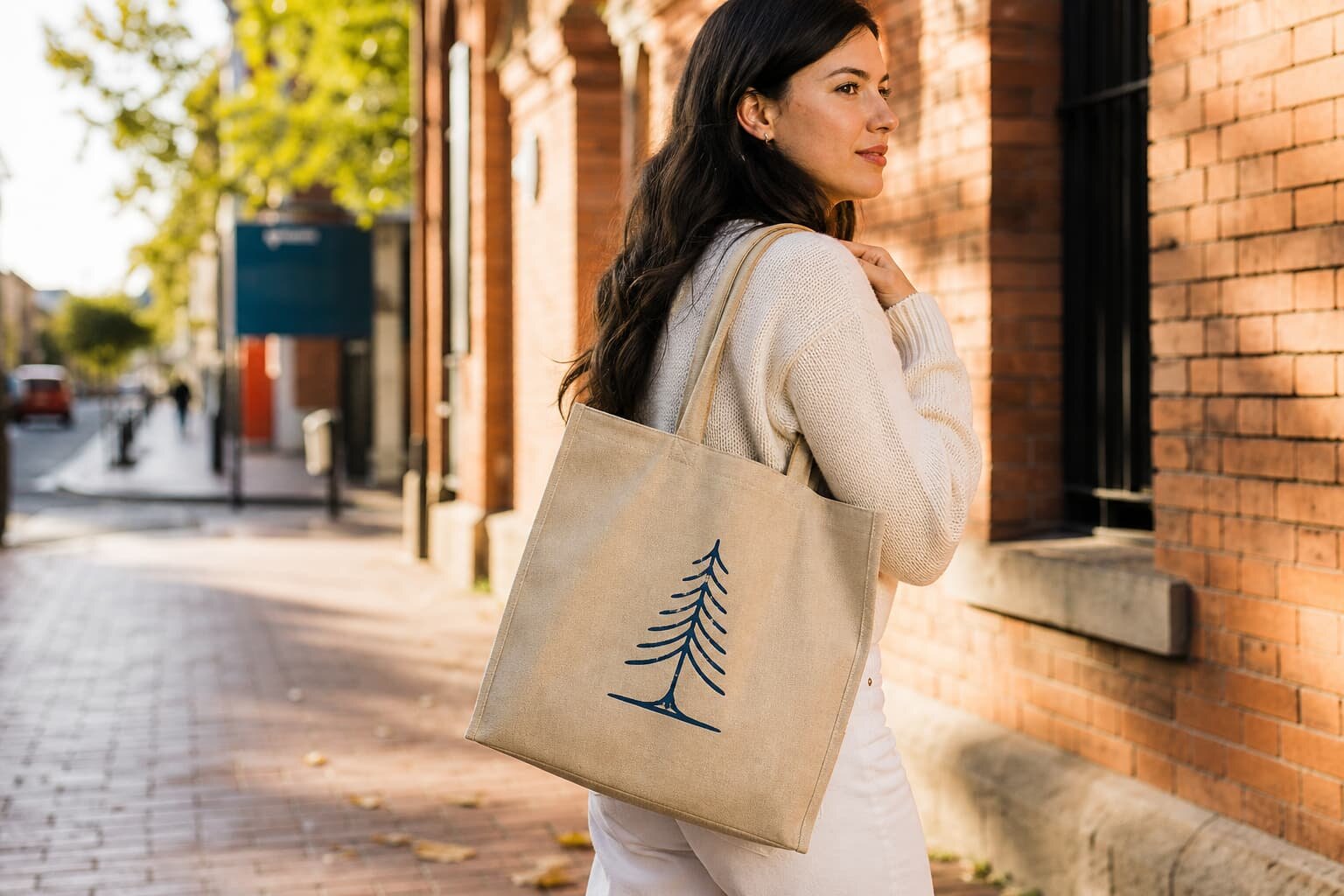
1. The buying problem: quotes that all say “heavy canvas” are not comparable
For a startup brand, a heavy canvas tote often looks like a simple item: one fabric, two handles, one logo, and a carton of finished bags. In factory quoting, that description is too loose. A supplier can quote 10 oz natural canvas with basic screen print, while another quotes 16 oz dyed canvas with reinforced construction and individual packing. Both may call the item a heavy canvas tote, but the cost, hand feel, sewing difficulty, carton volume, and resale value are not the same.
This cost review memo is for buyers who need to compare supplier quotations before placing a first order. The goal is not to chase the cheapest line item. The goal is to define the product well enough that every factory is pricing the same bag, then identify where cost differences come from. If the RFQ is vague, the lowest quote usually hides a specification gap: lighter fabric, shorter handles, simpler seams, cheaper print, looser packing, or a sample that does not match bulk production.
- Do not accept “heavy canvas” as a fabric specification; request oz and GSM.
- Do not compare unit prices without checking dimensions, gusset, handle drop, and print coverage.
- Do not approve a production order from a photo mockup only; approve a physical pre-production sample.
2. Fabric weight: the main cost lever buyers underestimate
Canvas fabric is normally discussed in ounces per square yard, but many factories and importers also use GSM. A practical reference range is 10 oz at about 320-340 GSM, 12 oz at about 380-410 GSM, 14 oz at about 450-480 GSM, and 16 oz at about 500-540 GSM. These ranges vary by weave, finishing, humidity, and supplier measurement method, so the RFQ should include a target range instead of one exact number unless you have already tested the fabric.
For most startup brands, 12 oz canvas is the safest starting point. It feels substantial, prints well, and is not as costly or bulky as 16 oz. If the brand positioning depends on a more rigid premium feel, 14 oz or 16 oz can work, but the buyer should expect thicker seams, higher needle stress, slower sewing, and heavier export cartons. If the bag is mostly a promotional insert or event giveaway, 10 oz can still be acceptable when the handle reinforcement and print quality are controlled.
- Ask if the quoted GSM is measured on finished fabric or before dyeing, washing, or coating.
- Request one small fabric swatch for each weight option before paying for full sampling.
- Specify natural canvas shade acceptance because cotton seed flecks and tone variation are normal unless bleached or dyed fabric is ordered.
- Remember that heavier fabric increases not only material cost but also carton weight and freight exposure.
3. Construction choices that change cost and perceived value
A heavy tote is judged by how it carries weight, not only by how thick the panel feels. The handle width, handle drop, stitching pattern, top hem, side seams, and bottom gusset decide whether the bag feels retail-ready or looks like a basic promotional sack. Common handle widths are around 2.5 cm to 3.8 cm. Handle drop often ranges from about 25 cm for hand carry to 30 cm or more for shoulder carry, depending on market preference.
The bottom construction also affects cost. A flat tote without gusset is cheaper and packs efficiently, but it holds less volume and may not stand well in photos. A boxed bottom or side gusset adds fabric, sewing steps, and inspection points, yet it improves usability for apparel, books, groceries, and retail merchandise. If a startup brand expects customers to reuse the tote, these construction details deserve the same attention as the front logo.
- Use cross-stitch or X-box reinforcement at handle attachment for load-bearing totes.
- Specify top hem height and whether the handle is sewn into the hem or applied over it.
- Define gusset depth clearly; “bottom gusset” and “side gusset” may be interpreted differently.
- Ask the factory to quote a simple load test target if the bag will carry books, bottles, or packaged goods.
4. Print method: choose for artwork risk, not only unit cost
Screen printing is usually the most practical option for startup brands when the artwork is one to three solid colors and the order quantity is enough to justify setup. It gives good opacity on natural canvas and predictable repeatability for reorders. The RFQ should include vector artwork, Pantone references, print dimensions, location from bag edge, number of print sides, and whether the print crosses seams or gussets. Without this data, two factories may quote very different print assumptions.
Heat transfer, DTF, and digital options can help when the MOQ is small, artwork has gradients, or the buyer is testing multiple designs. However, these methods must be checked for hand feel, wash/rub resistance, edge marks, and heat press impressions on thick canvas. Embroidery adds perceived value but can pucker fabric, distort small letters, and require backing. For a cost review, ask the factory to quote the recommended method and one alternative method so the brand can see whether design complexity is driving the price.
- For screen print, confirm color count, setup cost, minimum print charge, and curing process.
- For transfers, request a rub test and check if the print edge is visible on natural canvas.
- For embroidery, confirm stitch count, backing, logo minimum size, and whether needle marks are acceptable.
- For two-sided print, confirm whether both sides are the same artwork or different screens.
5. MOQ logic: why the factory minimum may not match your launch quantity
A startup may want 300 pieces to test demand, while the factory quotes a 1,000-piece MOQ. That number is not always a sales tactic. MOQ can come from fabric roll length, dye lot minimum, print setup, cutting efficiency, sewing line planning, carton packing, or export administration. Natural stock canvas usually allows more flexible MOQ than custom dyed canvas. Multiple artwork versions also change the equation because each design may need separate screen setup and production control.
When comparing quotes, separate the MOQ drivers. A factory may accept a lower total order if the same fabric and bag construction are used across several print designs. Another may require a minimum per artwork. If the buyer insists on custom dyed canvas, custom woven labels, metal trims, or special packing, the effective MOQ increases. The cleanest startup approach is often to use one stock canvas base bag and vary only the print, then upgrade fabric dye or hardware after repeat demand is proven.
- Ask for MOQ per style, per color, per print design, and per shipment.
- Ask whether a surcharge applies below standard MOQ instead of assuming the order is impossible.
- Group designs on the same canvas, same size, and same handle color when testing multiple SKUs.
- Avoid custom dyed fabric on a first small run unless brand color accuracy is essential.
6. Cost breakdown: what should appear in a serious quote
A useful factory quote should show more than a single FOB unit price. At minimum, it should define the bag size, fabric weight, fabric color, handle material, construction, print method, print size, packing method, MOQ, sample cost, sample lead time, bulk lead time, payment terms, quote validity, carton quantity, carton size, and gross weight. If any of these are missing, the quote may still be usable for a rough budget, but not for supplier selection.
Buyers should compare cost by function. Material cost is affected by fabric weight, dyeing, wastage, and handles. Labor cost is affected by gussets, reinforced stitching, pocket additions, zipper closures, labels, and ironing. Printing cost is affected by color count, print area, setup, curing, and reject rate. Packing cost is affected by individual bags, hangtags, barcode labels, inner cartons, and carton markings. Freight exposure is affected by carton dimensions and gross weight, not only the product unit price.
- Request a quote version number so revisions can be tracked.
- Ask the supplier to identify which items are included and which are optional add-ons.
- Compare total order value plus sample, setup, packing, inspection, and freight-related data.
- Use landed cost per accepted piece after inspection, not only the cheapest ex-factory line.
7. Sampling: the approval sample must represent bulk production
Sampling is where many startup tote programs drift away from the original idea. A factory may send a good-looking sample using available fabric, then bulk production uses a different roll weight or shade. Or the print sample is made by a sample-room process that differs from the bulk printing line. To prevent this, the buyer should state that the pre-production sample must use the actual nominated fabric, actual print method, actual handle length, actual thread color, and actual packing reference if packing affects presentation.
Sample approval should be written, not casual. Keep one signed or photographed approval sample with measured dimensions and notes. Record the acceptable tolerance for size, print position, color, and stitching. Cotton canvas is a textile product, so small variations are normal, but the buyer must define what is acceptable before the factory starts cutting. If the first production run is for retail sale, do not skip pre-production approval to save a few days.
- Measure height, width, gusset, handle drop, and handle width on the sample.
- Weigh a fabric swatch or request the factory’s GSM measurement record.
- Check whether the bag stands, folds, and carries the intended contents properly.
- Approve print color under consistent lighting and compare to Pantone or signed reference.
- Ask for a photo of packed bulk cartons before shipment if onsite inspection is not arranged.
8. Packing and freight: the hidden cost in heavy canvas totes
Heavy canvas totes are not fragile, but they are bulky. Packing choices affect freight, warehouse handling, and retail presentation. Flat packing is usually the most efficient for export cartons. Individual polybags can protect against dust and help ecommerce fulfillment, but they add labor, material cost, plastic compliance questions, and carton volume. If the bags will be distributed to retail stores, the buyer may need barcode stickers, hangtags, or master carton marks, which should be quoted from the start.
Carton data is not a minor detail in a cost review memo. A quote should show pieces per carton, carton dimensions, gross weight, and net weight. If one supplier quotes 100 pieces per carton and another quotes 50, freight and warehouse labor comparisons change. Over-compressed packing can also crease printed panels, especially with large screen prints. For premium retail totes, request packing that protects the front panel from hard fold lines across the logo.
- Ask for export carton dimensions before confirming freight estimates.
- Confirm whether cartons are single-wall or double-wall depending on weight and handling route.
- Define carton marks, SKU labels, barcode labels, and inner packing early.
- Avoid unnecessary individual polybags unless the sales channel requires them.
- For light-colored canvas, confirm moisture control and clean packing area standards.
9. Lead time planning: separate sample time from production time
A realistic schedule should separate artwork review, sample making, sample transit, sample approval, material booking, cutting, printing, sewing, finishing, inspection, packing, and export handover. Buyers often ask only, “What is the lead time?” and receive a production estimate that starts after sample approval and deposit. That is not the same as total calendar time from RFQ to delivery. For a startup launch, missing this distinction can create stockout risk or rushed inspection.
Lead time depends on fabric availability, print complexity, production season, and order size. Natural stock canvas with screen print normally moves faster than custom dyed fabric with multiple print versions and retail packing. If the launch date is fixed, the buyer should approve the bag specification before final marketing photography or campaign deadlines. Changing logo size, handle length, or fabric shade after sample approval can restart parts of the production timeline.
- Request separate timing for sample, sample revision, bulk material preparation, production, inspection, and packing.
- Ask when the factory needs final artwork files to hold the planned production slot.
- Confirm whether the quoted lead time starts after deposit, sample approval, or receipt of all materials.
- Build inspection and possible rework time into the schedule instead of treating shipment date as the only deadline.
10. How to use this memo when comparing supplier quotes
The best way to compare heavy canvas tote quotes is to normalize them into one review sheet. Put the quoted unit price beside the exact fabric weight, dimensions, print method, MOQ, sample basis, packing data, and lead time. Then mark each unknown item as a risk, not as an assumption. A low price with missing GSM, unknown carton size, and no pre-production sample condition is not automatically cheaper; it is simply less defined.
For startup brands, the first order should protect brand presentation and reorder consistency. Choose a specification that can be repeated, inspected, and explained to another supplier if needed. A well-written RFQ makes the factory’s job easier and reduces disagreement after production starts. If a supplier pushes back on details such as GSM, print tolerance, carton data, or sample matching, that response is also useful information for procurement.
- Shortlist suppliers that answer technical questions clearly, not only those with the fastest unit price.
- Use the approved sample as the control standard for bulk inspection and future reorders.
- Keep all quote assumptions in writing, including packing, artwork, and tolerance details.
- Review the total commercial picture: product cost, setup cost, defect risk, freight volume, and launch timing.
Specification comparison for buyers
| Spec decision | Recommended option | When it fits | Buyer risk to check |
|---|---|---|---|
| Fabric weight | 12 oz / about 380-410 GSM canvas for most startup retail totes | Good balance of structure, print surface, and freight weight for first commercial runs | Confirm whether the supplier quotes finished GSM or greige fabric weight before washing or finishing |
| Premium structure | 14-16 oz / about 450-540 GSM canvas | Higher perceived value, lifestyle retail, merch drops, heavier contents | Higher sewing difficulty, thicker seams, more carton volume, and possible needle marks |
| Budget heavy look | 10 oz / about 320-340 GSM canvas with reinforced stress points | Promotional or subscription inserts where cost and freight control matter | May collapse more easily and feel lighter than buyer expectation if photos imply a rigid tote |
| Print method | Screen print for 1-3 solid colors | Most startup logos, slogans, retail artwork, and repeatable reorder colors | Require Pantone reference, print size, placement tolerance, and curing test |
| Detailed artwork | DTF or heat transfer for gradients and small MOQ artwork | Testing several designs before committing to bulk screen setup | Check hand feel, wash/rub resistance, edge marks, and heat press impression on canvas |
| Construction | Cross-stitched handles plus top hem and boxed bottom if load-bearing | Retail tote, books, bottles, apparel, farmers market, trade show resale | Ask for handle pull strength target and inspect seam allowance at handle attachment |
| Packing | Flat packed 50-100 pcs per export carton with inner polybag only if required | Lower carton volume and cleaner receiving for distributors | Over-tight packing can crease printed panels; individual bags add cost and plastic compliance questions |
| Sample stage | Pre-production sample using actual fabric, actual print method, and actual handle length | Any first order, new fabric weight, new logo, or new factory relationship | Do not approve a digital mockup or substitute fabric sample as production approval |
Buyer checklist before sampling
- Define the selling use: retail merchandise, gift-with-purchase, subscription insert, event resale, or distributor stock.
- Specify fabric in oz and GSM range, not only as “heavy canvas.”
- State natural, dyed, or bleached canvas and whether shade variation is acceptable.
- Confirm finished bag dimensions, gusset depth, handle drop, and tolerance.
- Choose print method based on artwork, order quantity, color count, and hand feel requirements.
- Provide vector artwork, Pantone colors, print size, print position, and whether print is one side or two sides.
- Ask whether the quoted MOQ is driven by fabric roll, dye lot, printing setup, or sewing line efficiency.
- Require a pre-production sample made with actual fabric and actual printing process.
- Check carton quantity, carton size, gross weight, and whether individual polybags are included.
- Compare quotes using landed cost per usable accepted piece, not only unit price.
Factory quote questions to send
- What exact fabric weight are you quoting in oz and GSM, and is it measured before or after finishing?
- Is the canvas natural, bleached, dyed, organic, recycled, or conventional cotton, and what is the expected shade variation?
- What are the finished bag dimensions, gusset style, handle width, handle drop, seam allowance, and size tolerance?
- What MOQ applies to this order and what is the real MOQ driver: fabric, dyeing, printing setup, or production line minimum?
- Which print method do you recommend for this artwork and quantity, and what setup charges or color limitations apply?
- Can you quote screen print, heat transfer, and embroidery separately if the logo may change before production?
- Will the pre-production sample use the same fabric, color, thread, handle construction, and print method as bulk production?
- What is the expected sample lead time and bulk lead time after sample approval and deposit?
- How many pieces per carton, what carton dimensions, what gross weight, and what packing method are included?
- What quality defects are considered major for your factory, and what inspection standard can be used before shipment?
Quality-control points to confirm
- Measure fabric GSM from a cut swatch or approved lab-style sample rather than judging only by hand feel.
- Check finished dimensions at top width, bottom width, height, gusset, handle width, and handle drop.
- Inspect handle reinforcement stitching for skipped stitches, loose threads, uneven cross-stitching, and weak seam allowance.
- Rub-test printed areas after curing to check ink adhesion, cracking, smearing, or transfer.
- Confirm print placement tolerance against the approved pre-production sample, especially on gusseted bags.
- Check cotton seed flecks, slubs, stains, oil marks, and weaving defects against the agreed natural canvas standard.
- Review carton packing to ensure printed panels are not heavily creased or sticking together.
- Weigh packed cartons and compare to quoted shipping data before booking freight.
- Perform a simple load test using realistic contents for the intended retail use.
- Keep one signed approval sample and one production sample for future reorder comparison.