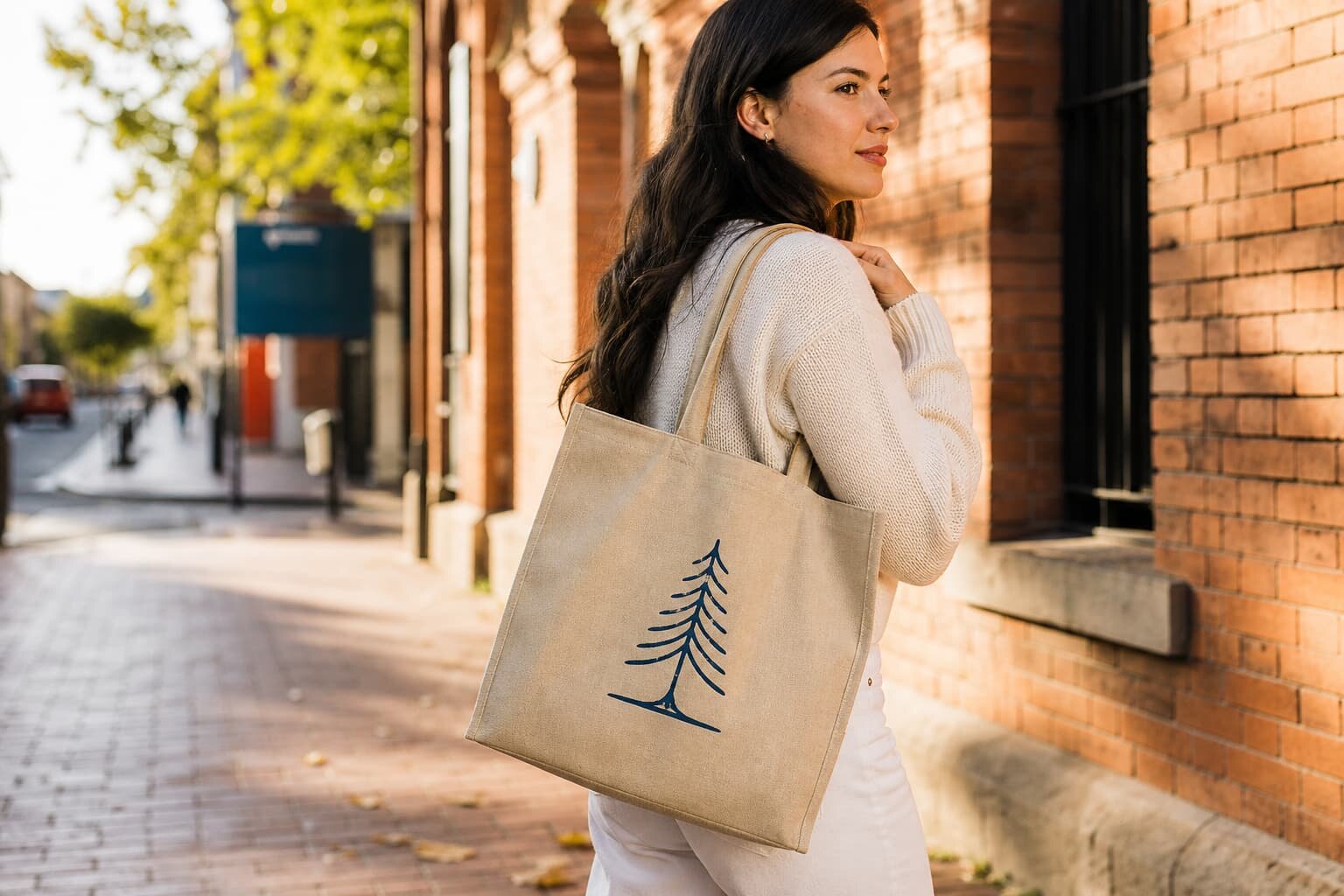
1. The reorder problem event buyers actually face
A heavy canvas tote for an event is rarely a one-time item if the program works. The first order may be for a conference, trade show, university orientation, festival, employee kit, distributor meeting, or retail activation. The next order may need to match the first one closely, even when the event date, artwork version, or quantity changes. That is where many buyers lose control: they reorder by sending an old photo and a rough quantity instead of a controlled specification.
The buying problem is not only finding a factory that can make canvas totes. It is building a repeatable reorder plan so the second and third orders do not arrive with lighter fabric, shorter handles, a shifted logo, a different natural canvas shade, or cartons that do not match the warehouse receiving plan. A reorder plan should connect the product specification, MOQ logic, sample approval, lead time, and quote format before the first bulk order is even placed.
- If the tote is used for a dated event, late arrival is a commercial failure, even if the bags are technically well made.
- If the tote is used across multiple events, visual consistency becomes part of the brand asset.
- If distributors reorder locally, the specification must be clear enough that different teams compare like for like.
- If the bag becomes a retail or membership item, the buyer must control repeat quality more tightly than a disposable giveaway.
2. Define heavy canvas in measurable terms, not sales language
The word heavy is not a specification. In factory quotations, heavy canvas may mean 10 oz, 12 oz, 14 oz, 16 oz, or even a supplier's local fabric naming habit. For bulk event totes, a practical starting point is usually 12 oz, about 407 GSM, when the buyer wants a sturdy reusable bag but still needs reasonable carton efficiency. For a more premium tote, 14 oz, about 475 GSM, gives a firmer handfeel and better structure. 16 oz can look excellent but adds cost, weight, folding difficulty, and shipping volume.
A serious RFQ should state both oz and GSM because different markets use different fabric weight language. Also state whether the weight is before or after washing if the fabric is washed. For natural unbleached cotton canvas, buyers should expect some shade variation between lots unless the factory controls fabric source and retains reference swatches. Dyed canvas needs lab dip approval and clear tolerance for shade, because a small color shift may look acceptable on a swatch but obvious on a full tote panel.
- Common event tote range: 10 oz to 14 oz depending on load, budget, and brand position.
- Premium reusable tote range: 14 oz to 16 oz when structure and resale feel matter.
- Always request GSM plus fabric composition, such as 100% cotton canvas or cotton blend if applicable.
- Ask for fabric swatches from the actual production material, not only a generic showroom swatch.
3. Choose the construction around event contents and user behavior
Event buyers often approve tote size by appearance, then discover the real contents do not fit well. A tote carrying brochures, a notebook, a bottle, snacks, and sponsor samples needs different structure from a tote holding only a folded T-shirt. A flat tote is simple and economical, but a box bottom or bottom gusset gives usable volume and a more professional shape when filled. Heavy canvas also behaves differently from thin cotton: it folds thicker, stands better, and puts more stress on handle seams.
For repeat orders, construction details must be frozen. A 38 x 42 cm tote with no gusset is not equivalent to a 38 x 35 x 10 cm tote, even if both are called large. Handle drop matters too. Short carry handles may fit a gift bag style; shoulder handles need enough drop, commonly around 25 to 30 cm depending on market preference and bag height. If the user is carrying event materials through an airport, venue, or city street, handle comfort and reinforcement are not decorative details.
- Record finished width, height, bottom gusset, side gusset if any, and handle drop.
- Specify handle material: self-fabric canvas, cotton webbing, or reinforced fabric strap.
- Use bartacks, cross-stitching, or box stitching at handle stress points for heavier event loads.
- Confirm whether seams are inside overlocked, bound, or folded, especially for retail-facing bags.
- Run a load test using realistic event contents, not only static weight in an empty sample.
4. Match the print method to canvas texture and reorder consistency
Screen printing is usually the most practical logo method for bulk heavy canvas event totes, especially for solid one-color to three-color artwork. It handles large front panels well and can be cost-efficient at event quantities. The buyer should define print size, position from top seam and side seam, ink type, Pantone reference, and whether the print must cover the rough canvas texture fully or allow a more natural texture showing through. Heavy canvas absorbs and breaks ink differently from smooth polyester or paper, so a print strike-off is important.
Digital printing can handle gradients and multi-color artwork, but it may not be the best fit for every heavy canvas project, especially when color accuracy and repeat cost are important. Embroidery adds premium value but changes the cost structure and may pucker heavy canvas if stitch density is not planned. Woven labels and side labels are good for brand continuity across reorders because they keep the bag recognizable even when event artwork changes. For dated events, buyers should confirm whether artwork includes the year; if yes, store reusable screen information carefully but expect setup changes for each version.
- Use screen print for bold logos, sponsor marks, campaign slogans, and large solid graphics.
- Use embroidery for smaller premium marks, not huge dense filled areas without testing.
- Use woven side labels when the buyer wants brand continuity across different event prints.
- Approve a print strike-off on the same canvas weight and color as bulk production.
- Check print after bending and rubbing because heavy canvas flexes around folds and seams.
5. Build MOQ tiers around fabric, print setup, and reorder risk
MOQ is not a random number. For a heavy canvas tote, the factory's MOQ is driven by fabric purchasing, dyeing or finishing minimums, cutting efficiency, sewing line setup, print screen setup, labor allocation, and export packing. A first order of 3,000 pieces may be smooth because it fits fabric and production planning. A later urgent reorder of 300 pieces may be possible, but the unit cost can rise sharply or the factory may need to use available fabric that is not a perfect match.
The best approach is to ask for MOQ tiers before you need the reorder. For example, request pricing at 500, 1,000, 3,000, 5,000, and 10,000 pieces using the same specification. Also ask which tier changes the production method or material availability. If a supplier quotes a lower tier by switching from 14 oz to 12 oz canvas, or from dyed fabric to stock natural canvas, that is not a true reorder comparison. Procurement teams should keep a quote matrix showing quantity, fabric, print method, packing, lead time, and validity period.
- Separate true MOQ from price break quantity; they are not the same.
- Ask whether the MOQ is per design, per color, per size, or per shipment.
- Confirm whether logo color changes require new screen setup or only ink change.
- Check whether fabric color has a dye lot minimum that is higher than sewing MOQ.
- For distributor programs, define a minimum reorder quantity that protects consistency.
6. Use samples as production controls, not souvenirs
A sample is useful only if it represents the order you expect to receive. For heavy canvas event totes, buyers should separate sample stages. A fabric swatch confirms weight, color, texture, and finish. A print strike-off confirms ink, logo size, color, and adhesion on the chosen canvas. A pre-production sample confirms full size, construction, handle length, label placement, and packing method. When timing is tight, buyers may combine steps, but they should understand which risks remain open.
For repeat orders, retain one approved sample from each lot and label it with PO number, production date, material weight, artwork version, and factory reference. This retained sample is your strongest protection against gradual specification drift. It also helps if a new procurement manager, distributor office, or brand team takes over the project. Photos are useful for communication but cannot replace a physical sample when checking fabric handfeel, stiffness, weight, and seam strength.
- Approve fabric swatch before confirming dyed or natural shade expectations.
- Approve print strike-off before mass printing, especially for white ink or large solid areas.
- Approve pre-production sample before cutting bulk fabric where possible.
- Ask for close-up photos of handle stitching, seam finishing, and print edges.
- Seal and store golden samples in a clean dry place for future reorder comparison.
7. Plan lead time backward from the event receiving date
Event buyers often ask for production lead time and forget the other time blocks. A practical timeline includes RFQ clarification, artwork preparation, sample making, sample shipping, approval comments, fabric booking, cutting, printing, sewing, trimming, final inspection, packing, export documentation, inland transport, international freight, customs clearance, and delivery to the event warehouse. If the bags are needed for kitting with other items, the receiving deadline may be earlier than the event date.
A reorder can be faster than a first order if the factory still has the same fabric source, screen information, approved pattern, and packing data. But it is not automatic. Fabric may be out of stock, the natural cotton shade may shift, the print screen may need remaking, or the sewing line may be booked. Buyers should create reorder trigger points based on inventory and event calendar. For example, if average use is 2,000 bags per quarter and the production plus logistics window is 8 to 12 weeks, the reorder discussion should start before inventory falls below the next event's requirement.
- Set the required warehouse receiving date, not only the event date.
- Add inspection time before shipment, especially for first bulk order and new artwork.
- Keep artwork and specification files ready so reorders do not restart from zero.
- Ask the factory what may cause delay: fabric dyeing, print approval, sewing capacity, or packing materials.
- For fixed-date events, avoid approving bulk production while key print or size details are still unclear.
8. Packing decisions affect cost, creasing, and event operations
Heavy canvas totes are bulky compared with thin cotton bags. Packing method affects freight cost, warehouse labor, and the way bags look when opened at the event site. Flat packing keeps the bag surface cleaner and reduces hard creases, but cartons may be larger. Folding can improve carton efficiency but may create visible fold lines, especially on 14 oz and 16 oz canvas. Individual polybags protect the tote during handling but add material, labor, and sustainability concerns.
For event distribution, carton labeling is not an afterthought. If one order supports multiple venues, sponsors, colors, or artwork versions, each carton should show SKU, PO number, design name, quantity, gross weight, carton number, and destination code if needed. Mislabeling may not be found until the venue team opens cartons under time pressure. Procurement should ask for carton photos before shipment and include packing count in inspection. If bags are palletized, confirm pallet height, stretch wrap, and whether cartons can handle stacking.
- Flat pack for cleaner presentation and fewer hard creases.
- Single fold only when carton efficiency is important and crease acceptance is agreed.
- Avoid tight compression on heavy printed panels if ink has not fully cured.
- Use carton marks that match warehouse receiving and event allocation needs.
- Request carton dimensions and gross weight in the quote so freight can be estimated early.
9. Compare supplier quotes using the same data fields
Two heavy canvas tote quotes can look similar while covering different products. One supplier may include 12 oz canvas, one-color screen print, flat packing, and standard export carton. Another may quote 14 oz canvas, inside label, individual polybag, reinforced stitching, and lower carton quantity. Comparing only unit price creates false savings. The quote should show enough technical data for procurement, merchandising, logistics, and brand teams to review the same assumptions.
A useful quote format includes bag size, fabric weight, fabric color, construction, handle details, print method, number of print colors, print area, label details, MOQ, price tiers, sample cost if any, sample lead time, bulk lead time, packing method, carton quantity, carton size, gross weight, incoterm, payment terms, and quote validity. If the supplier does not state these fields, ask before internal approval. Missing quote data usually becomes a production argument later.
- Compare fabric by GSM and finish, not only by product photo.
- Compare print by method, number of colors, and approved print area.
- Compare packing by pieces per carton, folding method, and carton size.
- Compare lead time from sample approval, not from first email contact.
- Compare MOQ per design and per color so distributor orders are realistic.
10. Set acceptance criteria before bulk production starts
Acceptance criteria help the factory and buyer solve problems before they become shipment disputes. For heavy canvas totes, key criteria should cover measurement tolerance, fabric weight tolerance, shade tolerance, print position tolerance, print appearance, seam strength, handle reinforcement, loose thread standard, stain allowance, packing count, and carton labeling. These do not need to be complicated, but they must be written. If the buyer only says make it like the sample, the supplier may not know which details are critical and which are flexible.
For event buyers, the most practical inspection is a combination of visual review, measurement check, functional load test, print rubbing check, and packing audit. Inspection should happen after full packing but before shipment release. If the tote is a premium retail item, the acceptable defect level should be tighter than a mass giveaway. If the tote is a low-cost sponsor bag, some minor natural cotton specks may be acceptable, but broken seams, wrong artwork, severe shade mismatch, and short quantity are never minor.
- Set measurement tolerance, such as plus or minus 1 cm, where appropriate for sewn bags.
- Define print position tolerance from top edge and center line.
- Reject handles with skipped reinforcement stitches or visibly weak attachment.
- Check that the bag can carry the intended contents without seam distortion.
- Confirm final quantity by carton count and random carton opening before shipment.
Specification comparison for buyers
| Spec decision | Recommended option | When it fits | Buyer risk to check |
|---|---|---|---|
| Fabric weight | 12 oz / 407 GSM or 14 oz / 475 GSM cotton canvas | Reusable event tote, conference welcome bag, retail merchandise bag | Supplier may quote lighter 10 oz fabric unless GSM and tolerance are written |
| Fabric finish | Natural unbleached or dyed canvas with shrinkage control | Brand wants sturdy handfeel and visible woven texture | Different batches may vary in shade; approve lab dip or fabric swatch before bulk |
| Bag construction | Box bottom with reinforced stress points | Event kits carrying catalogs, bottles, samples, apparel, or tech accessories | Flat totes may look cheaper and hold less volume than buyer expects |
| Handle specification | Self-fabric handles, 2.5 to 3.8 cm width, cross-stitched or bartacked | Heavy giveaways where users carry weight after the event | Handle length changes can affect shoulder fit and carton packing |
| Logo method | Screen print for solid 1-3 color graphics | Most event buyer logos, sponsor marks, slogans, and date graphics | Ink thickness, curing, and color matching must be checked on heavy canvas |
| Premium branding | Embroidery, woven label, or inside label plus print | Retail resale, VIP attendee gift, membership bag | Need stitch density, label placement, and colorfastness approval before mass sewing |
| MOQ planning | Base repeat MOQ on fabric availability, print setup, and carton efficiency | Quarterly event program, distributor replenishment, brand campaign reuse | Too-small reorder may force fabric substitution or higher unit cost |
| Packing method | Flat packed or folded one time, with master carton labeling by SKU/event | Warehouse receiving and event-site distribution | Over-folding heavy canvas creates hard creases and slows event packing |
| Lead time buffer | Sample approval plus fabric booking plus print/sewing plus inspection window | Fixed event date with warehouse receiving deadline | Reorders are not instant if fabric, dye lot, or print screens must be reset |
Buyer checklist before sampling
- Confirm the exact finished bag size, gusset, handle length, and measurement tolerance from the last approved sample.
- Record fabric weight in oz and GSM, not only the word heavy canvas.
- Keep a retained sample from every production lot for comparison before approving the next reorder.
- Specify natural, dyed, washed, or bleached canvas and whether color variation is acceptable.
- Lock the print artwork file, Pantone reference, print size, print position, and printing method.
- State whether the bag is used for giveaway, resale, conference kit, retail shelf, or distributor stock.
- Ask the factory to quote MOQ tiers using the same fabric and same print setup, not substituted material.
- Define packing: flat, folded, individual polybag, carton quantity, carton marks, and pallet preference if needed.
- Add inspection points for fabric weight, seam strength, handle attachment, print adhesion, and carton labeling.
- Build reorder timing around the event arrival date, not only the factory production finish date.
Factory quote questions to send
- What exact canvas weight are you quoting in oz and GSM, and what tolerance do you control in bulk production?
- Is the fabric greige, dyed, bleached, washed, or natural unbleached, and will the next reorder use the same fabric source?
- What is the minimum quantity for repeat production using the same material, size, print color, and packing method?
- Can you quote 500, 1,000, 3,000, 5,000, and 10,000 pieces with the same specification so we can plan reorder breaks?
- What sample types do you recommend before bulk: fabric swatch, print strike-off, pre-production sample, or carton-packed sample?
- Which print method are you quoting, and how will ink curing, rubbing resistance, and color matching be checked?
- What are the sewing reinforcement details at the handle and side seams, and can you show close-up photos from current production?
- How many pieces fit per export carton, what is the carton size and gross weight, and will the bag be folded?
- What production lead time applies after deposit and sample approval, and what time should we reserve for inspection and shipping?
- If our next reorder is smaller or urgent, which specifications may affect cost or availability first?
Quality-control points to confirm
- Check fabric weight by cutting and weighing a known area or by supplier test report supported by retained swatch comparison.
- Measure finished width, height, gusset, handle width, and handle drop against approved tolerance.
- Inspect handle attachment for bartack, cross-stitch, or reinforced box stitch consistency.
- Review seams for skipped stitches, loose threads, uneven tension, puckering, and broken needles marks.
- Test print adhesion with rubbing, tape pull, and bending checks suitable for canvas texture.
- Compare print color against approved strike-off under consistent lighting, not only mobile phone photos.
- Load test sample bags with the expected event contents plus safety margin.
- Check packing count, carton marks, SKU separation, and event destination labels before shipment.
- Keep sealed golden sample, print strike-off, and carton photo records for future reorders.
- Review shade variation between panels, handles, and gusset, especially on dyed or washed canvas.