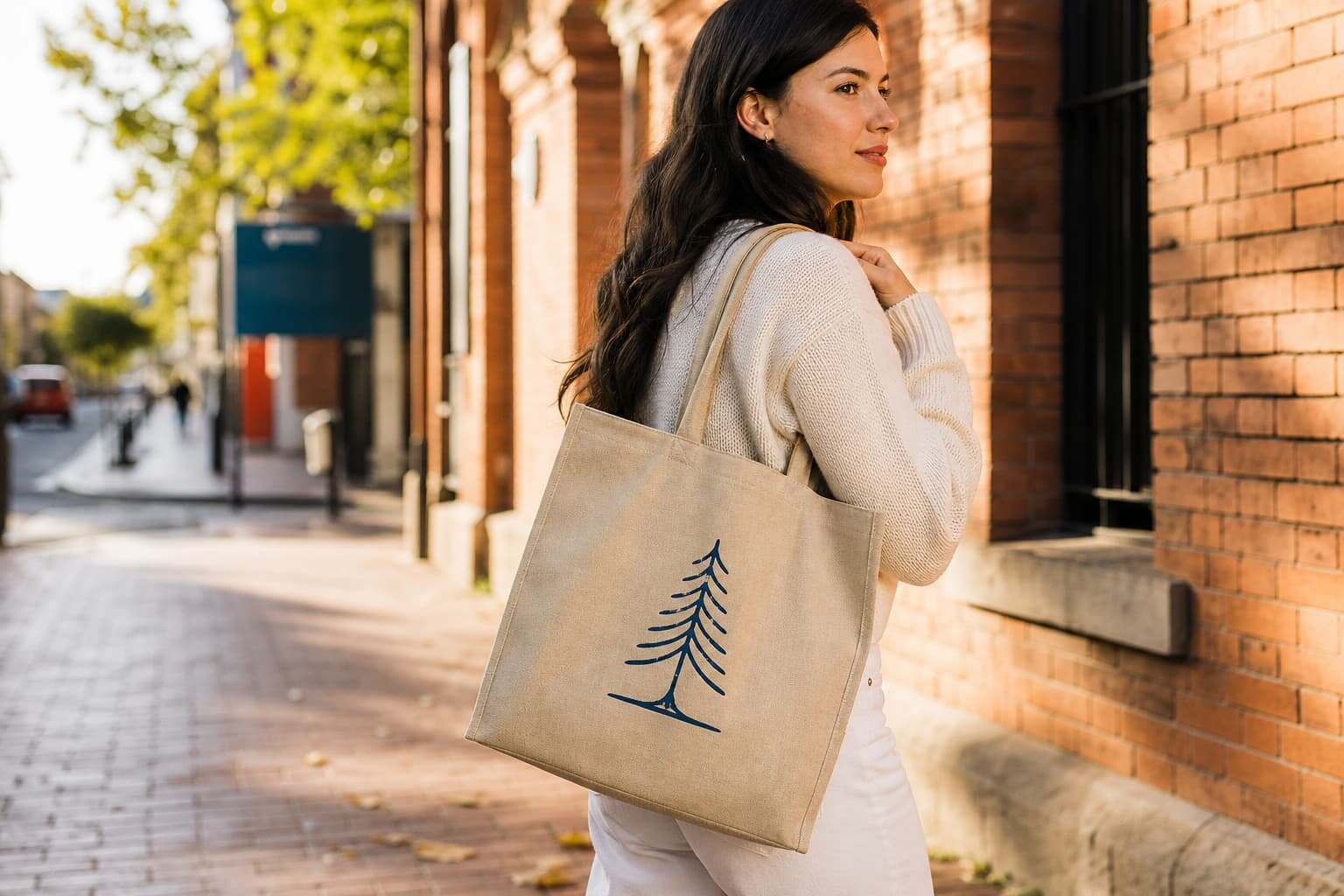
1. Define What Heavy Canvas Means Before You Inspect It
The most common quality dispute on a heavy canvas tote starts before production: the buyer writes heavy canvas, the supplier quotes a fabric that is heavy enough for the target price, and both sides assume they mean the same thing. For procurement teams, heavy canvas should be translated into measurable fabric weight, weave, composition, finish, and shrinkage expectation.
For tote bags, many startup brands begin around 10 oz canvas, but a truly heavy retail tote usually sits closer to 12 oz to 16 oz, roughly 380 to 540 GSM depending on the fabric construction. GSM alone is not the full answer. A tightly woven 12 oz canvas can feel stronger than a loosely woven 14 oz canvas. Natural canvas, dyed canvas, washed canvas, and laminated canvas also behave differently during sewing and printing.
- Write the fabric specification as: 100% cotton canvas, target oz/GSM, natural or dyed, washed or unwashed, and acceptable tolerance.
- Ask whether the GSM is measured before dyeing, after dyeing, or after washing because finishing can change fabric weight and shrinkage.
- Request a fabric swatch with the quotation when comparing factories, not only a finished sample after the price is agreed.
- Avoid approving a sample made from available stock fabric unless the factory confirms the same fabric will be used for bulk production.
2. Start Inspection From the Approved Sample, Not the Catalog Photo
A catalog photo is useful for shape, but it is not a production control document. Your approved sample should become the reference for fabric handfeel, stitching appearance, handle strength, print color, print placement, labels, folding, and carton packing. For startup brands, this is especially important because the first order often becomes the standard for repeat orders.
The best inspection setup uses two matching approved samples. One remains at the factory with signatures, date, and version notes. The other stays with the buyer or the third-party inspection company. If the supplier changes fabric lot, print ink, thread color, handle tape, label material, or packing method after sample approval, it should be re-confirmed before bulk cutting.
- Mark the approved sample with version number, date, fabric code, print method, and any buyer comments.
- Photograph the sample from front, back, inside seam, handle attachment, bottom gusset, label, and folded packing view.
- Keep the final artwork file, Pantone or color reference, size chart, and packing instruction together with the sample approval.
- Reject vague approvals such as sample looks fine if key measurements and details have not been recorded.
3. Inspect Fabric Quality Before Cutting, Not After Sewing
Once the canvas has been cut and sewn, fabric defects become harder to separate from sewing defects. For a heavy canvas tote, incoming fabric inspection should check weight, width, weave consistency, shade, odor, stains, holes, slubs, and dye rubbing. A few natural slubs may be acceptable for unbleached cotton canvas, but oil marks, large knots, heavy streaks, or visible shade panels can damage a retail brand presentation.
Startup brands often focus on the front logo and miss fabric shade control. If one carton contains cream natural canvas and another contains grey-yellow natural canvas, customers may think the product is inconsistent. For custom dyed canvas, the buyer should define a shade tolerance using a lab dip, approved swatch, or Pantone-style reference, while understanding that fabric dyeing is not the same as printing on paper.
- Check GSM by cutting and weighing a measured fabric area or ask the factory to provide internal fabric inspection data.
- Compare bulk fabric against the approved swatch under consistent light, not only under warm factory lighting.
- For dyed canvas, perform a dry rub and light wet rub check to identify obvious crocking risk.
- Confirm whether fabric is preshrunk if final bag dimensions are critical for packaging inserts or retail displays.
- Set acceptable fabric defect rules by location: defects on the front logo panel should be stricter than minor defects hidden inside.
4. Measure Bag Construction Where Failures Usually Happen
Heavy canvas totes fail at predictable points: handle attachment, top hem, side seams, bottom corners, and the gusset turn. The inspection should not only measure overall width and height. It should also look inside the bag and check seam allowance, stitch density, reinforcement shape, bartack or box-X quality, and whether the corners are caught securely.
A strong-looking tote can still be weak if the handle is stitched too close to the edge or if the top hem hides a short handle insertion. For bags expected to carry books, bottles, catalogs, cosmetics, or packaged apparel, handle construction must be specified before quoting. Otherwise one supplier may quote simple single-line handle stitching while another includes box-X reinforcement, creating a price difference that is not visible on the quotation line.
- Typical inspection measurements include body width, body height, bottom gusset depth, side gusset if any, handle width, total handle length, and handle drop.
- Ask for stitch density in stitches per inch or centimeter for side seams and handle reinforcement.
- Check that left and right handles are aligned and have the same drop within the agreed tolerance.
- Open the tote and inspect the inside bottom corners for missed stitches, exposed raw edges, or weak turning.
- For heavier loads, request load testing based on intended use rather than relying on visual approval.
5. Control Logo Printing on Thick Canvas
Heavy canvas has texture. That texture affects logo edges, ink coverage, color brightness, and small text readability. A design that looks sharp on a flat digital proof may fill in, break up, or appear uneven on a coarse canvas weave. Before mass production, the factory should confirm the print method and perform a print test on the actual bulk fabric, not a smoother substitute.
Screen printing is usually the practical option for solid brand logos and larger quantities. Heat transfer can help with detailed artwork or lower quantities, but it may feel less natural on heavy cotton and can raise questions about cracking or peeling depending on the transfer type. Embroidery gives a premium look, but small text and thin lines may not work well, and stitching can pucker heavy fabric if backing and tension are not controlled.
- Use screen print for simple one to three color logos where handfeel and durability matter.
- Use heat transfer only after checking edge sharpness, adhesion, flexibility, and wash or rub expectations.
- Use embroidery for small premium logos, monograms, or patches, but avoid very small lettering.
- Define print placement tolerance, for example plus or minus 5 mm or another agreed range based on bag size.
- Check curing by rubbing the print surface and gently bending the fabric to see whether ink cracks or lifts.
- Review print color on the actual canvas color because natural canvas will change perceived ink tone.
6. Use MOQ Logic to Judge Whether the Quote Is Realistic
MOQ for a heavy canvas tote is not only a factory policy. It is driven by fabric availability, dyeing minimums, cutting efficiency, printing setup, labor scheduling, label sourcing, and packing materials. A natural canvas tote with one-color screen print can often be quoted at a lower MOQ than a custom dyed heavy canvas tote with multiple print positions, woven labels, custom hangtags, and individual retail packaging.
When a supplier quotes a very low MOQ at an unusually low price, check what is being simplified. The fabric may be stock canvas, the color may be approximate, the print size may be limited, or the sample may not match future bulk material. Startup brands can use MOQ discussions to identify the most economical first order configuration without removing the quality controls that matter.
- Natural canvas usually has easier MOQ logic than custom dyed canvas because fabric may be available in stock.
- Custom dyeing may require a fabric dye lot minimum, and unused fabric cost may be built into the bag price.
- Each print color and position adds setup work, screen cost, alignment risk, and inspection time.
- Custom labels, hangtags, barcodes, and retail packing can each have their own supplier MOQ.
- If you need a small first order, simplify color, size, and decoration before reducing construction quality.
7. Compare Quotes by Data, Not Only Unit Price
Two heavy canvas tote quotes can differ by 20 percent and still both be honest, because they may not include the same product. One may use 12 oz canvas, single stitching, one-side print, bulk packing, and no labels. Another may use 16 oz canvas, reinforced handles, two-side print, sewn labels, individual folding, and stronger export cartons. Procurement should force each quote into the same comparison structure.
A clean quote should show product size, fabric weight, composition, color, handle style, print method, print size, number of colors, number of positions, label details, packing method, carton information, sample cost if any, tooling or screen cost if any, MOQ, lead time, payment terms, and trade term. If the supplier avoids giving these details, the buyer has no stable basis for inspection later.
- Ask whether the unit price includes print setup, sample revision, inner packing, carton marking, and export carton.
- Separate one-time costs from unit price so repeat order pricing is clearer.
- Check whether the quoted lead time starts from deposit, artwork approval, fabric arrival, or sample approval.
- Confirm the Incoterm or delivery basis, because EXW, FOB, CIF, and DDP quotes are not directly comparable.
- Request carton data early if freight cost, warehouse receiving, or Amazon-style routing is part of your decision.
8. Build Acceptance Criteria Before the Final Inspection
Final inspection works best when the buyer defines what counts as acceptable, minor, major, and critical before production is packed. Without acceptance criteria, the discussion becomes subjective: the factory says the defect is normal for canvas, while the buyer says the bag is not retail quality. Heavy canvas does have natural character, but that does not mean stains, crooked handles, weak seams, and bad printing should pass.
For startup brands, acceptance criteria do not need to be complicated, but they must be written. Include dimensional tolerance, print placement tolerance, fabric defect limits, stitching defect limits, shade tolerance, label accuracy, quantity accuracy, and packing requirements. If you use a third-party inspection company, share the purchase order, approved sample photos, artwork, and these criteria before the inspection date.
- Major defects include broken seams, incorrect size outside tolerance, wrong fabric, wrong color, wrong print, serious stains, and handle failure.
- Minor defects may include small loose threads, slight natural slubs outside the main logo area, or minor fold marks within agreed limits.
- Critical defects include safety issues, mold, strong chemical odor, contamination, sharp metal fragments, or incorrect regulated labeling where applicable.
- Set measurement sampling rules, such as measuring several units per color and per size rather than only one top carton unit.
- Do not allow the factory to complete all packing before the first inspection if print curing or sewing quality is still uncertain.
9. Check Packing Because Canvas Gets Dirty Easily
Natural and light-colored canvas totes show dirt quickly. A good bag can arrive looking low quality if the packing process is careless. Inspectors should check whether workers handle bags on clean tables, whether printed panels are fully cured before folding, whether bags are protected from dust, and whether carton liners or inner polybags are used when needed.
Packing also affects freight cost and warehouse efficiency. Overpacked cartons can crush handles and create deep creases across the print. Underpacked cartons waste space and increase freight cost. For distributors and retail buyers, carton labels should match the packing list and purchase order, especially when there are multiple logo versions, colors, or store allocations.
- Confirm fold direction does not place a hard crease through the main logo if avoidable.
- Use paper bands, individual polybags, or master polybags based on retail requirements and sustainability policy.
- Check that light canvas is not packed directly against dirty recycled cartons without a liner or protection.
- Verify units per carton, carton dimensions, gross weight, net weight, and carton mark format.
- Take random carton photos before shipment so receiving teams know what to expect.
10. Set a Sourcing Workflow That Prevents Rework
The safest workflow for a startup brand is not complicated: confirm specification, review quote details, approve fabric and print, approve one complete pre-production sample, inspect early production, inspect final packed goods, then release shipment. Skipping one of these steps may save a few days but can create expensive rework if the first bulk order becomes unsellable.
Lead time should be discussed as a sequence, not one number. Sample making may take several days depending on fabric and decoration. Bulk lead time starts only after deposit, artwork, fabric, labels, and packing files are clear. Printing and sewing capacity also change during busy seasons. A realistic RFQ gives the factory enough information to protect your schedule and gives your team enough checkpoints to protect quality.
- RFQ stage: provide target size, fabric weight, color, print artwork, quantity, packing, delivery term, and required ship date.
- Sampling stage: confirm final fabric, construction, print, labels, and packing, not only the bag shape.
- Pre-production stage: inspect fabric, print test, cutting panels, and first sewn units before full production continues.
- Final inspection stage: check random finished units, measurements, defects, carton packing, and shipment quantity.
- Repeat order stage: compare new fabric lot and print color to the retained approved sample before cutting.
Specification comparison for buyers
| Spec decision | Recommended option | When it fits | Buyer risk to check |
|---|---|---|---|
| Fabric weight | 12 oz to 16 oz cotton canvas, approximately 380 to 540 GSM depending on weave | Retail merchandise totes, welcome kits, boutique shopping bags, reusable brand packaging | Supplier may quote lower GSM fabric or use loose weave canvas that feels heavy but stretches and shrinks |
| Fabric finish | Natural unbleached, dyed, or washed canvas with shrinkage data confirmed | Natural for eco-style brands; dyed or washed for fashion or lifestyle assortments | Color variation, odor, dye crocking, and size shrinkage after wash or steam pressing |
| Handle construction | Self-fabric handles with box-X reinforcement or cotton webbing stitched into top hem | Heavy daily-use tote or retail bag expected to carry books, apparel, or packaged goods | Handles tearing from weak seam allowance, skipped stitches, or reinforcement hidden under trim |
| Print method | Screen print for solid logos; heat transfer only for detailed small runs; embroidery for premium placement | Screen print for most startup brand orders from sample to bulk production | Ink cracking on thick canvas, poor curing, misregistration, or print position drifting between panels |
| Bag structure | Bottom gusset with double-needle seams and clean corner turn | Totes used for retail packaging, markets, trade shows, and customer reuse | Twisted side seams, uneven gusset depth, weak bottom corners, or bags that cannot stand as expected |
| Packing method | Individual fold with paper band or master polybag by color/print, then export carton | Ecommerce inserts, retail delivery, distributor warehouse receiving | Deep fold marks across print, dirty natural canvas, mixed colors in carton, or incorrect carton labeling |
Buyer checklist before sampling
- Confirm actual fabric weight in GSM or oz per square yard, not only the supplier's marketing name such as heavy canvas.
- Ask for fabric composition, yarn count or weave description if available, and whether the canvas is preshrunk, washed, dyed, or untreated.
- Approve one physical pre-production sample with final fabric, final handle construction, final print method, final packing, and barcode or label if required.
- Measure bag width, height, gusset, handle length, and handle drop on at least five sample units before releasing bulk production.
- Check stitching density, seam allowance, box-X reinforcement, loose threads, skipped stitches, and bottom corner strength.
- Test logo print by rubbing, bending the fabric, checking ink coverage inside the weave, and reviewing print position against the approved artwork.
- Define acceptable fabric defects, shade tolerance, print tolerance, measurement tolerance, and carton packing rules in the purchase order.
- Request carton dimensions, gross weight, net weight, units per carton, and packing photos before shipment booking.
- Set an inspection point before packing is fully finished, not only after cartons are sealed.
- Keep one approved sample at the factory and one with the buyer so inspection teams compare against the same standard.
Factory quote questions to send
- What exact canvas weight are you quoting in oz and GSM, and is it measured before or after dyeing or washing?
- Is the fabric 100% cotton canvas, cotton-poly blend, recycled cotton blend, or another composition?
- What is the MOQ for this fabric and color, and does the MOQ change if we use natural canvas versus custom dyed canvas?
- Which print method are you quoting, and how many colors, print positions, and print size limits are included?
- Will the bulk order use the same fabric mill lot as the approved sample, or will fabric be purchased after order confirmation?
- What are your normal measurement tolerances for bag body, gusset, and handle drop?
- How many stitches per inch will be used on side seams, bottom seams, and handle reinforcement?
- Can you provide photos of the inside seams, bottom gusset, handle attachment, and print test before mass production starts?
- What packing method, carton quantity, carton size, and carton weight are included in the quote?
- What is the sample lead time, bulk lead time after sample approval, and the latest date for artwork and packing file confirmation?
Quality-control points to confirm
- Fabric GSM and handfeel match the approved sample and quoted specification.
- Bag dimensions remain within agreed tolerance after sewing, pressing, and packing.
- Handles are symmetrical, properly reinforced, and strong enough for the intended load.
- Side seams, top hem, bottom seam, and gusset corners have no skipped stitches, broken threads, or open seams.
- Logo print is centered within tolerance, cured properly, resistant to rubbing, and consistent across cartons.
- Fabric surface is clean, with no unacceptable stains, oil marks, weaving holes, serious slubs, or color panels from mixed lots.
- Labels, hangtags, barcodes, care labels, or brand patches are correct in content, position, and orientation.
- Packing protects the print and natural canvas from dirt, moisture, crushing, and excessive fold marks.
- Carton markings, quantity per carton, carton weight, and packing list match the purchase order.
- Inspection report includes photos of defects, measured dimensions, carton checks, and comparison against the approved sample.