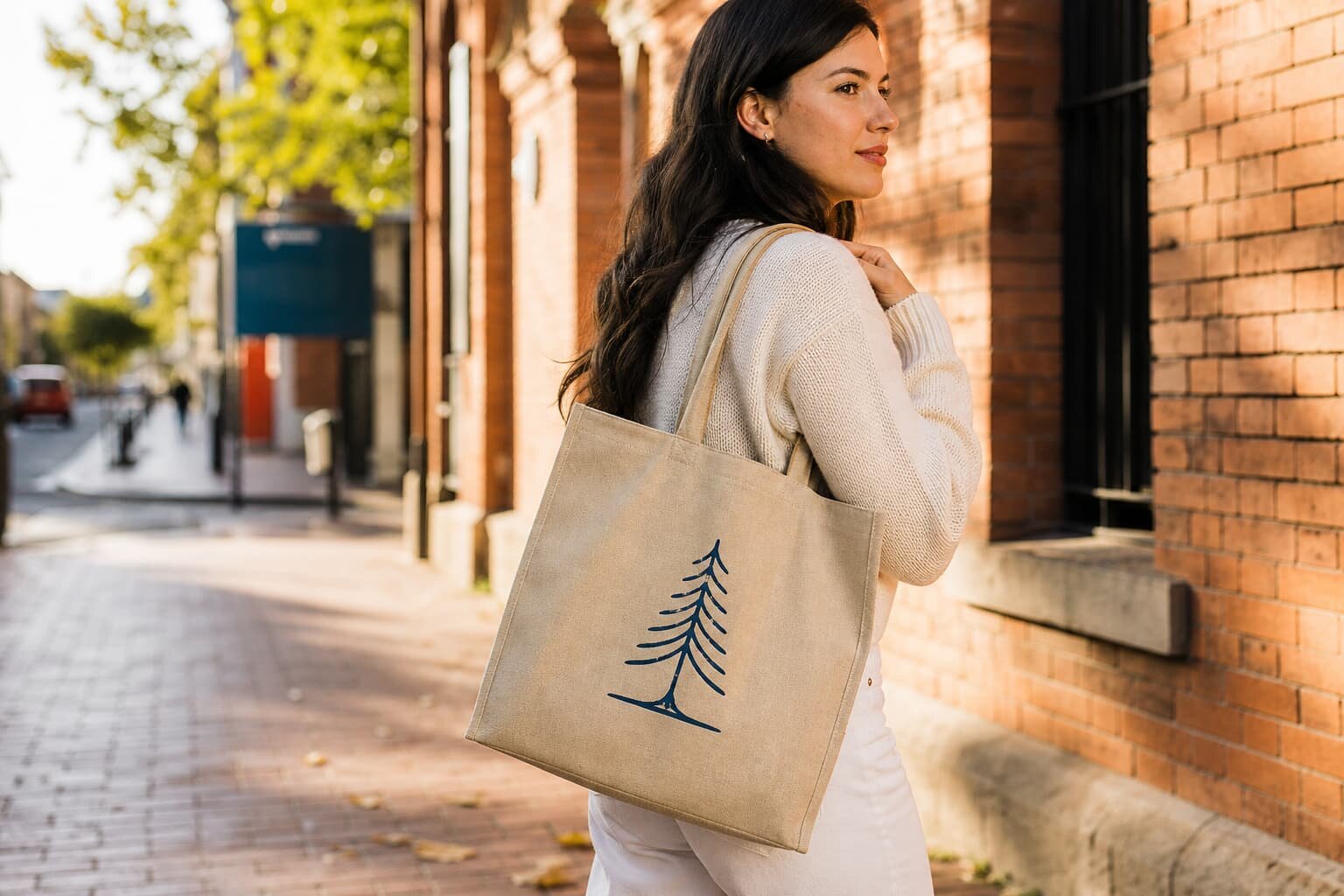
Start with the carrying job, not the canvas weight
For procurement teams, the common mistake is asking several factories for a “heavy canvas tote” without defining what the bag must carry and how the buyer will judge success. One supplier may quote 10 oz cotton canvas with a clean print and low freight weight. Another may quote 16 oz canvas with reinforced seams and a much higher carton weight. Both can be honest quotes, but they are not the same product.
Before requesting prices, define the carrying job in plain terms. A tote used for cosmetics gift packaging needs different fabric and seam decisions than a bookstore tote carrying hardback books. A distributor selling blank totes needs stable repeatability and neutral packing. A retail brand may accept a higher unit cost for better structure, cleaner stitching, and a branded label.
- Light retail purchase bag: usually 10 oz to 12 oz canvas, simple screen print, standard handles.
- Reusable shopping tote: usually 12 oz to 14 oz canvas, bottom gusset, reinforced handle stitching.
- Bookstore or merchandise tote: usually 14 oz to 16 oz canvas, stronger seams, careful print curing.
- Premium gift or lifestyle tote: heavy canvas plus woven label, inside binding, thicker handles, or custom dyed fabric.
- Distributor blank stock: prioritize consistent dimensions, stable shade, carton packing, and reorder repeatability.
How to compare 10 oz, 12 oz, 14 oz, and 16 oz canvas
Canvas weight is often quoted in ounces per square yard, while many procurement files use GSM. As a practical conversion, 10 oz is about 339 GSM, 12 oz is about 407 GSM, 14 oz is about 475 GSM, and 16 oz is about 542 GSM. The number is useful, but it is not the full specification. Yarn count, weave density, finishing, and whether the fabric has been washed or softened all change the final hand-feel.
A tightly woven 12 oz canvas can feel more stable than a loosely woven 14 oz canvas. A brushed or washed fabric may feel premium but can shrink more and print less sharply. Natural unbleached canvas can also vary in shade because cotton lots are not identical. If the order depends on repeat color and structure, do not approve from a catalog photo. Ask for swatches and measure actual GSM when the fabric arrives.
- 10 oz / 339 GSM: workable for cost-sensitive heavy-look totes, but needs good construction to avoid a weak feel.
- 12 oz / 407 GSM: common balanced choice for brand totes and reusable retail bags.
- 14 oz / 475 GSM: stronger body and better structure, with higher sewing and freight cost.
- 16 oz / 542 GSM: premium heavy-duty option, but thicker seams can affect sewing neatness and carton weight.
- Ask the factory to state tolerance, for example plus or minus 5% GSM, because textile weight is not exact piece by piece.
Natural, dyed, recycled, or blended canvas: what changes in buying risk
Natural cotton canvas is popular because it looks honest and works well for many brand positions. It is also easier to source at lower MOQ than custom dyed canvas. The tradeoff is shade variation. Natural canvas may show cotton seed flecks, darker yarn lines, or small slubs. These are normal within a controlled standard, but they must be accepted or rejected before bulk cutting.
Dyed canvas gives stronger brand control but normally introduces dye lot MOQ, lab dip approval, and longer lead time. Recycled cotton canvas can be a good option, but buyers should expect more color variation and fiber irregularity unless the supplier controls the yarn source closely. Cotton-poly blended canvas may improve dimensional stability and cost, but it changes the marketing claim and hand-feel.
- Use natural canvas when shade variation and cotton flecks fit the product story.
- Use dyed canvas when brand color is important enough to justify lab dip approval and MOQ.
- Use recycled cotton canvas only after checking strength, shade range, and documentation requirements.
- Use blended canvas when durability, shrinkage control, or price is more important than pure cotton claim.
- Avoid vague terms such as “eco canvas” in RFQs; state the actual fiber content and acceptable proof.
Construction details that matter more as canvas gets heavier
Heavy canvas does not automatically make a strong tote. The handle attachment, seam allowance, stitch density, bottom structure, and sewing thread decide whether the bag survives real use. A 16 oz tote with narrow handles and weak bar tacks can fail faster than a 12 oz tote with correct reinforcement. Procurement teams should compare construction photos and samples, not only fabric weight.
The thickest points are usually where side seams, gusset folds, and handles overlap. These areas require suitable needles, proper thread tension, and sometimes adjusted stitch length. If the factory is not used to heavy canvas, you may see skipped stitches, broken threads, twisted handles, or bulky corners. This is why sample approval should include inside seam photos and load testing, not only front print approval.
- Common handle width: 2.5 cm to 3.8 cm, depending on bag size and load expectation.
- Common handle drop: about 25 cm to 30 cm for shoulder carry; shorter for hand-carry gift bags.
- Reinforcement options: cross-stitch box, bar tack, X-stitch, or double row stitching.
- Seam finish options: overlock, folded seam, bound seam, or French seam depending on price level.
- For heavy totes, check that the handle is not sewn too close to the top edge, which can tear under load.
Print method selection for rough, heavy canvas
Screen printing remains the most practical method for many heavy canvas totes. It handles solid logos, slogans, and simple artwork well, and it is efficient for bulk orders. The main risk is that heavy canvas texture can reduce edge sharpness. Fine lines, small text, and large flood prints need a strike-off before approval. Ink must also be cured correctly, or it can crack, rub off, or smell strongly after packing.
Heat transfer can reproduce more detail, but it may feel like a film on thick natural canvas and may not suit a brand that wants a low-plastic appearance. Digital printing can be useful for small batches or complex artwork, but color vibrancy and wash resistance must be tested on the exact fabric. Embroidery gives a premium result for small logos, but dense embroidery on heavy canvas can pucker if backing and thread tension are wrong.
- Best for one to four solid colors: screen printing.
- Best for small premium mark: embroidery, woven side label, or printed neck label style patch.
- Best for complex short-run artwork: digital print, after checking color and wash/rub performance.
- Avoid very thin reversed text on rough natural canvas unless the factory proves it with a strike-off.
- For large prints, specify acceptable hand-feel: soft hand, standard plastisol-like feel, or water-based effect.
MOQ logic: why one tote quote can have several minimums
Heavy canvas tote MOQ is not one number. The fabric mill may have one MOQ for custom dyeing, the printing workshop may have another MOQ for screen setup efficiency, the label supplier may require a minimum for woven labels, and the bag factory may set a sewing line MOQ. When buyers only ask “What is your MOQ?” they often receive a simplified answer that hides the real cost drivers.
For a clean comparison, ask the factory to separate MOQ by component. Stock natural canvas usually allows lower MOQ than custom dyed canvas. A standard tote pattern allows lower MOQ than a new shape with special inner pockets. One-color screen print is easier to quote than six-color artwork with tight registration. If the first order is a market test, specify which parts may use stock materials and which parts must be custom.
- Fabric MOQ: affected by stock availability, dye color, width, and finishing.
- Print MOQ: affected by number of colors, screen setup, artwork size, and print position.
- Trim MOQ: affected by woven labels, custom zipper pulls, snaps, webbing color, and hangtags.
- Sewing MOQ: affected by style complexity, line setup time, and factory production schedule.
- Packing MOQ: affected by printed cartons, barcode labels, retail sleeves, and polybag size.
Sample approval workflow that prevents bulk surprises
A useful sampling process has stages. A blank sample checks the body size, fabric weight, handle length, gusset, and sewing. A print strike-off checks logo color, line sharpness, ink coverage, and curing on the actual canvas. A pre-production sample combines the final approved material, final artwork, final trims, and final packing. Skipping one of these stages saves a few days but can create expensive arguments later.
When reviewing samples, measure like an inspector, not like a catalog viewer. Canvas stretches and relaxes, so lay the tote flat without pulling. Measure width at the top and bottom, height from top edge to bottom seam, gusset depth, handle length, and handle drop. Photograph the measurement points and keep one signed approval sample with your procurement record.
- Check GSM using a fabric cutter and scale if available, or ask the factory for the test method.
- Compare fabric shade to the approved swatch under neutral light, not yellow office light.
- Rub the print with dry and slightly damp white cloth to identify weak curing or color transfer.
- Load the bag with the intended weight for a short practical test and inspect handle seams afterward.
- Check odor after the sample stays inside a closed polybag for 24 hours, especially with printed bags.
Lead time planning: fabric, print, sewing, and packing are separate steps
A realistic lead time depends on material status. If the factory has stock natural canvas and the artwork is simple, sampling and production can move faster. If the order needs custom dyed canvas, lab dips, special labels, or printed retail packaging, the timeline extends. Procurement teams should ask which part is on the critical path instead of accepting one general lead time line in the quote.
Artwork approval can delay production more than buyers expect. Factories cannot make screens or print strike-offs confidently without final vector files, Pantone references if required, print size, and placement. Likewise, packing approval affects carton purchase and warehouse planning. A confirmed tote order is not truly ready for production until material, print, trims, and packing are all approved.
- Blank sample: often faster if based on an existing pattern and stock fabric.
- Print strike-off: depends on artwork file quality, screen setup, ink mixing, and curing test.
- Pre-production sample: should use final material, final logo, final trims, and final packing method.
- Bulk cutting: should start only after fabric inspection and written sample approval.
- Final packing: can slow shipment if barcodes, carton marks, or retailer routing labels arrive late.
Packing decisions affect freight, warehouse handling, and complaints
Heavy canvas totes are not fragile, but poor packing still creates problems. Natural canvas absorbs dust and odor. Thick fabric creases when compressed badly. Printed areas can transfer if packed before full curing or if bags are stacked face to face under pressure. If the tote is for retail sale, packing appearance matters as much as transport protection.
Ask for carton details during quotation, not after production. The same tote packed 50 pieces per carton versus 100 pieces per carton changes carton weight, handling risk, and warehouse convenience. Very heavy cartons may be rejected by some warehouses or create extra labor complaints. For distributors, bundle packing may be efficient. For retail buyers, individual polybags, hangtags, barcode stickers, or folded presentation may be required.
- Common export packing: bulk folded in bundles inside a lined carton.
- Retail packing: individual polybag, barcode sticker, hangtag, size label, or shelf-ready carton.
- Moisture control: use clean cartons, inner poly liner if needed, and avoid packing damp goods.
- Carton control: request carton dimensions, gross weight, net weight, and pieces per carton in the quote.
- Print protection: avoid face-to-face stacking of uncured or high-coverage prints.
Quote data procurement should request to compare suppliers fairly
A useful quote for heavy canvas totes should read like a production summary, not only a unit price. If one supplier includes 12 oz canvas, one-color screen print, cross-stitch handles, individual polybags, and export cartons, while another supplier quotes a blank 10 oz tote with bundle packing, the cheaper quote is not a saving. It is a different bag.
Ask each factory to quote against the same specification sheet and to list assumptions clearly. If the supplier suggests a cost-saving alternative, keep it as an alternate line, not a hidden substitution. The best RFQ allows you to compare base spec, optional upgrades, MOQ effects, and packing/freight impact before choosing.
- Bag size: width x height x gusset, plus measurement tolerance.
- Fabric: fiber content, canvas weight in oz and GSM, color, finish, and tolerance.
- Handles: material, width, length, drop, stitching method, and reinforcement.
- Print: method, colors, size, placement, ink type if relevant, and setup charge.
- Trims: labels, hangtags, snaps, zippers, pockets, or custom webbing if used.
- Packing: folding method, polybag or bundle pack, carton quantity, carton dimensions, gross weight.
- Commercial terms: MOQ, sample cost, sample lead time, bulk lead time, payment terms, and quote validity.
Specification comparison for buyers
| Spec decision | Recommended option | When it fits | Buyer risk to check |
|---|---|---|---|
| Main fabric weight | 12 oz / 407 GSM cotton canvas for most retail and event totes | Good balance of structure, printability, freight weight, and perceived durability | Confirm whether supplier quotes finished GSM after washing or nominal greige fabric weight |
| Premium heavy-duty fabric | 16 oz / 542 GSM canvas with reinforced seams | Reusable shopping bags, bookstore bags, gifting, brand merchandise with long service life | Higher needle breakage risk, thicker folded seams, higher carton weight, longer sewing time |
| Budget heavy look | 10 oz / 339 GSM canvas with bottom gusset and proper handle reinforcement | Large campaigns where bag must look substantial but unit cost and freight matter | Can feel soft if fabric is loosely woven; request actual fabric swatch and load test |
| Fabric finish | Natural unbleached canvas for eco-positioned retail use | Brands wanting visible cotton flecks, lower processing, and a natural appearance | Shade variation between lots; logo colors may look warmer than on white fabric |
| Logo printing | Screen printing for solid one to four color artwork | Most brand logos, retail graphics, promotional slogans, and repeat orders | Ink hand-feel, registration tolerance, and curing must be checked on heavy texture |
| Premium decoration | Embroidery or woven side label combined with simple print | Boutique retail, gift packaging, staff bags, and brand merchandise | Embroidery can pucker canvas if backing and stitch density are not controlled |
| Handle construction | Self-fabric handles with cross-stitch reinforcement or cotton webbing handles | Daily-carry totes, books, samples, and retail purchases | Handle drop must be measured after sewing; thick canvas reduces usable opening |
| Bottom structure | Boxed bottom gusset with reinforced side seams | Bags that need to stand better and hold packaged goods | Corner seam bulk can become uneven; request photos of inside corners in sample approval |
Buyer checklist before sampling
- Define the target use first: light retail packaging, reusable shopping, books, staff merchandise, or premium gifting.
- State fabric weight in both ounces and GSM, and ask whether the weight is greige fabric, finished fabric, washed fabric, or coated fabric.
- Request fabric swatches from the same mill source planned for bulk, not only showroom reference swatches.
- Specify bag dimensions as width x height x gusset, and confirm whether measurements are taken flat, finished, or excluding handles.
- Define handle material, handle width, handle length, handle drop, and reinforcement stitch pattern.
- Choose the print method based on artwork and fabric texture, then request a strike-off on the approved canvas.
- Set realistic logo placement tolerance, usually plus or minus 5 mm for screen print on sewn canvas unless a tighter tolerance is agreed.
- Confirm whether natural canvas shade variation is acceptable and define a reference sample for bulk shade approval.
- Ask for sample photos of inside seams, bottom corners, handle attachment, and label placement, not only front beauty shots.
- Define packing method: individual polybag, bundle pack, carton quantity, carton dimensions, carton weight, and barcode or retail label requirements.
Factory quote questions to send
- Which canvas weight are you quoting in oz and GSM, and is it measured before or after finishing?
- Is the quoted fabric 100% cotton canvas, cotton blend canvas, recycled cotton canvas, or another construction?
- What is the yarn count or construction you normally use for 10 oz, 12 oz, 14 oz, and 16 oz canvas?
- Can you provide fabric swatches from the same supplier intended for bulk production?
- What MOQ applies to the fabric color, bag style, printing method, and custom label separately?
- If we order below the fabric dyeing MOQ, will the bag use stock canvas? What shade range should we expect?
- Which print method do you recommend for our artwork on this canvas, and what are the limitations on fine lines and small text?
- What is the screen setup charge or sampling charge, and is it refundable after bulk order confirmation?
- What is the expected sampling lead time for a blank sample, print strike-off, and full pre-production sample?
- What is the bulk lead time after deposit and final artwork approval, and what parts of the schedule depend on fabric arrival?
Quality-control points to confirm
- Fabric GSM must be checked with a cut sample and scale, not only judged by hand-feel.
- Finished dimensions should be measured flat at top width, bottom width, height, gusset, handle length, and handle drop.
- Natural canvas shade should be compared under neutral lighting against the approved reference sample.
- Print color should be compared after curing and cooling because ink can darken on natural cotton canvas.
- Rub resistance and scratch resistance should be checked for printed areas, especially on dark ink over rough heavy canvas.
- Handle attachment should pass a practical load test based on intended use, with no broken stitches or fabric tearing.
- Inside seams and bottom corners should be checked for skipped stitches, loose threads, fraying, and bulky uneven folds.
- Metal trims, zippers, snaps, or eyelets, if used, should be checked for rust risk, sharp edges, and secure attachment.
- Packing should protect the canvas from moisture, dust, odor transfer, and carton compression during export transport.
- Carton marks, barcode labels, polybag warnings, and retail labels should match the buyer’s routing and warehouse requirements.