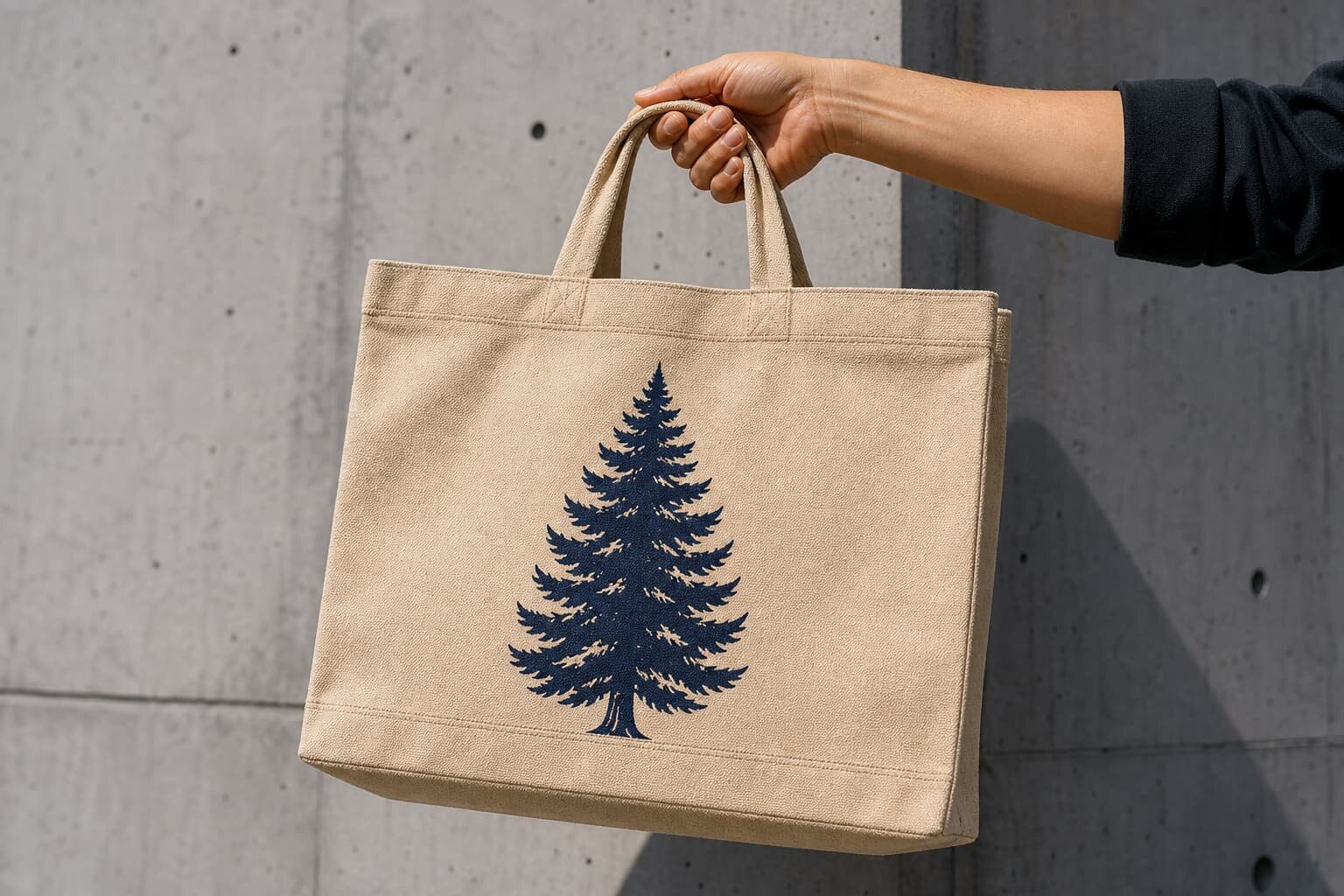
1. The buying problem: startup tote orders need a clear MOQ plan
A heavy canvas tote looks simple until the first quote comparison arrives. One supplier quotes 500 pcs, another says 1,000 pcs, and a third gives a low unit price but does not mention fabric GSM, print setup, carton packing, or sample charges. For a startup brand, this creates a real sourcing problem: you may think you are comparing the same tote, but each factory may be pricing a different construction.
The practical way to control this is to build your RFQ around MOQ logic, not just target price. MOQ is affected by fabric availability, dyeing, cutting efficiency, print setup, label production, sewing line setup, packing style, and quality inspection time. A heavy canvas tote for startup brands should normally begin with a controlled specification: one size, one fabric color, one logo design, and one packing method. Once sales volume is proven, you can add extra colors, pockets, zipper closure, or private labels.
- Avoid asking only: "How much for 500 canvas totes?"
- Ask instead: "Please quote 500, 1,000, and 2,000 pcs for this exact size, 14 oz canvas, natural color, one front screen print, bulk packed."
- Make the supplier state what changes when MOQ increases: fabric price, print setup allocation, cutting loss, labor efficiency, and carton packing.
2. Define the tote before you ask for price
A factory cannot quote accurately from a lifestyle photo. For heavy canvas totes, the cost starts with the finished measurements and construction. A 38 x 42 cm flat tote and a 38 x 35 x 12 cm boxed tote may look similar in a catalogue, but fabric consumption, sewing time, handle position, packing volume, and freight cost are different. If your quote request does not name these details, the supplier may quote the cheapest interpretation.
For a startup brand selling the tote as merchandise or using it as premium packaging, the size should match the product use. A tote for apparel needs different depth than a tote for books. A grocery-style tote needs a stronger bottom and wider handle. A fashion merch tote may need cleaner stitching and better print position even if the load is lighter. Decide whether the tote is a paid retail item, free gift, event giveaway, or reusable shopping bag before finalizing the spec.
- Common flat tote reference: around 38 x 42 cm, no gusset, simple daily carry use.
- Common retail gusset reference: around 38 x 35 x 10 to 12 cm, better for apparel, boxes, and books.
- Handle drop reference: 25 to 30 cm for shoulder carry; shorter for hand-carry gift bags.
- Handle width reference: 25 to 38 mm depending on load, style, and comfort requirement.
- Construction options: flat, bottom gusset, side gusset, boxed bottom, inside pocket, zipper top, snap button, or lining.
3. Fabric weight: why oz and GSM must both be in the RFQ
Heavy canvas is often described in ounces, such as 10 oz, 12 oz, 14 oz, or 16 oz. International buyers should also request GSM because ounce descriptions can be used differently by mills and factories. A 12 oz canvas may be quoted as roughly 380 to 410 GSM depending on fabric width, finishing, and supplier convention. A 16 oz canvas may feel much heavier, but it also increases sewing difficulty, carton weight, and unit price.
The right fabric weight depends on use and brand positioning. For a low-cost event tote, 8 oz to 10 oz may be enough, but it should not be sold as a heavy canvas tote. For a startup brand that wants a sturdy retail product, 12 oz to 14 oz is often a practical starting point. For premium merchandise or a structured bag, 16 oz can work, but the buyer should confirm whether the sewing machine can handle seams, gusset corners, and handle reinforcement without bulky distortion.
- Ask for fabric weight in both oz and GSM, not one or the other.
- Request a swatch or previous sample if fabric hand-feel matters to your brand.
- Confirm whether fabric is natural cotton canvas, bleached canvas, dyed canvas, washed canvas, or recycled cotton blend.
- Check shrinkage if the tote may be washed by end users.
- For natural canvas, accept that cotton seed specks and minor shade variation may be visible unless you specify tighter grading.
4. MOQ drivers that startup buyers often miss
MOQ is not only a sales policy. It is a production calculation. A factory may have available stock fabric for natural canvas, allowing a lower MOQ. Dyed canvas or custom Pantone fabric usually needs a higher MOQ because the mill has its own minimum dye lot. A simple one-color screen print can be set up economically at a smaller quantity, while multiple logo versions, several print placements, or different bag colors split the production and reduce efficiency.
Many startup brands want variety for launch: three colors, two logos, two handle styles, and custom labels. This often looks attractive on a website but is inefficient for a first order. If the total order is 600 pcs split into six variants, each variant is only 100 pcs. Cutting, printing, sewing, labeling, and packing all become fragmented. The better approach is to launch with the strongest single SKU, then reorder with extra variants once sell-through is clear.
- Lower MOQ is easier when using stock natural canvas, standard size, standard handles, and one print design.
- MOQ rises with custom dyed fabric, custom woven labels, embroidery, zipper closure, lining, inside pocket, or retail individual packing.
- Print MOQ may be separate from sewing MOQ if screens, transfers, or embroidery setup are involved.
- Label MOQ may be higher than bag MOQ, so ask if unused labels can be stored for reorder.
- Carton and packing customization can also create a separate MOQ.
5. Pricing checklist: what should be inside a serious factory quote
A useful quote is not just a unit price. It should show what specification the price is based on and what is excluded. For heavy canvas totes, fabric can be the largest cost driver, but printing, sewing labor, packing material, inspection handling, and export cartons also matter. If two suppliers are far apart in price, first check whether they quoted the same GSM, the same bag structure, the same print method, and the same packing.
Startup buyers should request price breaks, but price breaks need to be tied to the same specification. Ask for 500, 1,000, and 2,000 pcs using identical fabric, logo, and packing. This reveals whether the price reduction comes from better material purchasing, spreading setup cost, or improved sewing efficiency. It also helps you decide whether the extra inventory risk is worth the lower unit cost.
- Unit price by quantity tier, with currency and Incoterm clearly stated.
- Fabric specification: weight, composition, color, weave, and finishing.
- Print cost: method, number of colors, print size, screen or setup charge, and sampling charge.
- Accessory costs: woven label, hangtag, barcode sticker, snap, zipper, pocket, or inner label.
- Packing cost: bulk pack, individual polybag, tissue, insert card, master carton, or retail carton.
- Lead time basis: after deposit, after artwork approval, after sample approval, or after fabric arrival.
- Shipping term: EXW, FOB, CIF, DDP, or buyer’s forwarder pickup, with port or address named.
6. Print method choices on heavy canvas
The most common method for startup canvas totes is screen printing. It is reliable for solid logos, bold text, and one to three colors. On heavy canvas, the fabric texture is visible, so very small letters, thin lines, and large flat ink areas need review. A good factory will check whether the artwork needs line thickening, trapping between colors, or a different ink approach to avoid broken edges.
Heat transfer can be useful for multi-color designs or detailed artwork at moderate quantities, but the hand-feel may be different from screen print. Embroidery adds perceived value but costs more and can distort thin canvas if the backing and stitch density are wrong. Woven labels or sewn side labels are good for small brand marks and repeat orders because they reduce the need for a large front print. The right choice depends on your logo, sales channel, and target retail price.
- Screen print: best for solid logos, cost control, and repeatable production.
- Water-based or pigment ink: check coverage on dark or dyed canvas before approval.
- Heat transfer: useful for detailed multi-color graphics, but test adhesion and hand-feel.
- Embroidery: premium look, but confirm backing, stitch count, and fabric puckering risk.
- Woven label: good for subtle branding and lower print risk, but label MOQ may apply.
- Always approve a printed sample or print strike-off before bulk production.
7. Sample approval: what to check before production starts
The sample stage is where many expensive mistakes can still be prevented. A photo sample can confirm rough appearance, but it may not prove fabric weight, hand-feel, print curing, or load performance. For a retail or branded merchandise tote, a physical sample is usually worth the time because the buyer can test handle comfort, fabric stiffness, print scale, and packing fit.
Do not approve a sample only because the front photo looks good. Measure the bag. Compare the handle drop with your intended carry style. Check the inside seam finish. Rub the print lightly with a white cloth after curing. Fold the bag the same way it will be packed. If the sample has the wrong fabric or blank handles, ask the factory to clearly state what will be changed in the pre-production sample.
- Confirm finished size tolerance, commonly around plus or minus 0.5 to 1.0 cm depending on construction.
- Check print position tolerance, especially distance from top edge and side seams.
- Review handle reinforcement: cross stitch, box stitch, bar tack, or double line stitch.
- Check thread color, stitch density, seam straightness, and loose thread trimming.
- Test whether the tote folds neatly into the planned carton or individual bag.
- Keep the approved sample sealed, signed, or photographed as the production reference.
8. Packing and freight: the hidden cost in heavy canvas totes
Heavy canvas totes are not fragile, but they are bulky and can become expensive to ship if packing is poorly planned. A 16 oz gusseted tote takes more carton space than a 10 oz flat tote. Individual polybags add labor and material cost, but they may be necessary for retail fulfillment, barcode scanning, or clean warehouse handling. Bulk packing is cheaper and uses less plastic, but it must protect against moisture, dust, and carton damage.
Ask for carton quantity, carton dimensions, gross weight, and net weight at quote stage. This allows your freight forwarder to estimate cost and prevents surprises after production. If you sell through retailers, confirm carton weight limits and labeling rules early. A carton that is too heavy may be rejected by a warehouse or require repacking, which is avoidable if the supplier knows your requirements before production.
- Bulk pack is usually the simplest for promotional orders and internal brand use.
- Individual polybag is useful for retail, ecommerce fulfillment, and clean inventory handling.
- Add barcode sticker, hangtag, or insert card only when the sales channel requires it.
- Use moisture-resistant export cartons and consider inner poly lining for humid routes.
- Ask whether cartons will be marked with SKU, quantity, color, PO number, carton number, and country of origin if needed.
- Confirm if the tote will be folded once, folded twice, or packed flat, because this affects crease marks and carton volume.
9. Lead time planning for first orders and reorders
A startup buyer should not treat production lead time as only sewing time. The calendar includes artwork checking, sample making, sample transit, buyer review, fabric booking, printing, sewing, trimming, QC, packing, final inspection, and export handover. If dyed fabric or custom labels are involved, material preparation may take longer than sewing. The supplier should state when the production clock starts.
For reorders, lead time can improve if the buyer keeps the same specification and the factory retains approved screens, patterns, labels, and reference samples. However, a reorder is not automatically identical unless the PO states the approved version. If you change fabric color, logo size, packing, or handle length, treat it as a revised order and confirm sample or at least a production confirmation before bulk work begins.
- Separate sample lead time from bulk production lead time.
- Ask whether lead time starts after deposit, artwork approval, or sample approval.
- Confirm material availability before announcing launch dates.
- Keep an approved production file with size chart, artwork, Pantone references, label layout, and packing method.
- For seasonal launches, build buffer time for sample revision and shipping delay.
- For reorders, reference the previous PO and approved sample, then list any changes clearly.
10. Acceptance criteria: turn your checklist into a purchase order attachment
The best way to avoid disputes is to attach a short technical sheet to the purchase order. It does not need to be complicated, but it must define what the factory is expected to make. Include finished measurements, material, logo method, color references, stitching method, packing, carton marks, inspection standard, and approved sample reference. This turns a loose email conversation into a production document.
Acceptance criteria should focus on issues that affect saleability and function. Minor cotton slubs on natural canvas may be acceptable. A crooked front logo, weak handle stitch, wrong GSM, severe stains, or incorrect carton quantity should not be accepted. Agree on inspection points before production starts so the supplier understands which defects are critical for your brand and channel.
- Critical defects: wrong item, wrong logo, unsafe sharp part, broken handle, severe stain, wrong material, mold, or strong odor.
- Major defects: crooked print, poor ink curing, wrong size beyond tolerance, weak stitching, open seam, missing label, or wrong packing.
- Minor defects: small loose thread, slight natural cotton speck, minor shade variation within agreed range, or small fold crease from packing.
- Define whether inspection is done by factory QC, buyer’s agent, third party, or buyer’s warehouse.
- Request production photos during cutting, printing, sewing, and final packed goods for first orders.
- Keep reference samples and inspection records to support repeat orders and supplier improvement.
Specification comparison for buyers
| Spec decision | Recommended option | When it fits | Buyer risk to check |
|---|---|---|---|
| Fabric weight | 12 oz to 16 oz cotton canvas, roughly 380 to 540 GSM depending on weave and finishing | Startup retail totes, merch bags, bookstore totes, lifestyle brand packaging, and heavier daily-use bags | Do not compare quotes only by ounce. Ask for GSM, fabric construction, shrinkage, and whether weight is before or after washing/finishing. |
| Bag structure | Flat tote for lower cost; boxed bottom with side gusset for retail-grade capacity | Flat works for lightweight merch; gusseted works for apparel, books, grocery-style use, or paid retail product | Gusset depth changes fabric consumption and carton volume. A cheap quote may be based on a flat bag while your drawing shows a gusset. |
| Handle type | Same-fabric canvas handles or 30 to 38 mm cotton webbing with cross-stitch reinforcement | Webbing handles are stable for repeated carrying; same-fabric handles give a cleaner fashion look | Check handle drop, width, reinforcement stitch, and whether the quoted handle material matches the approved sample. |
| Print method | Screen print for solid logos; heat transfer for small multi-color art; embroidery or woven label for premium detail | Most startup logos work best with 1 to 2 color screen print on natural, black, or dyed canvas | Heavy canvas has texture. Thin lines, gradients, and large ink coverage may need art adjustment or print test. |
| MOQ strategy | Start with one fabric color, one size, and one print position to control MOQ and setup cost | Best for first production run, launch inventory, event sales, or wholesale testing | Splitting 500 pcs across five colors often creates higher unit cost, more defects, and longer approval time. |
| Packing | Bulk pack in export carton; optional individual polybag only if required by retail channel | Bulk pack fits promotional and direct-to-consumer brands; individual packing fits retail distribution and warehouse scanning | Packing affects labor, material cost, carton size, barcode work, and sustainability claims. |
Buyer checklist before sampling
- Confirm final bag dimensions with tolerance, including width, height, gusset, handle width, and handle drop.
- Specify fabric weight in oz and GSM, plus color, weave, and whether fabric is natural, bleached, dyed, or washed.
- Decide if the tote is a flat bag, bottom-gusset bag, side-gusset bag, or full boxed construction.
- State expected loading use, such as books, apparel, cosmetics, wine accessories, or general retail packaging.
- Provide logo artwork in vector format and include print size, print position, Pantone references, and number of print colors.
- Ask the factory to confirm the best print method for the fabric texture and logo detail before sampling.
- Request a pre-production sample or photo sample that uses the correct fabric weight, handle, print, and stitching method.
- Define sample approval rules: dimensions, print color tolerance, stitching, fabric hand-feel, shrinkage, and packaging.
- Request itemized quotation showing bag cost, print setup, sample charge, packing, labels, inspection, and freight basis.
- Confirm MOQ by style, fabric color, print design, and packing method instead of accepting one vague MOQ number.
Factory quote questions to send
- What is the MOQ for this exact tote if we use one natural canvas fabric, one size, and one screen print design?
- Does the MOQ change if we choose dyed canvas, custom Pantone fabric, inside pocket, zipper top, or individual polybag packing?
- What fabric weight are you quoting in both oz and GSM, and is the weight measured before or after finishing?
- Can you provide fabric swatch photos or physical swatches for 12 oz, 14 oz, and 16 oz canvas so we can compare hand-feel?
- What is the recommended print method for our logo on this canvas weight, and what artwork details may need adjustment?
- Is the quoted price based on bulk packing or individual packing, and what is the carton quantity, carton size, and gross weight?
- What sample type is included: digital proof, blank fabric sample, printed prototype, or pre-production sample using final materials?
- What are your standard tolerances for bag size, handle drop, print position, and color variation?
- What production lead time starts after which approval point: deposit, artwork approval, sample approval, or fabric arrival?
- Can you separate unit price, mold or screen charge, sample charge, label cost, packing cost, inspection cost, and shipping term?
Quality-control points to confirm
- Measure finished bag width, height, gusset, handle drop, and handle width against approved sample and tolerance sheet.
- Check canvas GSM with cutting sample or supplier test data, and compare hand-feel against approved swatch.
- Review fabric defects such as slubs, stains, weaving lines, uneven dyeing, and oil marks before printing.
- Inspect handle attachment with box stitch or cross stitch and confirm thread tension is not loose or puckered.
- Check seam allowance, inside overlock, corner strength, and whether heavy stress points are reinforced.
- Confirm print size, print position, ink coverage, registration, curing, rub resistance, and color against approved sample.
- Test practical loading with a realistic weight based on intended use, not an extreme claim with no relevance.
- Verify labels, hangtags, barcode stickers, insert cards, and country-of-origin marking if required by the buyer.
- Check individual polybags or bulk packing for moisture control, carton strength, carton marks, and correct pack quantity.
- Keep one signed pre-production sample and compare it against inline and final inspection units.