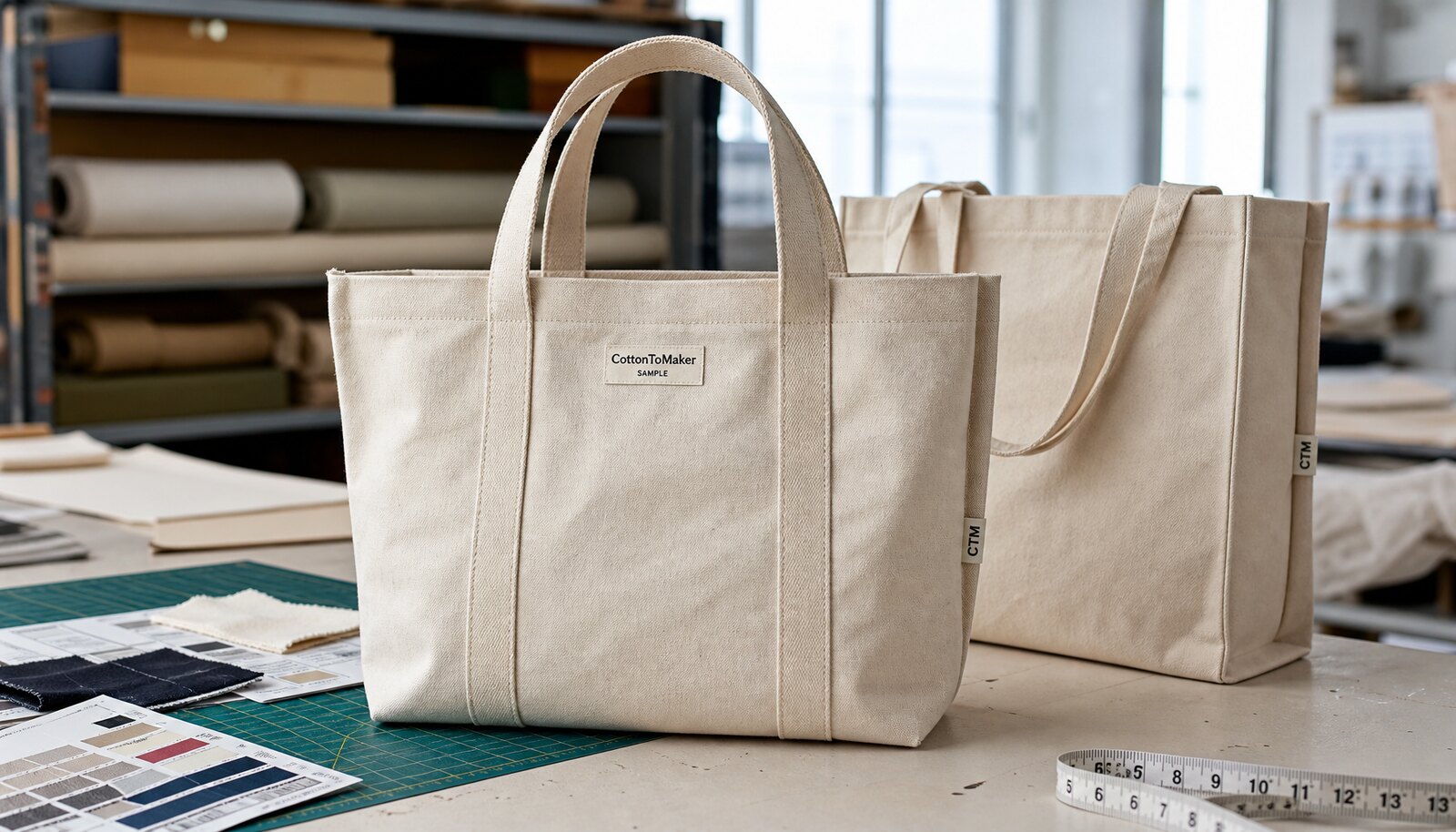
1. The buying problem: heavy canvas totes look simple, but quotes are rarely equal
A heavy canvas tote is often used as a retail product, a branded merchandise item, or a premium reusable shopping bag. The shape may look basic, but the quote can move quickly when fabric weight, gusset, handle length, print coverage, packing, and MOQ splits are not controlled. For procurement teams and brand owners, the main problem is not finding a supplier who can sew a tote. The problem is comparing several quotations that are based on different assumptions.
One factory may quote 14 oz natural canvas with bulk packing, another may quote 16 oz dyed canvas with individual polybags, and a third may include a heavier handle but exclude print setup. These prices cannot be judged by unit price alone. A useful RFQ should force each supplier to quote the same construction, same logo method, same packing, and same delivery basis. That is the only way to see who is genuinely competitive and who is simply quoting a lighter or incomplete version.
- Ask for finished dimensions, not only cutting dimensions.
- Separate fabric cost, printing cost, packing cost, and setup charges where possible.
- Confirm whether the price is based on your exact artwork or a simple one-color estimate.
- Treat unusually low quotes as a signal to re-check fabric weight, handle size, and packing.
2. Start MOQ planning by separating fabric, color, print, and packing
MOQ for heavy canvas totes is not only a number of bags. It is tied to how the factory buys fabric, sets up cutting, prepares screens or transfers, controls color, and packs the finished goods. If a buyer asks for 3,000 pieces total but splits the order into three fabric colors, three logo artworks, and two packing methods, the real MOQ pressure becomes much higher. The factory must manage each version as a separate mini production run.
A better approach is to ask the supplier to show MOQ by variable. For example, the fabric mill may require a minimum for custom dyed canvas, while the bag factory may accept a lower MOQ using stock natural canvas. Screen printing may have a setup charge per artwork and per color. Retail packing may require a minimum quantity of printed hangtags or barcode labels. Once these elements are separated, the buyer can decide whether a wider assortment is worth the higher cost.
- MOQ per fabric type: natural, bleached, dyed, organic, recycled, or washed canvas.
- MOQ per colorway: one canvas color usually runs cleaner than several small color lots.
- MOQ per logo: each artwork, placement, and print size may require separate setup.
- MOQ per packing method: bulk pack, individual polybag, retail belly band, hangtag, or barcode sticker.
- MOQ per size: a 38 x 42 cm tote and a 45 x 38 x 12 cm gusseted tote are separate patterns.
3. Fabric weight: use GSM and handfeel, not only oz labels
Heavy canvas tote buyers often specify 12 oz, 14 oz, 16 oz, or 18 oz. That is useful, but it is not enough for accurate sourcing. Ounce ratings can vary by market convention, finishing, moisture, and supplier description. A factory should be able to convert the fabric to GSM and confirm the tolerance. As a practical range, 12 oz canvas is often around 400 GSM, 14 oz around 475 GSM, 16 oz around 540 GSM, and 18 oz around 610 GSM, but these are approximate and should not replace a real fabric swatch or test.
The handfeel also matters. Two fabrics with similar GSM may feel different because of yarn count, weave density, washing, starch, and finishing. A stiff 16 oz canvas may stand upright better for retail display, while a softer washed canvas may feel more lifestyle-oriented but cost more and shrink differently. If the tote must carry books, wine, groceries, or boxed merchandise, do not approve fabric from a photo. Request a swatch or sample and test how it folds, creases, and holds weight.
- 12 oz: usable for midweight promotional or retail totes when cost matters.
- 14 oz: common choice for stronger branded totes with a more substantial feel.
- 16 oz: good for premium retail totes, structured bags, and heavier daily use.
- 18 oz and above: stronger look and feel, but higher sewing difficulty, freight weight, and MOQ pressure.
- Natural canvas shade can vary by lot; request shade tolerance if the brand color story depends on it.
4. Construction choices that change the unit price
The biggest hidden cost drivers are not always the logo. Bag shape and sewing method can change fabric consumption, labor time, reject rate, and carton volume. A flat tote is usually the most economical because it uses a simpler pattern and packs efficiently. A bottom gusset, side gusset, or boxed bottom adds carrying capacity and a more premium shape, but also requires more sewing accuracy and more fabric. For retail buyers, this trade-off should be decided before RFQ, not after samples arrive.
Handle construction is another common source of quote mismatch. A narrow handle made from lighter webbing is not the same as a wide self-fabric handle made from the same heavy canvas. Long shoulder handles increase fabric use and may require stronger reinforcement at the attachment point. If the tote is meant to carry heavy goods, ask for box stitch with cross reinforcement and confirm stitch density. If the tote is mainly a fashion merchandise item, the visual proportion of the handle may matter as much as load capacity.
- Flat tote: lowest fabric use and cleanest price comparison.
- Bottom gusset: adds volume while keeping a simple front panel for printing.
- Full side gusset: better capacity, more complex sewing, higher carton cube.
- Self-fabric handle: premium look but higher fabric consumption.
- Cotton webbing handle: stable width and cost, but the color and texture may differ from the bag body.
5. Logo method: match artwork to canvas texture before locking MOQ
Heavy canvas has a visible weave, so artwork that looks sharp on paper may lose fine details on the bag. Screen printing is usually the most practical choice for solid brand logos, large text, and one to four color artwork. It gives good coverage when the ink and curing are controlled, but each color normally adds setup and production time. Large solid blocks can also feel thick if the ink deposit is heavy, so the buyer should approve a physical print sample for important retail programs.
Heat transfer can be useful for detailed, gradient, or multi-color logos, but the finish may feel different from direct print and should be tested for adhesion on textured canvas. Embroidery gives a premium result for small logos but is not economical for large solid artwork and can pucker heavy fabric if backing and tension are not controlled. Woven labels, leather patches, or cotton labels may be better when the brand wants subtle identification rather than a large front print.
- Screen print: best for simple logos, slogans, and bold graphics.
- Heat transfer: useful for complex artwork, but test edge adhesion and wash/rub resistance.
- Embroidery: premium for small marks, not ideal for large filled areas.
- Woven label: consistent branding across multiple bag colors with less print-color risk.
- Debossed patch: premium look, but material sourcing and attachment method add MOQ and lead time.
6. Pricing structure: what a complete quote should include
A professional quote for a heavy canvas tote should make the cost assumptions visible. Procurement teams should not accept a one-line price without knowing what is included. At minimum, the quote should include fabric specification, bag size, handle style, logo method, number of print colors, packing method, carton details, MOQ, sample cost, production lead time, and trade term. If the supplier cannot state these items clearly, later cost increases are likely.
For internal comparison, it helps to build a quote sheet with separate lines for base bag, print, packing, testing, and delivery-related costs. This does not mean every factory must reveal its full cost structure, but the buyer should know which choices are causing price movement. For example, changing from bulk pack to individual polybag with barcode sticker may look minor, but it adds material, labor, packing inspection, and carton volume. A cheaper bag price may disappear once freight and retail-prep costs are included.
- Base bag: fabric, cutting, sewing, thread, trimming, normal wastage.
- Logo: setup, screens, ink, transfer film, embroidery program, patch mold, or label MOQ.
- Packing: polybag, tissue, hangtag, barcode sticker, inner carton, master carton, pallet request.
- Sampling: fabric swatch, prototype, print strike-off, pre-production sample, courier charge.
- Compliance and testing: colorfastness, azo, heavy metals, fiber content, packaging warnings, if required.
- Logistics data: carton size, gross weight, net weight, CBM, HS code suggestion, loading quantity if needed.
7. Sample approval: check the sample like a production document
A sample is not just for appearance. It is the physical production standard. Buyers should mark the approved sample with date, version, fabric weight, print reference, and packing notes. If several rounds of samples are made, keep clear records of which one is approved. Many disputes start because the sales sample, photo sample, and production sample are not the same version.
For heavy canvas totes, measure the bag when it is lying flat and also check how it opens when loaded. A gusseted tote can measure correctly but still look twisted if the sewing tension or corner alignment is poor. Check handle drop on a shoulder, not only with a ruler. For printing, confirm size, position from top edge or side seam, opacity, curing, and whether the logo is distorted near seams or folds. If the order is for retail sale, also approve the packing presentation, not just the bag.
- Weigh and measure the fabric if the order depends on a specific GSM.
- Load the tote with realistic product weight and inspect handle stress points.
- Fold and pack the sample in the intended method to see crease impact on print.
- Compare logo color under consistent light, not only phone photos.
- Sign off any allowed variation, such as plus or minus 1 cm dimension tolerance.
8. Packing and carton data: small decisions that affect landed cost
Packing is often treated as an afterthought, but it can change landed cost and retail readiness. Bulk packing is usually suitable for wholesale distribution, event use, or when the buyer will repack locally. Individual polybags protect the tote during handling and may be required for ecommerce or retail inventory, but they increase labor and plastic use. Hangtags, barcode stickers, belly bands, and printed inserts should be included in the RFQ because they affect material sourcing and packing speed.
Carton data must be requested before the buyer compares freight. Heavy canvas increases gross weight, and gusseted bags increase carton volume. A quote that looks lower per piece may create higher sea freight or air freight cost if the packing is inefficient. Ask for pieces per carton, carton dimensions, gross weight, net weight, and estimated CBM for the full order. If the shipment is palletized, specify pallet requirements early because carton strength and stacking pattern may need adjustment.
- Bulk pack: lowest cost, less plastic, efficient for distributors.
- Individual polybag: better protection and inventory control, higher labor and material cost.
- Retail hangtag: useful for shelf display, but requires artwork, string, and attachment labor.
- Barcode sticker: confirm code format, placement, scan quality, and whether applied to bag or polybag.
- Export carton: confirm ply strength, carton marks, moisture protection, and maximum gross weight per carton.
9. Lead time planning: separate artwork, sampling, fabric, and production
Lead time should be counted from the point when the factory has all approvals, not from the first inquiry. A realistic timeline includes artwork checking, sample making, sample shipping, sample review, deposit or purchase order confirmation, fabric preparation, cutting, printing, sewing, finishing, inspection, packing, and export booking. If custom dyed canvas or special labels are involved, fabric and accessory lead time may control the schedule more than sewing capacity.
Buyers should ask the factory to provide a milestone schedule instead of a vague production time. This is especially important before seasonal retail launches, distributor campaigns, or promotional events with fixed dates. If the order is urgent, reduce complexity first. Using stock natural canvas, one bag size, one print position, and bulk packing is usually easier to accelerate than a multi-color, multi-SKU program with retail labels and custom dyed fabric.
- Artwork approval: vector file, Pantone reference, print size, and position confirmed.
- Sample stage: prototype or pre-production sample reviewed and signed off.
- Fabric stage: stock fabric reserved or custom fabric purchased, dyed, and inspected.
- Print stage: screen or transfer setup, strike-off approval, curing time.
- Sewing and finishing: cutting, stitching, thread trimming, pressing if needed.
- Packing and inspection: final count, carton marks, QC report, shipping documents.
10. Mistake prevention: how brand owners can avoid quote disputes
Most heavy canvas tote problems are preventable when the RFQ is specific and the approved sample is treated as the production reference. Common disputes include fabric feeling lighter than expected, print color not matching brand guidelines, logo placed too low, handles too short for shoulder use, cartons too heavy, or MOQ changing after the buyer splits artwork. These are not rare factory issues; they are specification issues that should be closed before production.
The strongest purchasing file contains a written specification sheet, artwork file, approved sample photos, packing instruction, inspection checklist, and quote confirmation. If any item changes, request a revised quote and written confirmation. Do not rely on chat messages alone for critical production points. A clean written trail protects both buyer and factory and makes repeat orders much easier.
- Do not approve production from a photo if fabric weight, logo color, or handle comfort is critical.
- Do not compare a natural canvas quote against a dyed canvas quote without adjusting expectations.
- Do not assume one MOQ covers every color, logo, size, and packing variation.
- Do not leave carton size and gross weight until after production if freight cost matters.
- Do not let the supplier choose print position without a measured artwork layout.
Specification comparison for buyers
| Spec decision | Recommended option | When it fits | Buyer risk to check |
|---|---|---|---|
| Fabric weight | 14 oz to 16 oz canvas, roughly 475-540 GSM depending on yarn and finishing | Retail merchandise totes, premium gift-with-purchase bags, reusable shopping bags requiring structure | Do not compare ounce weight alone; ask for GSM, weave density, shrinkage, and finished fabric handfeel |
| Bag construction | Flat tote for lower cost; boxed bottom or full side gusset for higher carrying volume | Flat tote fits documents and light retail; gusseted tote fits apparel, grocery, and lifestyle products | Gusset width changes fabric consumption and carton volume; confirm finished dimensions after sewing |
| Handle style | Self-fabric handles with cross-stitch reinforcement, 2.5-3.8 cm width | Most brand totes needing a clean, durable look | Longer or wider handles increase fabric use; confirm shoulder drop, not only total handle length |
| Logo method | Screen print for solid logos; heat transfer for detailed artwork; embroidery or woven label for smaller premium branding | Brand owners balancing appearance, durability, and MOQ | Heavy canvas texture can break fine print details; request artwork size, Pantone references, and print adhesion test |
| MOQ basis | MOQ separated by fabric dye color, logo design, print color, and packing style | Multi-SKU retail orders and distributor programs | One total order quantity may not qualify if split across too many versions; confirm MOQ per colorway and per artwork |
| Packing | Individual polybag only when retail handling requires it; otherwise bulk pack with inner bundles | Wholesale, ecommerce prep, retail floor-ready shipment, or promotional distribution | Retail packing adds labor, material cost, carton cube, and inspection time; include barcode and warning label needs early |
Buyer checklist before sampling
- Define finished bag dimensions, gusset size, handle drop, and tolerance before requesting price.
- State fabric requirement by oz and GSM, and ask whether the quoted fabric is greige, bleached, dyed, or washed.
- Confirm whether MOQ is per total order, per fabric color, per print artwork, per print color, or per packing method.
- Send logo files in vector format and specify Pantone colors, print size, print position, and acceptable placement tolerance.
- Ask for sample type: available fabric sample, digital pre-production sample, or full custom sample using exact fabric and print.
- Check whether the quote includes fabric shrinkage, wastage, cutting loss, printing setup, packing materials, and export carton markings.
- Request carton dimensions, pieces per carton, gross weight, and estimated CBM before comparing freight costs.
- Confirm production lead time from deposit and artwork approval, not from the first email inquiry.
- Set inspection acceptance points for fabric weight, stitching, handle strength, print color, print adhesion, odor, stains, and packing.
- Require supplier to list all quote exclusions, including testing, certificates, barcode labels, hangtags, special cartons, and inland freight.
Factory quote questions to send
- What exact fabric weight are you quoting in oz and GSM, and what is the acceptable production tolerance?
- Is the quoted canvas natural, bleached, dyed, enzyme washed, or pre-shrunk?
- What is the MOQ per fabric color and per logo artwork for this heavy canvas tote?
- If we split the order across two bag sizes or two print designs, how does the MOQ and unit price change?
- Which print method do you recommend for our artwork on this canvas surface, and what are the setup charges?
- What is the maximum print area possible without distortion near seams, handles, or gusset folds?
- Will the sample use the same fabric, thread, handle construction, and print process as bulk production?
- How many pieces per carton, what carton size, and what approximate gross weight and CBM should we expect?
- What production lead time applies after deposit, artwork approval, and sample approval?
- What quality standards do you use for print color tolerance, stitching defects, fabric stains, and dimension variance?
Quality-control points to confirm
- Measure finished bag width, height, bottom depth, side gusset, and handle drop against approved sample tolerance.
- Verify fabric weight by GSM test or agreed fabric swatch comparison, especially for 14 oz, 16 oz, and 18 oz claims.
- Check handle attachment with reinforced box stitch or cross stitch and inspect for skipped stitches or loose thread ends.
- Confirm print position, print size, Pantone color match, registration, opacity, and edge sharpness on textured canvas.
- Run basic rub, scratch, and tape tests on printed logos after curing, especially for dark inks and large solid areas.
- Inspect fabric for stains, oil marks, yarn slubs beyond agreed standard, color shade variation, and strong odor.
- Review seam allowance, inside overlock, bottom corner alignment, and gusset symmetry on random production pieces.
- Check packing count, barcode labels, hangtags, polybag suffocation warnings, carton marks, and carton strength.
- Compare pre-shipment samples or inline inspection photos against the signed pre-production sample.
- Record defect limits before inspection so the supplier and buyer are not negotiating quality after production is finished.